
Results
-
 £115.60
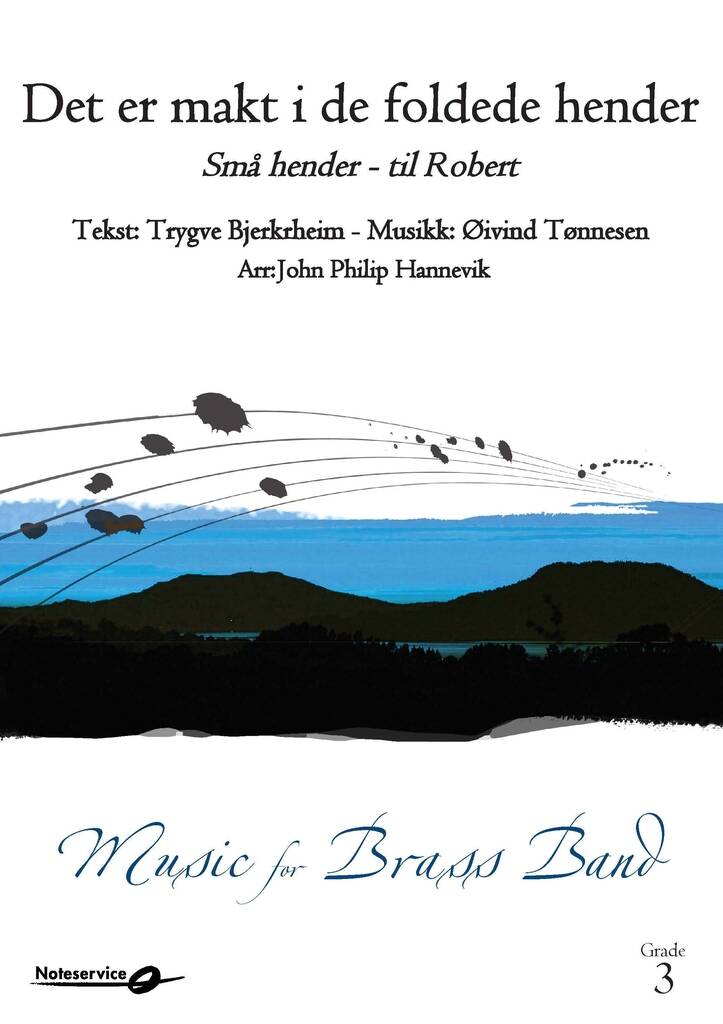
Det er makt i de foldede hender - Trygve Bjerkrheim - John Philip Hannevik
This arrangement is written to commemorate Robert Kvam, a trumpeter, conductor and instrument repair technician.He died of cancer in 2019, only 54 years old.The quiet, beautiful hymn There is power in the folded hands (Trygve Bjerkrheim / Oivind Tonnesen) was his favorite song, and the tune and lyrics are the fundament of this arrangement. Especially the line in themselves, the hands are small and weak is an important motif to the arrangement.
Estimated dispatch 5-14 working days
-
 £59.99
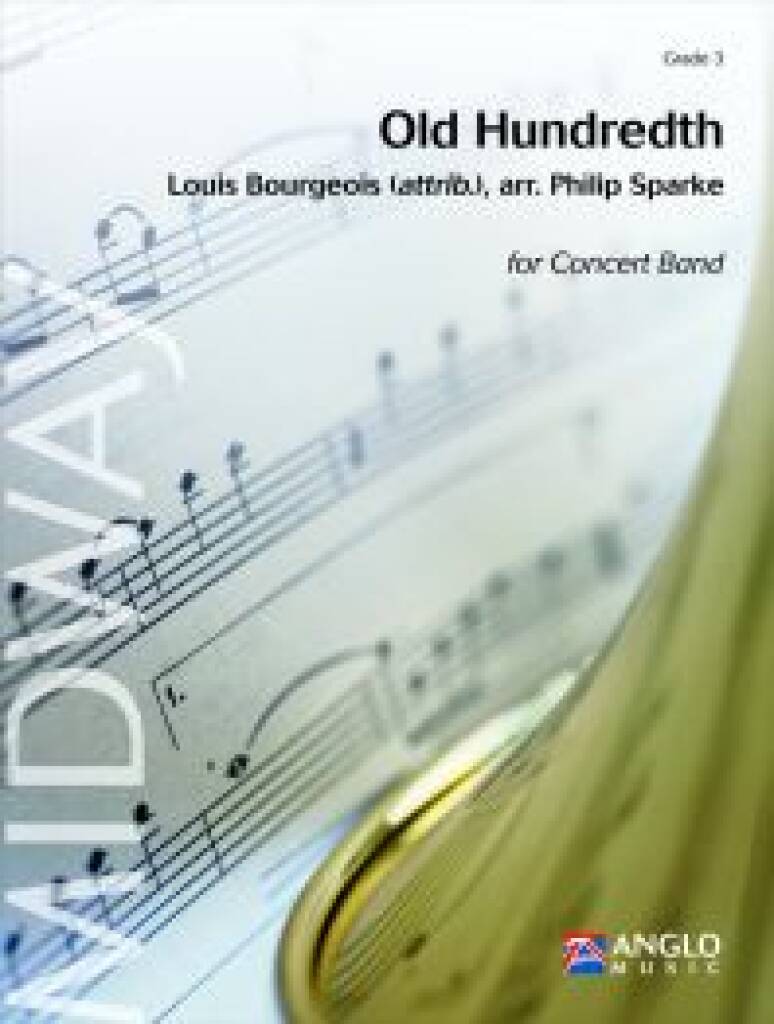
Old Hundredth - Louis Bourgeois - Philip Sparke
The tune Old Hundredth is one of the best-known melodies in all Christian musical traditions and first appeared in the 1551 psalter "Pseaumes Octante Trois de David", where it is used as a setting for a version of Psalm 134; it is usually attributed to the French composer Louis Bourgeois (c.1510 - c.1560). The melody was then used in 1561 by the Scots clergyman, William Kethe in Sternhold and Hopkins' Psalter for his paraphrase of Psalm 100 - All People that on Earth do Dwell, which is still the most familiar hymn sung to this noble tune. When Tate and Brady's "New Version of the Psalms" was published in 1696, the melody became know as the 'old' version - henceits current title. This arrangement presents three contrasting verses and is effective as a concert piece as well as an instrumental interlude as part of a church service or wedding.
Estimated dispatch 5-14 working days
-
 £26.00
Prelude- The truth from above - Ralph Vaughan Williams - Paul Hindmarsh
In hisPrelude - The Truth from Above, outstanding arranger and curator Paul Hindmarsh has distilled the essence of a timeless Christmas classic by Ralph Vaughan Williams into five minutes of ravishingly unforgettable music for brass band. The variants of the Herefordshire tune popular from theFantasia on Christmas CarolsandThe Oxford Book of Carolsare skilfully and stylishly woven together, from an evocative opening to an ecstatic, multi-layered coda. Unerringly true to the timeless spirit of the original, with the added beauty of the brass-band sound at its most sonorously grave and haunting,Prelude - The Truth from Abovemay be performed separately, or as the first of two preludes, preceding Paul's arrangement ofRhosymedre from the Three Preludes Founded on Welsh Hymn Tunes, also available from Stainer & Bell.
Estimated dispatch 5-14 working days
-
 £59.99
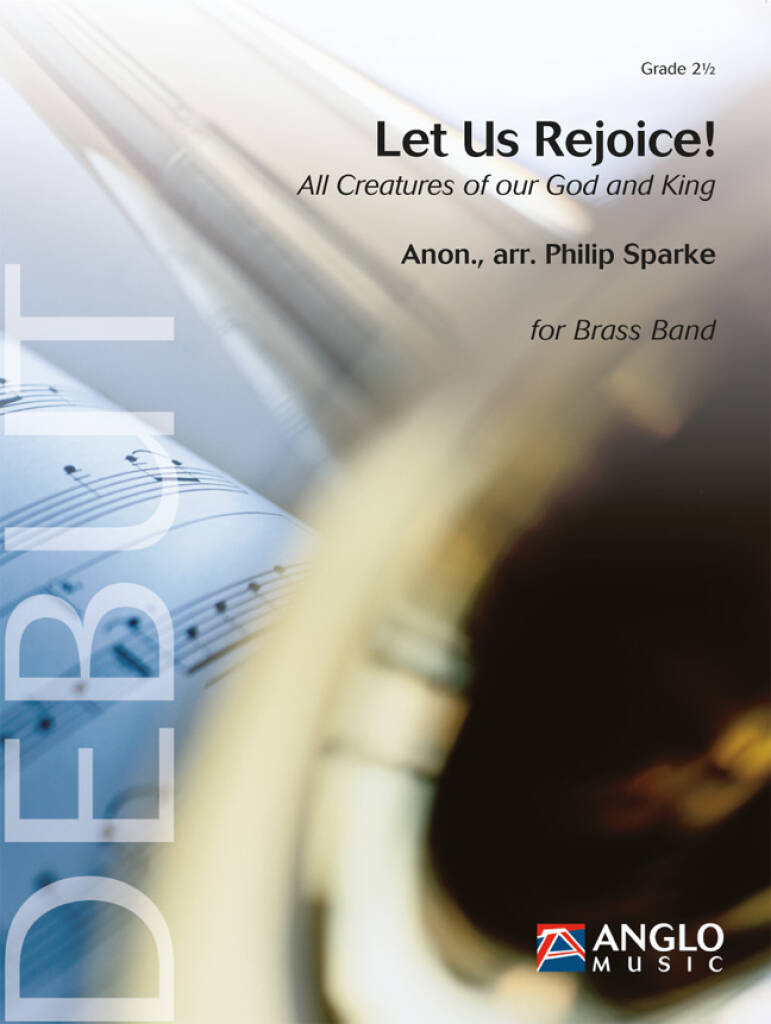
Let Us Rejoice! - Philip Sparke
This arrangement presents three contrasting verses of the ancienthymn tune Let Us Rejoice!, which in the English-speaking worldis usually sung to the hymn All creatures of our God and King. Itis effective as a concert piece as well as an instrumental interludeduring a church service, particularly at Easter or Whitsun.
Estimated dispatch 5-14 working days
-
 £55.00
Triumph Series Brass Band Journal, Numbers 1363 - 1366, July 2024
1363: Festival March - Collect the harvest (Anders Beijer)This march is a call to tell others about the salvation we have received and bring people to Jesus. Jesus has bought us with his blood, and we now belong to him and stand under his protection, surrounded by his love and care. After brief references to the melody Bringing in the sheaves (S.A.S.B. 58) (also appearing later in the work in full) and an original melody, we hear the familiar tune Saviour, like a shepherd. This music should be performed with great joy and enthusiasm.1364: O come, Immanuel (Steve Kellner)The text of this beautiful Advent hymn (C.C. 62) dates to the 8th century and its chant-like tune to the 15th century. While the text alludes to Israel's captivity in Babylon and the coming Messiah, it in fact refers to the believer's anticipation of Jesus' second coming. The original chant melody was call and response, so the opening motif serves as the call, returning throughout the arrangement.1365: Our Consecration (Marcus Venables)This arrangement uses the tune St Margaret (T.B. 427) to the beloved hymn by George Matheson, O love that wilt not let me go (S.A.S.B. 616), which highlights the powerful and enduring nature of God's love. The use of the melodic fragment on the word 'go' serves as a subtle question mark, inviting the listener to reflect on the human qualities that may cause doubt in the steadfastness of God's love for us. However, as the piece ends, there is a sense of peace and assurance that we can truly rely on the never-ending love of God in our lives. This powerful and emotive arrangement will leave the listener feeling uplifted and encouraged by the knowledge that they are held securely in the arms of God's love.1366: March - The bell ringer (David Rowsell)The title of this march refers to someone who stands by the iconic Salvation Army Christmas kettle and receives donations from passers-by. They ring a bell to attract attention and subtly invite people to give a donation in support of The Salvation Army's work. This march was written as a tribute to the many volunteers worldwide who support this campaign each year. The music features the choruses from two Christmas carols, Sweet chiming Christmas bells (C.C. 83) and Sweet chiming bells (C.C. 82).
Estimated dispatch 7-14 working days
-
 £55.00
Triumph Series Brass Band Journal, Numbers 1383 - 1386, March 2026
1383: Festival March - Lead On! (Andrew Wainwright)A dynamic march, commissioned by Majors Paul and Dawn McFarland during their appointment as Area Commanders of The Salvation Army's Dallas-Fort Worth Area, premiered at the 2023 Thanksgiving service at the Dallas Adult Rehabilitation Centre. Featuring the classic hymns Storm the forts of darkness (S.A.S.B. 980) and Lead on, O King eternal (S.A.S.B. 964), the piece captures the drive, hope, and mission at the heart of The Salvation Army's work in North Texas.1384: Confession (Kenneth Downie)This arrangement is based on the tune Lord of all (T.B. 440), one of the welcome additions to the 2015 Salvation Army tune book. Introduced to the arranger by Andrew Blyth, whose appreciation for the melody highlighted its gentle charm, the piece is dedicated to Andrew and the Peterborough Citadel Band, where he served as Bandmaster and continues to play.The music pairs the tune with the reflective words of We have not known thee as we ought (S.A.S.B. 630), a hymn often used in worship as a moment of confession and heart-searching before God. Its inclusion encourages both performers and listeners to approach worship with humility and sincerity.Although labelled simply as "German traditional," the tune's graceful simplicity is immediately evident. This arrangement preserves that character while introducing subtle harmonic colour and developing the tune's rising fourth motif as a unifying musical thread. The gentle nature of the melody remains central throughout, with a slightly heightened energy in the fifth phrase carefully drawn out without disrupting the overall serenity. The sharing of thematic material between Cornets and Horns calls for smooth, unobtrusive ensemble playing, allowing the tune's beauty to speak naturally.1385: God in good (Stephen Hull) This arrangement brings together two much'loved melodies: Goodness of God, a favourite from the final years of the arranger's service as Divisional Music Director in the Wisconsin/Upper Michigan Division, and the simple, enduring chorus God is so good. Heard often at summer camps, the song's message stayed with him, eventually inspiring this thoughtful musical pairing that highlights God's unwavering goodness throughout our lives.1386: A march in time (Martin Cordner)Written to celebrate the 130th anniversary of Thetford Corps (UKI Territory), this lively march pays tribute to a legacy of faithful witness, joyful service, and a community moving forward in God's light. Premiered by Cambridge Citadel Band during the anniversary weekend, the piece weaves together three cherished songs: Marching on in the light of God (S.A.S.B. 968), Jesus, precious Saviour (S.A.S.B. 501), and Light up the sunshine in your heart.
Estimated dispatch 7-14 working days
-
 £40.00
Abide With Me (Euphonium Solo with Brass Band - Score and Parts)
My arrangement of William H. Monk's tune of 1861, uses the euphonium soloist as the central figure for the melodic line in the three verses. Surrounding the solo line is an irregular pulsed figure in the percussion to give the music an unsettled feel whilst the muted ensemble lightly colour the melodic contour of the soloist. From the low beginnings of the piece, where no high instrumentation is used, we are led through the darkened texture to a bright finale, although the sense of the forbidding is always present.Abide With Me has always been a favourite hymn of mine and it was when watching the film 28 Days Later that I believed it would make a rather striking arrangement for brass band. This was confirmed further when the hymn was used at the 2012 opening ceremony of the London Olympics. The juxtaposition between the static, slow moving melody and the rhythmic effects of the dancers was something that I thought could be captured in an arrangement.- Paul McGheeDuration: 5.00
Estimated dispatch 7-14 working days
-
£24.95
LOVE DIVINE (Brass Band Set) - Brian Bowen
Sir John Stainer's fine tune is often associated with Charles Wesley's hymn, 'Love divine, all loves excelling'. The introduction is designed to evoke a feeling of awe, and a broad, confident style will set the pattern for the whole arrangement. Contrast in colour has been sought in the scoring but special effects must not be allowed to obscure the melody. The arrangement ends in an atmosphere suggested by the final line of the hymn, 'Lost in wonder, love and praise'.
Estimated dispatch 7-14 working days
-
 £24.95
Judd: Love Divine
Sir John Stainer's fine tune is often associated with Charles Wesley's hymn, 'Love divine, all loves excelling'. The introduction is designed to evoke a feeling of awe, and a broad, confident style will set the pattern for the whole arrangement. Contrast in colour has been sought in the scoring but special effects must not be allowed to obscure the melody. The arrangement ends in an atmosphere suggested by the final line of the hymn, 'Lost in wonder, love and praise'.
Estimated dispatch 7-14 working days
-
 £55.00
Triumph Series Brass Band Journal, Numbers 1347 - 1350, March 2023
1347: Intrada on 'St Magnus' (Ruben Schmidt)This is an energetic intrada based on the tune St. Magnus with the composer keeping the words The head that once was crowned with thorns (S.A.S.B. 22) in mind.1348: March - In every corner sing (Alan Williams)This is a bright march requiring plenty of vigour and imagination. Featuring and taking its title from Let all the world in every corner sing: My God and King! (S.A.S.B. 41), this bright melody is contrasted with the tune Lydia associating the words There is a name I love to hear, I love to sing its worth (S.A.S.B. 94).1349: I need thee (Craig Woodland)An expressive arrangement of the traditional hymn I need thee every hour (S.A.S.B. 707)1350: March - The great commission (Paul Sharman)This march was written for the Norwegian Christian brass band, Egersund Missionary Band, and is derived from the tune Onward, Christian soldiers (T.B. 188) as well as a brief fragment of the Norwegian National Anthem and the melody Die Sach is dein (The work is thine).
Estimated dispatch 7-14 working days
 View Music