
Results
-
 £24.95
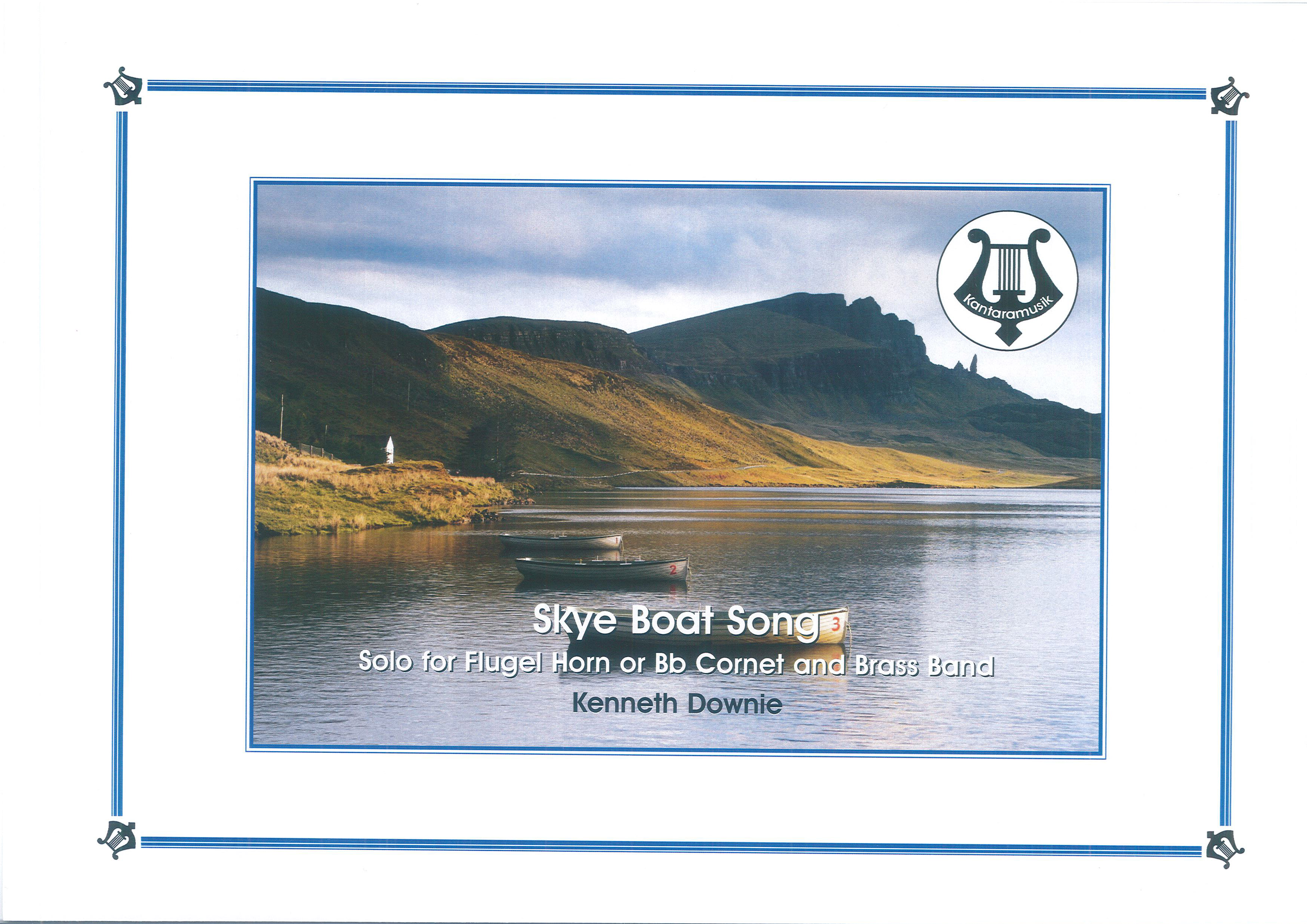
Skye Boat Song (Flugel Horn Solo with Brass Band - Score and Parts)
This wistful Scottish folk song tells the story of the escape of Bonnie Prince Charlie from Uist to Skye after the battle of Culloden in 1746. His defeat effectively ended the Jacobite movement as a political threat in Britain. The gentle tune has great charm and is often used as a lullaby.
Estimated dispatch 7-14 working days
-
 £12.95
Concerto for Trumpet (Cornet Solo)
Though not a concerto in the classical sense this is, nonetheless, a popular vehicle for trumpet (or cornet) soloists to show off their jazz credentials!It does not outstay its welcome and gives players in the ensemble a chance to play some hand-held percussion too. Great fun all round.
Estimated dispatch 7-14 working days
-
 £56.00
A Soft and Gentle Heart (Euphonium Solo with Brass Band - Score and Parts) - Fernie, Alan
This easy, original solo is a great way to feature your euphonium player who prefers the soaring melodic lines to the quick technical passages. A great slower number for your concert.
Estimated dispatch 7-14 working days
-
 £102.99
Chameleon (Euphonium Solo with Brass Band - Score and Parts) - Doss, Thomas
Chameleon is a three-part solo piece for euphonium and brass band. The different styles within the piece provide lots of variety, requiring refined technique and a great deal of flexibility from the soloist. This composition was commissioned by Georg Pranger, to whom the piece is also dedicated. As a pioneer of the Austrian euphonium soloist scene, Pranger is committed to the unshackling of this wonderful instrument and the creation of great musical momentum, as achieved by this commission.Duration: 8.30
Estimated dispatch 7-14 working days
-
 £44.95
Bravura (A Fantasy on British Folk Songs) (Euphonium Solo with Brass Band - Score and Parts) - Graham, Peter
Bravura is a companion piece to the composer's earlier euphonium display piece Brillante, utilising the same traditional 19th century "fantasy variation" structure, familiar to generations of brass soloists. Folk songs from the four corners of Great Britain are featured; Oranges and Lemons, (England), The Blue Bells of Scotland, The Minstrel Boy (Ireland) and the famous Welsh anthem Men of Harlech.The solo is a conflation of the original version, written for the 2002 Royal Albert Hall Gala Concert, which followed the National Brass Band Championships of Great Britain. On that occasion the combined talents of virtuosi David Childs, Derick Kane, Steven Mead and David Thornton (with guests Robert and Nicholas Childs) were on display, each personalising the cadenza section towards the end. This version incorporates a published cadenza, though soloists should feel free to improvise their own material at this point.
Estimated dispatch 7-14 working days
-
 £44.95
The Great Race (Euphonium Solo with Brass Band - Score and Parts) - Graham, Peter
Finale from In League with Extraordinary GentlemenThe Great Race, for solo euphonium and band, follows Phileas Fogg on the last stage of his epic journey "Around the World in Eighty Days" (from the novel by Jules Verne). The moto perpetuo nature of the music gives full rein to the soloist's technical virtuosity. As the work draws to a conclusion, the frantic scramble by Fogg to meet his deadline at the Reform Club in Pall Mall, London, is echoed by the soloist's increasingly demanding ascending figuration, set against the background of Big Ben clock chimes.
Estimated dispatch 7-14 working days
-
 £44.95
Trombone Concerto (Trombone Solo with Brass Band - Score only) - Wiffin, Rob
My Trombone Concerto was commissioned by Brett Baker following an earlier piece I had written for him called Shout! It was composed in Spain in the summer of 2010. Once I started writing I realised that this concerto was inevitably going to draw on my own experiences as a trombone player. The first movement was really a matter of getting the right thematic ideas and balancing the tutti and solo passages so, for formal structure, I studied the Gordon Jacob Trombone Concerto. There is a lyrical section preceding the first Allegro that owes much in spirit (but not in the actual music) to The Eternal Quest, Ray Steadman-Allen's Salvation Army solo. The slow movement seemed determined to come out in the vein of a Richard Strauss song. I wanted to write something ineluctably 'cantabile' as we trombone players rarely get a chance to play the melody. There is a brief allusion to that wonderful moment when the trombone gets to sing above the orchestra in Sibelius' seventh symphony. Arthur Wilson, that great exponent of the singing style in trombone-playing and my teacher at college died in the summer of 2010 so it seemed appropriate to dedicate this movement to him. The last movement is the lightest of the three in style and is slightly jazz-inflected, hopefully providing some fun for the soloist. While wanting to test the instrument I did not set out with the intention of making the concerto difficult but there are undoubtedly challenges of technique, range and style to be met by the soloist.- Rob Wiffin
Estimated dispatch 7-14 working days
-
£87.95
Trombone Concerto (Trombone Solo with Brass Band - Score and Parts) - Wiffin, Rob
My Trombone Concerto was commissioned by Brett Baker following an earlier piece I had written for him called Shout! It was composed in Spain in the summer of 2010. Once I started writing I realised that this concerto was inevitably going to draw on my own experiences as a trombone player.The first movement was really a matter of getting the right thematic ideas and balancing the tutti and solo passages so, for formal structure, I studied the Gordon Jacob Trombone Concerto. There is a lyrical section preceding the first Allegro that owes much in spirit (but not in the actual music) to The Eternal Quest, Ray Steadman-Allen's Salvation Army solo.The slow movement seemed determined to come out in the vein of a Richard Strauss song. I wanted to write something ineluctably 'cantabile' as we trombone players rarely get a chance to play the melody. There is a brief allusion to that wonderful moment when the trombone gets to sing above the orchestra in Sibelius' seventh symphony. Arthur Wilson, that great exponent of the singing style in trombone-playing and my teacher at college died in the summer of 2010 so it seemed appropriate to dedicate this movement to him.The last movement is the lightest of the three in style and is slightly jazz-inflected, hopefully providing some fun for the soloist.While wanting to test the instrument I did not set out with the intention of making the concerto difficult but there are undoubtedly challenges of technique, range and style to be met by the soloist.- Rob Wiffin
Estimated dispatch 7-14 working days
-
 £110.00
To Every Thing There is a Season (Cornet Solo with Brass Band - Score and Parts) - Rutter, John - Noble, Paul
Upon first hearing this beautiful composition by John Rutter, it seemed obvious that it would not only be a great piece for combined Band and Chorus, but also would be a perfect solo for trumpet. Therefore, in addition to the arrangement for either combined band and chorus, or trumpet solo and band, this arrangement for Brass Band is now available as well. The beauty and simplicity of the piece should certainly allow it to become a mainstay in the repertoire of trumpet solos at any level.
Estimated dispatch 7-14 working days
-
 £42.95
Blue Jeans (Trombone Solo with Brass Band - Score and Parts) - Wiffin, Rob
In 2008 the trombonist, Chris Jeans, was invited to be a featured soloist at a British Trombone Society event. He contacted Stan Kitchen at Studio Music Company to see if he had any new material for trombone. Stan then got in touch with me, as I had already written a piece for another trombone player, Brett Baker. This piece, Shout! was programmed for the same event so we needed to find something new for Chris.The title 'Blue Jeans' came to my mind, thus linking a blues-style piece with the obvious reference to Chris's surname. I spoke to Chris and he liked the sound of it so then I had to go away and write a solo to match the title!I managed to get a version with piano accompaniment done in time for Chris to perform at the trombone event and have now had a chance to complete the band version.Chris is a great chap, a good friend and a wonderful trombone player so I hope people enjoy listening to this solo that bears his name.- Rob WiffinDuration: 3.30
Estimated dispatch 7-14 working days
 View Music