
Results
-
 £5.95
£5.95Poliuto (Trombone Quartet - Score and Parts)
Written for 3 Bb TC Tenor Trombones and Bass Trombone
Estimated dispatch 7-14 working days
-
 £5.95
£5.95Southern Breezes (Trombone Quartet - Score and Parts)
Written for 3 Bb TC Tenor Trombones and Bass Trombone
Estimated dispatch 7-14 working days
-
 £6.95
£6.95The Grenadiers (Trombone Quartet - Score and Parts)
Written for 3 Bb TC Tenor Trombones and Bass Trombone
Estimated dispatch 7-14 working days
-
 £42.95
Blue Jeans (Trombone Solo)
A slow, bluesy trombone solo written for Chris Jeans
Estimated dispatch 7-14 working days
-
£54.20
Entebbe Road (Trombone Solo)
Entebbe Road is a busy and frantic trombone solo, reflecting the busy and chaotic main road to the airport in Uganda's capital, Kampala. A percentage of sales of this piece goes to Brass for Africa.
Estimated dispatch 7-14 working days
-
.NOBOX-1.jpg) £40.00
£40.00Bass Trombone Concerto - Gareth Wood
Written in 2006 for Roger Argente, Gareth Wood brings his considerable experience of writing for brass, and brass bands in particular, to an instrument not often blessed with opportunities for solo exposure. It is scored for soloist accompanied by traditional brass band line-up, including timpani and two percussion, and follows the standard three-movement pattern. In the first movement, the soloist launches straight into the musical argument with a low-lying repeated quaver figure punctuated by the band. A lyrical second subject in the high register is also entrusted to the soloist, and the movement comes to a thrilling conclusion. The slow movement opens softly with the percussion, and a mournful bass line sets the mood for a thoughtful long melody. It reaches a powerful climax, which subsides to a return of the opening mood. In the march-like finale, the soloist is pitted against a number of solo instruments from the band and a driving ostinato carries the momentum through to the blazing ending.
-
 £42.00
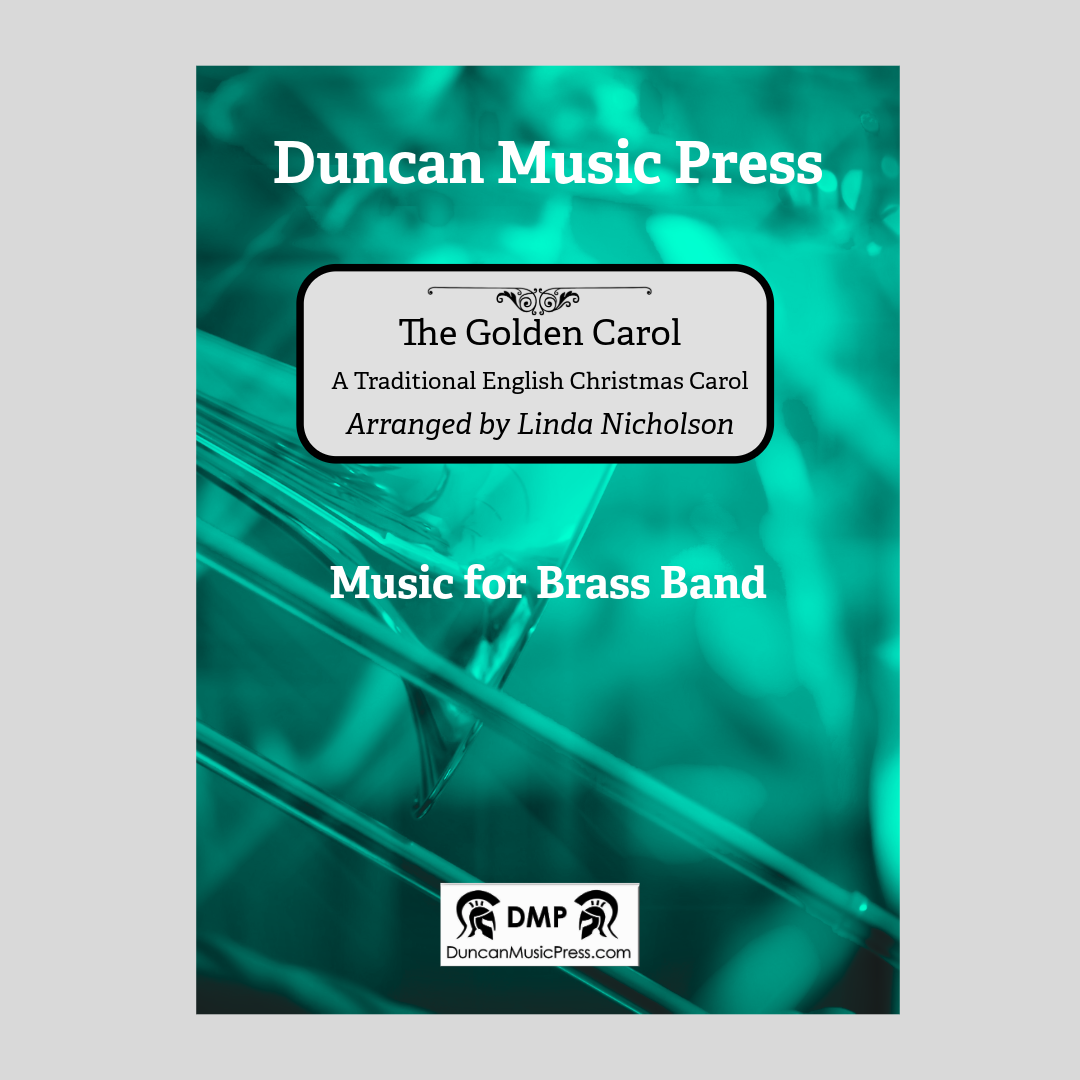
The Golden Carol. Arranged for brass band by Lynda Nicholson
Arranged for brass band by by Lynda Nicholson The Golden Carol is a traditional Old English Christmas Carol. The words tell of the Three Kings following the Star to Bethlehem to see Jesus on Christmas morning. The tune is anonymous, but has a medieval feel, similar to other carols, such as I Saw three Ships. The Golden Carol begins in a 5/4 jazz waltz rhythm with a solo Eb Bass being joined a few bars later by by a solo trombone then a solo horn, before more instruments (including percussion) are added and the tune plays out in the cornets and soprano cornet. The second section goes into 4/4 with a strong Rock/Big Band feel driven along rhythmically by the kit drummer. This section then leads to a rousing close for the full band. The Golden Carol is part of the Lynda Nicolson Collection . To hear a sound recording of The Golden Carol scroll down.
-
£44.95
MUSIC FOR A JOYFUL OCCASION (Revisited) (Brass Band Set) - Kenneth Downie
This music was originally written to mark the 24th anniversary of The Salvation Army's Canadian Staff Band and was performed by the band, under the direction of the composer, in January 1993. The inspiration was the theme chorus of the International Corps Cadet rally held in London in 1956; 'Jesus, I love you, I love you with tender care'. The mood of the music is often high-spirited and humorous and frequently calls for a sense of bravura although there are some tender moments too. This new edition was produced for The International Staff Band, omitting the singing and trombone quartet but containing new material in the same high-spirited style of the original.
Estimated dispatch 7-14 working days
-
Duet For Two Cats - G. Rossini - Len Jenkins
"Duet For Two Cats" is often performed as an encore to vocal recitals and operatic galas. It may be sung by two sopranos, male-female pairs, or even as a tomcat duet and can be accompanied by a piano or a full orchestra. The lyrics are simple; the single word 'Miaow', repeated with various styles of inflexion and attitude throughout the piece. Our arrangement is for a cornet and trombone. The piece is generally ascribed to Rossini, though there is some doubt as to its actual origins and whether it is an authentic work by that composer. It is believed that an English composer, Robert Lucas Pearsall under the pseudonym G. Berthold may have assembled the various elements from Rossini and perhaps other composers into the piece as we now know it. In order to achieve the correct balance between band and soloists, there is a need to mute most of the band instruments. Recognising that not all bands will have the larger mutes which are expensive and sometimes unwieldy, we suggest a form of muting made famous by a jazz trumpeter and which works well on most instruments. It consists of a circle of heat resistant padded table covering or felt, slightly larger than the bell diameter, with an elasticated edge like a 'mop-hat'. With 3 holes in it to let the sound out, the mute is then simply stretched over the bell to achieve the desired effect and folded up when not required.
-
 £3.95
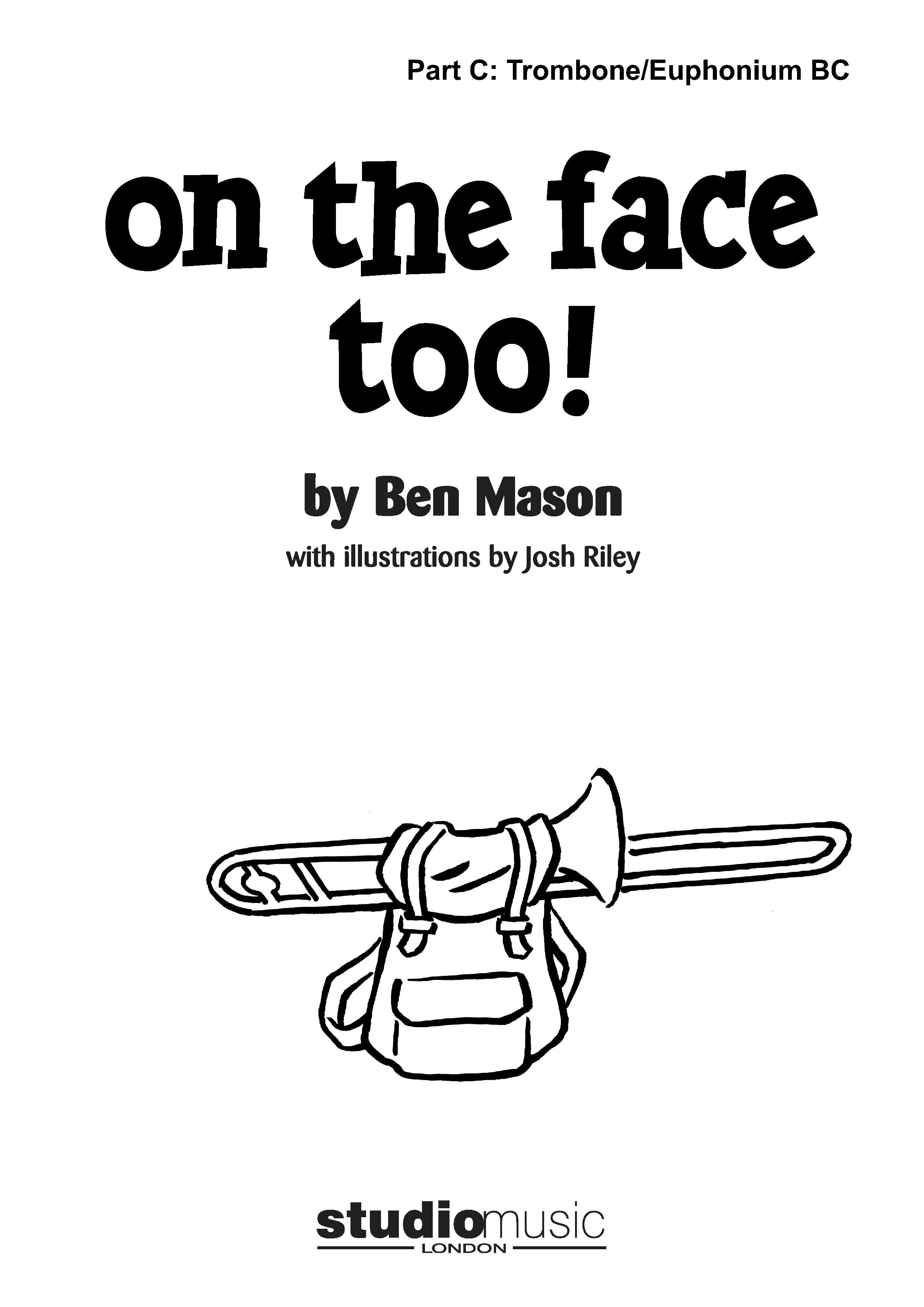
£3.95On the Face Too! (Part C: Trombone/Euphonium BC)
On the Face Too! is to the secondary school brass teacher as On the Face! is to the primary: namely a collection of pieces for intermediate brass ensemble in various jazz and popular styles, aiming to give a ready supply of material for concerts and assemblies, which nevertheless still allows for the developing technique of the young players to whom it is addressed.Generally speaking, the technical difficulty of the material here goes no further than grade 4 or 5 (even the first trumpet part never goes higher than a written G), though some pieces will offer considerable rhythmic challenges.
Estimated dispatch 7-14 working days