
Results
-
 £31.40
Heed the Word - Lucy Pankhurst
Lucy Pankhurst created this impressive work in support of a charitable project, known in 2005 as Brass Band Aid. The organisation called for original compositions to be included in a follow-up CD release - Into Africa to help raise funds for projects in Adet, Africa, and to build awareness of the Make Poverty History campaign.Lucy's creativity and imagination are very prevalent in this work - a complete mix of powerful energy and poignant emotions flow from the score. A strong use of pulsating drums are balanced with sheer tranquility and rich chords. It exudes hope and positivity and perhaps, through its title, offers a gentle warning to listen carefully to the concerns that are aired around us - not least in recognition of the challenges facing the very communities the CD was aiming to help.The work was recorded by the Prairie Brass Band, US and featured on the Brass Band Aid CD - Into Africa.
In Stock: Estimated dispatch 3-5 working days
-
 £36.30
Russian Rag - George L Cobb, Sandy Coffin
Interpolating the world famous"Prelude" by RachmaninoffCommissioned by John Wallace, this arrangement of Russian Rag has been crafted by Sandy Coffin through close listening of the available recordings of the Harlem Hellfighters Band. Sandy had been heavily involved with the Historic Brass Society symposium 2017 held in New York and assisted John with his research on this fascinating band and the style of music it generated.Eye-witness accounts refer to the 369th band 'dancing' rather than 'marching'. Above all, in modern performance, finding a 'dancing beat' is crucial to a successful performance of this Ragtime march in order to do justice to the great pioneering work of James Reese Europe. Note the cheeky virtuosity and rubato!Look and Listen (courtesy of Tullis Russell Mills Band):Background to the Harlem HellfightersThe US Army 369th Regiment, made up largely of African-Americans from New York, became known as the Harlem Hellfighters because of the heroic reputation which accrued to them during the actions they engaged in during the First World War in Europe.James Reese Europe was one of the most active African-American composer/musical directors in the pre-war American music scene. The legendary Harlem Hellfighters Band, which he assembled in 1917 from African-American and Puerto Rican musicians, came at an important transitional point in musical history. A new form of music called jazz was emerging from Ragtime and the performing style of Europe's band was immersed in the flow of this new direction.Europe's Harlem Hellfighters influenced and inspired everyone who heard them, including the welcoming crowd when they disembarked in France, bowled over by their swinging rendition of La Marseillaise. Reese Europe became a war hero, commanding a machine-gun unit as well as the band.On return from War in 1919 the band led a ticker-tape parade along Fifth Avenue in New York and soon made about 30 shellac recordings. These recordings display some of the fingerprints of their performing style: ragging, improvising, muting, wailing, smearing (their word for glissando) - and from the evidence of their recordings they took the printed page as a blueprint for individuality.In May 1919 during the Hellfighters' triumphant coast-to-coast tour after their return, James Reese Europe was tragically murdered, bringing to premature close, at the age of 39, the work of a great musical innovator.
In Stock: Estimated dispatch 3-5 working days
-
 £30.00
That Moaning Trombone - Carl D Bethel, Sandy Coffin
Comic March One-StepCommissioned by John Wallace, this arrangement of That Moaning Trombone has been crafted by Sandy Coffin through close listening of the available recordings of the Harlem Hellfighters Band. Sandy had been heavily involved with the Historic Brass Society symposium 2017 held in New York and assisted John with his research on this fascinating band and the style of music it generated.Eye-witness accounts refer to the 369th band 'dancing' rather than 'marching'. Above all, in modern performance, finding a 'dancing beat' is crucial to a successful performance of this Ragtime march in order to do justice to the great pioneering work of James Reese Europe.Note the the reckless abandon with which glissando, at that time a novel effect, is used!Look and Listen (courtesy of the Tullis Russell Mills Band):Background to the Harlem HellfightersThe US Army 369th Regiment, made up largely of African-Americans from New York, became known as the Harlem Hellfighters because of the heroic reputation which accrued to them during the actions they engaged in during the First World War in Europe.James Reese Europe was one of the most active African-American composer/musical directors in the pre-war American music scene. The legendary Harlem Hellfighters Band, which he assembled in 1917 from African-American and Puerto Rican musicians, came at an important transitional point in musical history. A new form of music called jazz was emerging from Ragtime and the performing style of Europe's band was immersed in the flow of this new direction.Europe's Harlem Hellfighters influenced and inspired everyone who heard them, including the welcoming crowd when they disembarked in France, bowled over by their swinging rendition of La Marseillaise. Reese Europe became a war hero, commanding a machine-gun unit as well as the band.On return from War in 1919 the band led a ticker-tape parade along Fifth Avenue in New York and soon made about 30 shellac recordings. These recordings display some of the fingerprints of their performing style: ragging, improvising, muting, wailing, smearing (their word for glissando) - and from the evidence of their recordings they took the printed page as a blueprint for individuality.In May 1919 during the Hellfighters' triumphant coast-to-coast tour after their return, James Reese Europe was tragically murdered, bringing to premature close, at the age of 39, the work of a great musical innovator.
In Stock: Estimated dispatch 3-5 working days
-
 £36.30
The St Louis Blues - Sandy Coffin, W C Handy
Two-Step MarchCommissioned by John Wallace, this arrangement of The St Louis Blues has been crafted by Sandy Coffin through close listening of the available recordings of the Harlem Hellfighters Band. Sandy had been heavily involved with the Historic Brass Society symposium 2017 held in New York and assisted John with his research on this fascinating band and the style of music it generated.Eye-witness accounts refer to the 369th band 'dancing' rather than 'marching'. Above all, in modern performance, finding a 'dancing beat' is crucial to a successful performance of this Ragtime march in order to do justice to the great pioneering work of James Reese Europe.Note the flutter-tonguing and use of muting, the counter-melody in soprano cornet, and the wilder and yet wilder nature of each repetition of the Chorus.Look and Listen:Background to the Harlem HellfightersThe US Army 369th Regiment, made up largely of African-Americans from New York, became known as the Harlem Hellfighters because of the heroic reputation which accrued to them during the actions they engaged in during the First World War in Europe.James Reese Europe was one of the most active African-American composer/musical directors in the pre-war American music scene. The legendary Harlem Hellfighters Band, which he assembled in 1917 from African-American and Puerto Rican musicians, came at an important transitional point in musical history. A new form of music called jazz was emerging from Ragtime and the performing style of Europe's band was immersed in the flow of this new direction.Europe's Harlem Hellfighters influenced and inspired everyone who heard them, including the welcoming crowd when they disembarked in France, bowled over by their swinging rendition of La Marseillaise. Reese Europe became a war hero, commanding a machine-gun unit as well as the band.On return from War in 1919 the band led a ticker-tape parade along Fifth Avenue in New York and soon made about 30 shellac recordings. These recordings display some of the fingerprints of their performing style: ragging, improvising, muting, wailing, smearing (their word for glissando) - and from the evidence of their recordings they took the printed page as a blueprint for individuality.In May 1919 during the Hellfighters' triumphant coast-to-coast tour after their return, James Reese Europe was tragically murdered, bringing to premature close, at the age of 39, the work of a great musical innovator.
In Stock: Estimated dispatch 3-5 working days
-
 £74.72
Mind Dances (Brass Band) Fendall Hill
This highly descriptive and personal work for brass band is autobiographical, and based on a seven-year period of the composer Fendall Hill's life. He comments: "...external events had severe personal consequences, and my previously self assured self woke in the early mornings, way before my body wanted. My mind would fret, regret, and attempt to fix things beyond my control or powers, carving out an anxiety-shaped hole in my soul. This piece is an exploration of the sheer range of thought processes I went through, the mind dances I would perform to either calm myself back to sleep, or somehow come to terms with my situation. So often I would get to the point of mental exhaustion after phases of semi-calm, imagined alternate realities, and sheer panic. Your mind knows there is no benefit to worrying, but that doesn't stop the flow of emotions, the fear, and the anxiety." To view a performance video of the work please visit www.youtube.com/watch?v=pUhy33KKCKY&t=3s PDF download includes score and parts. Sheet music available from: UK - www.brassband.co.uk USA - https://satradecentral.org Difficulty Level: First Section + Length: 15.00 minutes Instrumentation: Soprano Cornet Eb Solo Cornet Bb Repiano Cornet Bb 2nd Cornet Bb 3rd Cornet Bb Flugel Horn Bb Solo Horn Eb 1st Horn Eb 2nd Horn Eb 1st Baritone Bb 2nd Baritone Bb 1st Trombone Bb 2nd Trombone Bb Bass Trombone Euphonium Bb Bass Eb Bass Bb Timpani Percussion Vibraphone Marimba
In Stock: Estimated dispatch 1-3 working days
-
 £59.95
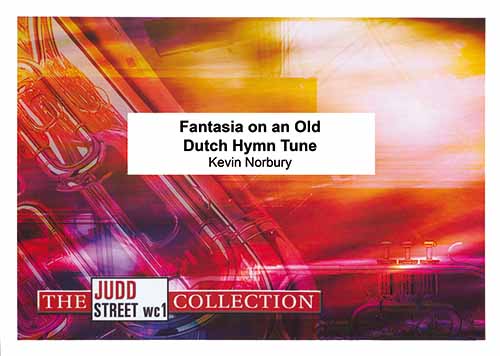
Fantasia on an Old Dutch Hymn Tune (Brass Band - Score and Parts)
Kevin Norbury writes:This tune has always been a favourite of mine. It was first published in Holland in 1624 and then appeared in a later collection called David's Psalmen in 1685. In many hymnals it is still known by its original name, Vruechten. In the vast majority of cases, the melody is associated with the lyrics by George Ratcliffe Woodward, an ordained minister of the Church of England, who lived from 1848 to 1934.At no time in this piece do I envisage any heaviness of style. Even in slow movement, whilst predominantly homophonic, the music should flow and be transparent. The music seeks to capture the essence of joy in both the melody and words (S.A.S.B. 234).
Estimated dispatch 7-14 working days
-
 £96.99
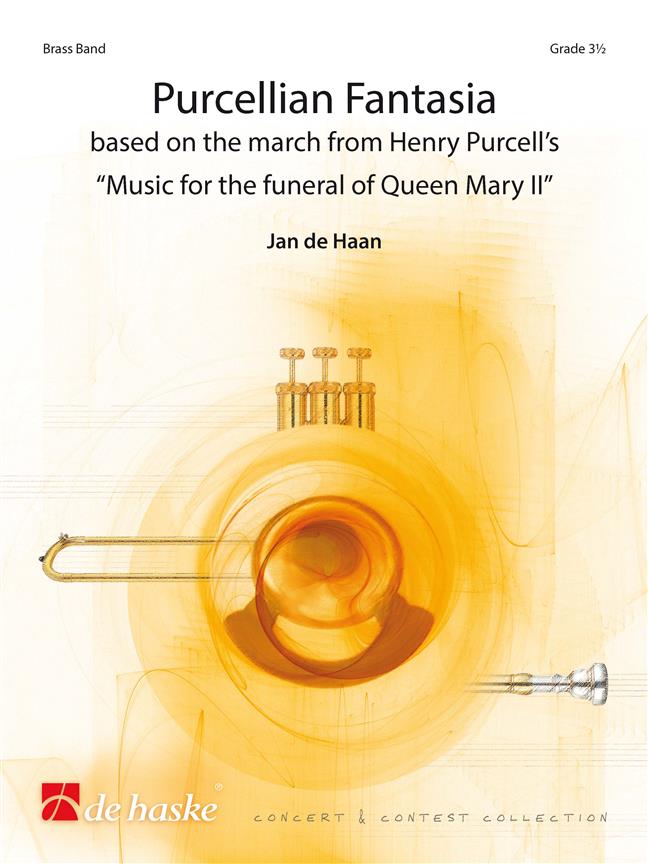
Purcellian Fantasia (Brass Band - Score and Parts)
This composition is based on the march from Henry Purcells Music for the funeral of Queen Mary II, a work written in 1694. In this fantasia, various movements flow from one to the next following the main theme; these movements not only elaborate on the theme, but also contrast with it. At times, the thematic material diverges so much, that the work acquires a character of its own; however, the composer often refers back to fragments of the theme. This work was test piece in the 4th division of the Dutch National Brass Band Championships (NBK) in 2017. Duration: 10.30
Estimated dispatch 7-14 working days
-
 £34.95
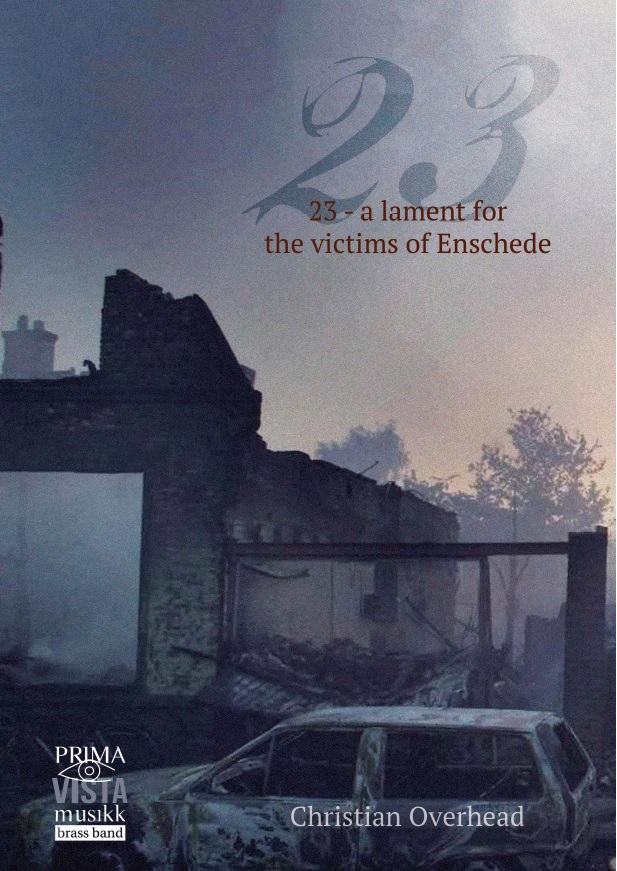
23 - A Lament for the Victims of Enschede (Brass Band - Score and Parts)
23 was composed for Brass Band Schoonhoven, and used as part of their programme for Brass in Concert in November 2016.On the 13 th May 2000, the Netherlands was shocked by an explosion in Roombeek - a district of Enschede, near the German border - after a fire broke out at a local fireworks depot. 23 people lost their lives in the tragic events. This piece pays tribute to their memory.The numbers 2 and 3 form the basis of the piece. The use of 5/4 allows the music to flow, alternating between 2 + 3 and 3 + 2; there are frequent passages where triplet quavers clash with straight quavers; and the tuned percussion make use of a scale composed of alternating intervals of 2 and 3 semitones.
Estimated dispatch 7-14 working days
-
 £14.95
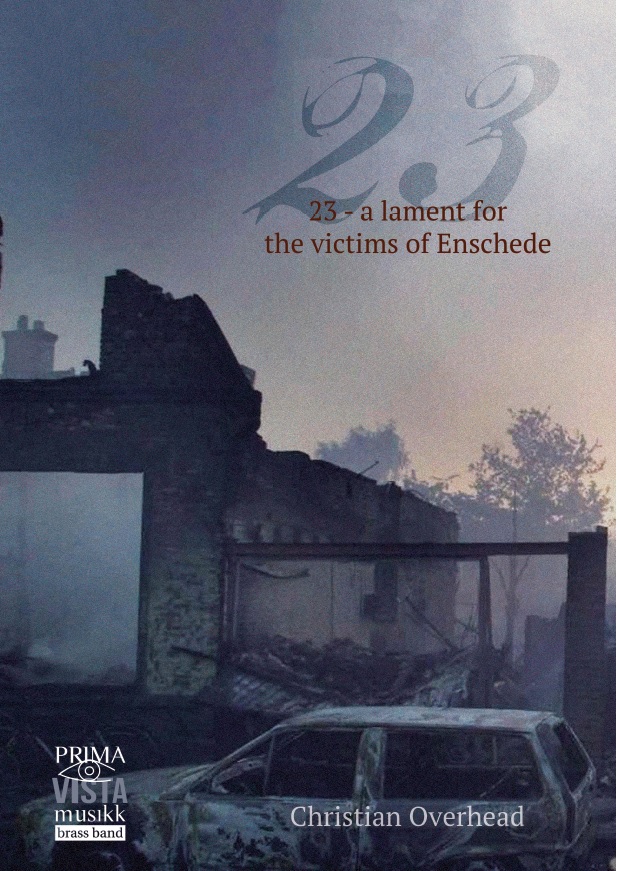
23 - A Lament for the Victims of Enschede (Score Only)
23 was composed for Brass Band Schoonhoven, and used as part of their programme for Brass in Concert in November 2016.On the 13 th May 2000, the Netherlands was shocked by an explosion in Roombeek - a district of Enschede, near the German border - after a fire broke out at a local fireworks depot. 23 people lost their lives in the tragic events. This piece pays tribute to their memory.The numbers 2 and 3 form the basis of the piece. The use of 5/4 allows the music to flow, alternating between 2 + 3 and 3 + 2; there are frequent passages where triplet quavers clash with straight quavers; and the tuned percussion make use of a scale composed of alternating intervals of 2 and 3 semitones.
Estimated dispatch 7-14 working days
-
 £69.95
Horn Concerto (Horn Solo with Brass Band)
Horn in F/E flat with Brass BandComposed in 1971 for Ifor James, the Concerto for French Horn and Band revealed some of those elements that have made Gregson's music so popular with audiences (and not just brass band audiences) worldwide: the boldness of his melodies, with the interval of the fourth revealing his admiration for the music of Paul Hindemith; his incisive rhythms, betraying the influence of another favourite composer, Bla Bartk; an admirable economy of means; and the clarity of his scoring.Each of the Concerto's three movements displays a different facet of the French Horn's character. The first is serious, symphonic in impulse, the rising fourths of the opening gesture giving the music an almost Germanic weight. In the slow movement, the soloist becomes the first among equals, sharing with the cornet soloist some typically haunting melodies. The lyrical flow is interrupted at the mid-point by mysterious, fleet-of-foot cadenzas. A rondo finale brings the concerto to a lighthearted conclusion. The rising fourths here are the impulse for a jaunty theme which reveals another of Gregson's early influences - William Walton, and in particular that composer's Partita for orchestra.
Estimated dispatch 7-14 working days