
Results
-
 £33.62
Les Chasseresses from 'Sylvia' (Brass Band) Delibes arr. Rob Bushnell
Clement Philibert Leo Delibes was a French composer, best known for his ballets and operas, including works such as Lakme (with its famous "Flower Duet"), Coppelia and Sylvia (both key works in the development of modern ballet). The latter started as a play, Aminta, by the Italian poet Torquato Tasso, which Delibes set to music. It was then adapted for the Paris Opera with rehearsals starting in August 1875. The premiere took place on 14 June 1876 and was the first ballet to be shown at the newly-built Opera Garnier. Whilst the scenery and costumes were created by top artists and designers (Cheret and Lacoste), it was Delibes's music that shown thrown, being said to have saved the production, preventing the ballet from drifting into obscurity.Sylvia is said to be one of the first modern ballets, with Tchaikovsky remarking to composer Sergei Taneyev upon its ingenuity: "... the first ballet, where the music constitutes not only the main, but the only interest. What charm, what elegance, what richness of melody, rhythm, harmony." Although Swan Lake, a contemporary to Sylvia, is considered one of the best ballets there is, Tchaikovsky preferred Sylvia to his own work, saying Swan Lake was "poor stuff in comparison". Tchaikovsky said to Taneyev, "I was ashamed. If I had known this music early then, of course, I would not have written Swan Lake". The music to Sylvia, rather than setting only the mood, also sets the action and is noted for its use of leitmotifs - Delibes was an admirer of Wagner - and more dominant use of brass and wind. The most famous piece from this ballet is the Pizzicati in the third act.Act I of the ballet takes place in sacred wood, where creatures are worshipping before Eros when Sylvia arrives with her huntresses to mock the god of love. Aminta, a lowly shepherd and infatuated with Sylvia, protects the deity and Sylvia is wounded by Eros's arrow. The hunter Orion kidnaps Sylvia, whilst Eros revives Aminta. Act II takes place in Orion's Island cave, where Sylvia tries to bribe Orion with jewels and wine. Unsuccessful, she appeals to Eros for help, who arrives and takes her to the temple of Diana (where the final act takes place). Orion and Aminta fight, Sylvia and Orion cause the goddess of the hunt, Diana, to be outraged, smiting Orion and denying the love of Aminta and Sylvia. Eros shows Diana a vision, which changes her mind and the couple finally come together.This brilliant and lively fanfare that introduces the huntresses in the first act is arranged here for the UK-style brass band, with alternative parts for horns in F and bass-clef lower brass. The piece has been lowered by a tone compared to the original. A recording of the original composition can be found here https://youtu.be/6yoGrUH38PI?si=0L0bFa1qXnYNvkR3 Duration: Approx. 3.10 minutes Difficulty Level: 1st Section + This PDF download includes the full score and parts. Includes alternative parts for soloist in Eb, horns in F and lower brass in bass clef. Sheet music available at www.brassband.co.uk (UK) or https://satradecentral.org (USA) Instrumentation: Soprano Cornet Eb Solo Cornet Bb Repiano Cornet Bb 2nd Cornet Bb 3rd Cornet Bb Flugel Horn Bb Solo Horn Eb 1st Horn Eb 2nd Horn Eb 1st Baritone Bb 2nd Baritone Bb 1st Trombone Bb 2nd Trombone Bb Bass Trombone Euphonium Bb Bass Eb Bass Bb Timpani Percussion - Triangle, Cymbal & Bass Drum
In Stock: Estimated dispatch 1-3 working days
-
£35.00
Epitaph (for Hillsborough) - Peter Meechan
Epitaph (for Hillsborough) was written on the 20th anniversary of the Hillsborough stadium disaster, April 15 1989, in memory of the 96 victims. All of the victims were fans of Liverpool Football Club, the club I have supported since I was a young child.The disaster unfolded in front of the BBC television cameras, and due to the importance of the match (FA Cup semi final), millions, including myself, witnessed it first hand, leaving a lasting impression in the public psyche.Several features of the piece were determined by the tragedy. The length of the piece, 6 and a half minutes, represents the minutes of the game that were played that day (The match was abandoned after 6 minutes), and the final thirty seconds of the work, where the band gently applaud, is a reference to the first match played after the tragedy, a European Cup semi final between AC Milan and Real Madrid.After 6 minutes, the referee blew his whistle and all the players stood still where they were, both sets of fans applauded in memory of the perished, and the fans of AC Milan began singing Youall Never Walk Alone, the anthem of Liverpool Football Club.The work also features 96 strikes of the tubular bells, in memory of each person who lost their life.Epitaph is dedicated to the 96 people who died that day, and to their families whose fight for justice is an inspiration to all.
Estimated dispatch 12-14 working days
-
 £38.95
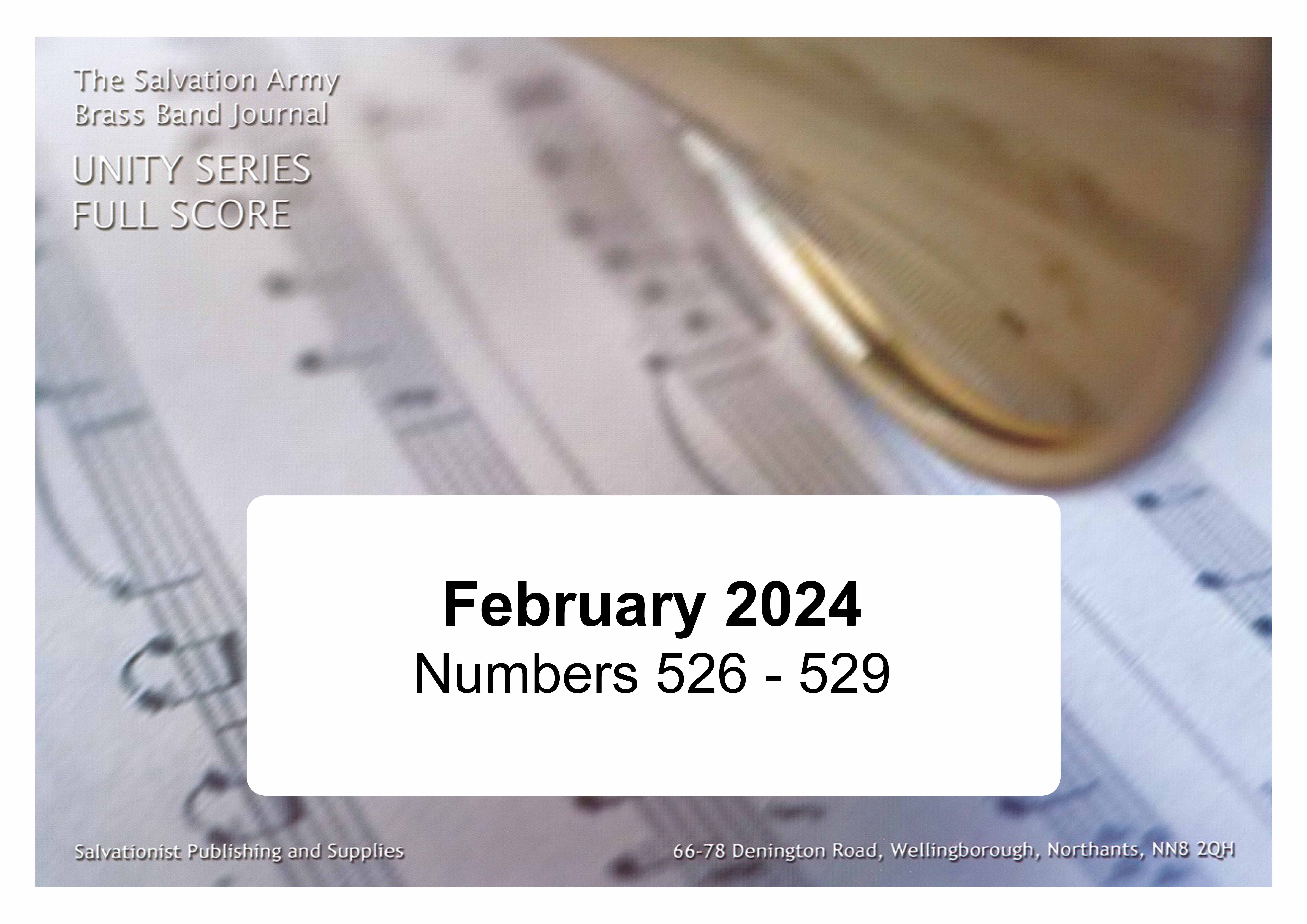
Unity Series Band Journal - Numbers 526 - 529, February 2024
526: March - Summit Cross (Beat Hari)This exciting and energetic work introduces a new contributor to our journals. Beat Hari helps lead the band at Frutigen Corps, Switzerland. This march was composed with the intention of featuring it in an open-air concert beside the ski slopes. Members of the corps regularly join the band, instigating conversations with skiing guests by distributing bible verses and sweets. The composer has named this march because of the many Swiss mountains that have crosses on their summit as symbols of God's protection over the population living in the valleys below. The march follows a traditional format with a solid rhythmic construction built from the bass line.527: Christ is all (Olaf Ritman)The Salvation Army song, Christ is all (S.A.S.B. 588) is one that is cherished by the composer. The verses by Herbert Booth are both powerful and vulnerable and the melody by William A. Williams really touches the soul.528: My all to follow (David Edmonds)This piece pays tribute to all who have accepted the call to become Salvation Army officers and envoys. Such a calling involves significant change and can be difficult when leaving their comfort zone or moving away from family.529: We shall win (Alan Williams)William Hodgson's song We're a band that shall conquer the foe (S.A.S.B. 990) is one of confidence and encouragement in our daily fight against evil, sin and injustice, both in the world and in our lives. As such, this music should be full of that same confidence.
Estimated dispatch 7-14 working days
-
 £34.95
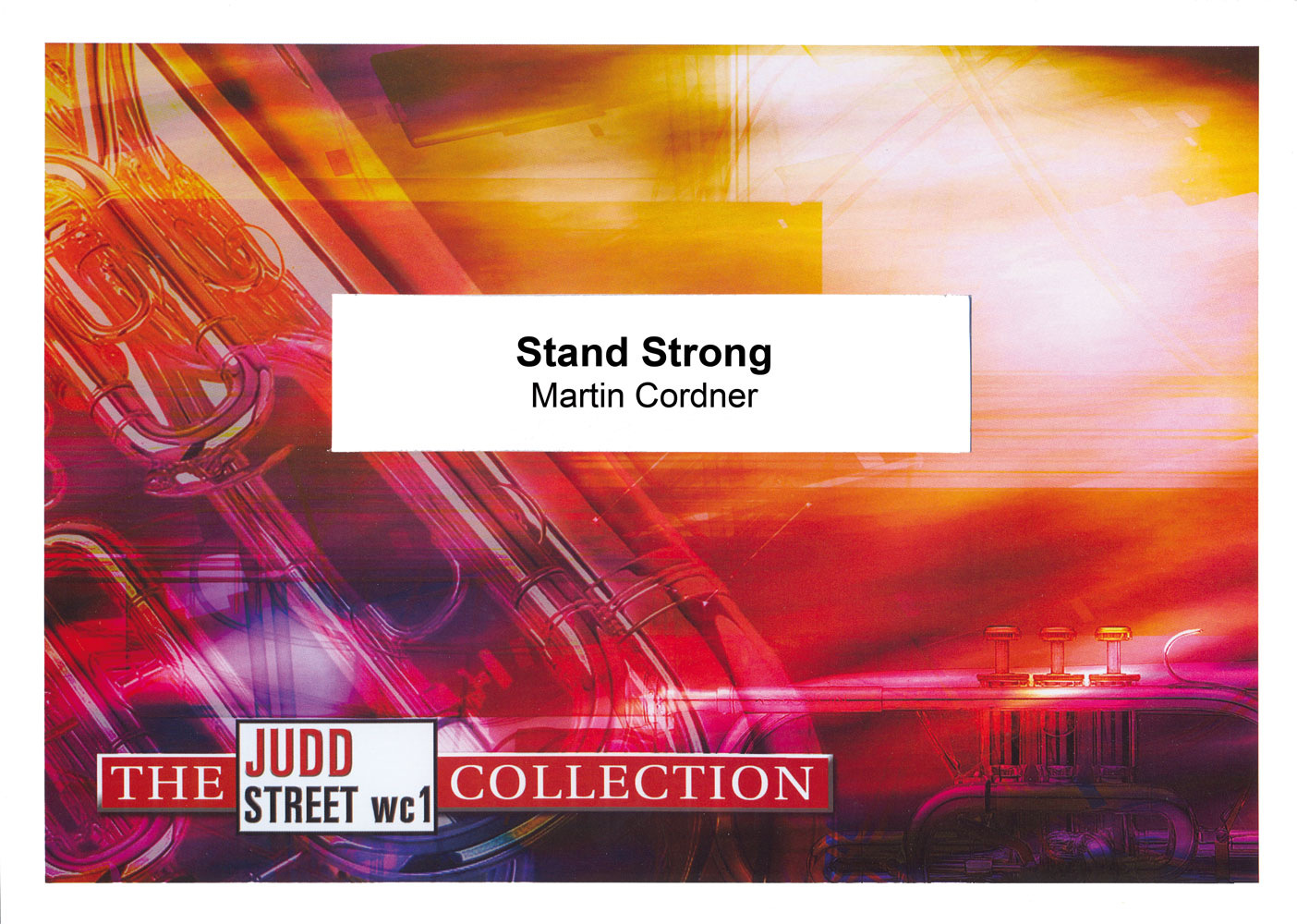
Judd: Stand Strong
This march was written for the North York Temple Band, Toronto, for their tour of the UK in 2012. Inspired by St Paul's words to the Ephesians to 'put on the full armour of God, so that when the day of evil comes, you may be able to stand your ground' (Ephesians 6:13 NIV), the music features three songs of warfare. The first song (S.A.S.B. 989) forms the introduction to the piece and is presented by Percussion and two muted Cornets. The image here is of a distant army approaching with banners aloft. The volume of the music increases as the army approaches:We'll shout aloud throughout the landThe praises of our God,We'll fight beneath our flag unfurled,Kept by his precious blood.
Estimated dispatch 7-14 working days
-
 £19.99
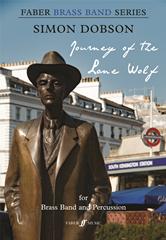
Journey of the Lone Wolf (Brass Band - Score Only)
Championship Section Test Piece for the 2016 National Finals of the British Brass Band Championship.The Lone Wolf of the title is the great Hungarian composer and folklorist Bla Bartok. Bartok's journey took him from the hills of the Balkans to the heart of the new world. His singular vision may have meant a life out in the cold, a life without warmth and love, a life without true happiness, a death mourned by a few in a strange land.The first of the three linked movements is capturing the Peasants' Song and follows the young Bartok and fellow composer Zoltan Kolday as they embark on Summertime adventures through the Hungarian countryside to collect and catalogue the astonishing variety of Gypsy and folk music heard in the Balkan hills. The arrival of WW1 plunges Bartok's beloved Hungary into chaos.Bartok was at times a cold man, aloof and lonely. The occasional moments of tenderness he showed are portrayed in Night Music. His brief but intense affairs speak of a love he could only long for. Jazz is my night music and here there are hints of what Bartok may have heard in the USA later in his life.Having been forced by the world's evils to leave his homeland of Hungary for America Bartok, the anti-fascist, felt isolated and angry. In the finale, Flight and Fight, we hear his longing for a simpler time of Gypsy folk dances as well as his maturity and depth as a composer finally exploring deeper colours and darker themes.Duration: 15.00
Estimated dispatch 7-14 working days
-
 £60.00
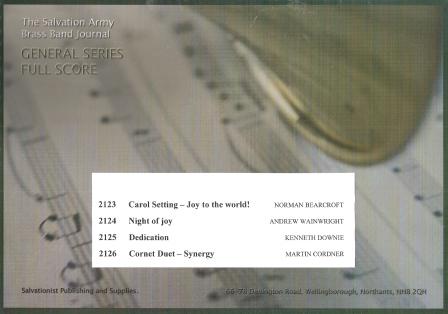
General Series Band Journal August 2013 Numbers 2123-2126
No. 2123 Carol Setting - Joy to the world! (Lieut. Colonel Norman Bearcroft)'Joy to the world' is a melody often attributed to Handel, but it is a bringing together of a couple of brief snippets of themes from his oratorio, 'Messiah'. These were put together by Lowell Mason to form the tune, 'Antioch', which we use for this carol. The carol has been arranged in majestic style by Lieut-Colonel Norman Bearcroft.No. 2124 Night of Joy (Andrew Wainwright)'Night of Joy' is based on a traditional Spanish Christmas song entitled 'Cantemos a Maria' ('Let's sing to Mary').No. 2125 Dedication (Dr Kenneth Downie)A setting of Colonel Brindley Boon's beautiful song of dedication, 'I dedicate myself to thee' (Musical Salvationist, November 1950).No. 2126 Cornet Duet - Synergy (Captain Martin Cordner)This piece celebrates the Biblical principle of believers working together in the Body of Christ and incorporates the song with words by Catherine Baird 'We're in Gods Army and we fight together with the composers own melody to Philip Paul Bliss's words 'Whosoever heareth! shout, shout the sound.
Estimated dispatch 7-14 working days
-
 £84.95
A Day in the Life of a Knight (Brass Band - Score and Parts)
Here we have a most descriptive piece of writing - a story through music. A fantastic 1st section test piece and championship concert work:The opening scene would depict standing on the battlements of a castle hearing the thundering hoofs of our brave Knight's horse miles in the distance. His arrival is expected, and his reputation is known across many lands. Today, he is to joust amongst mere mortal knights and compete for the hand of the fair (and local) Princess.He vanquishes all competitors and wins the day. The scene moves to evening and court where reception and dance is to be held for our winning knight. Both Knight and Princess become centre of attention during the dance. Their eyes only for each other.At last, the Knight has a chance to be a lone with his Princess as they steal away from the celebrations to a star lit rampart above the castle gardens, where the Knight declares his ever-lasting love and pledges his life and of honour to her. He asks her hand, meanwhile monks pray in the below chapel hoping for union. She say's yes. It is announced in court, then blown from the battlements.Day breaks; he is brought word of evil doings back in his own land. He leaves word to the Princess that he will be back soon to take her hand. The trouble back home was a rouse to get him away from the Princes so one of the vanquished, a dark knight in yesterdays joust, has summoned a dragon to kidnap the princess for his own.As the truth of the deception reaches our Knight he quickly returns to face the varlet that has taken his Lady. This time tis no joust, but a fight to the death with the dark knight and dragon. Our champion proves his best once again and wins the day and the hand of his Princess forever!- Phil LawrenceSuitable for 1st Section Bands and aboveDuration: 11.15
Estimated dispatch 7-14 working days
-
 £29.95
The Pilgrim Way (Brass Band - Score and Parts) - Ball, Eric
Attempting to recreate the atmosphere of mediaeval pilgrims, this suite comprises three separate, yet linked movements. I. Based on John Bunyan's poem 'He Who Would Valiant Be', the music reminds us of the words 'No foes shall stay his might, though he with giants fight, he will make good his right to be a pilgrim'. II. A transcription of the composer's own setting of 'God be in my head'. III. The original themes in this movement express feelings of joy and excitement of present day pilgrims journeying on the Christian path.
Estimated dispatch 7-14 working days
-
£14.95
The Pilgrim Way (Brass Band - Score only) - Ball, Eric
Attempting to recreate the atmosphere of mediaeval pilgrims, this suite comprises three separate, yet linked movements. I. Based on John Bunyan's poem 'He Who Would Valiant Be', the music reminds us of the words 'No foes shall stay his might, though he with giants fight, he will make good his right to be a pilgrim'. II. A transcription of the composer's own setting of 'God be in my head'. III. The original themes in this movement express feelings of joy and excitement of present day pilgrims journeying on the Christian path.
Estimated dispatch 7-14 working days
-
 £22.00
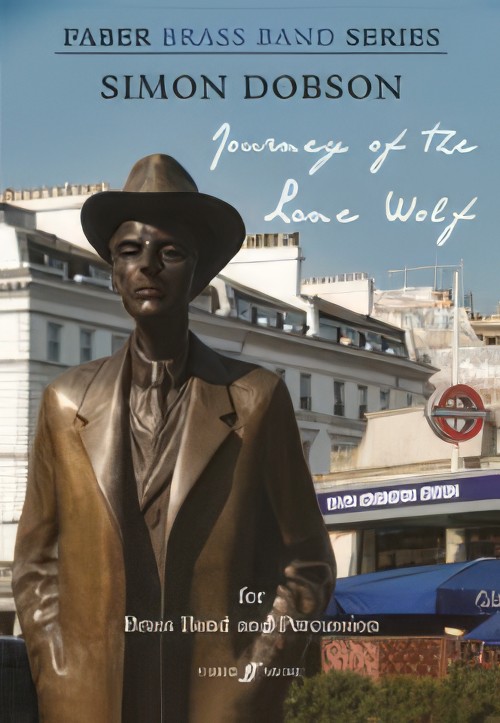
Journey of the Lone Wolf (Brass Band - Score only)
Championship Section Test Piece for the 2016 National Finals of the British Brass Band Championship.The Lone Wolf of the title is the great Hungarian composer and folklorist Bla Bartok. Bartok's journey took him from the hills of the Balkans to the heart of the new world. His singular vision may have meant a life out in the cold, a life without warmth and love, a life without true happiness, a death mourned by a few in a strange land.The first of the three linked movements is capturing the Peasants' Song and follows the young Bartok and fellow composer Zoltan Kolday as they embark on Summertime adventures through the Hungarian countryside to collect and catalogue the astonishing variety of Gypsy and folk music heard in the Balkan hills. The arrival of WW1 plunges Bartok's beloved Hungary into chaos.Bartok was at times a cold man, aloof and lonely. The occasional moments of tenderness he showed are portrayed in Night Music. His brief but intense affairs speak of a love he could only long for. Jazz is my night music and here there are hints of what Bartok may have heard in the USA later in his life.Having been forced by the world's evils to leave his homeland of Hungary for America Bartok, the anti-fascist, felt isolated and angry. In the finale, Flight and Fight, we hear his longing for a simpler time of Gypsy folk dances as well as his maturity and depth as a composer finally exploring deeper colours and darker themes.Duration: 15.00
Estimated dispatch 7-14 working days
 View Music