
Results
-
 £78.20
Dual - Andrew Pearce
Dual (for euphoniums and band) was commissioned by Robbert Vos and Anteun Hoesen of Altena Brass, the Netherlands. Pearce strived to write a fun, melodic and challenging piece that showed off the vast range and virtuosity of these fine players. The octatonic scale forms the harmonic basis for much of the piece, which is a musical competition or race between our mighty Euphonium soloists! Rapidly ascending and descending atonal lines create constant drama for both soloists and band, culminating in a more expressive and tonal ending.
Estimated dispatch 5-14 working days
-
 £127.30
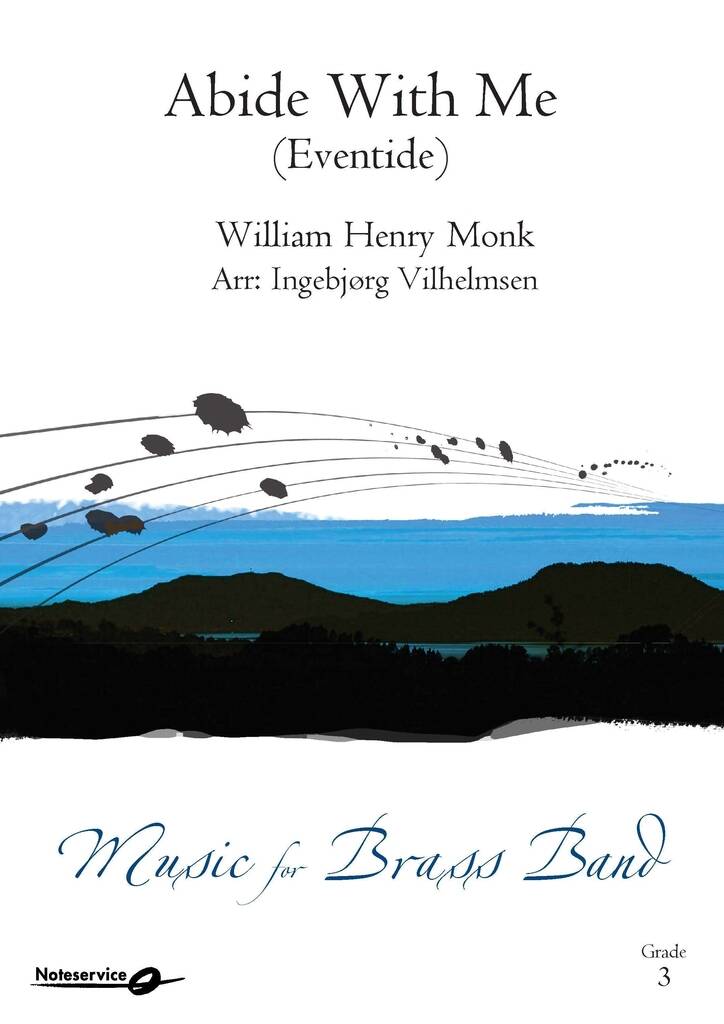
Abide With Me - William Henry Monk - Ingebjørg Vilhelmsen
This arrangement of "Abide with me" slightly differs from the traditional representation of the hymn. The piece has a majestic introduction based on elements from and around the hymn. Furthermore, the theme is presented in a more familiar way, first in low brass and then tutti. The ending then reverts to the expression from the opening. This arrangement may fit in many concert programs, but is perhaps ideally suited for church concerts.
Estimated dispatch 5-14 working days
-
 £115.60
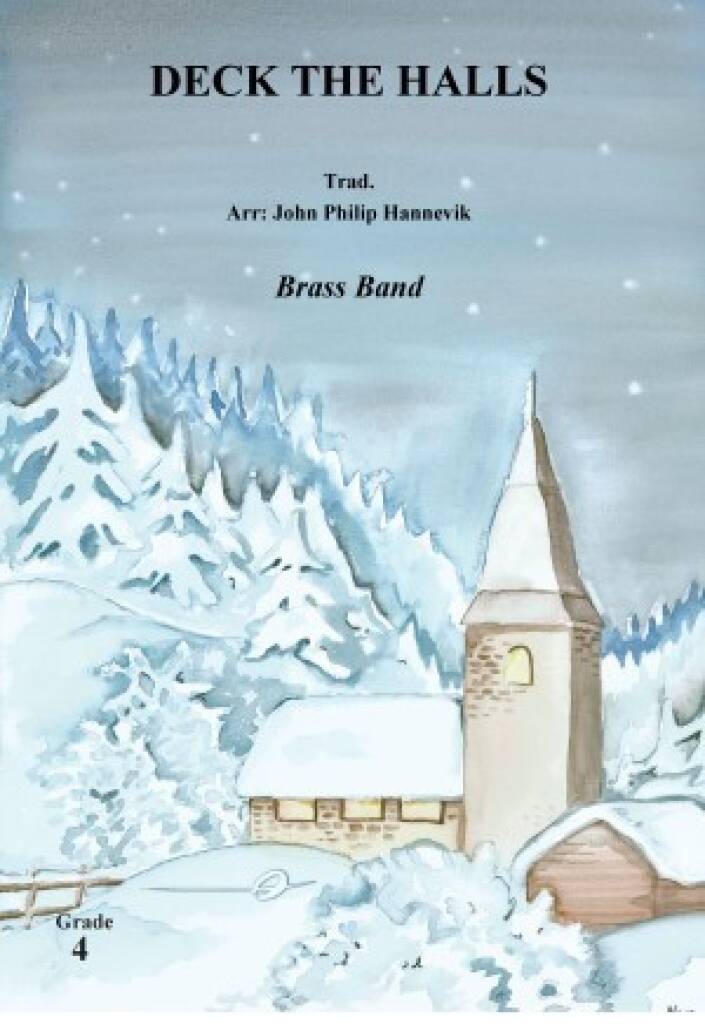
Deck the Halls - John Philip Hannevik
The original Welsh song Nos galan dating back to the sixteenth century, has become an international Christmas carol with the English lyric Deck the hall with boughs of holly.The song does not offer much in terms of variation, but I have tried to construct a short piece where one can see that the song still offers itself to a wide array of stylistical treatments.The opening is almost like a Christmas Overture, before it wanders in to a renaissance-like style.The middle section offers a much more lush and lyrical rubato treatment, with lots of color and thick harmonization.The end then turns the tempo even more up than at the start of the piece, and brings us through a big band ending with long soaring lines.- John Philip Hannevik -
Estimated dispatch 5-14 working days
-
 £94.95
Of Men and Mountains - Edward Gregson
Of Men and Mountains was commissioned by the Netherlands Brass Band Championships for their tenth anniversary contest in Drachten in December 1990. In July the previous year, Edward Gregson and his wife took the Trans Canadian Railway from Toronto to Vancouver. The journey through the Rocky Mountains was the starting point for Of Men and Mountains. Gregson writes that: 'its high peaks and shafts of sunlight breaking through the clouds, its canyons and ferocious rapids made me understand a little more about the majesty of nature and the fragility of humanity. The eternal struggle between man and nature was personified in the building of this incredible railway... hence my title (after Blake).' The work is dedicated to the memory of Eric Ball, who died shortly before the writing of the work was commenced. Of Men and Mountains is in one continuous movement with a duration of approximately 17 minutes. Its form is difficult to describe because of its motivic and accumulative nature, but it is essentially a symphonic tone poem in search of a theme, which eventually comes in its final and complete state in the majestic ending after an ever-increasing paced scherzo. Of Men and Mountains has been selected as the test pieces for the 2023 National Brass Championships of Great Britain at the Albert Hall.
Estimated dispatch 5-14 working days
-
 £54.99
My Way - Thijs Oud
The evergreen My Way, originally a French chanson (Comme d'Habitude), was written by Jacques Revaux and Gillies Thibault and first released by Claude Francois in 1967. Paul Anka wrote the English lyrics which were used by Frank Sinatra who made it in to the American charts with his world famous interpretation in 1969. Since then the song has been covered by a variety of pop stars, including Elvis Presley. This arrangement is based on the Elvis version and within it the chorus appears in a swinging blues style. This popular song will be ideal for that spectacular ending to your concert.
Estimated dispatch 5-14 working days
-
 £118.99
Sinfonietta no. 1 - Johan de Meij
Sinfonietta No. 1, written for brass band, was commissioned by the Dutch National Championships 2011 in Groningen. It also served as the test piece for the Swiss National Championships 2011 in Montreux, Switzerland. Unlike most of Johan de Meij's compositions, Sinfonietta No. 1 is an abstract, non-programmatic work. It consists of three movements, in which the thematic material of the opening measures - an upward fifth jump - returns in various shapes and forms throughout the piece. The slow middle section features solo passages by cello, English horn and bassoon, all starting with the same fifth jump. The final movement presents an Elgar-like march theme,interspersed with quotes from the second movement, and ending with the opening theme of movement I.
Estimated dispatch 5-14 working days
-
 £118.99
The Graces of Love - Oliver Waespi
The Graces of Love (Le Gratie d'Amore) is the title of a book published in 1602 by Cesare Negri, the famous dance master of the Milan court in the Renaissance.It contains numerous dance tunes and precise descriptions of courtly dances. It also includes the tune Il bianco fior (The White Flower) on which the first movement of the present piece is based. A vigorous dance in three-four, it leads to an acceleration and a sudden shift to an even meter towards the end.The second movement, calm and contemplative in character, features the tune Vaghe bellezze ... (Veiled Beauty ...). Widely spacedmelodic parts surround two solos during which the tune is varied and developed. Finally, the third movement contains a saltarello with a hypnotic rhythm, ending the work with flair and gusto.
Estimated dispatch 5-14 working days
-
 £76.99
Showtime ! - Sven Van Calster
In this piece, which consists of four contrasting sections in which doubling of parts make it suitable for a wide range of bands. The first part is a kind of musical appetizer which has a heavy disco beat while the second part is a romantic ballad. The third part is inspired by an Irish dance and the last part is a variation of the first part with a spectacular ending. This work makes an ideal challenge for dynamic and young bands.
Estimated dispatch 5-14 working days
-
 £60.99
Signature - Jan Van der Roost
This opener was written for the 10th anniversary of Brass Band Midden Brabant (BBMB), the composer's own band. A soft and lyrical middle section follows on the powerful opening fanfare which, if the technical equipment is available, can be used as background music for a spoken text or presentation. The finale is distinctly rhythmical in character, and develops into a somewhat unusual ending. Here, the composer piles ten different notes on top of each other, representing the BBMB anniversary in a musical way. At a later date the composer made two new versions of Signature, namely for wind band and fanfare.
Estimated dispatch 5-14 working days
-
 £60.99
Minerva - Jan Van der Roost
Minerva by Jan Van der Roost was composed on the commission of the German "Musikverein Braunshausen" on the occasion of the 75th anniversary of the orchestra. The composition, first performed on September 17, 1999, is not a street march but a concert march, just like Mercury and Arsenal. The use and variation of different rhythmic patterns gives the first part of this march a distinctly dynamic character. Two main themes are presented in several instrumental combinations. The theme from the trio, on the other hand, is characterized by a broad melodic approach using large intervals. This theme, wreathed by high woodwinds, is heard one more time after a contrasting newpart, but now in a somewhat slower tempo. The counterpoint in this part refers to the first part of the march. The brilliant ending suits a festive anniversary march!
Estimated dispatch 5-14 working days
 View Music