
Results
-
 £56.00
Duet from Don Giovanni (Vocal Duet (Soprano/Baritone) with Brass Band - Score and Parts - Mozart, Wolfgang Amadeus - Lorriman, Howard
La Ci Darem La ManoDuration: 3.30
Estimated dispatch 7-14 working days
-
 £56.00
Duet from Magic Flute (Vocal Duet (Soprano/Baritone) with Brass Band - Score and Parts) - Mozart, Wolfgang Amadeus - Lorriman, Howard
Bei Mannern, Welche Liebe FuhlenDuration: 3.30
Estimated dispatch 7-14 working days
-
 £124.95
Diary of a Madman (Twenty-Fourth February) (Brass Band - Score and Parts) - Clarke, Nigel
From the beginning of history, warlords, emperors and dictators have risen up, some benign but many of them a scourge on humanity. Names that resonate to this day include Julius Caesar, Caligula, Genghis Khan, Ivan IV (The Terrible), Attila the Hun, Vlad IV (The Impaler), Hitler, Stalin, Mao Zedong, Pol Pot, all of whom were responsible for wanton destruction and the torture and death of millions of victims, either citizens of invaded countries and territories and or indeed, their own peoples.Diary of a Madman starts with a light-hearted march that gives the impression of toy tin soldiers parading in a brightly-coloured ceremonial pageant from a fairy tale, conveying peace and innocence. This spectacle is abruptly interrupted by a 'shock and awe' fanfare-like march, symbolising aggression and war. This theme grinds slowly to a halt, and an atmosphere of introspection, sadness and despair takes over. Rising above the smoky theatre of war, we then hear a distant cornet give a rendition of the Ukrainian Nation Anthem (The glory and freedom of Ukraine has not yet perished. Luck will still smile on us brother-Ukrainians). The solo cornet soon enters a fragile duet with a second cornet accompanied by dark undertones. One by one, we hear short shards of aggressive fanfare-like figures from various instruments in the band. The mood breaks - we hear strident fortissimo whole-tone scales representing pealing church bells, warning of danger. In contrast, we also hear pianissimo whole-tone scales announcing that the enemy's troops are falling back. A counter-offensive soon takes centre stage, and battles and skirmishes are heard, with short quotations from Mussorgsky's `Great Gates of Kyiv' symbolising the defenders' heroic struggle.All sides are victims of the Dictator's ambition! The slow central section offer us moments of melancholic beauty and utilises Henry Purcell's `When I am laid in earth' (`Dido's Lament' from Dido and Aeneas 1688). This music represents the loss of homes, dignity and loved ones. There are occasional hints at better times as the theme of the parading toy tin soldiers is heard from afar, like a distant memory.To announce the final push, we hear a church bell strike and an air raid siren signalling a ferocious musical counter-attack. After one final rendition of the Purcell theme, Diary of a Madman closes with a mood of triumph over tyranny.- Nigel Clarke
Estimated dispatch 7-14 working days
-
£57.95
Diary of a Madman (Twenty-Fourth February) (Brass Band - Score only) - Clarke, Nigel
From the beginning of history, warlords, emperors and dictators have risen up, some benign but many of them a scourge on humanity. Names that resonate to this day include Julius Caesar, Caligula, Genghis Khan, Ivan IV (The Terrible), Attila the Hun, Vlad IV (The Impaler), Hitler, Stalin, Mao Zedong, Pol Pot, all of whom were responsible for wanton destruction and the torture and death of millions of victims, either citizens of invaded countries and territories and or indeed, their own peoples.Diary of a Madman starts with a light-hearted march that gives the impression of toy tin soldiers parading in a brightly-coloured ceremonial pageant from a fairy tale, conveying peace and innocence. This spectacle is abruptly interrupted by a 'shock and awe' fanfare-like march, symbolising aggression and war. This theme grinds slowly to a halt, and an atmosphere of introspection, sadness and despair takes over. Rising above the smoky theatre of war, we then hear a distant cornet give a rendition of the Ukrainian Nation Anthem (The glory and freedom of Ukraine has not yet perished. Luck will still smile on us brother-Ukrainians). The solo cornet soon enters a fragile duet with a second cornet accompanied by dark undertones. One by one, we hear short shards of aggressive fanfare-like figures from various instruments in the band. The mood breaks - we hear strident fortissimo whole-tone scales representing pealing church bells, warning of danger. In contrast, we also hear pianissimo whole-tone scales announcing that the enemy's troops are falling back. A counter-offensive soon takes centre stage, and battles and skirmishes are heard, with short quotations from Mussorgsky's `Great Gates of Kyiv' symbolising the defenders' heroic struggle.All sides are victims of the Dictator's ambition! The slow central section offer us moments of melancholic beauty and utilises Henry Purcell's `When I am laid in earth' (`Dido's Lament' from Dido and Aeneas 1688). This music represents the loss of homes, dignity and loved ones. There are occasional hints at better times as the theme of the parading toy tin soldiers is heard from afar, like a distant memory.To announce the final push, we hear a church bell strike and an air raid siren signalling a ferocious musical counter-attack. After one final rendition of the Purcell theme, Diary of a Madman closes with a mood of triumph over tyranny.- Nigel Clarke
Estimated dispatch 7-14 working days
-
 £25.95
Song of Tranquillity (Cornet Duet or Bb Solo with Brass Band - Score and Parts) - Wiffin, Rob
A reflective piece featuring two cornets and band but also playable as a solo for cornet, trombone or euphonium.Song of Tranquillity was written just after a close friend of the composer died suddenly. It was cathartically written to reflect the release from pain to peace. It fits the expressive style and power of the solo brass instruments.Duration: 3.45
Estimated dispatch 7-14 working days
-
 £59.70
Las Chiapanecas (Cornet Duet or Trio with Brass Band - Score and Parts) - Smith, Sandy
Duration: 2.30
Estimated dispatch 7-14 working days
-
 £32.95
Mac and Mac (Xylophone or Cornet Duet or Solo with Brass Band Set) - Alford, Kenneth J. - Grant, Gregor J.
This set includes a solo cornet conductor part
Estimated dispatch 7-14 working days
-
 £105.20
Under manen (Fra Den unge Fleksnes) - Christian Engebretsen - Bjorn Morten Kjaernes
This has become a Christmas song that has its roots in a love duet between the young Fleksnes and classmate Victoria. The class will be competing with a duet in a song competition. The text gives hope of love and links it to Christmas traditions. "A Dream of Christmas, About Love" is the first line of the text. "The Young Fleksnes" runned as advent calender on TV Norge in 2010. This arrangement feature an flugelhorn soloist and a euphonium soloist. Please be aware of the dynamics between soloists and accompaniment. Adjust the dynamics according to the musicians in the ensemble.
Estimated dispatch 5-14 working days
-
 £105.20
Our Last Summer - Benny Andersson - Bjørn Morten Kjærnes
An exciting arrangement where almost all players have a bit of the melody line. There are many opportunities to give individual musicians soloistic challenges. Any bandmember should find something interesting in this piece. It will be possible to add vocals to the arrangement. A lovely melody with great expressions.Our Last Summer" is a song by the Swedish pop group ABBA from their seventh studio album, "Super Trouper," released in 1980. The song is indeed featured in the musical "Mamma Mia!", a little bit shortened and with small changes in the lyrics. The musical premiered in London's West End in 1999 and is a duet performed by the characters Harry Bright and Donna Sheridan, reflecting on their past romance during a summer spent in Paris.The song is primarily sung by Bjorn Ulvaeus, with backing vocals provided by Agnetha Faltskog and Anni-Frid Lyngstad, the female members of ABBA. Their harmonies contribute to the song's nostalgic and wistful atmosphere. The lyrics vividly describe the memories of the summer spent together, including scenes of walking along the Seine River in Paris and listening to French songs. The song also touches on the passage of time and the realization that the summer romance has ended.While not released as an official single in most countries, "Our Last Summer" still received considerable airplay and became a fan favorite. It charted in some European countries and has remained popular among ABBA fans over the years.
Estimated dispatch 5-14 working days
-
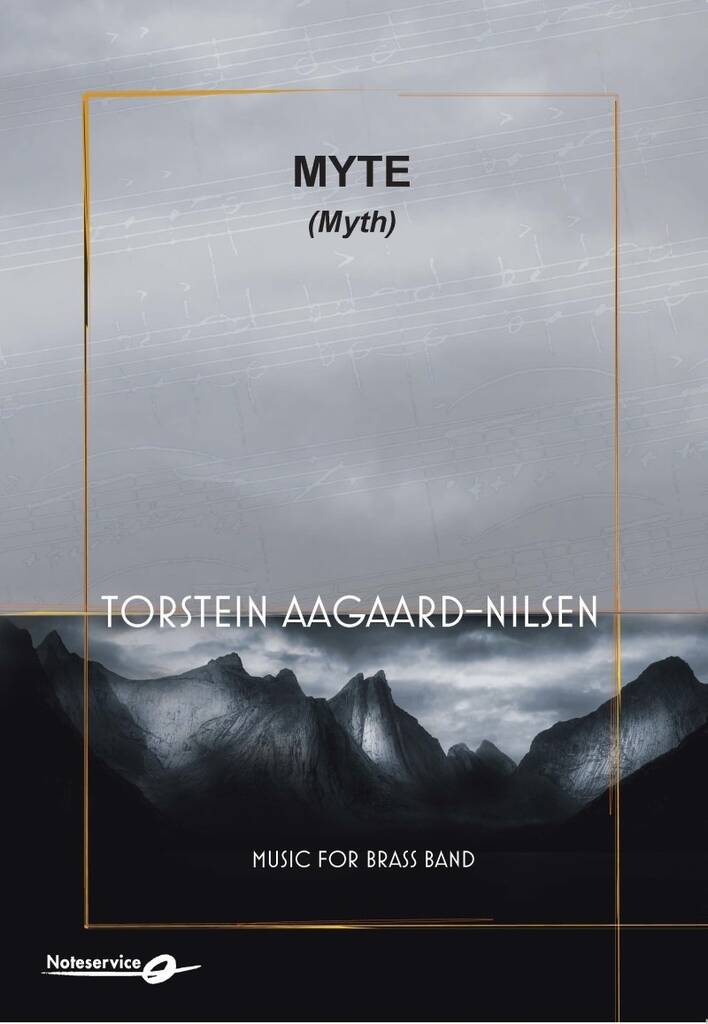 £228.70
Myte - Myth - Torstein Aagaard-Nilsen
Commissioned by Radoy Brass for their 20 years anniversary.This version was first performed by Manger Skulemusikklag in 2005.The Work is devided into Five Scenes:1. Sverdet (The Sword) 3:452. Advarsel - fra en vis mann (Warning - from a Wise Man) 2:303. Dragen (The Dragon) 3:004. Advarsel II - fra syngende fugler (Warning II - from singing birds) 1:355. Gull - forbannelsen (Gold - The Curse) 2:50Total durata 13:30This work is based on five scenes from the tale about "Sigurd Favnesbane" (Sigurd the dragonslayer). Moods and atmospheres in the piece represent my way of retelling the old myth.1. The SwordThe dwarf blacksmith Regin is hammering and sharpening the edges of the magical sword Gram. After three attempts the sword is finally sharp enough to kill a dragon. 2. Warning - from a Wise manRichard Wagners opera Sigfried is based on the same story. In the opera the hero get warned by a wise man. He tells the secret of how to survive an attack of the dragon by hiding in a hole in the pathway and then kill the dragon with the sword as thedragon passes on its way to the river to drink water.3. DragonThe Dragon (Favne) guards a fantastic treasure, but he is also the brother of the blacksmith Regin. Favne get killed and his blood flows slowly while he laments (trombone/bass trombone).4. Warning II - from singing birdsWhile frying the heart, Sigurd burns his thumb and put it into his mouth to cool it down. Then he swallow a drop of fresh magic dragon blood which transfers the ability to understand the birdlanguage. The birds sing warnings to Sigurd telling himthat Regin will betray him and later kill him. Sigurd then kills Regin instead.5. Gold - the CurseSigurd takes the gold treasure and escapes on the horseback of Grane. But his robbery of the gold lead him into trouble: The gold is banned and a curse will hit everyone whotakes it...Myth is a programmatic work where the story is quite clearly illustrated throughout the piece:In the first movement you can hear the blacksmith working with hammer on ambolt while the heat is intense from the glows. The dwarf has got his own theme i lower brass (bar 4-5). The hero Sigurd has his own identifying chord (2 bars before F). Thechord is also a symbol of the sword.In the second movement the warning from the wise man is expressed in the lyric bass line.The airblow in instruments illustrate the dragon Favne on his way out of his cave, and later the blood flows slowly. The dragon takes his last deep breath after a painful duet in trombones. The birds sing their motifs (lightly, but not cheerfulthough), until Sigurd cuts the head off Regin and it hits the ground.The last movement describes the atmosphere andstate of mind as the curse infects the obsessed thief.
Estimated dispatch 5-14 working days
 View Music