
Results
-
 £62.00
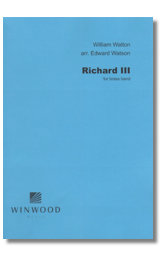
Richard III (Score only) - William Walton
It takes a special ability to compose film scores which serve the images perfectly yet translate into first class concert music. William Walton was such a talent as the continuing popularity of his brilliantly evocative film music shows. This suite presents a rich, vivid musical tapestry with all the drama of the original captured to perfection. Winwood Music are delighted to bring this music from Laurence Olivier's classic film to the brass band world in a fabulous arrangement by Edward Watson - so idiomatic that you'll think this is the original version! There are seven movements: 1. Prelude 2. Fanfare and Processional 3. Sound Drums and Trumpets & Recessional 4. Elegy 5. The Princes in the Tower 6. The Battle of Bosworth Field 7. Death of Richard and Finale
Estimated dispatch 7-9 working days
-
 £74.00
Richard III (Parts only) - William Walton
It takes a special ability to compose film scores which serve the images perfectly yet translate into first class concert music. William Walton was such a talent as the continuing popularity of his brilliantly evocative film music shows. This suite presents a rich, vivid musical tapestry with all the drama of the original captured to perfection. Winwood Music are delighted to bring this music from Laurence Olivier's classic film to the brass band world in a fabulous arrangement by Edward Watson - so idiomatic that you'll think this is the original version! There are seven movements: 1. Prelude 2. Fanfare and Processional 3. Sound Drums and Trumpets & Recessional 4. Elegy 5. The Princes in the Tower 6. The Battle of Bosworth Field 7. Death of Richard and Finale
Estimated dispatch 7-9 working days
-
£45.00
Cocoon - Horner, J - Barry, D
A major box-office success of 1985 directed by Ron Howard. Composed by James Horner Cocoon is a lyrical, tender, intimate work which addresses a vast spectrum of emotions, examining such topics as death and mortality, friendship, and familial relationships, as well as the joy of regained youth.
In Stock: Estimated dispatch 1-3 working days
-
£45.00
Liebestod - Wagner, R - Harper, P
Philip Harper has arranged the closing moments of the famous 'Love Death' from Wagner's opera Tristan and Isolde which builds to an immense climax before subsiding into tranquility and calm to close.Championship sectionDuration 4 mins 30 secs
In Stock: Estimated dispatch 1-3 working days
-
 £59.95
Aftershock (Brass Band - Score and Parts)
In this piece, the term "aftershock" serves as a metaphor for the Christian Church: commissioned by Jesus to carry forward the impact of his ministry and message. The Church is the spiritual aftershock of Christ's life, death, and resurrection - reverberating through history and into the present.Musically, the piece is constructed in three movements and built around motifs that pulse, echo, and resonate, symbolising the ongoing influence of Christ through his Church. Several well-known Christian songs are woven into its fabric, each contributing to the narrative of mission and worship. Build your Kingdom here (Rend Collective) affirms the Church's identity as "the hope on earth," while Major Leonard Ballantine's And you will be my witnesses (M.S. 1992-10) recalls Jesus' call to spread the gospel.The reflective central section features Matt Redman's I will offer up my life in spirit and truth, expressing personal devotion of a believer seeking to serive within the global Church.The finale draws on a traditional Salvation Army song by William Drake Pennick (S.A.S.B. 937), urging believers to proclaim the gospel far and wide: Tell the world, O tell the world!Make salvation's story heard;In the highways, in the byways,And in lands beyond the sea,do some witnessing for JesusWheresoever you may be.
Estimated dispatch 7-14 working days
-
 £127.95
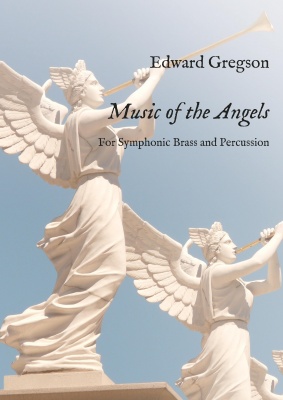
Music of the Angels (Symphonic Brass Ensemble - Score and Parts)
In 1998 Gregson was commissioned by conductor Martyn Brabbins to write a short concert opener with choir to mark his debut as Music Director of the Huddersfield Choral Society. Entitled ...and the seven trumpets... this ten minute flourish is founded on a verse from Chapter 8 of the Revelation To John (The Apocalypse), the last book in the Bible: 'and I saw the seven Angels which stood before God: and to them were given seven trumpets'. The performance employed the full power of the Huddersfield Town Hall organ and the brass section of the BBC Philharmonic, including seven trumpets and four horns placed strategically around hall.The following year, when Gregson received a commission from the Cheshire-based Foden's Brass Band (conducted at that time by Nicholas Childs) for a work to mark its centenary in 2000, he turned to the first portion of ...and the seven trumpets... as the basis for an ambitious celebratory work entitled The Trumpets of the Angels. "The opportunity to create an extended work which would break out of the brass band mould was an important milestone for me," the composer says. In 2015 he was asked by Nicholas Childs to create a new performing edition without organ for the Black Dyke Band. This received its first performance in April 2016 at the European Brass Band Festival in Lille. In 2018, Gregson revisited the music for a third time, returning the opening fanfares to orchestral brass and transforming substantial portions of the 'Black Dyke' version to create Music of the Angels, a dramatic canvas for symphonic brass and percussion.An array of bells and gongs offer an unmistakable key to the source of Gregson's inspiration. Inscribed In tribute to Olivier Messiaen, the work's principal material and its sound world, but crucially not the underlying musical processes, are influenced by Messiaen's masterpiece for wind and percussion, Et exspecto ressurectionem mortuorum (1964). Music of the Angels begins with braying of horns suggestive of the start of an ancient ritual. Six 'angel' trumpeters, set behind the ensemble, answer in sequence, with the evocative sound of tam-tams creating the Messiaen-like aura. Once the horns have reached the performing space, four of the trumpeters deliver highly contrasting fanfare cadenzas. At the climax of this episode, the individual fanfares are presented together, as if, perhaps, to reflect the Biblical writer's apocalyptic visions of hail, fire, seas of blood and the cataclysmic destruction of man and beast.This powerful vision of death and destruction gives way to a prayerful lament, re-imagining a sung Kyrie Eleison from the 'Black Dyke' edition, with flugel horn and euphonium obligati. The hushed atmosphere is broken by tenor and side drums, and trumpets five and six, which gallop away like the Horsemen of the Apocalypse. In the biblical account their steeds had 'heads like lions with fire and smoke and sulphur issuing from their mouths'.As the reverberation of a dramatic climax dies we hear the entry of the seventh trumpet, from 'on high', blazing forth with a version of the main that extends across the entire compass of the instrument - almost three octaves. Supported by a 'holy trinity' of gongs, an 'epic' final cadenza introduces new material which is further developed in a frenetic final section. This is announced by two sets of timpani, to the left and right. Braying brass (euphoniums and horns) once more adds an air of foreboding. As the music builds towards a magisterial conclusion, the Messiaen-inspired tritones of the principal motif are smoothed out into perfect 5ths and combined with the earlier material in a full-voiced chorale, over which the seventh trumpet blazes in triumph.- Programme note by Paul HindmarshScored for1 Trumpet in E flat (Trumpet 5)6 Trumpets in B flat (Trumpet 4 doubling Flugel Horn)4 Horns in F3 Tenor Trombones1 Bass TromboneEuphonium2 Tubas2 Timpani (Percussion 3 doubles Timpani 2)Percussion (3 players): 3 Tam-tams, 3 Suspended Cymbals, Bass Drum, Tenor Drum, Snare Drum, Tubular Bells.Duration: 16.00
Estimated dispatch 7-14 working days
-
 £14.95
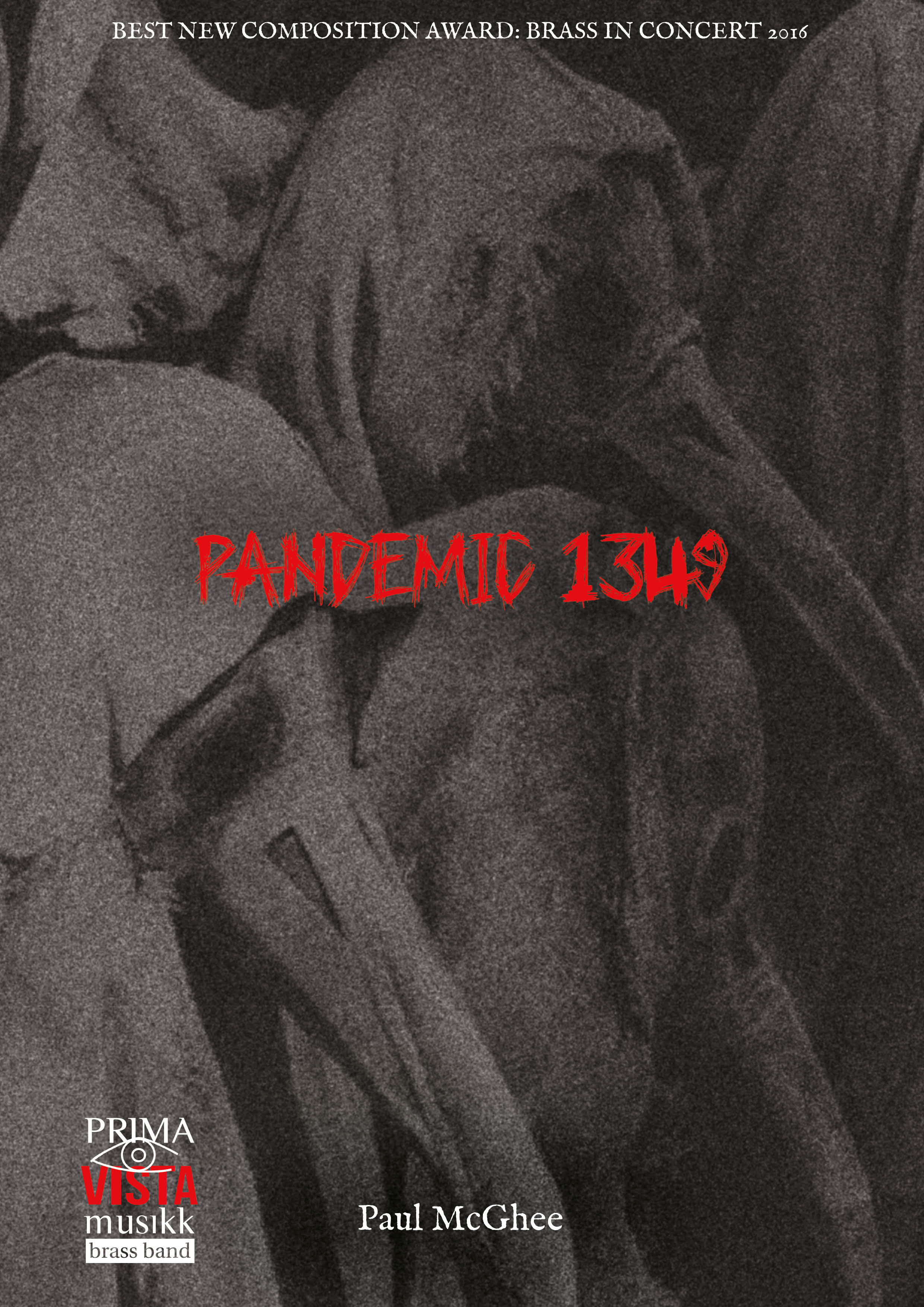
Pandemic 1342 (Score Only)
'Pandemic 1349' was written during September and October 2016 and received its premiere on Sunday 20 th November at the 40 th Brass in Concert Championships at the Sage, Gateshead where it received the best new composition/arrangement award.'Pandemic 1349' is a concert work that aims to capture the atmosphere of fear and terror as the plague spreads throughout the city. The cries and screams get louder and reach a chaotic climax, before a calmer and reflective passage takes over - although the chaos and fear never totally leaves as the melodic material is played against the backdrop of what has gone before.London lost almost half of its population during the Black Death, making this one of the single most devastating events in the city's dark history. The outbreak not only shaped the number of inhabitants in London but also changed their mind-sets with many turning to religion - even the English language was to be forever altered.
Estimated dispatch 7-14 working days
-
 £34.95
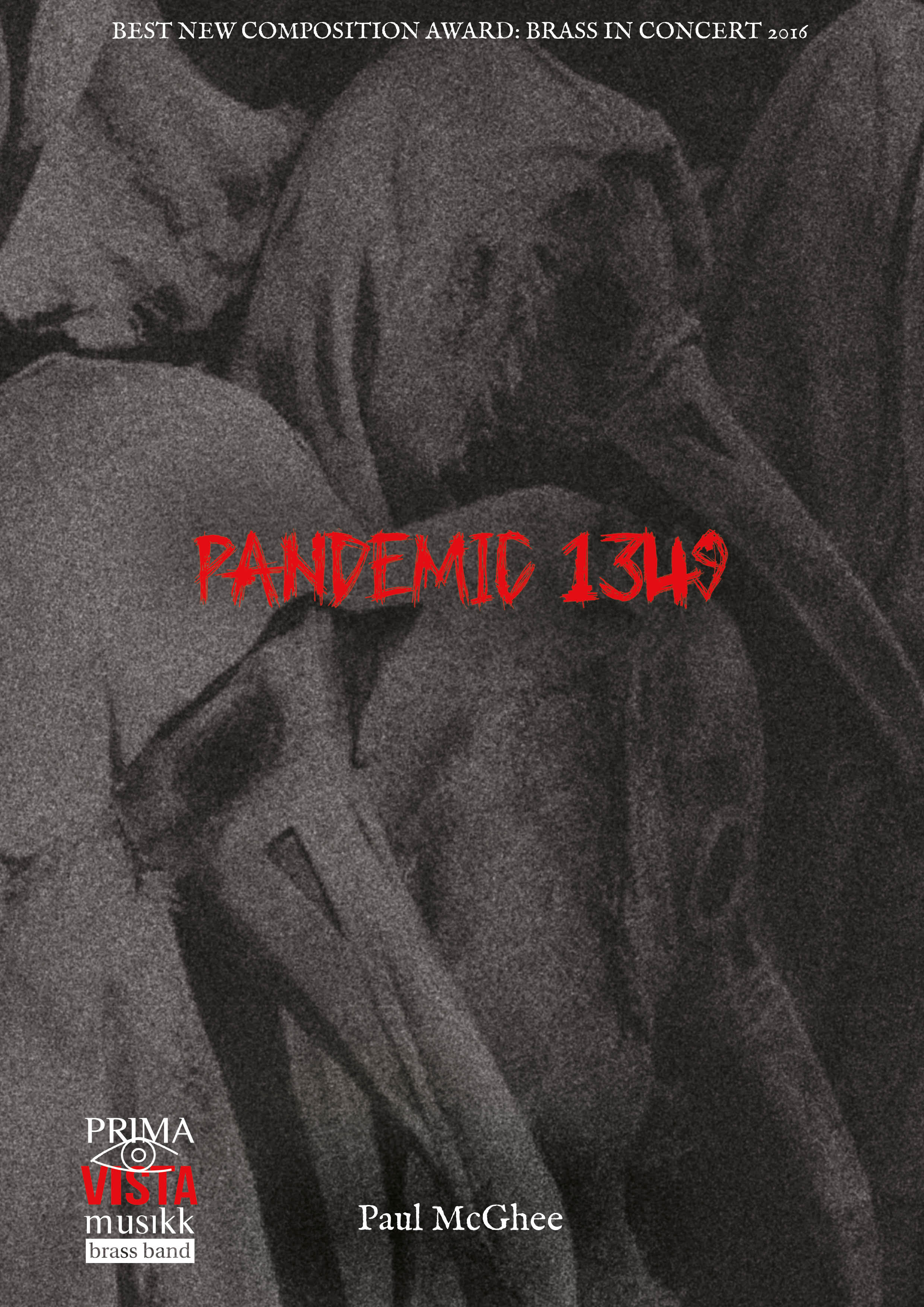
Pandemic 1349 (Brass Band - Score and Parts)
'Pandemic 1349' was written during September and October 2016 and received its premiere on Sunday 20 th November at the 40 th Brass in Concert Championships at the Sage, Gateshead where it received the best new composition/arrangement award.'Pandemic 1349' is a concert work that aims to capture the atmosphere of fear and terror as the plague spreads throughout the city. The cries and screams get louder and reach a chaotic climax, before a calmer and reflective passage takes over - although the chaos and fear never totally leaves as the melodic material is played against the backdrop of what has gone before.London lost almost half of its population during the Black Death, making this one of the single most devastating events in the city's dark history. The outbreak not only shaped the number of inhabitants in London but also changed their mind-sets with many turning to religion - even the English language was to be forever altered.
Estimated dispatch 7-14 working days
-
 £38.95
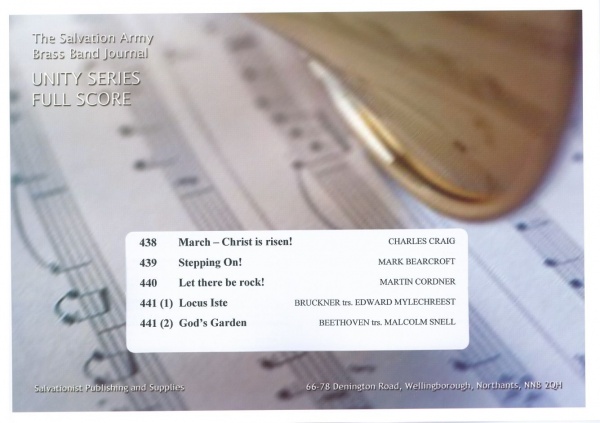
Unity Series Band Journal February 2016 Number 438 - 441
No. 438 March - Christ is risen! (Charles Craig)This march, as its title implies, was written for Easter morning celebrations. The opening two bars states 'Up from the grave he arose' (T.B. 905). At section B, the chorus of Graham Kendrick's song, In the tomb so cold is presented. The words associated with this are:Christ is risen! Christ is risen!Death has been conquered.Christ is risen! Christ is risen!He shall reign for ever.
Estimated dispatch 7-14 working days
-
 £45.00
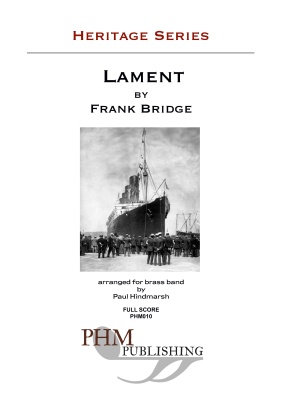
Lament (Brass Band - Score and Parts)
The English composer Frank Bridge (1879 - 1941) did not take an active part in the First World War. However, he was devastated by the slaughter on the western and the eastern fronts, especially the loss of so many of his musicians friends and colleagues. Writing in 1963, his former pupil Benjamin Britten confessed that 'a lot of my feelings about the First World War which people seemed to see in the War Requiem came from Bridge. He had written a piano sonata in memory of a friend killed in France and though he didn't encourage me to take a stand for the sake of a stand, he did make me argue and argue and argue. His own pacifism was not aggressive, but typically gentle'.Bridge composed this Lament for string orchestra on 14 June 1915, in memory of Catherine Crompton, who drowned when the Cunard liner Lusitania was torpedoed by a German submarine on 7 May, 1915. According to figures researched by Liverpool historian Kevin Roach (www.lusitania.net), 1201 men, women and children lost their lives out of the 1962 people aboard. Ninety-four children died, including Catherine, her twin brother Paul and four other siblings. Paul Crompton, Snr. (44), a British businessman working in Philadelphia, his wife Gladys (40) and the family nanny were also drowned. How Bridge's dedication came about is uncertain. The music critic Edwin Evans, who knew Bridge well, has written that the Catherine was a young friend. It is also possible that he came across the family photograph which was published in many newspapers in the wake of the tragedy. By that time, Bridge was greatly distressed by the war as a whole. It seems perfectly in keeping with his pacifist leanings and the strength of his reaction, that this poignant and deeply touching 'war memorial' should mourn a child who he did not know, rather than one of the thousands of young men who fell in battle.Through the musical tears of this melancholy lullaby, Bridge may have regarded the death of young Catherine Crompton as symbolic of the loss of so many innocent lives in wartime. His response to this personal tragedy was characteristically spontaneous and utterly sincere. It is one of his most effective miniatures, poignant yet restrained in its lyrical beauty, with a compelling directness and simplicity of construction.This brass band transcription is pitched one tone lower than the original for string orchestra.- Paul HindmarshDuration: 5.00
Estimated dispatch 7-14 working days
 View Music