
Results
-
 £60.99
Entry of the Celts (Brass Band - Score and Parts)
Entry of the Celts is a delightful light concert opener. As its title implies, this work features Celtic-inspired music. All the instruments in the band are given the opportunity to display their most beautiful sound colours: from the bass section to the cornets, via the tenor horns, euphoniums/baritones and trombones. Each section plays a solo passage, accompanied by percussion instruments. The solo for soprano cornet leads to a sparkling and impressive finale. A wonderful Celtic work that will enchant and delight your audiences. 04:20
Estimated dispatch 7-14 working days
-
£42.95
SILENT NIGHT (Cornet/Brass Band) - Gruber, Franz - Barry, Darrol
Cornet Solo with Brass Band. Please note: all cornets (except solo cornet) and percussion are tacet throughout.
Estimated dispatch 7-14 working days
-
 £59.95
Essay (Brass Band - Score and Parts) - Gregson, Edward
This work was specially commissioned as the test piece for a new brass band competition in 1971, held at the Royal Albert Hall, London. It is in three movements, the titles of which all have literary connotations. The first movement, Dialogue takes the form of 'conversations' between the instruments, based on the opening melody announced in unison on cornets and euphoniums. A second theme is introduced on the flugel horn and developed alongside this, creating a sonata form shell.The second movement, Soliloquy is dedicated to the memory of Gilbert Vinter - a composer who did so much in the 1960s to bring the brass band into the modern world. The movement is poignant in mood, which is depicted by a cornet solo announced after a brief introduction. The middle section builds to a powerful climax, at which point the opening theme of the first movement is heard again. Tranquillity returns however, with a solo trombone now playing the original theme with other instruments adding decorative accompanying patterns.The final movement, Epigram, creates strong rhythmic contrasts and exploits the more virtuoso character of the brass band. The middle section, with its changing time patterns and open expansive melody, suggests a 'big-country' style. A rhythmically charged coda concludes the work in exciting fashion.Duration: 12.00
Estimated dispatch 7-14 working days
-
£29.95
Essay (Brass Band - Score only) - Gregson, Edward
This work was specially commissioned as the test piece for a new brass band competition in 1971, held at the Royal Albert Hall, London. It is in three movements, the titles of which all have literary connotations. The first movement, Dialogue takes the form of 'conversations' between the instruments, based on the opening melody announced in unison on cornets and euphoniums. A second theme is introduced on the flugel horn and developed alongside this, creating a sonata form shell.The second movement, Soliloquy is dedicated to the memory of Gilbert Vinter - a composer who did so much in the 1960s to bring the brass band into the modern world. The movement is poignant in mood, which is depicted by a cornet solo announced after a brief introduction. The middle section builds to a powerful climax, at which point the opening theme of the first movement is heard again. Tranquillity returns however, with a solo trombone now playing the original theme with other instruments adding decorative accompanying patterns.The final movement, Epigram, creates strong rhythmic contrasts and exploits the more virtuoso character of the brass band. The middle section, with its changing time patterns and open expansive melody, suggests a 'big-country' style. A rhythmically charged coda concludes the work in exciting fashion.Duration: 12.00
Estimated dispatch 7-14 working days
-
 £91.99
Fanfares, Songs & Dances (Brass Band - Score and Parts) - Sparke, Philip
Fanfares, Songs & Dances was commissioned by Brass Bands England, the Lithuanian Brass Band Association and the Dutch National Brass Band Championships (NBK), and first performed at the 43rd 'NBK' in October 2024.The work is played in three linked movements:FANFARES opens in robust fashion with a sequence of fanfare-like statements, initially featuring the horns, whose modal theme includes a figure that will reappear throughout the work. Euphoniums and then cornets introduce a second theme, which is followed by a third, again initiated by the horns. Baritones then change the mood with a more-lyrical theme, which builds to a climax, eventually leading back to a recall of the initial fanfare theme. This gradually dissolves to introduce the second movement.SONGS continues to relax the fanfare feel with a long introduction to the movement's main theme, first appearing on solo cornet. A change of key introduces a bridge passage which leads to a sonorous chorale, which builds to a triumphal return of the cornet theme. A peaceful coda leads to the final movement of the work.DANCES is a scherzo-like movement based around a series of rhythmic melodies in triple time, which lead to a majestic return of the 2nd movement's chorale theme under cornet figuration. The opening dance theme returns and heralds a joyous coda.Duration: 11.00
Estimated dispatch 7-14 working days
-
 £79.99
A Midwest Fanfare (Brass Band - Score and Parts) - Sparke, Philip
A Midwest Fanfare was commissioned by the Brass Band of Battle Creek and premiered by them during their appearance at the Midwest Clinic in Chicago on 20th December 2017 where this fanfare was the opening piece of the entire event. This piece is designed to be played with the cornets split into two teams either side of the band. It opens with the two groups answering each other antiphonally over a repeated figure in the lower band. A calmer central section introduces a euphonium solo which is then taken up by the whole ensemble. This leads back to a repeat of the opening fanfares over a rhythmic accompaniment and a short coda which brings the work to a close.Duration: 4.00
Estimated dispatch 7-14 working days
-
 £120.00
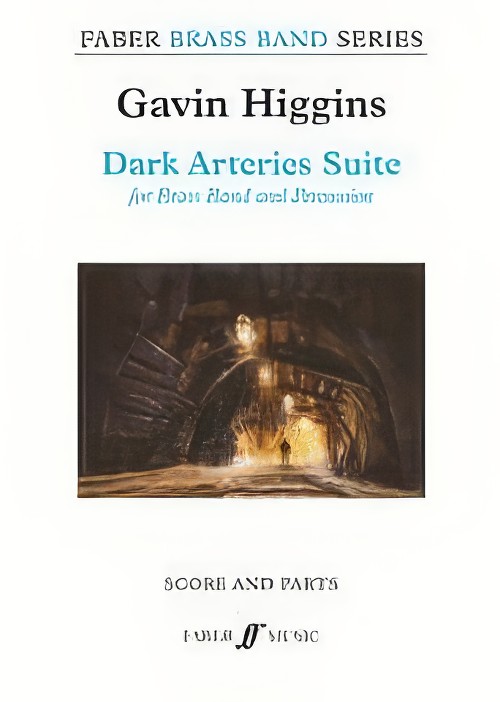
Dark Arteries Suite (Brass Band - Score and Parts) - Higgins, Gavin
Dark Arteries was commissioned by Rambert Dance Company and first performed in May 2015 with the Tredegar Town Band sharing the stage with Rambert dancers. Dark Arteries is a personal and at times highly wrought response to the Miners Strike and its aftermath. It is in three movements, the first and last are expansive, with widely contrasting sound worlds, from dark, brooding melodies and the haunting sounds of solo flugel horn to wild syncopations on cornets, suggestive of an imposing, but often bleak mining landscape. Suitable for 1st Section Bands and above. Duration: 16.00
Estimated dispatch 7-14 working days
-
 £44.95
Meditation (from The Triumph of Time) (Flugel Horn and Baritone Duet with Brass Band - Score and Parts) - Graham, Peter
Meditation is the central theme from The Triumph of Time, a work commissioned for The Black Dyke Band by Music Director Nicholas Childs. The original brief was for a piece which would showcase the talents of the band's many fine soloists, among them Zoe Hancock on Flugel horn and Baritone soloist Katrina Marzella. This extract brings both instruments together in an extended stand-alone arrangement.Although scored for Flugel and Baritone, a number of options can be explored at the discretion of the conductor (eg. Flugel/Cornet and Euphonium/Trombone; two Bb Cornets etc. in which case cued lines in the Solo Horn and Soprano cornet parts may be played).Duration: 05:00
Estimated dispatch 7-14 working days
-
 £32.50
Olympus (Brass Band - Score only) - Harper, Philip
Selected as the test-piece for the 3rd Section Regional contests of the National Brass Band Championships 2012The music begins with a depiction of the exciting Opening Ceremony where noisy fanfares and sudden swells add to the cosmopolitan flag-waving clamour. Without a break the music leads to The Chariot Race, a fast compound-time gallop with thundering hooves in the basses and percussion, and a heroic melody introduced by the tenor horns. Chariot racing was the main equestrian event in the Ancient Greek Games, which were founded in memory of King Oenomaus. In the Greek legend he suffered defeat in a chariot race to his son-in-law and Zeus' grandson, Pelops, but much of the music is bitter-sweet to symbolise the fact that Pelops had to cheat to win - drawing parallels with some of the issues still facing modern-day athletics.A slow, mystical passage follows, describing The Temple of Zeus at Olympia. The statue of Zeus, who was honoured throughout the Ancient Games' history, was housed inside the temple and was one of the Seven Wonders of the Ancient World. The music depicts this period of the dawn of one of mankind's most ancient civilisations and there is a series of solo passages above a drone.The next section is called The Olympic Flame and a broad and lyrical anthem-like melody develops slowly in the euphoniums, which gradually ascends until the horns can take it over before passing upwards again to the cornets (Higher). The music bursts into bright life at the lighting of the flame and the regular rhythmic pattern which has been established goes through an accelerando (Faster).The final section is called The Olympic Truce and aims to capture the cooperative spirit of the ancient practice of ending wars for the duration of the games. The anthem-like melody makes an affirmatory return (Stronger) and the work ends as it began - with a blaze of colour and a real sense of optimism and global celebration.Citius, Altius, Fortius (Faster, Higher, Stonger)Duration: 11:30
Estimated dispatch 7-14 working days
-
£74.99
Olympus (Brass Band - Score and Parts) - Harper, Philip
Selected as the test-piece for the 3rd Section Regional contests of the National Brass Band Championships 2012The music begins with a depiction of the exciting Opening Ceremony where noisy fanfares and sudden swells add to the cosmopolitan flag-waving clamour. Without a break the music leads to The Chariot Race, a fast compound-time gallop with thundering hooves in the basses and percussion, and a heroic melody introduced by the tenor horns. Chariot racing was the main equestrian event in the Ancient Greek Games, which were founded in memory of King Oenomaus. In the Greek legend he suffered defeat in a chariot race to his son-in-law and Zeus' grandson, Pelops, but much of the music is bitter-sweet to symbolise the fact that Pelops had to cheat to win - drawing parallels with some of the issues still facing modern-day athletics.A slow, mystical passage follows, describing The Temple of Zeus at Olympia. The statue of Zeus, who was honoured throughout the Ancient Games' history, was housed inside the temple and was one of the Seven Wonders of the Ancient World. The music depicts this period of the dawn of one of mankind's most ancient civilisations and there is a series of solo passages above a drone.The next section is called The Olympic Flame and a broad and lyrical anthem-like melody develops slowly in the euphoniums, which gradually ascends until the horns can take it over before passing upwards again to the cornets (Higher). The music bursts into bright life at the lighting of the flame and the regular rhythmic pattern which has been established goes through an accelerando (Faster).The final section is called The Olympic Truce and aims to capture the cooperative spirit of the ancient practice of ending wars for the duration of the games. The anthem-like melody makes an affirmatory return (Stronger) and the work ends as it began - with a blaze of colour and a real sense of optimism and global celebration.Citius, Altius, Fortius (Faster, Higher, Stonger)Duration: 11:30
Estimated dispatch 7-14 working days
 View Music