
Results
-
 £39.95
Fanfare: The Crowning - Jonathan Bates
DURATION: 3 minutes. DIFFICULTY: Championship. "Trumpets sound in the Abbey, bells ring out, & a 62-gun salute booms from the Tower of London.". 'The Crowning' is a ceremonial fanfare and chorale based upon the hymn tune 'Westminster', the London Abbey in which coronations and subsequent 'crownings' take place at the change of every Monarch. You will hear 62 bass drum strikes in the intrada representing the 62 gun-salute which accompanies the ceremony as the 'trumpets sound and bells ring out in the Abbey'. .
In Stock: Estimated dispatch 1-3 working days
-
£69.95
ENGLISH HERITAGE (Brass Band Set) - George Lloyd
English Heritage was first heard in the pleasant surroundings of Hampstead Heath as part of a Kenwood Lakeside concert given on 2nd July 1988. It was commissioned for English Heritage by Michael Webber, the organiser of Kenwood Concerts for English Heritage and subsequently chosen as the Championship Section test-piece for the National Brass Band Championships of Great Britain 1990. The sense of historic significance inherent in ensuring the preservation of England's fine buildings of the past drew from the composer music which seems to capture the essence of Olde England. This is a musical view of England's heritage concerned not only with pageantry and ceremonial but also catching some of the humour inherent in the English character as well as those quiet reflective moments which have surely fashioned England's past and influenced its present.
Estimated dispatch 7-14 working days
-
The Tricorn - Len Jenkins - Len Jenkins
The Tricorn is a style of three-cornered hat from Europe in the 18th century, generally referred to as a 'cocked hat' in Britain and popular in America at the time of the War of Independence. It may still be seen on ceremonial occasions as part of the town-cryer's dress in England and features in a popular German song for children 'Mein Hut, der hat drei Ecken'. However, in the case of this music, the reference is to the cornet section and the requirement for triple-tonguing on the Eb Soprano cornet. Whilst ostensibly a concert march in style, its jaunty rhythm makes you want to stride along and it may therefore be used as a 'road march' as well. Pressure on the Soprano cornetist as a soloist is reduced by adding the Solo Cornets to the melody line in the 'road march' version. With this in mind, we supply the music in both A4 (concert) and A5 (march-card) sizes as a package.
-
 £39.95
Sovereign's Escort (Score and Parts) - Roy Douglas
Roy Douglas was not only assistant to Ralph Vaughan Williams, Noel Coward, and a host of others, but a composer in his own right. This short ceremonial march for brass band bears all the hallmarks of the best of the English composers. Duration: 3:45
Estimated dispatch 7-9 working days
-
 £39.95
Prelude to a New Age (Score and Parts) - Peter Graham
Ceremonial concert opener
Estimated dispatch 7-9 working days
-
 £44.95
 -
 £31.50
Finale to Act 1 (from Lohengrin)
Authentic Wagner ceremonial and power is presented here, in bringing the first Act of Lohengrin to a close. This excerpt can be used as a prelude to Procession to the Minster (from Act 2) or as a companion to the Wedding March as heard in Act 3.
Estimated dispatch 7-14 working days
-
 £79.99
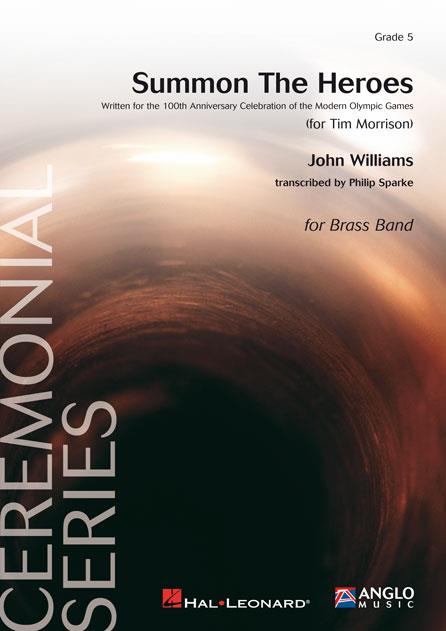
Summon the Heroes (Brass Band - Score and Parts) - Williams, John - Sparke, Philip
John Williams has written ceremonial music for many major events and ceremonies but of all these occasional pieces Summon the Heroes is the most elaborate and musically complex. It was composed for the Atlanta Olympic Games in 1996 and performed at the opening ceremony. As with all of John Williams's ceremonial compositions this work makes an ideal brass band work that will bring the house down as a concert opener.Duration: 6:20
Estimated dispatch 7-14 working days
-
 £124.95
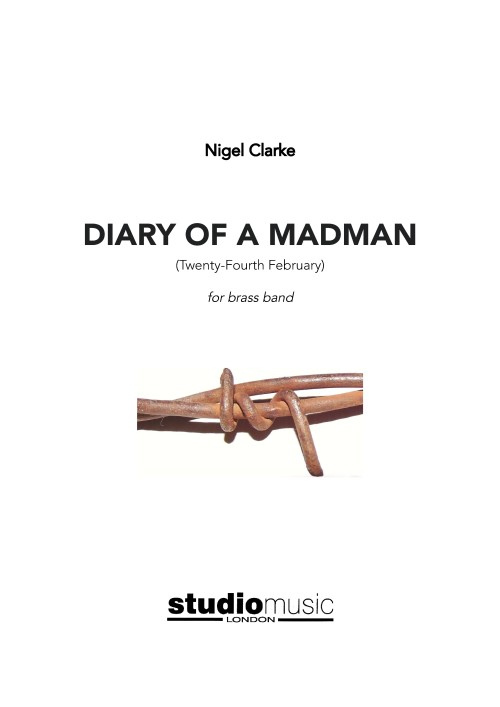
Diary of a Madman (Twenty-Fourth February) (Brass Band - Score and Parts) - Clarke, Nigel
From the beginning of history, warlords, emperors and dictators have risen up, some benign but many of them a scourge on humanity. Names that resonate to this day include Julius Caesar, Caligula, Genghis Khan, Ivan IV (The Terrible), Attila the Hun, Vlad IV (The Impaler), Hitler, Stalin, Mao Zedong, Pol Pot, all of whom were responsible for wanton destruction and the torture and death of millions of victims, either citizens of invaded countries and territories and or indeed, their own peoples.Diary of a Madman starts with a light-hearted march that gives the impression of toy tin soldiers parading in a brightly-coloured ceremonial pageant from a fairy tale, conveying peace and innocence. This spectacle is abruptly interrupted by a 'shock and awe' fanfare-like march, symbolising aggression and war. This theme grinds slowly to a halt, and an atmosphere of introspection, sadness and despair takes over. Rising above the smoky theatre of war, we then hear a distant cornet give a rendition of the Ukrainian Nation Anthem (The glory and freedom of Ukraine has not yet perished. Luck will still smile on us brother-Ukrainians). The solo cornet soon enters a fragile duet with a second cornet accompanied by dark undertones. One by one, we hear short shards of aggressive fanfare-like figures from various instruments in the band. The mood breaks - we hear strident fortissimo whole-tone scales representing pealing church bells, warning of danger. In contrast, we also hear pianissimo whole-tone scales announcing that the enemy's troops are falling back. A counter-offensive soon takes centre stage, and battles and skirmishes are heard, with short quotations from Mussorgsky's `Great Gates of Kyiv' symbolising the defenders' heroic struggle.All sides are victims of the Dictator's ambition! The slow central section offer us moments of melancholic beauty and utilises Henry Purcell's `When I am laid in earth' (`Dido's Lament' from Dido and Aeneas 1688). This music represents the loss of homes, dignity and loved ones. There are occasional hints at better times as the theme of the parading toy tin soldiers is heard from afar, like a distant memory.To announce the final push, we hear a church bell strike and an air raid siren signalling a ferocious musical counter-attack. After one final rendition of the Purcell theme, Diary of a Madman closes with a mood of triumph over tyranny.- Nigel Clarke
Estimated dispatch 7-14 working days
-
£57.95
Diary of a Madman (Twenty-Fourth February) (Brass Band - Score only) - Clarke, Nigel
From the beginning of history, warlords, emperors and dictators have risen up, some benign but many of them a scourge on humanity. Names that resonate to this day include Julius Caesar, Caligula, Genghis Khan, Ivan IV (The Terrible), Attila the Hun, Vlad IV (The Impaler), Hitler, Stalin, Mao Zedong, Pol Pot, all of whom were responsible for wanton destruction and the torture and death of millions of victims, either citizens of invaded countries and territories and or indeed, their own peoples.Diary of a Madman starts with a light-hearted march that gives the impression of toy tin soldiers parading in a brightly-coloured ceremonial pageant from a fairy tale, conveying peace and innocence. This spectacle is abruptly interrupted by a 'shock and awe' fanfare-like march, symbolising aggression and war. This theme grinds slowly to a halt, and an atmosphere of introspection, sadness and despair takes over. Rising above the smoky theatre of war, we then hear a distant cornet give a rendition of the Ukrainian Nation Anthem (The glory and freedom of Ukraine has not yet perished. Luck will still smile on us brother-Ukrainians). The solo cornet soon enters a fragile duet with a second cornet accompanied by dark undertones. One by one, we hear short shards of aggressive fanfare-like figures from various instruments in the band. The mood breaks - we hear strident fortissimo whole-tone scales representing pealing church bells, warning of danger. In contrast, we also hear pianissimo whole-tone scales announcing that the enemy's troops are falling back. A counter-offensive soon takes centre stage, and battles and skirmishes are heard, with short quotations from Mussorgsky's `Great Gates of Kyiv' symbolising the defenders' heroic struggle.All sides are victims of the Dictator's ambition! The slow central section offer us moments of melancholic beauty and utilises Henry Purcell's `When I am laid in earth' (`Dido's Lament' from Dido and Aeneas 1688). This music represents the loss of homes, dignity and loved ones. There are occasional hints at better times as the theme of the parading toy tin soldiers is heard from afar, like a distant memory.To announce the final push, we hear a church bell strike and an air raid siren signalling a ferocious musical counter-attack. After one final rendition of the Purcell theme, Diary of a Madman closes with a mood of triumph over tyranny.- Nigel Clarke
Estimated dispatch 7-14 working days
 View Music