
Results
-
 £60.99
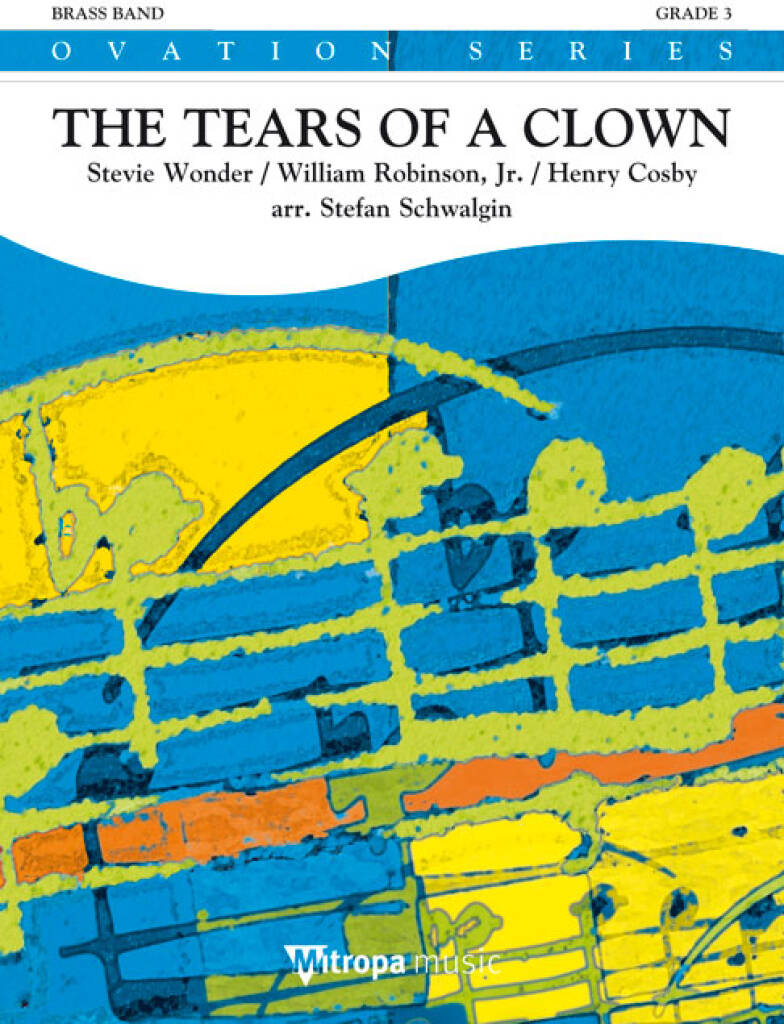
The Tears of a Clown - Stevie Wonder - Stefan Schwalgin
Stevie Wonder wrote The Tears of a Clown in 1966 and gave it to Smokey Robinson as a Christmas gift. Robinson and his band, The Miracles, turned the song into a massive hit. The songs steam-organlike sounds gives it a very unique characteristic and over the years has been recorded by numerous artists. Now you can also record it with your brass band!
Estimated dispatch 5-14 working days
-
 £69.99
Thumbs Up! - André Waignein
This piece definitely gets a Thumbs Up! Andre Waignein has created an exciting and varied original work in which the solo part can be played, depending on setting, availability, and occasion, by a cornet or vibraphone. Thumbs Up! consists of a slow and a fast movement that are linked together, which are fun to play and will delight the audience at your next concert.
Estimated dispatch 5-14 working days
-
 £154.99
Spiriti - Thomas Doss
A Bach chorale stands at the centre of this work (Fur deinen Thron tret ich hiermit).Anton Bruckner was one of Johann Sebastian Bach's great admirers. His work is full of the spirit of that musical genius. For Thomas Doss, it was Bruckner's spirit that always seemed to be with him while working on Spiriti. Bruckner's spirit is captured in this composition by a quote from the chorale of his Fifth Symphony at the end of the piece.The introduction, written in the style of a funeral march, already displays the first fragments of the chorale. Like splinters they are strewn throughout the first Allegro, combining and recombining in turbulent, powerful tuttipassages. As the music becomes more rambunctious, the Bach-like fragments begin to swirl around each other, only to be scattered once more.The middle-section is of a more pensive nature. The Religioso character gives the audience time to reflect. The music is meditative and the quarter-note (or crotchet) elements mimic a soul that is yearning and crying out.The third part of the piece finally leads, by way of minimalist elements and the fragments mentioned earlier, to a magnificent presentation of the Bach chorale. As the church bells ring out, one can almost hear the great masters presiding at the organ.
Estimated dispatch 5-14 working days
-
 £60.99
Best Friends - Johan Nijs
With Best Friends, Belgian composer Johan Nijs portrays friendship in a wonderful ballad that can be played on the cornet, euphonium or trombone. A great chance to put one of your players in the spotlight! In this version for Brass Band theeuphonium plays the solo.
Estimated dispatch 5-14 working days
-
 £154.99
Bulgarian Dances (Part II) - Franco Cesarini
Bulgarian folk music has a long tradition and numerous typical characteristics, such as particular dissonances and complex, irregular rhythms. In Bulgarian Dances (Part II) (which can be performed together with the previously published title Bulgarian Dances) Franco Cesarini has preserved the original spirit of Bulgarian folk music, yet has imbued it with a symphonic character and brought it into the concert hall. The three different movements give us a meditative, moving folksong and a lively dance, before a distinctly symphonic part leads to a glittering finale.
Estimated dispatch 5-14 working days
-
 £102.99
Red Mountain - Marc Jeanbourquin
We all set ourselves certain goals in life, some of which can be compared to mountains and are not always easy to reach. Red Mountain depicts these moments, variously strewn with doubts, confidence, calm and emotions. Red Mountain won the audience's prize at the EBBA 2012 composition competition.
Estimated dispatch 5-14 working days
-
 £87.99
Ten Chorale Preludes - Max Reger - Philip Sparke
During his short lifetime Max Reger (1873-1916) was a prolific composer with many of his best known works being composed for organ. The ten chorale preludes in this selection are from his set of Thirty Short Chorale Preludes Op.135a composed as short voluntaries for liturgical use rather than for recitals in these arrangements Philip Sparke has kept this in mind and each prelude can be performed with minimal instrumentation for those occasions where a small band is needed. They also make great pieces for band warm-ups or studies in intonation, sound and balance.
Estimated dispatch 5-14 working days
-
 £59.99
Veni Immanuel - Philip Sparke
The Advent hymn we all know today as O Come, O Come, Immanuel was arranged in its modern form by Thomas Helmore and published in Hymnal Noted in 1856. Both the words and melody, however, predate this version by centuries. The words are based on a 9th century antiphon and the tune, Veni Immanuel, is taken from a 15th century processional of French Franciscan nuns, part of the setting for the funeral hymn Libera Me. This arrangement aims to expand on the power and mystery of the original tune and will be most effective if the solo Cornet at the start and end of the piece can be placed away from the band, maybe at the back of the auditorium.
Estimated dispatch 5-14 working days
-
 £74.99
Letter from Home - Philip Sparke
In Letter from Home Philip Sparke portrays the many feelings and emotions that a letter from home can evoke. This intimate works opens with a gentle melody, which gradually becomes more confused as new emotions are introduced. Finally resignation sets in, but a sense of peace and balance is restored with the fi nal chorale. In this emotional work Philip Sparke truly captures the highs and lows of being away from home.
Estimated dispatch 5-14 working days
-
 £168.50
A Tale as Yet Untold - Philip Sparke
A Tale as Yet Untold was commissioned by the Cory Band for the European Brass Band Championships in Linz, Austria, 2010, and their winning performance gave them a hattrick of victories at the competition. The theme of this impressive work, which is set in three movements, is one that recurs again and again throughout the music of Philip Sparke, the power of the human spirit to overcome adversity and how the beauty of music can help in this respect.
Estimated dispatch 5-14 working days
 View Music