
Results
-
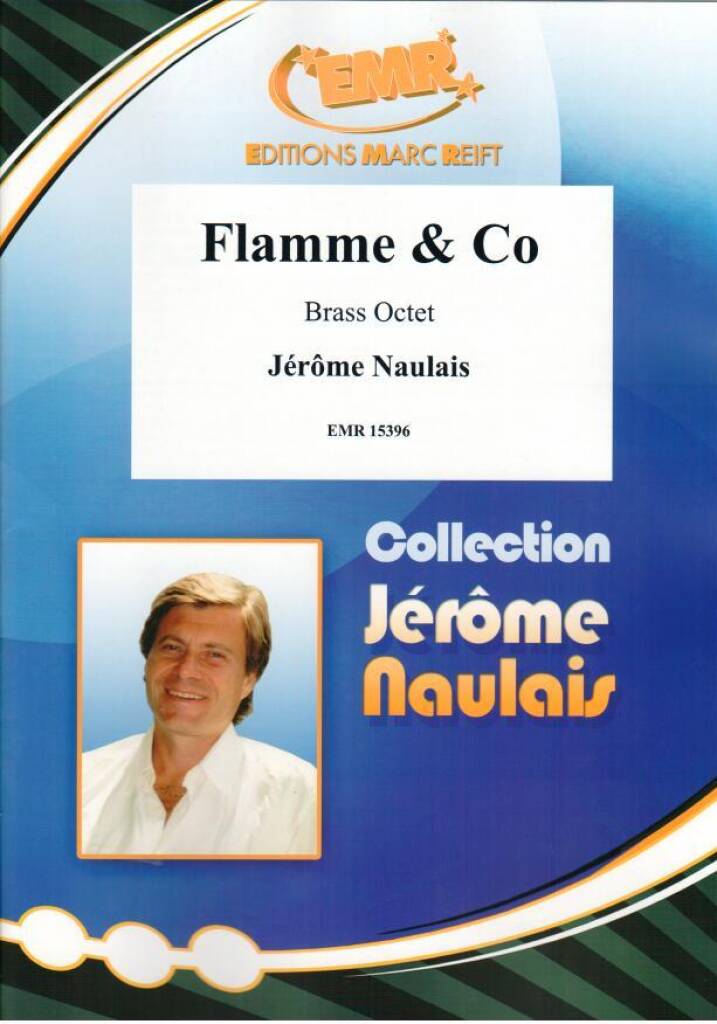 £22.10
Flamme & Co - Jérôme Naulais
Estimated dispatch 5-14 working days
-
 £142.60
Flamme And Co (Cornet Solo) - Jérôme Naulais
Estimated dispatch 5-14 working days
-
 £142.60
Flamme And Co - Jérôme Naulais
Estimated dispatch 5-14 working days
-
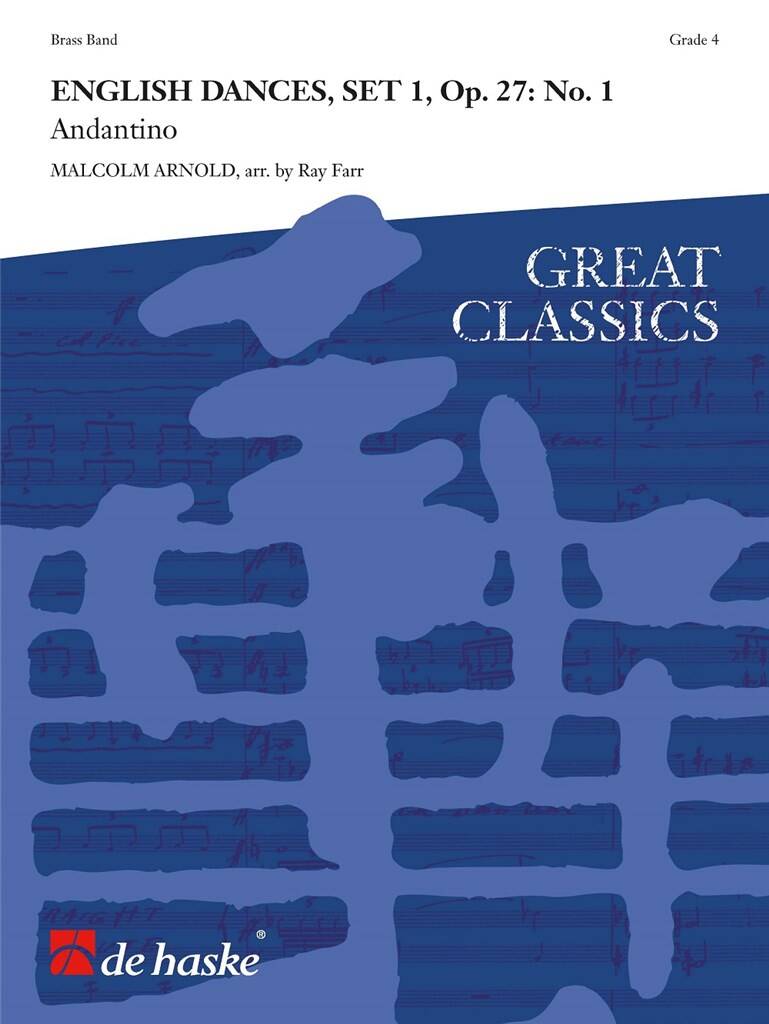 £72.99
English Dances, Set 1, Op. 27: No. 1 - Sir Malcolm Arnold - Ray Farr
English Dances, Set I, opus 27, is a light classic composition that was written for orchestra by the British composer Malcolm Arnold in 1950. The set contains four dances that continue without pause: the individual movements are indicated by the tempo markings. The work came about at the request of Bernard de Nevers, at the time the head of publisher Alfred Lengnick & Co., who asked Arnold to write a suite of dances as an English counterpart to Dvo ak's Slavonic Dances and Bartok's Romanian Folk Dances. The premiere took place in the spring of 1951, played by the London Philharmonic Orchestra, conducted by Sir Adrian Boult. Following the success of the first set, DeNevers asked the composer to write a second one, which Arnold completed the next year (Op. 33). The Andantino from the first set has been skilfully arranged and orchestrated for brass band by Ray Farr.
Estimated dispatch 5-14 working days
-
 £33.20
Have Yourself a Merry Little Christmas (Vocal or Flugel/Cornet Solo with Band)
This attractive Bossa Nova-style arrangement for vocal or flugel/cornet soloist with brass band has been made by Australian composer Sam Creamer. The key is suitable for male or female vocalists, or in the absence of a vocal soloist a part has been supplied for flugel horn or cornet soloist. A piano accompaniment that matches this band arrangement is also available here and may be used as an alternate accompaniment in the absence of a full band, or can be used simultaneously by a rhythm section alongside the brass band. Have Yourself a Merry Little Christmas has been a Christmas favourite to many since its first release, extensively featuring in Christmas movies, broadcasts and programming. It has also been recorded numerous times by artists including Judy Garland, Frank Sinatra, Tori Amos, Michael Buble, Christina Aguilera, and Chicago. To view a rolling score video of this piece please visit www.youtube.com/watch?v=sSZHxzsJheg Duration: Approx. 3.00 minutes Difficulty Level: Medium Easy PDF download includes parts and score. Sheet music available from www.brassband.co.uk or www.durhammusicshop.co.uk (UK) or https://satradecentral.org (US) Instrumentation: Vocal Soloist Cornet/Flugel Horn Soloist Bb Soprano Cornet Eb Solo Cornet Bb Repiano Cornet Bb 2nd Cornet Bb 3rd Cornet Bb Flugel Horn Bb Solo Horn Eb 1st Horn Eb 2nd Horn Eb 1st Baritone Bb 2nd Baritone Bb 1st Trombone Bb 2nd Trombone Bb Bass Trombone Euphonium Bb Bass Eb Bass BbPercussion I (Timpani, Vibraphone, Glockenspiel) Percussion II (Bongos, Shaker, Triangle) Percussion III(Drum Set)
In Stock: Estimated dispatch 1-3 working days
-
 £36.89
The First Nowell (Brass Band, opt. Choir & Piano) Traditional arr. Barrie Gott
This charming setting by Australian composer Barrie Gott is of the favourite carol The First Nowell. Although this version is for brass band, choir and piano, it is orchestrated such that it will work for standalone brass band. The arranger writes: 'I have always been fascinated with the words and music of this majestic carol. It was first written for choir and piano and then orchestrated for the Brisbane Lord Mayor's Carols with the Queensland Pops Orchestra. A further arrangement for brass band was prepared for a Salvation Army event. The setting is for four verses (1,2,5 and 6) and tells the Gospel story in a nutshell. It starts very simply and builds to a spectacular climax.' To view a rolling score video of this work please visit www.youtube.com/watch?v=2KH6u0MUiaY Duration: 4.45 minutes approx. Difficulty Level: 3rd Section + PDF download includes parts and score. Sheet music available from www.brassband.co.uk or www.durhammusicshop.co.uk (UK) or https://satradecentral.org (US) Instrumentation: Soprano Cornet Eb Solo Cornet Repiano Cornet Bb 2nd Cornet Bb 3rd Cornet Bb Flugel Horn Bb Solo Horn Eb 1st Horn Eb 2nd Horn Eb 1st Baritone Bb 2nd Baritone Bb 1st Trombone Bb 2nd Trombone Bb Bass Trombone Euphonium Bb Bass Eb Bass BbTimpani Percussion 1-2 SATB Choir (optional) Piano (optional)
In Stock: Estimated dispatch 1-3 working days
-
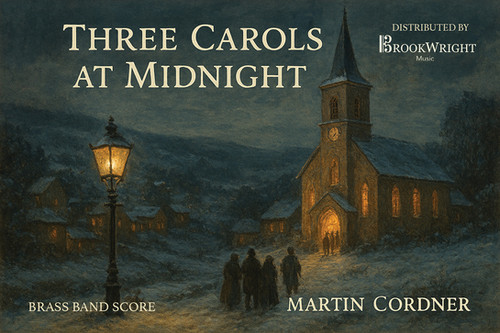 £36.89
Three Carols at Midnight (Brass Band) Martin Cordner
Rooted in the sacred stillness of a French village on Christmas Eve, this suite by Martin Cordner draws upon traditional carols that have echoed through centuries of candlelit chapels and midnight vigils. Each movement offers a window into the Nativity story: I. Mystery: Noel Nouvelet (Christmas Comes Anew) opens with modal wonder, evoking the anticipation of Christ's coming and the quiet awe of Advent. II. Cradle: Entre le boeuf et l'ane gris (Between the Ox and the Grey Donkey) rests in pastoral tenderness, where the newborn Savior lies between humble beasts, watched over by angels and the Virgin. III. Joy: Il est ne, le divin enfant (He is born, the Divine Infant) bursts forth in celebration, proclaiming the divine birth with rustic dance and jubilant praise. Together, these carols form a musical triptych - moving from mystery to intimacy to exultation. Three Carols at Midnight invites listeners to step into the hush of a French Noel, where the sacred story is told not only in word, but in melody, memory, and light. All proceeds support the mission and ministry of The Salvation Army Delaware Command, USA. To view a rolling score video of the work please visit www.youtube.com/watch?v=fUcCluBS18Q Difficulty level: 4th Section + Duration: approx. 5.00 minutes This PDF download includes parts and score. Sheet music available at www.brassband.co.uk or www.durhammusicshop.co.uk (UK) or https://satradecentral.org (USA) Instrumentation: Soprano Cornet Eb 1st Cornet Bb 2nd Cornet Bb 1st Horn Eb 2nd Horn Eb 1st Baritone Bb 2nd Baritone Bb 1st Trombone Bb 2nd Trombone Bb Bass Trombone Euphonium Bb Bass Eb Bass Bb Percussion 1-2 Glockenspiel
In Stock: Estimated dispatch 1-3 working days
-
 £33.20
'Mid all the traffic (Brass Band) Traditional arr. Andy Wareham
This stunning arrangement by British composer Andy Wareham is of the popular hymn 'Mid all the Traffic, which marries the North-American folksong Shenandoah set to lyrics by English journalist, novelist and poet William Arthur Dunkerley (written under the pseudonym of 'John Oxenham'). The hymn is very well-regarded in both the Salvation Army and wider brass band movement thanks to a popular arrangement by renowned Salvationist composer Leonard Ballantine. The arranger writes: 'This setting of 'Mid All The Traffic was originally composed during the Covid-19 pandemic as an octet arrangement for single instrument. My hope was to create an arrangement that offers an alternative view on harmony and could be multi-track recorded; allowing performers to give, and share, a performance whilst in isolation. The music was written in dedication to all of the 'key-workers' in the UK, especially in the NHS, who worked tirelessly throughout difficult conditions during the Covid-19 pandemic.' To view a follow-the-score video of the work please visit https://www.youtube.com/watch?v=naajvdsg9Wo PDF download includes score and parts. Sheet music available from: UK - www.brassband.co.uk USA - www.solidbrassmusic.com Difficulty Level: 3rd Section + Instrumentation: Soprano Cornet Eb Solo Cornet Bb Repiano Cornet Bb 2nd Cornet Bb 3rd Cornet Bb Flugel Horn Bb Solo Horn Eb 1st Horn Eb 2nd Horn Eb 1st Baritone Bb 2nd Baritone Bb 1st Trombone Bb 2nd Trombone Bb Bass Trombone 1st Euphonium Bb 2nd Euphonium Bb Bass Eb Bass Bb Bass Drum Suspended Cymbal
In Stock: Estimated dispatch 1-3 working days
-
 £81.18
'Odyssey' Variations (Brass Band) Kevin Norbury
'Odyssey' Variations was composed as a result of a commission in May 2020 from Five Lakes Silver Band and its musical director, Christopher Ward. This music is based on an original theme that I first used in an earlier composition, Odyssey, which was the test piece for the European Brass Band Championships, held at Munich, Germany, in April 1999. I distinctly remember getting into my hotel room and turning on the television to be greeted by news coverage of the Columbine High School shooting, so that piece has always held some significance for me, though because of a very sad coincidence. The melody was originally a cornet solo in the central slow section of Odyssey and pitched deliberately to test the soloist. I have, more recently attempted a straightforward choral setting of the melody, and the harmonies I use in the three chorale-style settings at the start of these variations are loosely based on that setting. The melody is a setting of the familiar words of Be Thou My Vision, an old Irish hymn, translated by Mary E. Byrne, and versified by Eleanor H. Hull. The form of the work is as follows: Theme - three presentations Variation 1 - Allegro Variation 2 - Moderato (featuring the horns, baritones, euphoniums and basses) Variation 3 - Maestoso (featuring the cornets, flugel horn, and trombones) Variation 4 - Adagio Variation 5 - Allegretto Variation 6 - Largo - Moderato Variation 7 - Allegro molto Theme - Maestoso e sostenuto Finale - Allegro vivace - Adagio e allargando To view a video of Five Lakes Silver Band performing the work please visit: www.youtube.com/watch?v=vfLnld3bCw8 Sheet music available from: UK - www.brassband.co.uk USA - www.solidbrassmusic.com Difficulty Level: 1st Section + Instrumentation: Soprano Cornet Eb Solo Cornet Bb Repiano Cornet Bb 2nd Cornet Bb 3rd Cornet Bb Flugel Horn Bb Solo Horn Eb 1st Horn Eb 2nd Horn Eb 1st Baritone Bb 2nd Baritone Bb 1st Trombone Bb 2nd Trombone Bb Bass Trombone Euphonium Bb Bass Eb Bass Bb Timpani Percussion 1-3
In Stock: Estimated dispatch 1-3 working days
-
 £33.20
'Sanctus' from Faure's 'Requiem' - Brass Band (Faure arr. Andrew Wainwright)
Faure's Requiem stands as one of the most cherished choral works in the classical repertoire. Unlike many of his contemporaries who focused on the dramatic aspects of death and judgment, Faure's Requiem is characterised by its serene and comforting nature. The Sanctus, a pivotal movement within this larger work, encapsulates a sense of peace and transcendence that resonates deeply with audiences. This brass band setting by Andrew Wainwright of the Sanctus remains faithful to the essence of Faure's original orchestration, although is scored down a tone from the original. To view a rolling score video of the work please visit https://www.youtube.com/watch?v=mo55Q6M2H18 Sheet music available from www.brassband.co.uk Difficulty Level: 2nd Section + Instrumentation: Soprano Cornet Eb Solo Cornet Bb Repiano Cornet Bb 2nd Cornet Bb 3rd Cornet Bb Flugel Horn Bb Solo Horn Eb 1st Horn Eb 2nd Horn Eb 1st Baritone Bb 2nd Baritone Bb 1st Trombone Bb 2nd Trombone Bb Bass Trombone Euphonium Bb Bass Eb Bass Bb Timpani Suspended Cymbal Vibraphone (or Glockenspiel)
In Stock: Estimated dispatch 1-3 working days
 View Music