
Results
-
£44.95
PASTORAL SYMPHONY, A (Brass Band Set) - Robert Redhead
This symphony for brass band seeks to explore the thought that 'the greatest need of any congregation is its pastor's personal holiness'. The first movement challenges the pastor 'to serve the present age', the tunes 'Majesty' and 'Lathbury' are used. The second movement expresses a priority to 'Seek...first the Kingdom of God'. The short third movement presents the question 'Except I am moved with compassion, how dwellest they Spirit in me?' before the triumphant finale reflects the desire of every Christian that his life and work will always be for the glory of God with the presentation of 'In my life Lord, be glorified'.
Estimated dispatch 7-14 working days
-
£59.95
MOORSIDE SUITE, A (Brass Band Set) - Gustav Holst
This work was first heard at the Crystal Palace Brass Band Contest in 1928 for which it had been specially written.
Estimated dispatch 7-14 working days
-
£44.95
LABOUR AND LOVE (Brass Band Set) - Percy Fletcher
Following its selection as test-piece for the 3rd Section of the Regional Brass Band Championships of Great Britain 2010, the publishers have made the following amendments to the original publication; Tenor Trombone parts are now in treble clef, percussion parts are now included in the full score.
Estimated dispatch 7-14 working days
-
£69.95
ENGLISH HERITAGE (Brass Band Set) - George Lloyd
English Heritage was first heard in the pleasant surroundings of Hampstead Heath as part of a Kenwood Lakeside concert given on 2nd July 1988. It was commissioned for English Heritage by Michael Webber, the organiser of Kenwood Concerts for English Heritage and subsequently chosen as the Championship Section test-piece for the National Brass Band Championships of Great Britain 1990. The sense of historic significance inherent in ensuring the preservation of England's fine buildings of the past drew from the composer music which seems to capture the essence of Olde England. This is a musical view of England's heritage concerned not only with pageantry and ceremonial but also catching some of the humour inherent in the English character as well as those quiet reflective moments which have surely fashioned England's past and influenced its present.
Estimated dispatch 7-14 working days
-
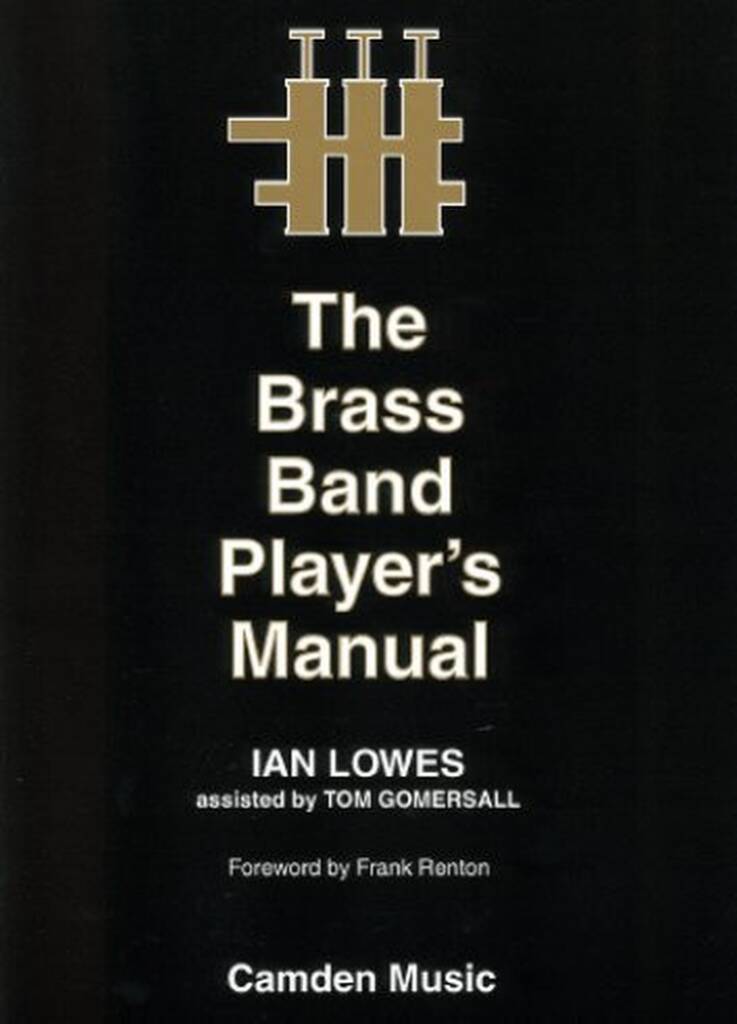 £11.95
The Brass Band Player's Manual - Ian Lowes
This is the 'Haynes manual' of technique for the brass player. It breaks down all areas of preparation and performance into easy to understand sections and provides valuable exercises to improve all aspects of playing. Completewith a quick reference 'fault diagnosis chart'.IntroductionThis tutor is intended as a self-help tutor for all band players. It is laid out in the manner of a DIY car manual where technical explanationsare combined with fault diagnosis and suggestions for corrective solutions. Explanations range in depth to suit playing standards from beginner to championship level.64 pages.
Estimated dispatch 5-14 working days
-
 £109.99
Introducing the Brass Band - Bruce Fraser
Perfect for a presentation of your band at a concert or a presentation on a (music) school. The orchestra and the various sections introduce themselves to the public. A wonderful showpiece for your band to the public!
Estimated dispatch 5-14 working days
-
 £228.70
Ascension For Brass Band and Percussion - Fredrick Schjelderup
"Ascension" was commissioned in 2014 for the Norwegian school band, Hellen Skoles Musikkorps for their 60th anniversary.The piece is based on two themes, processed through rhythms, chords and solos in various time signatures.The title, "Ascension" which means rising, is central for the main thematic material and describes the band's hard work for a coming event (concert or a contest) where the musical level is ascending/rising.
Estimated dispatch 5-14 working days
-
 £34.95
Excelsior - Fanfare and Theme (Brass Band - Score and Parts)
The New Mills Old Prize Band is the inheritor of a proud tradition going back 200 years. Its origin lies in a brass and reed band formed in 1812 by Timothy Beard and it is one of the oldest brass bands in continuous existence in the UK.The New Mills Old Prize Band is inextricably linked to the Beard family. Timothy Beard the founder of the band, was one of five children and two of his brothers, John and Stephen, were to join him in the band.Excelsior is based on the hymn tune 'Ransom' believed to have been composed in 1838 by Timothy's brother Stephen Beard. I have taken this hymn tune and composed a concert fanfare utilising the main melodic material from the original hymn tune.The title of the piece comes from the bands original motto "Excelsior!"Paul Lovatt-Cooper
Estimated dispatch 7-14 working days
-
 £39.95
Swing into Christmas (Brass Band - Score and Parts)
Written during Colonel Robert Redhead's tenure as Bandmaster of The International Staff Band, this bright and good-humoured selection - originally titled Sounds of the forties - was composed for the UK Territory's annual Christmas event at the Westminster Central Hall in 1993. It features lively treatments of Good King Wenceslas, Carol of the drum, Silent Night! and Deck the hall and brings fresh sparkle to these familiar carols. With the permission of the Redhead family, the work has been readied for publication. Colonel Redhead lives in retirement in Canada, and this release stands as a welcome addition to the journals.The secret to a successful presentation of this piece (and any swing number) is for the band to have a clear grasp of basic swing principles. Players should aim for a relaxed, buoyant feel built on back'beat emphasis (2 and 4), light articulation, and a sense of forward motion without rushing. Note that, apart from the intentionally straight quavers on the drum kit in sections D and E, quavers elsewhere should be swung.A drum kit will be essential as it provides the stylistic anchor throughout, setting up the tempo, supporting the back'beat, and giving the band confidence to embrace the swing style.The Glenn Miller-inspired opening cornet feature sets the tone for the whole piece and should be played with strength, clarity, and stylistic assurance. The outer movements share this brighter, punchier swing character, with crisp rhythmic definition and confident ensemble playing.In contrast, the central setting of Silent Night! adopts a slow 'shuffle' feel. This section should feel spacious and unhurried, with warm phrasing, gentle back'beat, and a laid'back rhythmic pulse. In the melody line, think breadth, and in the accompaniment, think subtlety rather than weight.
Estimated dispatch 7-14 working days
-
 £44.95
Triumphant (Brass Band - Score and Parts)
Triumphant was written as the opening work for the 2024 Future All-Stars final concert. Based on the well-known hymn Victory in Jesus (S.A.S.B. 464), the piece reimagines the familiar melody and words with energetic drumline-inspired rhythms and driving Bass groove.O victory in Jesus, my Saviour, for ever!He sought me and bought me with his redeeming blood;He loved me ere I knew him, and all my love is due him -He plunged me to victory beneath the cleansing flood.Musically speaking, the rhythmic pulse should remain confident and consistent throughout, with the percussion establishing the groove and the band locking in with precision. Take time to find a tempo that allows the Bass and Percussion parts to remain clear and accurate. A slightly steadier pace will produce a stronger, more convincing groove. However, a slower tempo can result in the band's playing becoming too heavy. Melodic lines should be played on the longer side, allowing phrases to sing over the rhythmic accompaniment that can be more defined and articulated. As the work builds, be patient and disciplined with dynamics, saving the band's fullest sound for the climactic moments, maximising their impact.
Estimated dispatch 7-14 working days
 View Music