Results
-
 £127.30
Introduction - Torstein Aagaard-Nilsen
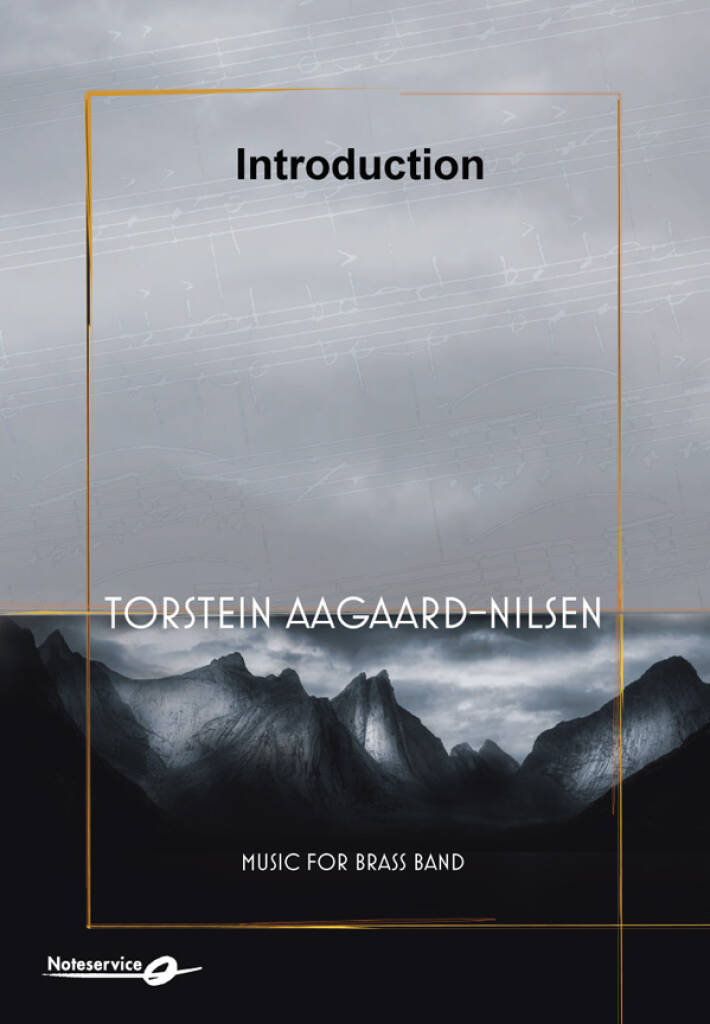
A short concert opener. I quote a couple of Norwegian Folk Tunes to make a musical picture of the Vikings running from the seashore to face a battle. They used to drink something made of mushrooms to prevent fear and pain - They became Berserkings!Introduction is recorded by Manger Musikklag on their CD Circius.
Estimated dispatch 5-14 working days
-
 £146.80
How to Train Your Dragon - John James Powell - Fredrick Schjelderup
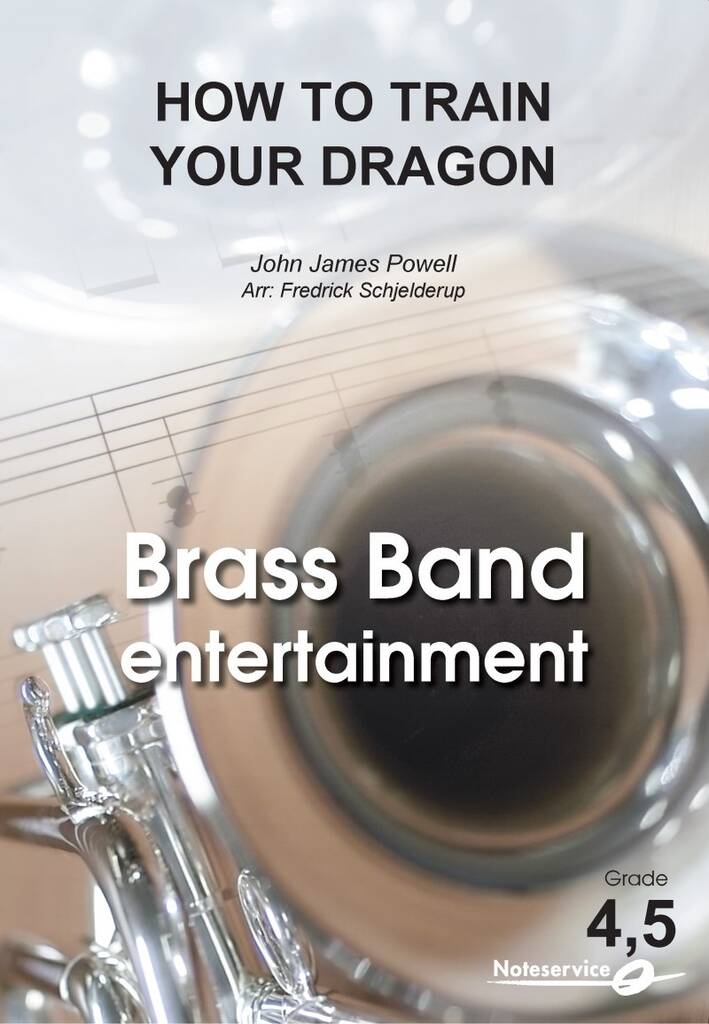
"How to train your dragon" is an American animation film about a little viking village which gets attacked by dragons.In the movie, the young character Birk must convince his father and the rest of the village that he will be a viking warrior and fight the dragons.During the process of becoming a real warrior, Birk wants to become friends with the dragons, rather than fight them.The film music is originally written by John James Powell and describes the drama, tension og romance.In this arrangement you'll find the themes "This is Birk" and "Dragon Battle".
Estimated dispatch 5-14 working days
-
£70.00
Macbeth - Peter Meechan
Commissioned by the Scottish Brass Band Association for the 2007 Scottish Open Championship, Macbeth takes itsa inspiration from the Shakespeare play of the same name. Character portraits (Of the three witches as well as Macbeth himself), abstractions (The lament), and scenes (Macbethas final battle with Macduff) make up the nine sections of the piece.i: WitchesThe prophecies of the three witches are an integral part of the play, and in this opening section, these mysterious characters are represented by three different sections of music that introduces the listener to the musical material of the piece.ii: DaggerMacbethas aIs this a dagger I see before theea speech, where an imaginary dagger leads him to contemplate the pending murder, builds in intensity before the bell tolls at itsa conclusion - a sign from Lady Macbeth that Duncan is now alone.iii: General MacbethA character portrait of Macbeth - a fearless General who has led his armies to defeat foes from all over Europe. His ambition and flair that make him such a great General are also the characteristics that lead to his eventual downfall.iv: Contemplations of Lady MacbethAlone and mad, Lady Macbeth ponders all that has gone, before taking her own life.v: LamentAlthough the play tells of Macbeth not feeling the pain of his wifeas death, this lament ponders not only her death, but the tale as a whole.vi: Tomorrow and tomorrow and tomorrowIt is in this final soliloquy that we see the ultimate tragedy of Macbeth - the realisation that his life is ultimately worthless.vii: A spell still castThis acts as an prologue to section eight, restating the original awitchesa music, before heading into Macbethas final battle.viii: Final BattleMacbethas final battle, where he locks swords with Macduff.ix: Not of woman bornMacbethas realisation that the witches have misled him comes all too late, as Macduff beheads Macbeth, fulfilling the last prophecy.
Estimated dispatch 12-14 working days
-
 £235.00
A Poem Against War - Harrie Janssen
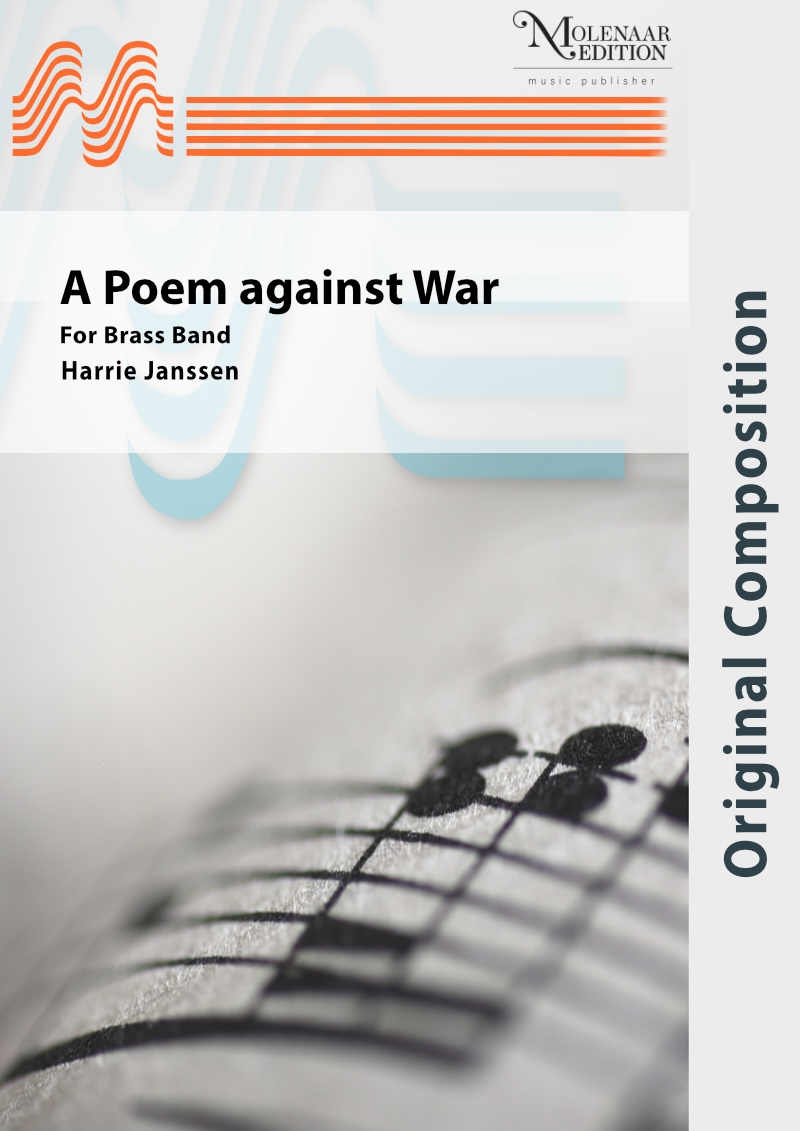
A Poem against War A Poem against War was commissioned by Psalm 150, Dinxperlo for the project Leven in Vrijheid!.Starting point of the composition of this piece was the poem A Poem against War from the American poet Karen Kapowich. The poem tells of young lives that are broken in their start because of war.A monument - founded in memory of the soldiers who gave their lives - is hardly noticed and even ignored. Children find the tree-sheltered memorial place rather scary and even the narrator speeds up his stride when passing. Underlying theme is the otiosity of war.The musical piece is composed of two parts that are being played without interruption. The first part explains the drama of the battle. The second part is based on the poem of Karen Karpowich in which we look back on the sacrifices that have been made. The text is sung by a Mezzo Soprano and emphasizes the bloodshed that comes along with every war. The opening theme returns at the end of the piece but in a complete metamorphosis, wherein optimism and vigor take place for resignation knowing that history repeats itself time and time again. A Poem against War had its premiere on 25th November 2012 in de DRU Cultuurfabriek in Ulft by Fanfare-orchestra Psalm 150, Dinxperlo led by Tijmen Botma. The Mezzo Soprano was Elske ter Lindert.commissioned by Psalm 150, Dinxperlo for the project Leven in Vrijheid!.Starting point of the composition of this piece was the poem A Poem against War from the American poet Karen Kapowich. The poem tells of young lives that are broken in their start because of war.A monument - founded in memory of the soldiers who gave their lives - is hardly noticed and even ignored. Children find the tree-sheltered memorial place rather scary and even the narrator speeds up his stride when passing. Underlying theme is the otiosity of war.The musical piece is composed of two parts that are being played without interruption. The first part explains the drama of the battle. The second part is based on the poem of Karen Karpowich in which we look back on the sacrifices that have been made. The text is sung by a Mezzo Soprano and emphasizes the bloodshed that comes along with every war. The opening theme returns at the end of the piece but in a complete metamorphosis, wherein optimism and vigor take place for resignation knowing that history repeats itself time and time again. A Poem against War had its premiere on 25th November 2012 in de DRU Cultuurfabriek in Ulft by Fanfare-orchestra Psalm 150, Dinxperlo led by Tijmen Botma. The Mezzo Soprano was Elske ter Lindert.
Estimated dispatch 10-14 working days
-
 £79.95
Corineus - Christopher Bond
Corineus, in medieval British legend, was a prodigious warrior, a fighter of giants, and the eponymous founder of Cornwall. The first of the legendary rulers of Cornwall, he is described as a character of strength and power. It is on the medieval ruler that this new work, Corineus, is based, presented in three contrasting sections. The work opens with heraldic fanfares and a sense of jubilance before presenting musical material which changes and develops organically, portraying the journey taken by Corineus, Brutus, and the Trojans from modern-day mainland Europe to Britain. The central section of the work is slower, creating a feeling of longing. Brutus' son, Locrinus, had agreed to marry Corineus' daughter, Gwendolen, but instead fell in love with a German princess. In writing this part of the work, the composer portrays the longing of Gwendolen for her husband, knowing he is in love with somebody else. After Corineus died, Locrinus divorced Gwendolen, who responded by raising an army in Cornwall and making war against her ex-husband. Locrinus was killed in battle, and legend suggests that Gwendolen threw Locrinus' lover into the River Severn. This dramatic battle provides the inspiration for the final part of the work. In writing this work, the composer hopes to flare the imagination of young brass players around the country, in an engaging new take on a firm fixture in British folklore.
Estimated dispatch 10-14 working days
-
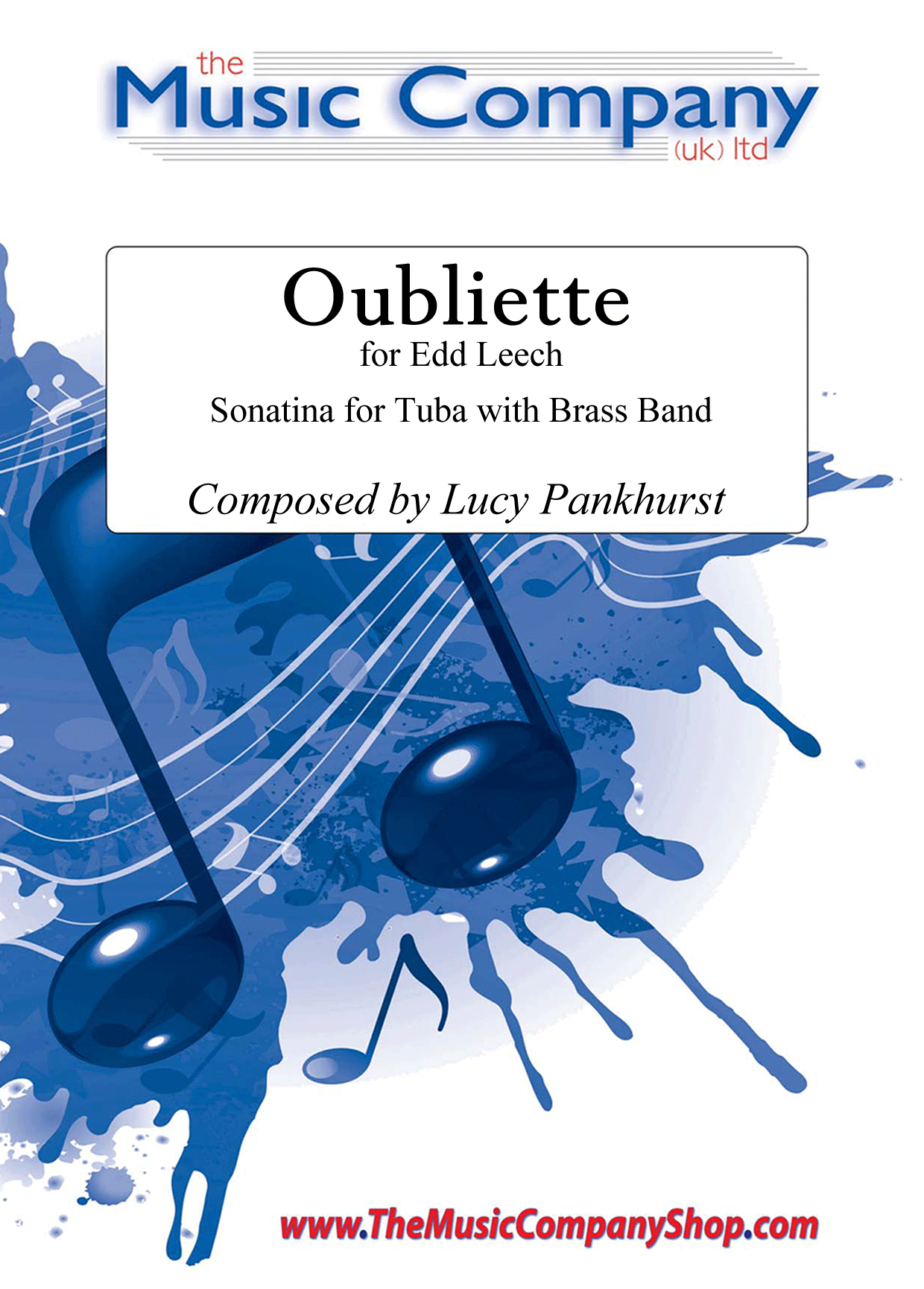 £42.35
Oubliette - Lucy Pankhurst
Lucy Pankhurst has created a highly immersive solo for Tuba/Eb Bass with brass band accompaniment, aiming and succeeding in showing the lyrical and technical diversity of the tuba, demanding virtuoso brilliance and clarity in performance.Dedicated to tuba player Edd Leech, Oubliette raises the bar for tuba repertoire.Set includes score, brass band parts and solo parts for Eb Bass (TC) and Tuba (BC). Solo with piano accompaniment available separately.Programme notes from the composer, Lucy Pankhurst:From the French word oublier, meaning 'to forget', an oubliette was a form of dungeon used in the 14th century. A small, windowless room where someone is locked away to be forgotten and left to go mad.I initially chose this title for the piece as the Tuba is often forgotten as a solo instrument, when its versatility in performance should be celebrated. Oubliette showsThe work begins with desolate and sparse accompaniment with lamenting solo lines. The soloist has already been cast into the oubliette at this point and is beginning to wake from a somnolent state. Reality is blurred through the darkness of the chamber - the only entrance is a hatch in the ceiling, far out of reach.Memories are confused by countless hours of solitude - hallucinations and paranoia tainting reality. Gradually, the soloist remembers images from the past and gains confidence and strength. Long forgotten by the captors, or presumed dead in the chamber, the entrance hatch suddenly opens to allow another prisoner inside. The soloist seizes the opportunity for escape and a short battle ensues. Sword and fist fighting, perilous leaps over the entrances to more dungeons and fierce battle cries are futile, as the soloist suddenly realises they are alone in the oubliette once more and the skirmish was nothing but another dream.The piece concludes with unaccompanied soloist in the low register, sinking deeper into the shadows of the windowless prison; are they accepting their fate, or merely lying in wait for another chance of escape, if one will ever come . . .
In Stock: Estimated dispatch 3-5 working days
-
£105.00
King Arthur - Benjamin Britten
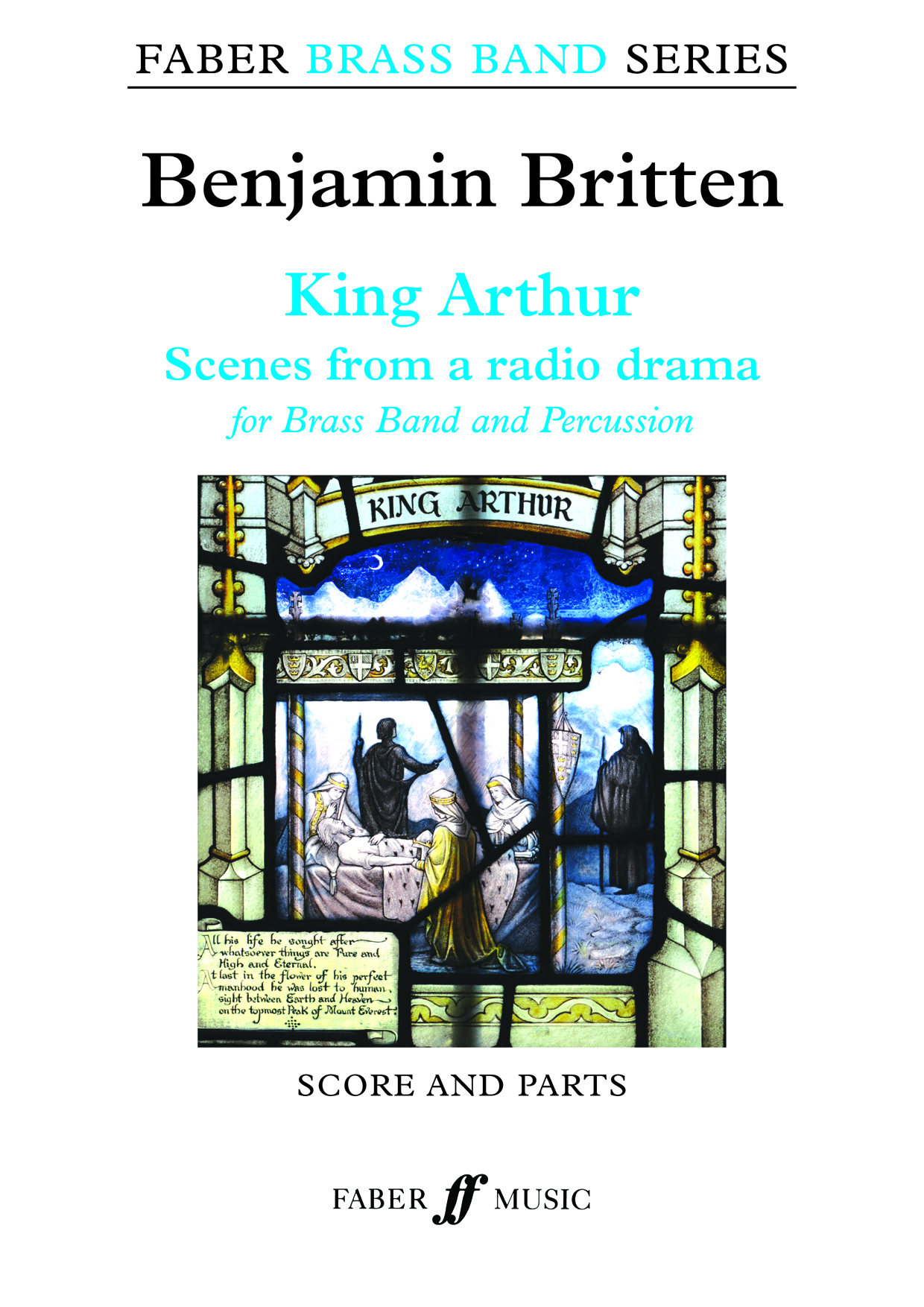
King Arthur (Scenes from a radio drama) was the first of 28 scores Benjamin Britten (1913-1976) composed for radio between 1937 and 1947. It was an ambitious dramatisation of King Arthur's life and times - part pageant, part play, part cantata - written by D.G. Bridson.This colourful suite incorporates the Introduction, a dramatic Wild Dance, some of the music underscoring the scenes for Galahad and The Holy Grail, and two vivid battle scenes, ending with The Final Battle and Apotheosis.
In Stock: Estimated dispatch 1-3 working days
-
 £35.00
strange geometry
Descriptionstrange geometrywas commissioned by Morgan Griffiths and the Hammonds Saltaire Band for their performance at the Brass in Concert Championships of 2015.As a bit of a space/sci-fi geek, as well as a musician, two events during the summer of 2015 had a particular effect on me. The first was the tragic early death in a plane crash of the famous film composer James Horner. Horner's music, particularly in films like 'Star Trek II: The Wrath of Khan', 'Avatar', 'Apollo 13' and even his debut in Roger Corman's 1980 budget film 'Battle Beyond the Stars', defined for a generation the sound of sci-fi at the cinema. Along with John Williams he created the vocabulary for those who wish to express other-worldly wonder in music and his inventive talent will be much missed in an industry where originality has become something of a dirty word in recent years.The second event was the epic flyby of Pluto by the NASA New Horizons spacecraft. There are many reasons to find this mission inspiring - for example, the scientists and engineers behind it created a craft that has travelled at 37,000 mph for nine years and three billion miles to arrive within seventy-two seconds of the predicted time for the flyby. That they achieved this with such accuracy is an outstanding tribute to humanity's ingenuity and insatiable curiosity. However, the most exciting aspect of the mission was the clear, high resolution pictures of this unthinkably remote and inhospitable world beamed back to mission control. The best previous image of Pluto was an indistinct fuzzy blob - suddenly we could see mountains made of ice, glaciers of methane and carbon monoxide and nitrogen fog - features previously unimagined on a world thought to be a slightly dull ball of cold rock. The BBC's venerable astronomy programme 'The Sky at Night' waxed lyrical about these newly discovered features, referring to "the surprising discoveries of mountains and strange geometry on the surface of this cold distant world".I like to think that Horner would have been as inspired as I have been by this real-life science story, and this piece uses some of the vocabulary of the sci-fi movie soundtrack in a tribute to the memory of a great musician and to the inspirational geeks at NASA who have boldly taken us where no-one has gone before.Note: This work comes with a B4 portrait score. Listen to a preview and follow the music below!
Estimated dispatch 7-14 working days
-
 £30.00
Janacek's 'Taras Bulba' - Janacek
Comments from Tim Paton, the arranger of Janacek's 'Taras Bulba': "I will never forget the day in 1967 when I was introduced to the music of Leos Janacek, a Czech composer born in 1854, who died in 1928. Janacek was little known in Britain until the 1960's, when the conductor Charles Macherras introduced his unique music. I heard a recording of Macherras conducting the Pro Arte Orchestra in a performance of Janacek's "Sinfonietta".It was in 1969 that I first heard Janacek's Symphonic Rhapsody, "Taras Bulba".Janacek's music is exciting, powerful, emotive, impassioned and unpredictable.I have taken the first and third movements of this piece, and adapted them for Brass Band, which was at times extremely difficult, but rewarding. It sometimes took up to an hour to be satisfied that a mere several bars had been reproduced to convey the composer's intentions.The Death of AndriThe Cossaks, under the leadership of Taras Bulba, are fighting against the Poles in the 17th century. Taras's son Andri seeks to rescue his love, a Polish princess, from a city which is being besieged by the Cossaks. Having found her, he throws in his lot with the Poles, but is finally captured by his father, who executes him as a traitor before riding off again to battle.Prophesy and Death of Taras BulbaTaras himself is finally captured and condemned to be nailed to a tree and burned alive. As the flames creep around him, Taras has the satisfaction of seeing histroops escape, and as he dies, sees a vision of his country freed at last.This is incredibly descriptive music. The mood is constantly changing, creating feelings of love and anger, celebration and melancholy, despair and triumph.This Brass Band EditionThe duration of the original symphonic rhapsody, three movements, is approximately 23 minutes. I chose the first and third movements, so the Brass Band edition is approximately 14 minutes. The main reason is twofold: Being realistic about the demands this music would place on the stamina of the brass player; Keeping the piece less than 15 minutes, so that, if desired, it could be used on the contest platform.Two unique qualities of Janacek's music had to be taken into account when preparing this brass band version. His compositional technique was individual, at times not sticking to traditional expectations, in both form and orchestration. I imagined what the genius himself would have said looking at my work, and how to tackle a particular section to emulate his original intentions. This was particularly the case when dealing with high woodwind and violin parts, the use of tremolo in string parts, and the orchestral harp.Percussion: Janacek included timpani, side drum, cymbals, triangle and tubular bells. For reasons stated previously, I have also included xylophone and glockenspiel. I have also added the gong in a couple of places to enhance the dramatic effect of the music.
In Stock: Estimated dispatch 3-5 working days
-
 £79.95
Neverland - Christopher Bond
"All children, except one, grow up" wrote J.M. Barrie about Peter Pan in 1911; the first line and an expression of beautiful melancholy and fantasy, coming to represent one of the best-loved children's stories of the twentieth century. 'Peter & Wendy', as the book was first released, has subsequently been transformed into adaptations for film and stage, with subsequent books based on this iconic tale. In writing this new work for brass band, the composer has taken three of the main themes from J. M. Barrie's book, and used these themes to create new musical material, forming a work in three contrasting sections. I. Journey to Neverland The opening of the work, mysterious in its style, reflects the opening chapters of the story - a leafy London street, still in the dead of night - with the music transforming quickly as it builds in texture and momentum - a Journey to Neverland through the night sky; Second Star to the Right and straight on 'til morning. "Then Peter knew that there was not a moment to lose. 'Come,' he cried imperiously, and soared out at once into the night, followed by John and Michael and Wendy. Mr & Mrs Darling and Nana rushed into the nursery too late. The birds were flown." II. The Windows that Closed The central section of the work takes its inspiration from the sense of longing throughout the book, mainly by Peter Pan, the Darling Children & The Lost Boys. Distant memories of life before Neverland, memories of the Lost Boys' mothers, and regret at what the children have missed. Peter says "Long ago, I thought like you that my mother would always keep the window open for me; so I stayed away for moons and moons and moons, and then flew back; but the window was barred, for mother had forgotten all about me, and there was another little boy sleeping in my bed." III. Aboard the Pirate Ship The final section of the work takes its inspiration from the Pirate Ship, and Peter Pan's ultimate battle with its infamous Captain Hook. "In person, he was cadaverous and blackavized, and his hair was dressed in long curls, which at a distance looked like black candles, and gave a singularly threatening expression to his handsome countenance. His eyes were the blue of the forget-me-not, and of a profound melancholy, save when he was plunging his hook into you, at which time two red spots appeared in them and lit them up horribly."
Estimated dispatch 10-14 working days
 View Music
 Listen to MP3