
Results
-
 £37.95
Benvenuto Cellini (Brass Band - Score only) - Berlioz, Hector - Wright, Frank
Berlioz's opera Benvenuto Cellini was first produced in Paris in 1838 but was withdrawn as a failure, and it was not until the production in Dresden in 1888 that it was finally acclaimed by the Germans as a triumph. Adapted from certain episodes recorded in the memoirs of Benvenuto Cellini, Tuscan sculptor and goldsmith, the story, laid in Rome during the mid-sixteenth century, is not strictly historical. The short opening Allegro, marked deciso con impeto, is conceived in the most brilliant Berlioz manner, utilising full instrumentation. In the Larghetto we meet at once the first of the opera themes - the Cardinal's aria (from the last act) introduced in the bass, quasi pizzicato. A second melody leads to a resumption of the Allegro, the contrasting second subject in the tenor horns being an adaptation of Teresa's aria (Act I). Towards the end the Cardinal theme is re-introduced by trombones, fortissimo against an energetic cornet and euphonium passage (senza stringendo - without hurry, says the score). After a unison passage storming skywards, there is a sudden, dramatic three-bar silent pause broken by Eb basses alone, again stating the Cardinal theme. A simple molto crescendo on the dominant, begun piano, leads to the long, resounding chord.
Estimated dispatch 7-14 working days
-
 £82.95
Benvenuto Cellini (Brass Band - Score and Parts) - Berlioz, Hector - Wright, Frank
Berlioz's opera Benvenuto Cellini was first produced in Paris in 1838 but was withdrawn as a failure, and it was not until the production in Dresden in 1888 that it was finally acclaimed by the Germans as a triumph. Adapted from certain episodes recorded in the memoirs of Benvenuto Cellini, Tuscan sculptor and goldsmith, the story, laid in Rome during the mid-sixteenth century, is not strictly historical. The short opening Allegro, marked deciso con impeto, is conceived in the most brilliant Berlioz manner, utilising full instrumentation. In the Larghetto we meet at once the first of the opera themes - the Cardinal's aria (from the last act) introduced in the bass, quasi pizzicato. A second melody leads to a resumption of the Allegro, the contrasting second subject in the tenor horns being an adaptation of Teresa's aria (Act I). Towards the end the Cardinal theme is re-introduced by trombones, fortissimo against an energetic cornet and euphonium passage (senza stringendo - without hurry, says the score). After a unison passage storming skywards, there is a sudden, dramatic three-bar silent pause broken by Eb basses alone, again stating the Cardinal theme. A simple molto crescendo on the dominant, begun piano, leads to the long, resounding chord.
Estimated dispatch 7-14 working days
-
 £24.00
O Mio Babbino Caro (Trombone Solo with Brass Band - Score and Parts) - Puccini, Giacomo - Wilkinson, Keith M.
This famous aria is from the opera Gianni Schicchi. Lauretta, daughter of Gianni Schicchi, has fallen in love with Rinuccio but there are huge tensions between their two families which threaten to keep the young couple apart. The rather discordant music which opens portrays these tensions before giving way to Lauretta's tender appeal to her father to allow her to marry the man she loves. This arrangement was prepared at the request of Brett Baker to be performed with Brass Band Of The Western Reserve, musical director Dr Keith M Wilkinson, during his visit in May, 2011.
Estimated dispatch 7-14 working days
-
 £59.99
Sheep May Safely Graze (Brass Band - Score and Parts) - Bach, Johann Sebastian - Sparke, Philip
The Hunt Cantata (No.208) is one of more than 20 secular cantatas. It contains the famous aria 'Sheep May Safely Graze', originally written for a rather large orchestra and mixed choir. Bring a little of the Baroque era to your concert with this first class arrangement by Philip Sparke.Duration: 5:00
Estimated dispatch 7-14 working days
-
 £59.99
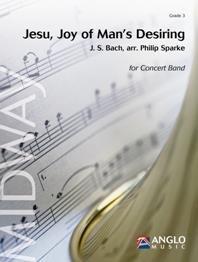
Jesu, Joy of Man's Desiring (Brass Band - Score and Parts) - Bach, Johann Sebastian - Sparke, Philip
Bach's appointment as the Cantor at Leipzig's Thomaskirche in 1723 required him to produce a new cantata for every Sunday service. Jesu, Joy of Man's Desiring is taken from his Cantata No.147 and is unusually elaborate, treated more like an aria than a chorale. It is perhaps the best-loved cantata movement from Bach's entire output and is a certain crowd pleaser for your concert programme.Duration: 2:45
Estimated dispatch 7-14 working days
-
 £37.95
ON WITH THE MOTLEY (Bb or Eb Solo with Brass Band) - Leoncavallo, Ruggero - Farr, Ray
Supplied with parts for soloist in E-flat or B-flat treble clef. This famous aria from the Opera Pagliacci is popular all over the world and sits perfectly for the euphonium. Recorded on Polyphonic QPRL010D Firebird. Duration 3:00.
Estimated dispatch 7-14 working days
-
 £30.00
Senza Mamma (from Suor Angelica) (Soprano Cornet Solo with Brass Band - Score and Parts) - Puccini, Giacomo - Littlemore, Phillip
The aria Senza Mamma (Without your Mother), sung in the opera by Sister Angelica, is one of the most poignant moments in any of Puccini's works, and has remained a repertoire favourite. Suor Angelica?is the second instalment in Puccini's triptych of one-act operas commonly known as Il trittico. The opera chronicles the fall, redemption, and final transfiguration of its central character, Sister Angelica, who has taken the veil in repentance for bearing a child out of wedlock. The libretto, by Giovacchino Forzano, was immediately appealing to the composer, whose sister Igenia was Mother Superior of the convent at Vicepelago. Though it contains some of Puccini's most adventurous writing (the musical language at times even flirts with polytonality) the work has not enjoyed popularity comparable to that of its companions,?Il Tabarro?and?Gianni Schicchi, each of which has enjoyed an independent life in the repertory. Duration: 3:40
Estimated dispatch 7-14 working days
-
 £30.00
Senza Mamma (from Suor Angelica) (Vocal Solo (Soprano) with Brass Band - Score and Parts) - Puccini, Giacomo - Littlemore, Phillip
The aria Senza Mamma (Without your Mother), sung in the opera by Sister Angelica, is one of the most poignant moments in any of Puccini's works, and has remained a repertoire favourite. Suor Angelica?is the second instalment in Puccini's triptych of one-act operas commonly known as Il trittico. The opera chronicles the fall, redemption, and final transfiguration of its central character, Sister Angelica, who has taken the veil in repentance for bearing a child out of wedlock. The libretto, by Giovacchino Forzano, was immediately appealing to the composer, whose sister Igenia was Mother Superior of the convent at Vicepelago. Though it contains some of Puccini's most adventurous writing (the musical language at times even flirts with polytonality) the work has not enjoyed popularity comparable to that of its companions,?Il Tabarro?and?Gianni Schicchi, each of which has enjoyed an independent life in the repertory. Duration: 3:40
Estimated dispatch 7-14 working days
-
 £169.99
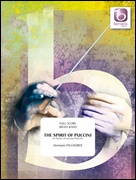
SPIRIT OF PUCCINI, The (Brass Band) - Pallhuber, Hermann
The famous Puccini motifs in this work are taken from Tosca (E lucevan le stelle), Turandot (Nessun dorma), Gianni Schicci (O mio babbino caro) and a quite funny little persifl age of the aria Senti L'ora e vicina from Tosca. The Spirit of Puccini has testing moments for each of the principal players of the band?s sections. Even although the music was inspired by this famous Italian composer, Hermann Pallhuber has succeeded in creating a piece of 'real band music' combining both the Italian influences and the modern British brass band sound. Duration: 16:00.
Estimated dispatch 7-14 working days
-
 £30.00
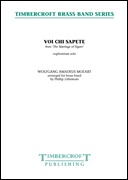
Voi Che Sapete (from The Marriage of Figaro) (Euphonium Solo with Brass Band - Score and Parts) - Mozart, Wolfgang Amadeus - Littlemore, Phillip
Mozart's opera, The Marriage of Figaro, was based on what was a rather scandalous play by Pierre Beaumarchais, because the drama involves an incompetent nobleman being upstaged by a crafty, quick-witted servant named Figaro, in their quest for the same woman. The action takes place in just one day and offers a series of awkward and humorous situations, complete with a vibrant dialogue between the all the main characters. Voi Che Sapete?is performed by Cherubino, who is about to be sent off to the army because the Count finds him a nuisance. When Cherubino appears before the Countess and Susanna to tell them of his fate, this aria is sung at the request of Susanna for a love song. Cherubino is characterized as a young adolescent who is in love with every woman he meets, and because his voice is yet unbroken, he is always played by a female singer.?Duration: 2:30
Estimated dispatch 7-14 working days
 View Music