
Results
-
 £79.99
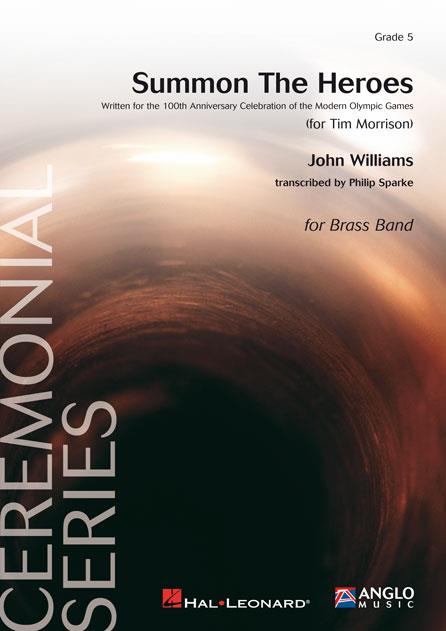
Summon the Heroes (Brass Band - Score and Parts) - Williams, John - Sparke, Philip
John Williams has written ceremonial music for many major events and ceremonies but of all these occasional pieces Summon the Heroes is the most elaborate and musically complex. It was composed for the Atlanta Olympic Games in 1996 and performed at the opening ceremony. As with all of John Williams's ceremonial compositions this work makes an ideal brass band work that will bring the house down as a concert opener.Duration: 6:20
Estimated dispatch 7-14 working days
-
 £58.00
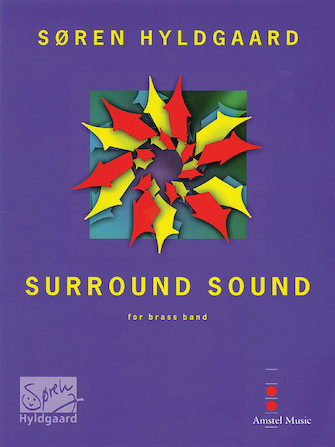
Surround Sound (Brass Band - Score and Parts) - Hyldgaard, Soren
This unusual work really lives up to its title with sound hitting the audience from all sides. The composer intended that this work not only be heard but experienced. The audience will feel how the drums and cornet figures fly around the auditorium as if a ball being kicked between players. This innovative piece is sure to be a hit with all who hear and play it. Duration: 2.45
Estimated dispatch 7-14 working days
-
 £26.95
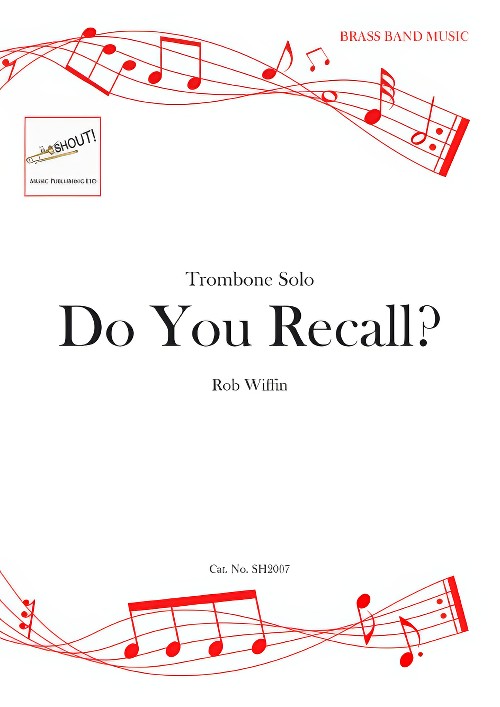
Do You Recall? (Trombone Solo with Brass Band - Score and Parts) - Wiffin, Rob
A slow, bluesy solo for trombone with band accompanimentLike many people, I took the opportunity offered by the COVID lockdown in Spring of 2020 to sort through old paperwork. I discovered a lot of songs that had not seen the light of day for many years and were mostly written with just the melody and chord symbols. Some offered the potential of becoming instrumental solos with a combination of heart-on-the-sleeve melodies the like of which I would not write now, together with maybe a greater sophistication in the instrumental writing. I had the notion in the back of my mind that Do you recall?; would work as a trombone solo but it seemed to fight me all the way. However, once finished it has proved to appeal to trombonists and has already been recorded by Brett Baker. It is not intrinsically difficult but needs a sense of the appropriate slow swing style and good control throughout the range.- Rob WiffinDuration: 4.15
Estimated dispatch 7-14 working days
-
 £50.00
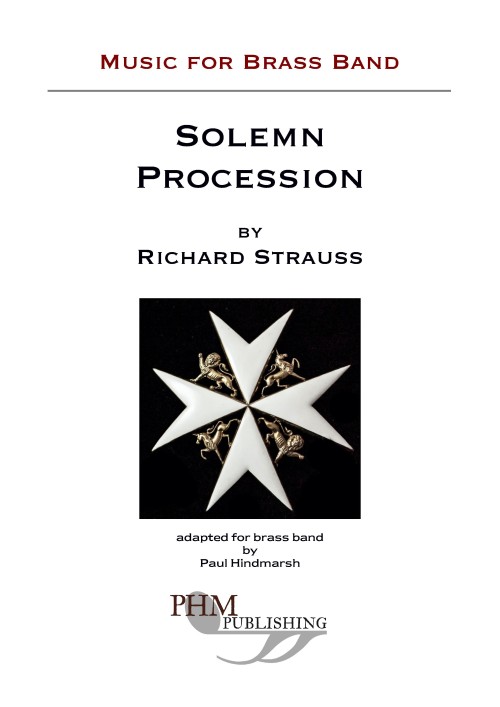
Solemn Procession (Brass Band - Score and Parts) - Strauss, Richard - Hindmarsh, Paul
Richard Strauss (1864 - 1949) was a famous conductor and composer when he wrote Feierlicher Einzug der Ritter des Johanniter-Ordens (Solemn Entrance of the Knights of the Order of Saint John) in 1909. One of only a handful of his works written exclusively for winds, Strauss composed Feierlicher Einzug for the investiture ceremonies of the Order of St. John, a Christian military order that was founded in Jerusalem in 1023 to care for poor, sick, or injured pilgrims journeying to the Holy Land.Strauss scored Feierlicher Einzug (TrV 224) for a large ensemble of fifteen trumpets, four horns, four trombones, two tubas and timpani. He saw enough potential in its stately character and majestic conclusion to produce a version for symphony orchestra with organ and it has been arranged for a variety of brass ensembles with or without organ since then.This version for British style brass band was adapted from the original in 1990 by Paul Hindmarsh for the exclusive use of Besses o' th' Barn Band, of which he was then the musical director. Now that the music of Richard Strauss published in his lifetime is in the public domain, Solemn Procession, as it has been rendered in English, can be enjoyed by all brass bands and their audiences.- Paul HindmarshDuration: 6.00
Estimated dispatch 7-14 working days
-
 £35.00
Gymnopedie No.1 (Brass Band - Score and Parts) - Satie, Erik - Littlemore, Phillip
Erik Satie's Gymnopedies are a series of three short piano pieces that were first published in 1888. These atmospheric pieces, all written in 3/4 time and sharing a common theme and structure, are recognised the world over and are his most famous compositions. Gymnopedie No.1?is divided into two almost identical parts, with a steady accompanying rhythm of crotchet-minim, crotchet-minim (short-long, short-long) that remains constant throughout - with the exception of the last two bars of each part! This gently lilting background supports an expressive melodic line which creates the occasional dissonance, yet seems impressively tension free. Duration: 8:10
Estimated dispatch 7-14 working days
-
 £35.00
I Saw Three Ships (Brass Band - Score and Parts) - McKenzie, Jock
This is a traditional English carol rumoured to have originated in Derbyshire. The earliest printed version is from the 17th century and the familiar version was later published in William Sandys' collection of 'Christmas Carols Ancient and Modern' in 1833. There are numerous theories as to the meaning of the carol's words; after all, Bethlehem, the place of Jesus' birth is not a coastal location. It has been suggested that the ships are actually camels (ships of the desert) used by the Magi for their visit to the baby Jesus. My arrangement takes advantage of the traditional 'jig' style of this carol to add a little 'Celtic' flavour. Duration: 3.00
Estimated dispatch 7-14 working days
-
 £174.99
The Turing Test (Brass Band - Score and Parts) - Dobson, Simon
Alan Turing is considered the father of modern computational science and much, if not all, of our modern computer technology and the connectivity that we now take for granted is born of the work of this one great, but troubled man. His famous test was designed to prove whether artificial intelligence (AI) could successfully imitate human thought. The single movement of The Turing Test is essentially non-programmatic, but it does seek to show something of the emotion and colour of Turing's life in its different sections. The composer employs bi-tonality and complex rhythms to show opposing worlds colliding. At the end of each test, we must decide: has true AI been born? Duration: 19.45
Estimated dispatch 7-14 working days
-
 £104.99
Viking Age (Brass Band - Score and Parts) - Deleruyelle, Thierry
The Viking age lasted from the late eighth, to the middle of the eleventh century. During this period, Scandinavian warriors and merchants explored, plundered and left their mark on numerous territories. This work is based on a series of four notes that appear in different forms, consisting of 4 movements: Northern Men, Explorer, Raids and Heritage. It is an impressive and spectacular piece, with lots of interesting and playful parts for all sections. This is a perfect contest piece or an outstanding work for thematic concerts.Duration: 10.40
Estimated dispatch 7-14 working days
-
£22.99
Viking Age (Brass Band - Score only) - Deleruyelle, Thierry
The Viking age lasted from the late eighth, to the middle of the eleventh century. During this period, Scandinavian warriors and merchants explored, plundered and left their mark on numerous territories. This work is based on a series of four notes that appear in different forms, consisting of 4 movements: Northern Men, Explorer, Raids and Heritage. It is an impressive and spectacular piece, with lots of interesting and playful parts for all sections. This is a perfect contest piece or an outstanding work for thematic concerts.Duration: 10.40
Estimated dispatch 7-14 working days
-
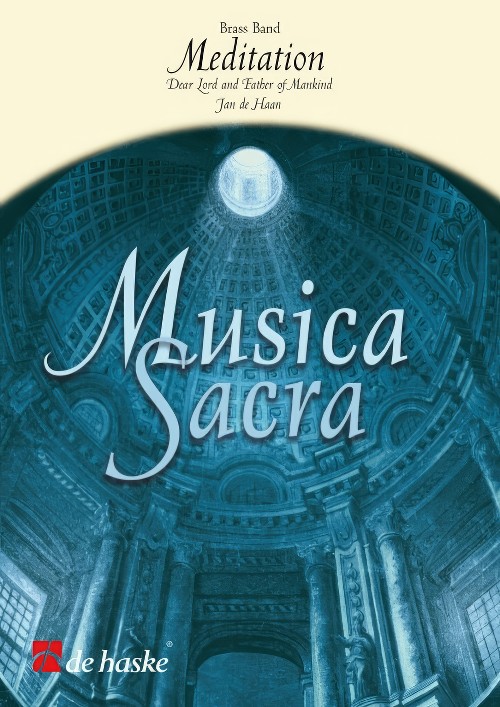 £69.99
Meditation (Brass Band - Score and Parts) - De Haan, Jan
Meditation is based on Dear Lord and Father of Mankind (1887) by the English composer and organist Frederick Charles Maker (1844-1927). This is a calm, introverted work that however has an intense effect. In the first section, the solo euphonium is given an important role, leading to one of the loveliest of all English hymn melodies.Duration: 6:45
Estimated dispatch 7-14 working days
 View Music