
Results
-
 £35.00
Cranborne Chase - Philip Harper
Cranborne Chase was commissioned by the Charles Church Camberley Band in 2011 in memory of solo horn player and life-long member Libby Godden.Libby joined the band in 1966 which marked the start of a long association, during which she progressed to the solo horn position, recruited four family members to play with the band, and had spells on the committee as publicity officer and chairman. Most recently she led the Training Ensemble in her role as Assistant Bandmaster. Libby continued to be active with the band despite a diagnosis of cancer, which finally claimed her life in February 2011.Programme notes from the composer, Philip Harper:The Music: As well as invoking the joyous spirit befitting Libby's approach to life, there are several musical ideas woven into the score. After a brief introduction, the main theme uses the musical letters of Libby's surname: G, O(A), D, D, E, N(G), whilst the harmonic progression here is based on that of the slow movement of Edward Gregson's Partita for Brass Band, one of Libby's favourite passages of music.To further imbue the piece with Libby's persona, the lyrical theme is first introduced as a traditional brass band quartet (two cornets, horn and euphonium), one of her favourite musical genres.After the first rehearsal of the piece the band members, with the composer's blessing, decided on the name Cranborne Chase, which is the name of a place in Dorset with which Libby Godden had a great affinity.Raising Funds for Cancer Research UK. The Music Company (UK) Ltd has been involved in charitable work for many years both nationally and internationally. Through publishing Cranborne Chase, The Music Company is extending its charitable support by helping to raise funds for the Cancer Research UK charity, in memory of Libby Godden (a band-friend since childhood of Clair Tomalin, Business Director of The Music Company (UK) Ltd).A donation will therefore be made by The Music Company (UK) Ltd for every purchased set of this piece. There is a hope that every band in the UK will have Cranborne Chase as part of their library and included in their concert programmes, enabling a significant amount of money to be raised for Cancer Research UK through the enjoyment of music.
In Stock: Estimated dispatch 3-5 working days
-
Laughter In The Rain - Sedaka & Cody - Len Jenkins
In America, this was Neil Sedaka's comeback single. Whilst he had 11 Top-40 hits from 1960-1963, he could not score a hit after the British Invasion of the 60's. His fortunes were such in America that this song was at first released only in England, where it went to No. 15. However, whilst recording with 10cc in London, Sedaka reconnected with his friend Elton John who offered to put out a Sedaka single in America under his own record label, Rocket Records. Since "Laughter In The Rain" was already a hit in the UK, that was the choice, and anything with Elton John's name on it was sure to get some spins. So, later in 1974, "Laughter" was released on Rocket Records with liner notes and endorsements by Elton, and the song took off, becoming his second million-seller 12 years after his first, which was "Breaking Up Is Hard To Do."
-
£42.00
FINALE from Francesca da Rimini - Tchaikovsky, P - Mcknight, I
Tchaikovsky's symphonic poem Francesca da Rimini: Symphonic Fantasy afterDante, Op. 32, was composed in less than three weeks during his visit to Bayreuthin the autumn of 1876.This fantasia presents a symphonic interpretation of the tragic tale of Francescada Rimini, a beauty who was immortalised in Dante's Divine Comedy. Francescada Rimini, a noblewoman, fell in love with her husband's brother. After the loverswere discovered and killed in revenge by the husband, they were condemned toHell for their adulterous passions. Iain McKnight's arrangement of the exciting Finale was first performed by theLeyland Band at the 2011 Brass in Concert and was used to conclude the band'swinning performance.
In Stock: Estimated dispatch 1-3 working days
-
 £94.95
Rhapsody on a Theme by Purcell - Contest Edition (Brass Band - Score and Parts)
Contest VersionIn his relatively short lifetime, Henry Purcell (1659 -1695) achieved stellar musical success and was known and admired internationally by his contemporaries. He is justifiably considered one of England's greatest composers.I thought long and hard before using this magnificent theme as the basis for a band piece because I think that Benjamin Britten has said just about everything possible regarding it in his The Young Person's Guide to the Orchestra. Bearing this in mind, I tentatively set about working on this composition. Once started though, the job became fun because the theme still yielded possibilities - even after Britten!The piece is basically a set of linked variations, much like Rachmaninov's great Rhapsody on theme by Paginini. The music starts slowly and makes much use of crisply dotted rhythms - a Purcellian characteristic. The theme is heard twice before the music changes into a jaunty duple time variation based on the opening motif of Purcell's theme. After this, the mood changes to a waltz-like variation in which clear references to the original theme can be heard. The slow movement follows, and is based on rising and descending scalic figures. This variation is an 'A-B-A' movement with two similar passages framing a more vigorous middle section which features antiphonal fanfare-like figures. Without any preamble, the last variation launches itself - a rumbustious dance which has a distinctive feel to it.The theme eventually reappears as a counter-melody to this dance music before a final triumphant treatment of the melody featuring a somewhat athletic bass line. The music accelerates at the Coda and disappears in a 'puff of smoke'.- Kevin Norbury
Estimated dispatch 7-14 working days
-
£39.95
Rhapsody on a Theme by Purcell - Contest Edition (Brass Band - Score only)
Contest VersionIn his relatively short lifetime, Henry Purcell (1659 -1695) achieved stellar musical success and was known and admired internationally by his contemporaries. He is justifiably considered one of England's greatest composers.I thought long and hard before using this magnificent theme as the basis for a band piece because I think that Benjamin Britten has said just about everything possible regarding it in his The Young Person's Guide to the Orchestra. Bearing this in mind, I tentatively set about working on this composition. Once started though, the job became fun because the theme still yielded possibilities - even after Britten!The piece is basically a set of linked variations, much like Rachmaninov's great Rhapsody on theme by Paginini. The music starts slowly and makes much use of crisply dotted rhythms - a Purcellian characteristic. The theme is heard twice before the music changes into a jaunty duple time variation based on the opening motif of Purcell's theme. After this, the mood changes to a waltz-like variation in which clear references to the original theme can be heard. The slow movement follows, and is based on rising and descending scalic figures. This variation is an 'A-B-A' movement with two similar passages framing a more vigorous middle section which features antiphonal fanfare-like figures. Without any preamble, the last variation launches itself - a rumbustious dance which has a distinctive feel to it.The theme eventually reappears as a counter-melody to this dance music before a final triumphant treatment of the melody featuring a somewhat athletic bass line. The music accelerates at the Coda and disappears in a 'puff of smoke'.- Kevin Norbury
Estimated dispatch 7-14 working days
-
 £74.95
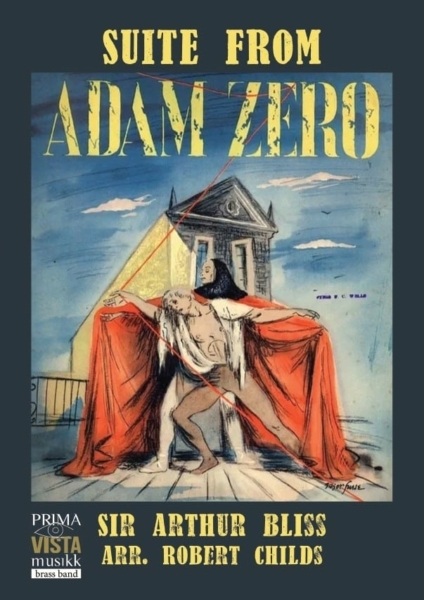
Adam Zero, Suite from (Brass Band - Score and Parts)
Selected as the Section 2 test piece for the National Brass Band Championships of Great Britain 2025Following his ballet Checkmate, Bliss composed another score for the, by then, Sadler's Wells Ballet, Miracle in the Gorbals, which was choreographed by Robert Helpmann, to a scenario by Michael Benthall. Premired in 1944, the ballet made a considerable impact and was a box-office success. It was followed in turn by a further collaboration with Helpmann and Benthall, Adam Zero. This would serve Helpmann, in the eponymous role, as a vehicle in two respects: demonstrating his gifts as a dancer-actor and as a choreographer. First performed at the Royal Opera House, Covent Garden, on 8 April 1946, Adam Zero was conducted by Constant Lambert, the work's dedicatee. Bliss considered it 'his most varied and exciting ballet score'. Benthall provided a synopsis for the programme:There is a philosophy that life moves in an endless series of timeless cycles. As Nature passes through Spring, Summer, Autumn and Winter, so man is born, makes a success in his own particular sphere, loses his position to a younger generation, sees his world crumble before his eyes and only finds peace in death. This age-old story is told in terms of a Company creating a ballet and calling on the resources of the theatre to do so. Lighting, stage mechanism, dance conventions, musical forms and costumes and scenery of all periods are used to symbolize the world of 'Adam Zero'.Apart from Adam, as the Principal Dancer, other main roles included the Stage Director (representing Omnipotence), and Adam's Fates (Designer, Wardrobe Mistress, and Dresser). 'The Woman in this allegory', wrote Bliss, 'under the symbol of the Choreographer, was both the creator and destroyer of Adam: his first love, his wife, his mistress, and finally the figure of beneficent Death.' When the curtain rose, the 'audience saw the Covent Garden stage right back to the wall, completely empty except for the protagonists, 'the Company poised, still and expectant, as they await the birth of... Adam Zero.'Unfortunately, soon after the premire, Helpmann injured himself and had to withdraw from the remaining performances. Despite generally positive reviews, the ballet did not capture the imagination of audiences and, to Bliss's considerable disappointment, was not revived. Seventy years would elapse before its first major return to the stage, in 2016, performed by the ballet company of Stadttheater Bremerhaven with choreography by Sergei Vanaev.Bliss extracted a concert suite from the ballet, conducting its first performance with the City of Birmingham Symphony Orchestra on 28 October 1948. For his own suite, arranged for brass band in 2023, Dr Robert Childs chose three dances linked to the seasons, book-ending them with the ebullient 'Fanfare Overture' and 'Fanfare Coda'. After Adam has grown to manhood, his Fates clothe him in a costume synonymous with confident youth, appropriate for the virile, ardent 'Dance of Spring'. In the 'Approach of Autumn', Adam, now wearing a sombre costume, has grown older: his Fates have streaked grey in his hair and put lines on his face. But they had earlier raised Adam to the zenith of his power, and the 'Dance of Summer' depicts him in the prime of life, in music of sweeping grandeur. The 'Fanfare Coda' signals that the next cycle of life is about to begin.Duration: 10.30
Estimated dispatch 7-14 working days
-
£31.95
Adam Zero, Suite from (Brass Band - Score only)
Selected as the Section 2 test piece for the National Brass Band Championships of Great Britain 2025Following his ballet Checkmate, Bliss composed another score for the, by then, Sadler's Wells Ballet, Miracle in the Gorbals, which was choreographed by Robert Helpmann, to a scenario by Michael Benthall. Premired in 1944, the ballet made a considerable impact and was a box-office success. It was followed in turn by a further collaboration with Helpmann and Benthall, Adam Zero. This would serve Helpmann, in the eponymous role, as a vehicle in two respects: demonstrating his gifts as a dancer-actor and as a choreographer. First performed at the Royal Opera House, Covent Garden, on 8 April 1946, Adam Zero was conducted by Constant Lambert, the work's dedicatee. Bliss considered it 'his most varied and exciting ballet score'. Benthall provided a synopsis for the programme:There is a philosophy that life moves in an endless series of timeless cycles. As Nature passes through Spring, Summer, Autumn and Winter, so man is born, makes a success in his own particular sphere, loses his position to a younger generation, sees his world crumble before his eyes and only finds peace in death. This age-old story is told in terms of a Company creating a ballet and calling on the resources of the theatre to do so. Lighting, stage mechanism, dance conventions, musical forms and costumes and scenery of all periods are used to symbolize the world of 'Adam Zero'.Apart from Adam, as the Principal Dancer, other main roles included the Stage Director (representing Omnipotence), and Adam's Fates (Designer, Wardrobe Mistress, and Dresser). 'The Woman in this allegory', wrote Bliss, 'under the symbol of the Choreographer, was both the creator and destroyer of Adam: his first love, his wife, his mistress, and finally the figure of beneficent Death.' When the curtain rose, the 'audience saw the Covent Garden stage right back to the wall, completely empty except for the protagonists, 'the Company poised, still and expectant, as they await the birth of... Adam Zero.'Unfortunately, soon after the premire, Helpmann injured himself and had to withdraw from the remaining performances. Despite generally positive reviews, the ballet did not capture the imagination of audiences and, to Bliss's considerable disappointment, was not revived. Seventy years would elapse before its first major return to the stage, in 2016, performed by the ballet company of Stadttheater Bremerhaven with choreography by Sergei Vanaev.Bliss extracted a concert suite from the ballet, conducting its first performance with the City of Birmingham Symphony Orchestra on 28 October 1948. For his own suite, arranged for brass band in 2023, Dr Robert Childs chose three dances linked to the seasons, book-ending them with the ebullient 'Fanfare Overture' and 'Fanfare Coda'. After Adam has grown to manhood, his Fates clothe him in a costume synonymous with confident youth, appropriate for the virile, ardent 'Dance of Spring'. In the 'Approach of Autumn', Adam, now wearing a sombre costume, has grown older: his Fates have streaked grey in his hair and put lines on his face. But they had earlier raised Adam to the zenith of his power, and the 'Dance of Summer' depicts him in the prime of life, in music of sweeping grandeur. The 'Fanfare Coda' signals that the next cycle of life is about to begin.Duration: 10.30
Estimated dispatch 7-14 working days
-
£21.95
Adam Zero, Suite from (Brass Band - Study Score)
Selected as the Section 2 test piece for the National Brass Band Championships of Great Britain 2025Following his ballet Checkmate, Bliss composed another score for the, by then, Sadler's Wells Ballet, Miracle in the Gorbals, which was choreographed by Robert Helpmann, to a scenario by Michael Benthall. Premired in 1944, the ballet made a considerable impact and was a box-office success. It was followed in turn by a further collaboration with Helpmann and Benthall, Adam Zero. This would serve Helpmann, in the eponymous role, as a vehicle in two respects: demonstrating his gifts as a dancer-actor and as a choreographer. First performed at the Royal Opera House, Covent Garden, on 8 April 1946, Adam Zero was conducted by Constant Lambert, the work's dedicatee. Bliss considered it 'his most varied and exciting ballet score'. Benthall provided a synopsis for the programme:There is a philosophy that life moves in an endless series of timeless cycles. As Nature passes through Spring, Summer, Autumn and Winter, so man is born, makes a success in his own particular sphere, loses his position to a younger generation, sees his world crumble before his eyes and only finds peace in death. This age-old story is told in terms of a Company creating a ballet and calling on the resources of the theatre to do so. Lighting, stage mechanism, dance conventions, musical forms and costumes and scenery of all periods are used to symbolize the world of 'Adam Zero'.Apart from Adam, as the Principal Dancer, other main roles included the Stage Director (representing Omnipotence), and Adam's Fates (Designer, Wardrobe Mistress, and Dresser). 'The Woman in this allegory', wrote Bliss, 'under the symbol of the Choreographer, was both the creator and destroyer of Adam: his first love, his wife, his mistress, and finally the figure of beneficent Death.' When the curtain rose, the 'audience saw the Covent Garden stage right back to the wall, completely empty except for the protagonists, 'the Company poised, still and expectant, as they await the birth of... Adam Zero.'Unfortunately, soon after the premire, Helpmann injured himself and had to withdraw from the remaining performances. Despite generally positive reviews, the ballet did not capture the imagination of audiences and, to Bliss's considerable disappointment, was not revived. Seventy years would elapse before its first major return to the stage, in 2016, performed by the ballet company of Stadttheater Bremerhaven with choreography by Sergei Vanaev.Bliss extracted a concert suite from the ballet, conducting its first performance with the City of Birmingham Symphony Orchestra on 28 October 1948. For his own suite, arranged for brass band in 2023, Dr Robert Childs chose three dances linked to the seasons, book-ending them with the ebullient 'Fanfare Overture' and 'Fanfare Coda'. After Adam has grown to manhood, his Fates clothe him in a costume synonymous with confident youth, appropriate for the virile, ardent 'Dance of Spring'. In the 'Approach of Autumn', Adam, now wearing a sombre costume, has grown older: his Fates have streaked grey in his hair and put lines on his face. But they had earlier raised Adam to the zenith of his power, and the 'Dance of Summer' depicts him in the prime of life, in music of sweeping grandeur. The 'Fanfare Coda' signals that the next cycle of life is about to begin.Duration: 10.30
Estimated dispatch 7-14 working days
-
 £74.95
A Tale of Hope (Brass Band - Score and Parts)
The piece tells the story of Chicago lawyer and Presbyterian church elder Horatio Gates Spafford. In 1873, the Spafford family planned a vacation to England, but last-minute business demands prevented Horatio from sailing with them. Tragedy struck when the ship collided with an iron sailing vessel while crossing the Atlantic, killing 226 people, including all four of Spafford's daughters. His wife, Anna, survived the tragedy, and upon arriving in Cardiff, Wales, she sent a telegram to Spafford that simply read "Saved alone." Shortly afterwards, as Spafford travelled to meet his grieving wife, he was inspired to write the hymn It Is Well with My Soul as his ship passed near where his daughters had died. The hymn was subsequently set to music by fellow American Philip Bliss, with the tune named after the ship on which Spafford's daughters died, Ville du Havre.Composer Steven Ponsford has chosen to portray this story in a substantial composition for brass band. Much of the early music is turbulent, reflecting the long voyage, and then the disaster that claimed Spafford's daughters. After a darker 'Grave' section, the hymn It Is Well With My Soul softly emerges, with the piece ending on a note of optimism and hope.Duration: 11.30
Estimated dispatch 7-14 working days
-
£31.95
A Tale of Hope (Brass Band - Score only)
The piece tells the story of Chicago lawyer and Presbyterian church elder Horatio Gates Spafford. In 1873, the Spafford family planned a vacation to England, but last-minute business demands prevented Horatio from sailing with them. Tragedy struck when the ship collided with an iron sailing vessel while crossing the Atlantic, killing 226 people, including all four of Spafford's daughters. His wife, Anna, survived the tragedy, and upon arriving in Cardiff, Wales, she sent a telegram to Spafford that simply read "Saved alone." Shortly afterwards, as Spafford travelled to meet his grieving wife, he was inspired to write the hymn It Is Well with My Soul as his ship passed near where his daughters had died. The hymn was subsequently set to music by fellow American Philip Bliss, with the tune named after the ship on which Spafford's daughters died, Ville du Havre.Composer Steven Ponsford has chosen to portray this story in a substantial composition for brass band. Much of the early music is turbulent, reflecting the long voyage, and then the disaster that claimed Spafford's daughters. After a darker 'Grave' section, the hymn It Is Well With My Soul softly emerges, with the piece ending on a note of optimism and hope.Duration: 11.30
Estimated dispatch 7-14 working days
 View Music