
Results
-
 £29.95
Judd: Victors Acclaimed
Bramwell Coles became known as the Salvation Army 'march king' a label he began to earn with his first march written in 1906! This march, written in 1945 to mark the end of World War Two, saluted his seven children all of whom returned unscathed from service in the armed forces.
Estimated dispatch 7-14 working days
-
 £24.95
Glorifico Aeternum (Brass Band - Score and Parts)
Dedicated to the memory of Retired Bandmaster Jim Hopkin, Glorifico Aeternum is built around a combination of traditional and contemporary worship songs, Now thank we all our God, Somebody prayed for me, Over all the earth and The King of love my Shepherd is.
Estimated dispatch 7-14 working days
-
 £39.95
Savoy Christmas Medley
Includes: Little Brown Jug; God Rest You Merry Gentlemen; Good King Wenceslas; Joyfully Carol Xmas Bells; The Vicar of Bray; The Moon Shines Bright; Here We Come a Wassailing; The First Noel; Auld Lang Syne.
Estimated dispatch 7-14 working days
-
 £69.95
Le Roi D'ys (Brass Band - Score and Parts)
OvertureLe roi d'Ys (The King of Ys) is an opera in three acts and five tableaux by the French composer douard Lalo, to a libretto by douard Blau, based on the old Breton legend of the drowned city of Ys. That city was, according to the legend, the capital of the kingdom of Cornouaille.
Estimated dispatch 7-14 working days
-
£32.00
Ravenswood - Rimmer, W
William Rimmer, undoubtedly the BritishMarch King as far as brass bands are concerned,penned many famous marcheswhilst he was Music Editor with Wright andRound. Ravenswood was one of his personalfavourites. Freshly engraved andprinted and now with a full conductor'sscore. Probably the most heard march onWhit Friday!3rd section +
In Stock: Estimated dispatch 1-3 working days
-
£45.00
Christmas Music No. 23 - Various
Star of Bethlehem by E. MortonJoyful Tidings by E. MortonKing of Kings by E. MortonHark! The Herald Angels Sing by MendelssohnAdeste Fideles by ReadingChristians Awake by WainwrightIncludes a full band set (no score)
In Stock: Estimated dispatch 1-3 working days
-
£45.00
Christmas Music No. 9 - Wadsworth, G
Hail! The New KingAs Friends We MeetStill VictoriousDays of Cloudless BeautyIncludes a full band set (no score)
In Stock: Estimated dispatch 1-3 working days
-
£13.00
Christmas Music No. 4 - Various
The First Nowell arranged G. HawkinsGood King Wenceslas arranged G. HawkinsGod Rest You, Merry Gentlemen arranged G. HawkinsIt Came Upon the Midnight Clear arranged G. HawkinsOnce in Royal David's City arranged G. HawkinsGood Christian Men, Rejoice arranged G. HawkinsHere We Come A-Wassailing arranged G. HawkinsThe Old Hundredth arranged G. HawkinsA Guid New Year arranged G. Hawkins
In Stock: Estimated dispatch 1-3 working days
-
 £43.99
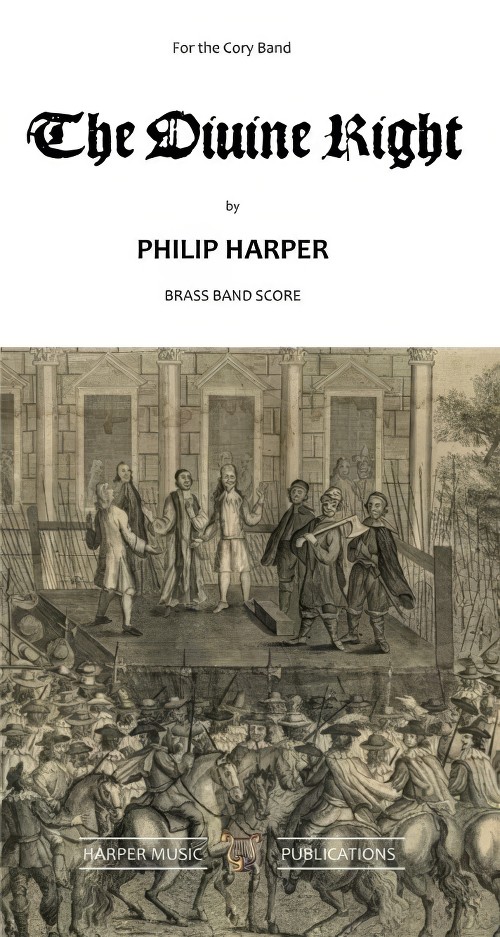
The Divine Right (Brass Band - Score only) - Harper, Philip
At the time of composing this piece, the Arab Spring was sweeping through the Middle East. It seemed that almost every week a new country's people had risen up against the regimes and dictatorships which had prevailed for generations, leaving many nations at a defining crossroads in their history. There were so many possible ways ahead: so many hopes, yet so many uncertainties.This music is a depiction of these revolutionary times, and several musical themes are in turn presented, discussed, considered, fought over, altered, rejected or accepted.Most nations have had, or probably will have, their own Arab Spring, including the United Kingdom. Events of 17th Century Britain provide the context for this piece, particularly those following the execution of the tyrant King Charles I on 30 January 1649. The regicide was in part due to Charless steadfast belief in the Divine Right of Kings, and led to a tumultuous interregnum, where England stood at its own defining crossroads. The music begins turbulently, before King Charles appears and is led to the gallows outside Banqueting House in central London where he is brutally decapitated. From the assembled crowd rose, according to one observer,a moan as I never heard before and desire I may never hear again.The music descends to emptiness.The musical argument which follows is not strictly programmatic, but a number of musical themes are all thrown into the melting pot, representing ideas such as: religion; military force; reasoned Parliamentary debate; and the chattering, irrepressible voice of the people. Additionally, there are some quotations from the music of royalist composer Thomas Tomkins (1572-1656), who was often in tune with the feeling of the times.This defining episode in England's history was brought to a close with the Restoration of the monarchy in 1660, and as the exiled King Charles II rode back into London the diarist John Evelyn wrote:Never was so joyful a day seen in this nation. I stood in the Strand and beheld it, and blessed God.At the end of the piece the bells ring out, and the musical appearance of the King has transformed from turbulent to triumphant.Duration: 17.00
Estimated dispatch 7-14 working days
-
£104.99
The Divine Right (Brass Band - Score and Parts) - Harper, Philip
At the time of composing this piece, the Arab Spring was sweeping through the Middle East. It seemed that almost every week a new country's people had risen up against the regimes and dictatorships which had prevailed for generations, leaving many nations at a defining crossroads in their history. There were so many possible ways ahead: so many hopes, yet so many uncertainties.This music is a depiction of these revolutionary times, and several musical themes are in turn presented, discussed, considered, fought over, altered, rejected or accepted.Most nations have had, or probably will have, their own Arab Spring, including the United Kingdom. Events of 17th Century Britain provide the context for this piece, particularly those following the execution of the tyrant King Charles I on 30 January 1649. The regicide was in part due to Charless steadfast belief in the Divine Right of Kings, and led to a tumultuous interregnum, where England stood at its own defining crossroads. The music begins turbulently, before King Charles appears and is led to the gallows outside Banqueting House in central London where he is brutally decapitated. From the assembled crowd rose, according to one observer,a moan as I never heard before and desire I may never hear again.The music descends to emptiness.The musical argument which follows is not strictly programmatic, but a number of musical themes are all thrown into the melting pot, representing ideas such as: religion; military force; reasoned Parliamentary debate; and the chattering, irrepressible voice of the people. Additionally, there are some quotations from the music of royalist composer Thomas Tomkins (1572-1656), who was often in tune with the feeling of the times.This defining episode in England's history was brought to a close with the Restoration of the monarchy in 1660, and as the exiled King Charles II rode back into London the diarist John Evelyn wrote:Never was so joyful a day seen in this nation. I stood in the Strand and beheld it, and blessed God.At the end of the piece the bells ring out, and the musical appearance of the King has transformed from turbulent to triumphant.Duration: 17.00
Estimated dispatch 7-14 working days
 View Music