
Results
-
 £42.00
The Golden Carol. Arranged for brass band by Lynda Nicholson
Arranged for brass band by by Lynda Nicholson The Golden Carol is a traditional Old English Christmas Carol. The words tell of the Three Kings following the Star to Bethlehem to see Jesus on Christmas morning. The tune is anonymous, but has a medieval feel, similar to other carols, such as I Saw three Ships. The Golden Carol begins in a 5/4 jazz waltz rhythm with a solo Eb Bass being joined a few bars later by by a solo trombone then a solo horn, before more instruments (including percussion) are added and the tune plays out in the cornets and soprano cornet. The second section goes into 4/4 with a strong Rock/Big Band feel driven along rhythmically by the kit drummer. This section then leads to a rousing close for the full band. The Golden Carol is part of the Lynda Nicolson Collection . To hear a sound recording of The Golden Carol scroll down.
-
 £33.62
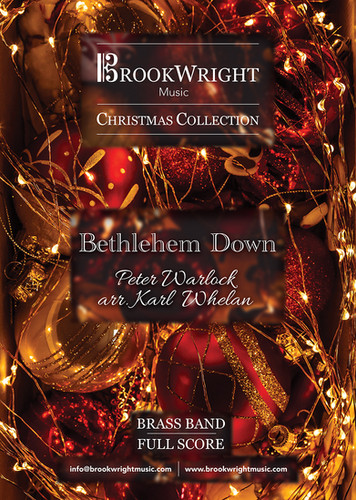
Bethlehem Down (Brass Band) Peter Warlock arr. Karl Whelan
Originally composed in 1927 by Peter Warlock with a hauntingly beautiful text by Bruce Blunt, Bethlehem Down is a Christmas carol unlike any other - serene, contemplative, and deeply moving. Written under unconventional circumstances (as an entry in a newspaper competition to fund a festive drinking session), the carol has become a timeless masterpiece of English choral music, celebrated for its emotional depth and harmonic subtlety. This brass band arrangement by Karl Whelan captures the quiet intensity and modal richness of Warlock's original, thoughtfully adapted for the warm, lyrical textures of a full brass ensemble. Flowing inner lines, gentle dissonances, and soft dynamics are carefully preserved, allowing the ensemble to explore a wide expressive range while maintaining the dignity and introspective tone of the piece. Ideal for concerts, church services, or as a moment of reflection within a festive programme, Bethlehem Down offers a powerful contrast to more jubilant seasonal works. A compelling choice for bands seeking a more intimate and profound interpretation of the Christmas story. To view a rolling score video of the work please visit https://www.youtube.com/watch?v=hN4-DBtsSpc Duration: approx. 4.00 minutes Difficulty Level: 3rd Section + PDF download includes parts and score. Sheet music available at www.brassband.co.uk (UK) or https://satradecentral.org (USA) Instrumentation: Soprano Cornet Eb Solo Cornet Bb Repiano Cornet Bb 2nd Cornet Bb 3rd Cornet Bb Flugel Horn Bb Solo Horn Eb 1st Horn Eb 2nd Horn Eb 1st Baritone Bb 2nd Baritone Bb 1st Trombone Bb 2nd Trombone Bb Bass Trombone Euphonium Bb Bass Eb Bass Bb Timpani Percussion 1-2
In Stock: Estimated dispatch 1-3 working days
-
 £37.35
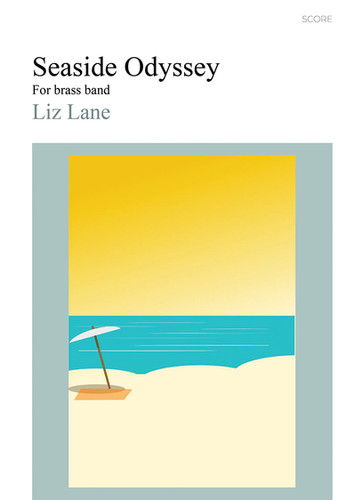
Seaside Odyssey (Brass Band) Liz Lane
Seaside Odyssey is a celebration of the British seaside! The music represents a juxtaposition between natural and manmade elements; there are two main musical themes - the reflective sea (a wordless setting of John Masefield's Sea Fever) and a more lively 'seaside' theme, heard separately in different ways and later together. From childhood memories, sand, beach and cliffs to cafes, ice creams, fish and chips, buckets and spades, boating trips, beach huts, bandstands, piers, theatres, gardens, mini golf, arcades and more, Seaside Odyssey is a journey from dawn to dusk with the sea at the heart of the music. This work was commissioned by Grimethorpe Colliery Band for its seaside tour, August 2023, where it performed at Paignton, Lyme Regis, Weymouth, Shanklin and Herne Bay. Includes optional poems and words specially curated from poets associated with the seaside towns, which can be read before a performance. Duration: approx. 5 minutes This PDF download includes parts and score. Sheet music available at www.brassband.co.uk (UK) or https://satradecentral.org (USA) Instrumentation: Eb Soprano Cornet Bb Solo Cornet Bb Repiano Cornet Bb Cornet 2 Bb Cornet 3 Bb Flugelhorn Eb Solo Tenor Horn Eb Tenor Horn 1 Eb Tenor Horn 2 Bb Baritone 1 Bb Baritone 2 Bb Trombone 1 Bb Trombone 2 Bass Trombone Bb Euphonium Eb Bass Bb Bass Percussion 1: timpani, triangle and optional 'arcade jackpot' effect (see score/part) Percussion 2: 3 suspended cymbals (2 ride, 1 crash) and hi-hat Percussion 3: snare, tom-toms and bass drum Percussion 4: glockenspiel
In Stock: Estimated dispatch 1-3 working days
-
 £15.00
Perseverance
DescriptionPerseverance was commissioned by Middleton Band to mark their 140th anniversary in 2016, supported using public funding by the National Lottery through Arts Council England, and featured on Middleton Band's CD of the same name.The title is taken from the original name of the 1876 band, the Middleton Perseverance Drum and Fife Band. According to the band's historical records, the Drum and Fife band was formed by six Middleton youngsters eager to learn music but short of funds. Following a whip round, they visited a music shop in Oldham where they purchased a 'one key flute' for six shillings and sixpence, and ('later on') a drum.This determination to make music despite the odds has been a characteristic of the band ever since; at the end of the second world war the band was again down to six players, who rebuilt the 'Middleton Borough Band' back to twenty-six players. After a period of some considerable success throughout the sixties and seventies culminating in winning the National Third Section title in 1983 the band hit hard times again in the late eighties and was down to only four members in 1987 before again being brought back to life. In recent decades the band has built a strong relationship with the East Lancashire Railway, another organisation which has battled sometimes mighty obstacles in its struggle to survive, and has maintained a thriving and successful youth band.The band's will to survive through adversity is reflected in the music, which builds from a sextet of four brass and two percussion players three times, only to fall back to the sextet twice. In the central slow movement the bass drum plays a 'heartbeat' rhythm as the remaining players remember those lost in the war. The relentless pace of the final section culminates in the band triumphing over the adversity which has curtailed the previous two sections. As a former member of Middleton Band (and one of the team that regained the National Third Section title in 2007) it is my pleasure to dedicate this work to the 'Pop and Ale Boys', Middleton Band.You can read more about the piece here.To view the accompanying video by Andy Marshall, designed to precede the piece, clickhereand find out more about the link between the video and the music here.Recording with Score VideoPerformance NotesIn performance the four brass members of the sextet (soprano, solo horn, solo trombone and solo euphonium) should stand at the sides of the band - soprano and horn behind the cornets, trombone and euphonium behind the trombones. Percussion may stand with them at the conductor's discretion, but only if the band has TWO snare drums and TWO concert bass drums available, as these are also needed at the back of the band in the tutti sections. In the second sextet snare drum should be muffled with a heavy cloth OR have the snares turned off (not both).Percussion and mutesPercussion required:snare drum (muffled with a heavy cloth at one point)concert bass drum, kit bass drum, hi-hat, suspended (crash) cymbal2 x tom-tomswood blockclash cymbals3 x timpanitam-tamglockenspielSoprano cornet, repiano and 2nd cornets, flugel and all trombones require metal straight mutes. Soprano, Solo Cornet 3/4, Repiano 2nd and 3rd cornets require cup mutes. Solo Cornet 1/2, Repiano, 2nd and 3rd cornets require harmon mutes.
Estimated dispatch 7-14 working days
-
 £65.00
AN ELGAR PORTRAIT - D.Price
This work was composed in commemoration of the 150th Anniversary of the birth English Composer Sir Edward Elgar. The suite is in three movements: 'Introduction', 'Elegy' and 'March', each of which have been inspired by three of Elgar's most celebrated works; Chanson de Matin, Nimrod ('Variation IX' from the Enigma Variations) and Pomp and Circumstance No.1.'Introduction' - Hollybush HillHollybush Hill is the name of one of the peaks of the Malvern Hills in Worcestershire. The Malverns were a favourite walking area for Elgar and his wife, and their panoramic views inspired much of Elgar's music.'Elegy' - BroadheathBroadheath is the small village at the foot of the Malvern Hills where Elgar was born (and lived at various times throughout his life). Elgar is buried not far from Broadheath at St Wulstan's in Little Malvern. 'March' - Worcester CathedralMany of the Worcestershire ensembles and music festivals played an important role in Elgar's early musical education. He was heavily involved in The Three Choirs Festival and either conducted or played in many of the light orchestras and vocal groups that performed at venues across Worcester. A statue of Elgar overlooks the Cathedral at the end of Worcester High Street.An Elgar Portrait has been used regularly as an own-choice test-piece for Section 4 bands, and was also selected as the set work for the Swiss National Championships in 2007 as well as the Pontins Championships in 2008. The composer has slightly reworked this piece for the Section 4 Final of the National Brass Band Championships of Great Britain 2020 and it's this version that should be performed at the contest. If bands currently have an older version in their libraries, please contact us directly for more information.
In Stock: Estimated dispatch 3-5 working days
-
 £112.08
All Tuned Up - 120 Famous Tunes for All Occasions (Full Set - A5) PDFs
This unique new resource from BrookWright Music will be an essential part of every band's library! All Tuned Up is designed to cater for ensembles for occasions throughout the year. Tunes are drawn from genres including Classical, Hymns, Folk and Patriotic amongst many others to form a comprehensive book that will cover a wide variety of events such as Weddings, Funerals, Graduation Ceremonies, Parties, Proms, Remembrance, Street Playing and Thanksgiving. Playable by as few as five players but also designed to work for full brass band or wind band, it features flexible parts in a wide variety of transpositions. These excellent arrangements have been expertly created by Andrew Wainwright, David E. Jones, Dean H. Jones and Steven Ponsford. The general harmonic format of All Tuned Up is in five parts, although additional notes have been included to thicken the harmony where more players are available. Therefore, the book will work equally well with larger groups, including full brass bands and wind bands. At the end of the Part 1 Bb book are four a capela tunes for Remembrance/Memorial occasions. To view a promotional video please visit https://www.youtube.com/watch?v=nmodRrXQRRs This PDF download is for International sizes: Full Score - A4 Size - 297mm x 210mm Band Parts - A5 Size - 210mm x 148mm Physical copies of the books available from: UK - Individual Books Full Set Brass Band Set USA - www.solidbrassmusic.com/product/all-tuned-up-ensemble-books The full set includes: Full Score Part 1 Eb (optional) - Soprano Cornet/Trumpet Eb, Clarinet Eb Part 1 Bb - Cornet/Trumpet Bb, Clarinet Bb, Flugel, Soprano Saxophone Part 1 C - Piccolo, Flute, Oboe, Part 2 Bb - Cornet/Trumpet, Clarinet Bb, Flugel Part 2 Eb - Tenor Horn, Alto Saxophone, Alto Clarinet Eb Part 2 F - Horn, Cor Anglais Part 3 Bb - Baritone, Trombone, Euphonium, Tenor Saxophone, Part 3 C (Bass clef) - Baritone, Trombone, Euphonium Part 3 Eb - Tenor Horn, Alto Saxophone, Alto Clarinet Eb Part 3 F - Horn, Cor Anglais Part 4 Bb - Euphonium, Baritone, Tenor Saxophone Part 4 C (Bass clef) - Euphonium, Baritone, Bassoon Part 5 Eb - Bass Eb, Baritone Saxophone Part 5 Bb - Bass Bb, Bass Clarinet Part 5 C (Bass clef) - Tuba, Bassoon, String Bass Percussion (optional) - Various
In Stock: Estimated dispatch 1-3 working days
-
£112.08
All Tuned Up - 120 Famous Tunes for All Occasions (Full Set - US Sizes) PDFs
This unique new resource from BrookWright Music will be an essential part of every band's library! All Tuned Up is designed to cater for ensembles for occasions throughout the year. Tunes are drawn from genres including Classical, Hymns, Folk and Patriotic amongst many others to form a comprehensive book that will cover a wide variety of events such as Weddings, Funerals, Graduation Ceremonies, Parties, Proms, Remembrance, Street Playing and Thanksgiving. Playable by as few as five players but also designed to work for full brass band or wind band, it features flexible parts in a wide variety of transpositions. These excellent arrangements have been expertly created by Andrew Wainwright, David E. Jones, Dean H. Jones and Steven Ponsford. The general harmonic format of All Tuned Up is in five parts, although additional notes have been included to thicken the harmony where more players are available. Therefore, the book will work equally well with larger groups, including full brass bands and wind bands. At the end of the Part 1 Bb book are four a capela tunes for Remembrance/Memorial occasions. To view a promotional video please visit https://www.youtube.com/watch?v=nmodRrXQRRs This PDF download is for US sizes: Full Score - Letter Size - 11" x 8.5" Band Parts - 7" x 5" Physical copies of the books available from: UK - Individual Books Full Set Brass Band Set USA - www.solidbrassmusic.com/product/all-tuned-up-ensemble-books The full set includes: Full Score Part 1 Eb (optional) - Soprano Cornet/Trumpet Eb, Clarinet Eb Part 1 Bb - Cornet/Trumpet Bb, Clarinet Bb, Flugel, Soprano Saxophone Part 1 C - Piccolo, Flute, Oboe, Part 2 Bb - Cornet/Trumpet, Clarinet Bb, Flugel Part 2 Eb - Tenor Horn, Alto Saxophone, Alto Clarinet Eb Part 2 F - Horn, Cor Anglais Part 3 Bb - Baritone, Trombone, Euphonium, Tenor Saxophone, Part 3 C (Bass clef) - Baritone, Trombone, Euphonium Part 3 Eb - Tenor Horn, Alto Saxophone, Alto Clarinet Eb Part 3 F - Horn, Cor Anglais Part 4 Bb - Euphonium, Baritone, Tenor Saxophone Part 4 C (Bass clef) - Euphonium, Baritone, Bassoon Part 5 Eb - Bass Eb, Baritone Saxophone Part 5 Bb - Bass Bb, Bass Clarinet Part 5 C (Bass clef) - Tuba, Bassoon, String Bass Percussion (optional) - Various
In Stock: Estimated dispatch 1-3 working days
-
£11.95
All Tuned Up - 120 Famous Tunes for All Occasions (International Size) Hard Copy
This unique new resource from BrookWright Music will be an essential part of every band's library! All Tuned Up is designed to cater for ensembles for occasions throughout the year. Tunes are drawn from genres including Classical, Hymns, Folk and Patriotic amongst many others to form a comprehensive book that will cover a wide variety of events such as Weddings, Funerals, Graduation Ceremonies, Parties, Proms, Remembrance, Street Playing and Thanksgiving. Playable by as few as five players but also designed to work for full brass band or wind band, it features flexible parts in a wide variety of transpositions. These excellent arrangements have been expertly created by Andrew Wainwright, David E. Jones, Dean H. Jones and Steven Ponsford. The general harmonic format of All Tuned Up is in five parts, although additional notes have been included to thicken the harmony where more players are available. Therefore, the book will work equally well with larger groups, including full brass bands and wind bands. At the end of the Part 1 Bb book are four a capela tunes for Remembrance/Memorial occasions. To view a promotional video please visit www.youtube.com/watch?v=nmodRrXQRRs This purchase is for International sizes: Full Score - A4 Size - 297mm x 210mm Band Parts - A5 Size - 210mm x 148mm The full set includes: Full Score Part 1 Eb (optional) - Soprano Cornet/Trumpet Eb, Clarinet Eb Part 1 Bb - Cornet/Trumpet Bb, Clarinet Bb, Flugel, Soprano Saxophone Part 1 C - Piccolo, Flute, Oboe, Part 2 Bb - Cornet/Trumpet, Clarinet Bb, Flugel Part 2 Eb - Tenor Horn, Alto Saxophone, Alto Clarinet Eb Part 2 F - Horn, Cor Anglais Part 3 Bb - Baritone, Trombone, Euphonium, Tenor Saxophone, Part 3 C (Bass clef) - Baritone, Trombone, Euphonium Part 3 Eb - Tenor Horn, Alto Saxophone, Alto Clarinet Eb Part 3 F - Horn, Cor Anglais Part 4 Bb - Euphonium, Baritone, Tenor Saxophone Part 4 C (Bass clef) - Euphonium, Baritone, Bassoon Part 5 Eb - Bass Eb, Baritone Saxophone Part 5 Bb - Bass Bb, Bass Clarinet Part 5 C (Bass clef) - Tuba, Bassoon, String Bass Percussion (optional) - Various
In Stock: Estimated dispatch 1-3 working days
-
 £19.99
All Tuned Up - A4 Size Parts
120 Famous Tunes for All Occasions for Flexible Ensembles of Brass and WoodwindAll Tuned Up is designed to cater for ensembles for occasions throughout the year. Tunes are drawn from genres including Classical, Hymns, Folk and Patriotic amongst many others to form a comprehensive book that will cover a wide variety of events such as Weddings, Funerals, Graduation Ceremonies, Parties, Proms, Remembrance, Street Playing and Thanksgiving.Playable by as few as five players but also designed to work for full brass band or wind band, it features flexible parts in a wide variety of transpositions. These excellent arrangements have been expertly created by Andrew Wainwright, David E. Jones, Dean H. Jones and Steven Ponsford.The general harmonic format of All Tuned Up is in five parts, although additional notes have been included to thicken the harmony where more players are available. Therefore, the book will work equally well with larger groups, including full brass bands and wind bands.The following parts are available (in both A4 and Marchcard sizes):Part 1 in Bb: Cornet/Trumpet, Clarinet, Flugel Horn, Soprano SaxophonePart 1 in C: Piccolo, Flute, OboePart 1 in Eb (optional part): Soprano Cornet/Eb Trumpet, Eb ClarinetPart 2 in Bb: Cornet/Trumpet, Clarinet, Flugel HornPart 2 in Eb: Tenor Horn, Alto Saxophone, Alto ClarinetPart 2 in F: French Horn, Cor AnglaisPart 3 in Bb: Baritone TC, Trombone TC, Euphonium TC, Tenor SaxophonePart 3 in C BC: Baritone BC, Trombone BC, Euphonium BCPart 3 in Eb: Tenor Horn, Alto Saxophone, Alto ClarinetPart 3 in F: French Horn, Cor AnglaisPart 4 in Bb: Euphonium TC, Baritone TC, Tenor SaxophonePart 4 in C BC: Euphonium BC, Baritone BC, BassoonPart 5 in Bb: Bb Bass, Bass ClarinetPart 5 in C BC: Tuba, Bassoon, String BassPart 5 in Eb: Eb Bass, Baritone SaxophonePercussion (optional part)
Estimated dispatch 7-14 working days
-
 £39.99
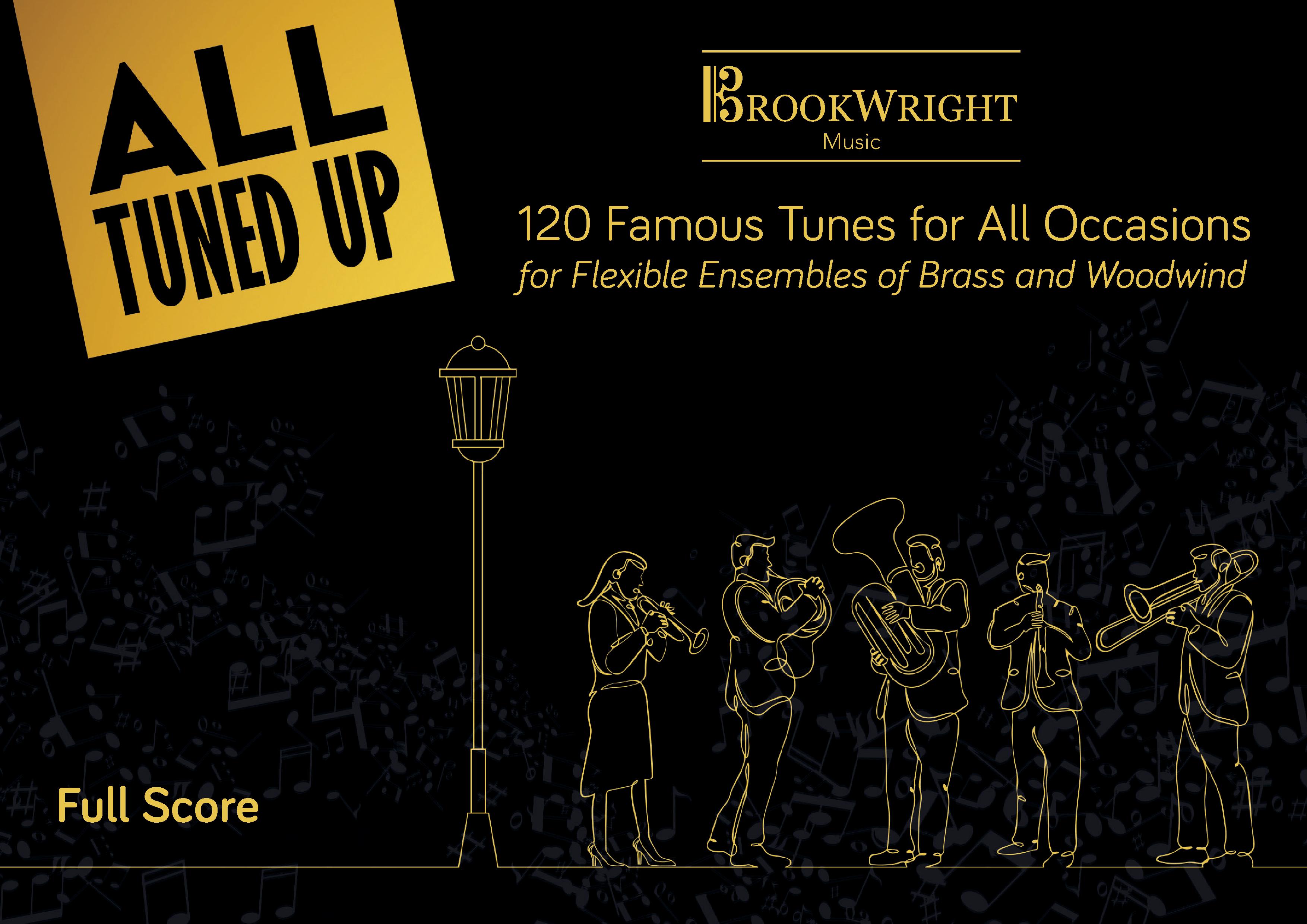
All Tuned Up - Full Score
120 Famous Tunes for All Occasions for Flexible Ensembles of Brass and WoodwindAll Tuned Up is designed to cater for ensembles for occasions throughout the year. Tunes are drawn from genres including Classical, Hymns, Folk and Patriotic amongst many others to form a comprehensive book that will cover a wide variety of events such as Weddings, Funerals, Graduation Ceremonies, Parties, Proms, Remembrance, Street Playing and Thanksgiving.Playable by as few as five players but also designed to work for full brass band or wind band, it features flexible parts in a wide variety of transpositions. These excellent arrangements have been expertly created by Andrew Wainwright, David E. Jones, Dean H. Jones and Steven Ponsford.The general harmonic format of All Tuned Up is in five parts, although additional notes have been included to thicken the harmony where more players are available. Therefore, the book will work equally well with larger groups, including full brass bands and wind bands.The following parts are available (in both A4 and Marchcard sizes):Part 1 in Bb: Cornet/Trumpet, Clarinet, Flugel Horn, Soprano SaxophonePart 1 in C: Piccolo, Flute, OboePart 1 in Eb (optional part): Soprano Cornet/Eb Trumpet, Eb ClarinetPart 2 in Bb: Cornet/Trumpet, Clarinet, Flugel HornPart 2 in Eb: Tenor Horn, Alto Saxophone, Alto ClarinetPart 2 in F: French Horn, Cor AnglaisPart 3 in Bb: Baritone TC, Trombone TC, Euphonium TC, Tenor SaxophonePart 3 in C BC: Baritone BC, Trombone BC, Euphonium BCPart 3 in Eb: Tenor Horn, Alto Saxophone, Alto ClarinetPart 3 in F: French Horn, Cor AnglaisPart 4 in Bb: Euphonium TC, Baritone TC, Tenor SaxophonePart 4 in C BC: Euphonium BC, Baritone BC, BassoonPart 5 in Bb: Bb Bass, Bass ClarinetPart 5 in C BC: Tuba, Bassoon, String BassPart 5 in Eb: Eb Bass, Baritone SaxophonePercussion (optional part)
Estimated dispatch 7-14 working days
 Watch video