
Results
-
 £29.95
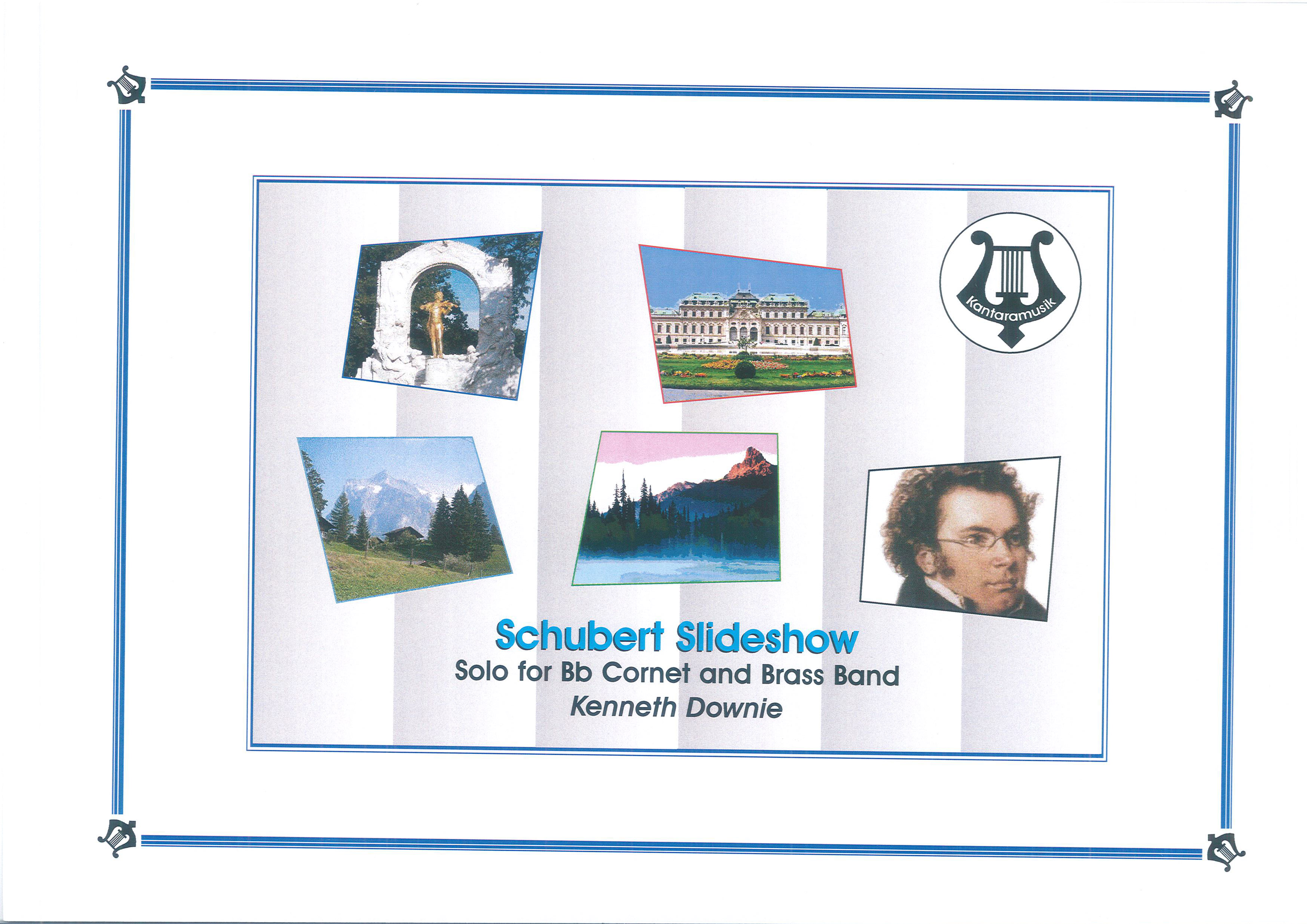
Schubert Slideshow - Cornet Solo (Brass Band - Score and Parts)
Heidenroslein' is a poem by Goethe, published in 1799, which was notably set to music by Schubert in 1815. It is this music which inspired this variation solo. It is called 'Slideshow' as each variation might be considered as a different view or aspect of the theme. Cornet players have the opportunity to demonstrate both the lyrical and the more bravura qualities of their playing.
Estimated dispatch 7-14 working days
-
 £14.95
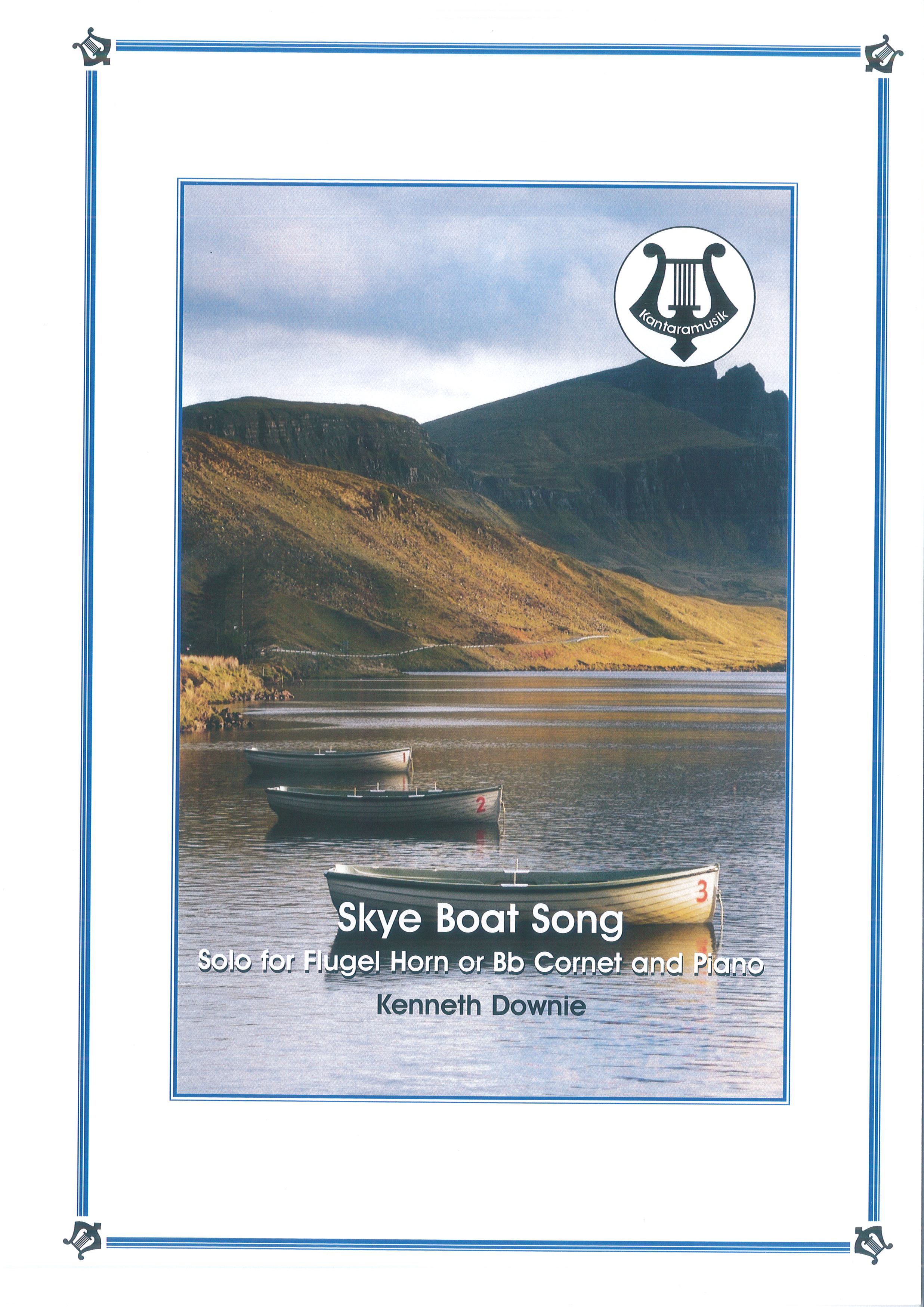
Skye Boat Song (Flugel Horn and Piano)
This wistful Scottish folk song tells the story of the escape of Bonnie Prince Charlie from Uist to Skye after the battle of Culloden in 1746. His defeat effectively ended the Jacobite movement as a political threat in Britain. The gentle tune has great charm and is often used as a lullaby.
Estimated dispatch 7-14 working days
-
 £24.95
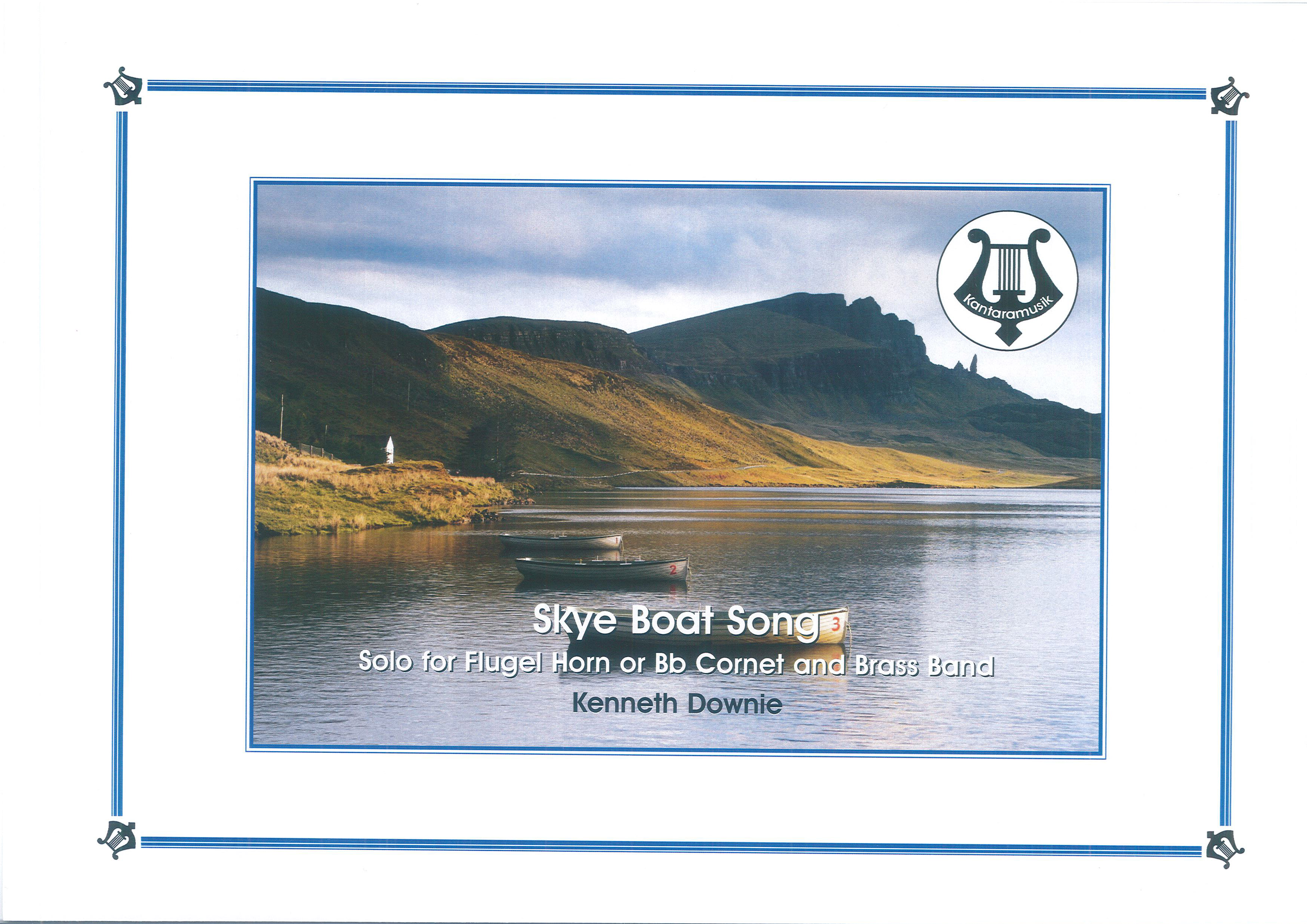
Skye Boat Song (Flugel Horn Solo with Brass Band - Score and Parts)
This wistful Scottish folk song tells the story of the escape of Bonnie Prince Charlie from Uist to Skye after the battle of Culloden in 1746. His defeat effectively ended the Jacobite movement as a political threat in Britain. The gentle tune has great charm and is often used as a lullaby.
Estimated dispatch 7-14 working days
-
 £34.95
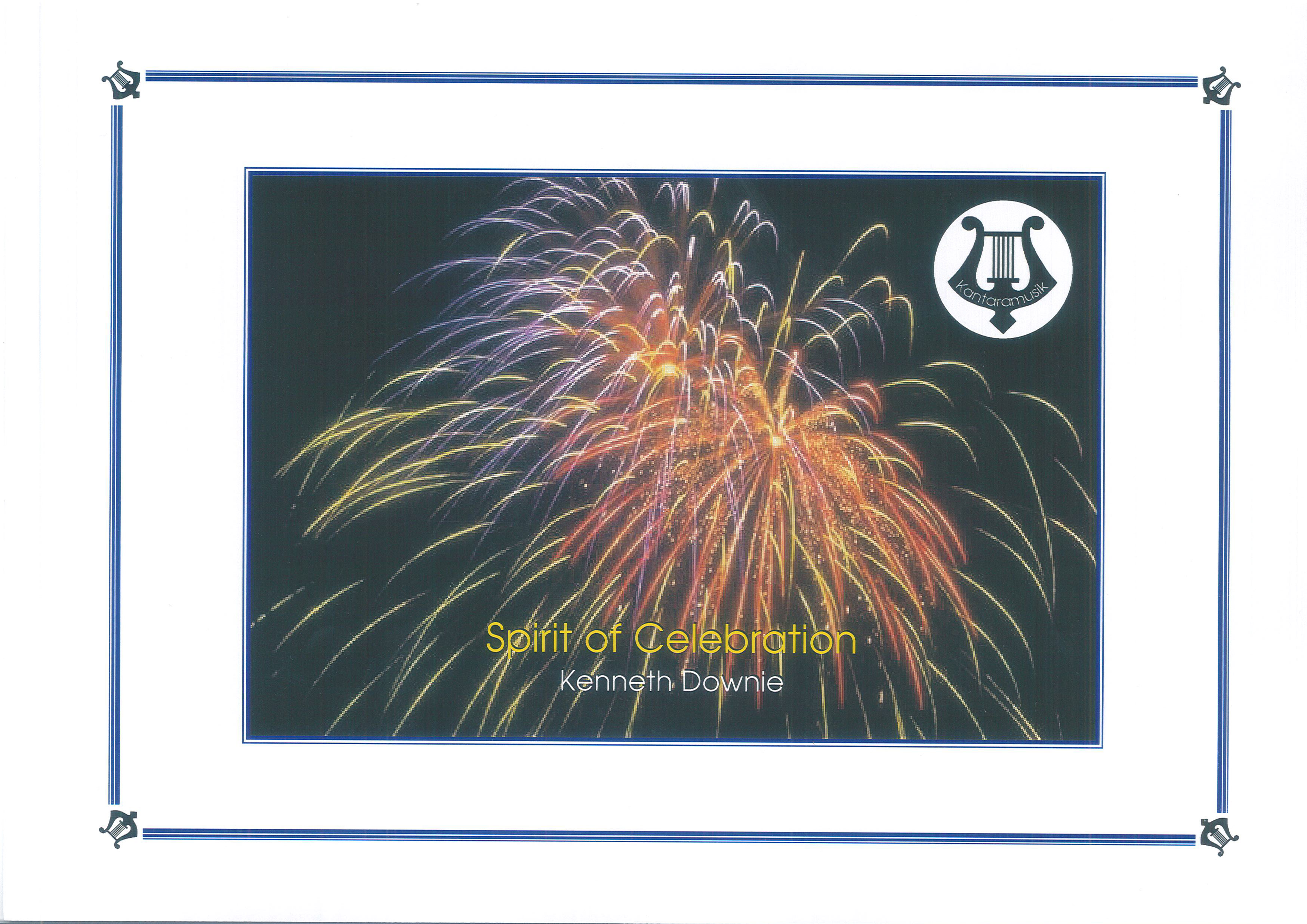
Spirit of Celebration (Brass Band - Score and Parts)
Written as a signature tune for the Yorkshire Building Society Band, this is often used as a sparkling concert opener.
Estimated dispatch 7-14 working days
-
 £14.95
Tom Bowling (Trombone and Piano)
This wonderful song is invariably featured in the last night of the BBC Promenade Concert series as it is included in Henry Wood's Fantasia on British Sea Songs. It is played as a cello solo and always provides one of the most sensitive, melancholic moments of the evening. It the trombone soloist rises to the challenge, there will not be a dry eye in the concert hall!
Estimated dispatch 7-14 working days
-
 £24.95
Tom Bowling - Trombone Solo (Brass Band - Score and Parts)
This wonderful song is invariably featured in the last night of the BBC Promenade Concert series as it is included in Henry Wood's Fantasia on British Sea Songs. It is played as a cello solo and always provides one of the most sensitive, melancholic moments of the evening. It the trombone soloist rises to the challenge, there will not be a dry eye in the concert hall!
Estimated dispatch 7-14 working days
-
 £41.09
Pageant (Brass Band) Barrie Gott
Born during the isolation of the COVID-19 pandemic, Pageant by Australian composer Barrie Gott transforms the simple interval of a fourth into an engaging, multi-faceted set of variations. Written specifically with 4th Section bands in mind, this work delivers rich textural contrast, clear educational rewards, and a crowd-pleasing arc that moves from regal tradition to high-energy rock. The piece opens with a majestic herald, setting a ceremonial tone as a warm, mellow melody dialogues with bright, fanfare-like brass. From there, the music moves through three distinct stylistic worlds: a delicate, nimble variation inspired by the craft of Eric Ball's A Little Suite for Band; a smooth, lyrical ballad featuring the solo cornet and flugel horn; and a high-energy finale grounded in a driving 6/8 rock groove, bringing the work to a dramatic, cinematic finish. To listen to a recording of Toowoomba Municipal Band performing the work please visit: https://on.soundcloud.com/i9X5JsWQedaAbiWzXf Duration: approx. 6.45 mins Difficulty Level: 4th Section + This PDF download includes the full score and parts. Sheet music available at www.brassband.co.uk (UK) or https://satradecentral.org (USA) Instrumentation: Soprano Cornet Eb Solo Cornet Bb Repiano Cornet Bb 2nd Cornet Bb 3rd Cornet Bb Flugel Horn Bb Solo Horn Eb 1st Horn Eb 2nd Horn Eb 1st Baritone Bb 2nd Baritone Bb 1st Trombone Bb 2nd Trombone Bb Bass Trombone Euphonium Bb Bass Eb Bass Bb Timpani Percussion 1-4
In Stock: Estimated dispatch 1-3 working days
-
 £38.95
Unity Series Band Journal - Numbers 530 - 533, June 2024
530: Carol Arrangement - God rest you merry, gentlemen (Noel Jones)This swing arrangement of the traditional English carol also features references to O come, all ye faithful (C.C. 61) and Jingle Bells (C.C. 121). Play with imagination and a sense of style!531: Go, tell it on the mountain! (Nathanael Watchorn)Historically, the passion of enslaved people in America for singing about the Gospel of Jesus is well documented, but it was men of three generations, each named John Wesley Work, who enabled spirituals to become more widely known. John Wesley Work Sr, a church choir director in Nashville, Tennessee, wrote and arranged music for the pioneering Fisk Jubilee Singers whose early repertoire consisted largely of spirituals. This passion and knowledge of spirituals was passed down through the generations. John Work III travelled hundreds of miles to collect songs by attending church services in remote areas. In 1940, he published a collection of 230 songs which included a setting of Go, tell it on the mountain! that is still performed today.Nathanael Watchorn, a Bandsman at Regent Hall Corps in London, is a new contributor to the journals. He originally wrote this as a vocal arrangement for the group FourHymn, subsequently transcribing it for the corps' Young People's Band, while he was Band Leader.532: Carol Arrangement - They all were looking for a king (Stephen Hull)At the North American Composers Forum, Major Len Ballantine challenged participants to find an unfamiliar song in the Salvation Army Song Book and try to write an arrangement of the listed tune. Stephen Hull happened across They all were looking for a king (S.A.S.B. 128) and the tune Childhood (T.B. 421) which lead to this arrangement.533: March - Washed and healed (Eiliv Herikstad)The Christian experience of many people will have been positively impacted by the life of the late Bandmaster Eiliv Herikstad, either personally or through his musical leadership and compositions. This march is the second publication from this well-known Salvation Army composer since his Promotion to Glory last year. This march is more traditional in style that many of his compositions but contains a strong Christian message and demonstrates his compositional expertise.
Estimated dispatch 7-14 working days
-
 £55.00
Triumph Series Brass Band Journal, Numbers 1351 - 1354, July 2023
1351: The anointed King (Marcus Venables)This piece was originally written as a massed band item for the Ontario Central-East Divisional Music Day in 2019. The updated version includes two songs, King of kings, majesty (S.A.S.B. 376) and O worship the King (S.A.S.B. 52) to a rhythmic setting of the tune Laudate Dominum (T.B. 481). Both songs present the contrasting characteristics of God; the powerful King and gentle, loving Saviour.1352: A suite of English Christmas carols (Kenneth Downie)This suite is the result of a request for a piece of music featuring exclusively English Christmas carols.The first movement features The holly and the ivy (C.C. 87). In sharp contrast, the second movement calls for a broad, sensitive, song-like approach. Using The cherry tree carol (C.C. 85), a much slower tempo than is normally applied to encourage the listener to see this beautiful tune in a new light. The rumbustious arrival of the finale is based on I saw three ships come sailing in (C.C. 44) with the festive mood prevailing until the end.1353: Nothing but thy blood (Norman Bearcroft)This two-verse setting of Richard Slater's much-loved hymn Nothing but thy blood (S.A.S.B. 769) appears straight-forward in nature, but requires a careful sense of the musical line across all parts.1354: Meditation - Reflections on Advent (Andrew Blyth)Two well-known carols, Away in a manger (C.C. 12) and Silent Night! (C.C. 77) are featured alongside original material. The piece attempts to convey a sense of reflection and meditation on the wonderful and awe-inspiring Advent story.
Estimated dispatch 7-14 working days
-
 £79.95
Corineus - Christopher Bond
Corineus, in medieval British legend, was a prodigious warrior, a fighter of giants, and the eponymous founder of Cornwall. The first of the legendary rulers of Cornwall, he is described as a character of strength and power. It is on the medieval ruler that this new work, Corineus, is based, presented in three contrasting sections. The work opens with heraldic fanfares and a sense of jubilance before presenting musical material which changes and develops organically, portraying the journey taken by Corineus, Brutus, and the Trojans from modern-day mainland Europe to Britain. The central section of the work is slower, creating a feeling of longing. Brutus' son, Locrinus, had agreed to marry Corineus' daughter, Gwendolen, but instead fell in love with a German princess. In writing this part of the work, the composer portrays the longing of Gwendolen for her husband, knowing he is in love with somebody else. After Corineus died, Locrinus divorced Gwendolen, who responded by raising an army in Cornwall and making war against her ex-husband. Locrinus was killed in battle, and legend suggests that Gwendolen threw Locrinus' lover into the River Severn. This dramatic battle provides the inspiration for the final part of the work. In writing this work, the composer hopes to flare the imagination of young brass players around the country, in an engaging new take on a firm fixture in British folklore.
Estimated dispatch 10-14 working days