
Results
-
 £69.60
The Best of W.A. Mozart - Wolfgang Amadeus Mozart - Henk Ummels
Now the masterful music of the most influential composer of all time, Wolfgang Amadeus Mozart, is also available for your student orchestra. This arrangement includes highlights from the classics 'The Magic Flute', 'Symphony #40', 'Concerto for Clarinet', 'Elvira Madigan' and 'Eine Kleine Nachtmusik'. This work was written for Molenaar's 'Flexible Winds' Series. It uses a 5 part flexible setting, whereby any student orchestra can quickly create a full, rich sound.
Estimated dispatch 5-14 working days
-
 £59.80
Suite "Aus Dem Lustgarten" - Hans Leo Hassler - Jan van Beekum
German composer Hans Leo Hassler composed this suite at the end of the 16th century. Hassler was a student of the famous composer Gabrieli who mainly wrote for brass ensembles. This is the reason why Hassler, while only composing a relatively smaller amount of work, composed mainly for the same type of ensemble. This arrangement from Jan van Beekum is characteristic of it's time and is for a 5 voice, flexible setting and percussion.
Estimated dispatch 5-14 working days
-
 £111.70
What's Your Favorite Cake? - Hilde Høyvik Dahl
This suite is written for beginning band at grade level 1-1,5. It consist of four short movements in various style. In one of the movements, the musicians are introduced to time signature.The suite in its entirety is a great concert piece, but you may also play the movements as single pieces.The composition consists basically of three voices to make it playable also for smaller ensembles.
Estimated dispatch 5-14 working days
-
 £154.60
Variations for Brass Band - John Brakstad
"Variations for Brass Band" consists of a chorale and 5 variations of brilliant, lyric and humorous character. The piece also contains several soloparts and elements of ensemble.Each variation has its own title, but the piece should be played in its entirity.The chorale is based on a minor pentachord, and each variation begins with these five notes, with different rhythmical treatment.There is also a little secondary "theme", consisting of five notes which are heard throughout the work (eg. as sixteens/semiquavers in cornets in bar 1).When the beams sweep across the Earth, they can be heard as regular pulses. We call them pulsars.In this piece there are three percussion parts. In addition there is an "optional part" to replace the marimba and vibraphone written in the three original percussion parts if desired. This fourth part is shown in the full score.
Estimated dispatch 5-14 working days
-
 £115.60
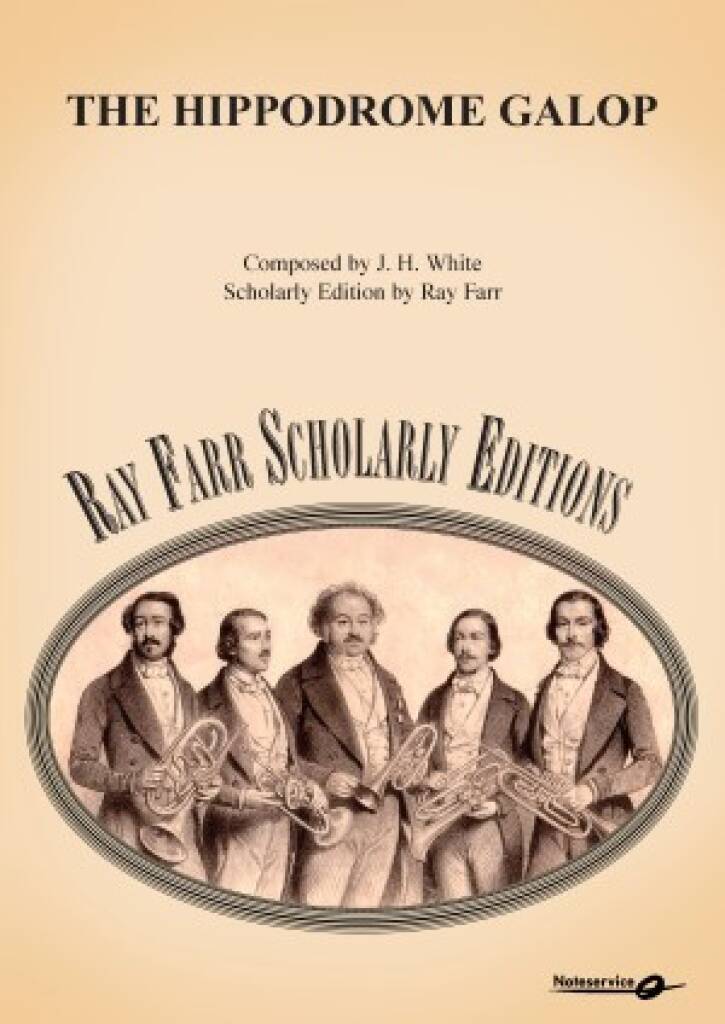
The Hippodrome Galop - J. H. White - Ray Farr
The Hippodrome Galop by H. White is No. 5 in the first of a series of works called Distin's Brass Band Scores (see advertisement below), published in 1854 by Henry Distin. These publications represent an important stage in the history of bands in Britain.The purpose of this scholarly edition is to produce a performing version, clearing ambiguities and errors, that can be enjoyed by today's performers and listeners, bearing in mind the original function and context. At the same time the edition is an analytical, musicological study of one of the rare treasures of the brass band repertory.
Estimated dispatch 5-14 working days
-
 £54.95
Sonata - Derek Bourgeois
This work, composed in 1998, was commissioned by the American trombonist Don Lucas as a work for trombone and piano and first performed by him in Birmingham on 19th May 2000. Subsequently, I arranged the music for both solo trombone and brass band and solo trombone and wind band so that it now exists in three formats. The first movement, in B flat major, is brisk and energetic, and is cast in sonata form. The second subject is gentler and more lyrical. The second movement, a scherzo in C major, is the most complex of the four. Basically the structure is a rond. For a long time the music remains in the opening 5/8 time until a new theme introduces more broken rhythms in a more jazzy idiom. After a return of the opening theme the following episode is more tonally ambiguous. Finally, the main theme returns to round off the movement. The third movement, a lyrical adagio, is really one long extended melodic flow. The harmonies are lush and the textures simple and direct. The tonal center is A minor, but the music meanders through so many keys, that this key centre is heavily disguised. The finale is a fiery affair. G minor is really its home key, but throughout the movement the music moves about a lot and the second subject is first heard in A flat minor. The movement's underlying sonata structure is masked not only by its loose tonality but also by its frequently changing time signatures. Like the first movement the second subject is more lyrical in nature and for a while it seems that the music will end peacefully, but a final flurry heralds a triple forte unison on the home note of the first movement - B flat. Derek Bourgeois
Estimated dispatch 5-14 working days
-
 £154.99
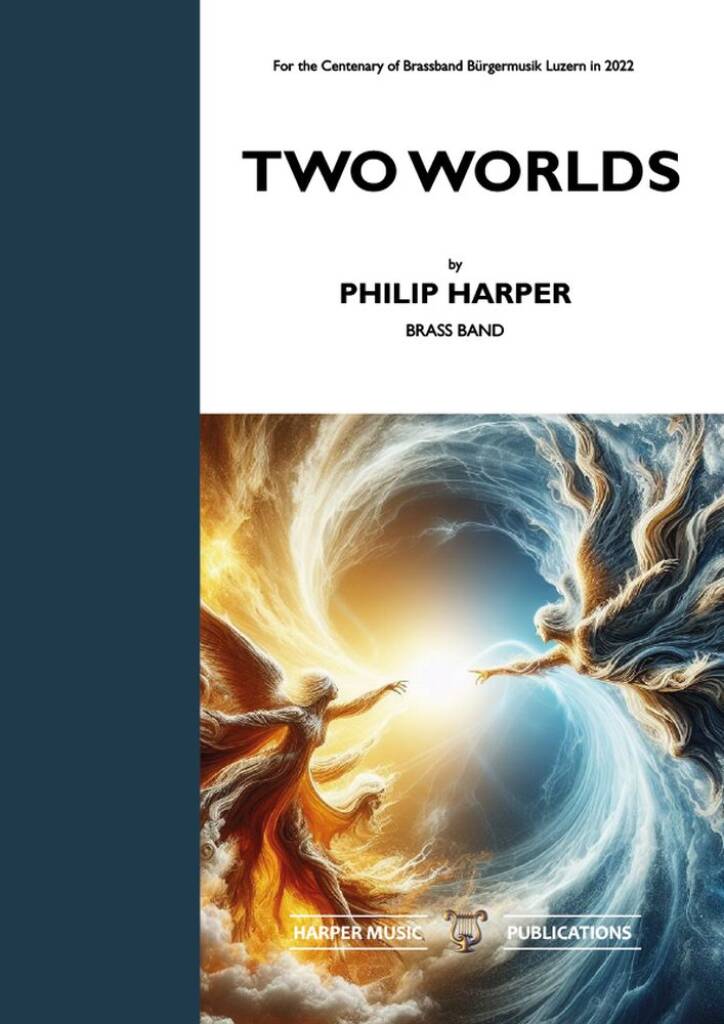
Two Worlds - Philip Harper
A powerful musical journey through time, Two Worlds explores the enduring force of storytelling. In an imaginary encounter, the Egyptian Pharaoh Tutankhamun and the American President Lincoln - in reality, separated by 5,000 years - meet to discuss the myths, truths and beliefs that shaped their respective civilizations. From the divine sun gods of Ancient Egypt to America's dream of equality, this evocative work blends fantasy and history with bold, cinematic music. At once dramatic and thought-provoking, Two Worlds reminds us that the stories we believe in can unite or divide, destroy or inspire.Commissioned for the centenary of the Swiss Brassband Burgermusik Luzern, in 2022.
Estimated dispatch 5-14 working days
-
 £77.20
The Best of Andrew Lloyd Webber - Andrew Lloyd Webber - Henk Ummels
Once again Henk Ummels has succeeded to make a rich and full arrangement using only 5 voices. This time an arrangement of highlights from the biggest musical hits from the most well known musical composer of all time. It has been arranged for beginner bands, but also very suitable for lower level bands who want something fun and entertaining. Includes music from: The Phantom of the Opera, Jesus Christ Superstar, Cats, and Joseph and the Amazing Technicolour Dreamcoat.
Estimated dispatch 5-14 working days
-
 £50.00
Hobson's Brass - Malcolm Arnold
Hobson's Brass is Malcolm Arnold's score to David Lean's 1954 film, Hobson's Choice, was one of three collaborations between the composer and director. It's a story ofHenry Hobson, played by Charles Laughtan who runs a successful bootmaker's shop in nineteenth-century Salford. A widower with a weakness for the pub, he tries forcefully to rule the lives of his three unruly daughters.Brass Band Grade 5: 1st Section. Duration 10 minutes.
Estimated dispatch 5-14 working days
-
 £70.00
A Forest Symphony - Gavin Higgins
A Forest Symphony was commissioned for the 2007 Voices in the Forest Festival, with the support of Creative Partnerships, the Forest of Dean. The first performance was given the Lydbrook Band. A ForestSymphony explores the hidden and magical world of the forest; secrets that may only be seen the animals who live there, or by fortunate ramblers who stray from the beaten path. Brass Band Grade 5/6: Championshipand 1st Sections. Duration: 12 Minutes.
Estimated dispatch 5-14 working days
 View Music