Results
-
£74.99Kingdom of Dragons (Brass Band - Score and Parts) - Harper, Philip
The 'Kingdom of Dragons' is Gwent in South Wales, known in ancient times as the Kingdom of Gwent, and more recently home to the Newport Gwent Dragons Rugby Union team.This piece was commissioned by the Gwent Music Service with additional funding from Ty Cerdd - Music Centre Wales to celebrate the 50th anniversary in 2010 of the formation of the Gwent Youth Brass Band.Although the music is continuous, it is divided into four distinct sections, each one representing one of the unitary authorities which make up the County of Gwent.Monmouthshire, which has a large number of ancient castlesBlaenau Gwent, an historic area of iron and coal miningTorfaen, where Pontypool Park is a notable landmarkNewport, the largest city in the regionThe music begins with a two-bar fanfare, which sets out all the thematic material of the piece. The mood of pageantry that follows describes some of the ancient castles in Monmouthshire, with rolling tenor drums and fanfaring cornets. After a majestic climax the music subsides and quite literally descends into the coal mines of Blaenau Gwent. The percussion provides effects that suggest industrial machinery clanking into life, and the music accelerates to become a perilous white-knuckle ride on the underground railroad. There is a brief respite as a miner's work-song is introduced and, after a protracted build-up, this is restated at fortissimo before the music comes crashing to an inglorious close, much like the UK's mining industry itself. The middle sonorities of the band portray the tranquillity of Pontypool Park, a place of great natural beauty. Brief cadenzas for cornet and euphonium lead to a full band reprise of the pastoral mood. At the end of this section we find ourselves at the top of the park's 'Folly Tower' from which the distant castle turrets of Monmouthshire are visible. Pontypool RFC was one of eleven clubs in the first Welsh league in 1881 and a brief but bruising musical portrayal of the formidable Pontypool front-row, the 'Viet Gwent' leads into the work's final section. This portrays Newport, a symbol for progress and optimism for the future, ideals shared by the Gwent Youth Band itself. The music is a vigorous fugue which advances through various keys and episodes before the final triumphant augmented entry which brings the work to a magnificent conclusion.Duration: 12:00
Estimated dispatch 7-14 working days
-
£82.95EUPHONIUM CONCERTO No.1 (Sparke) (Brass Band - Score and Parts) - Sparke, Philip
This concerto has its origins in a concerto for horn and brass band, commissioned by the River City Brass Band (Pittsburgh) in 1992.It was composed at the request of British euphonium virtuoso, Steven Mead, and first performed by him with the Breeze Brass Band in Osaka, Japan, in 1995.In conventional three-movement form, performed without a break, the concerto covers the panoply of the euphonium's range and character. The first movement is marked Moderato e energico and is rhythmically energetic in style with many meter changes and much syncopation. Only in the central section does the soloist relax in cantabile mood.The second movement opens with tuned percussion taking centre stage, laying for the foundations for a long cantilena from the soloist in resigned mood, but with a touch of optimism. After a central climax for the band, this melody returns, with soloists from the band answering in counterpoint. The finale is a 6/8 romp in caccia style (betraying its origins as a piece for horn). Again, the central section is more legato in mood, though the band keeps the eighth-note figures present throughout. The movement ends in a bravura display from the soloist.
Estimated dispatch 7-14 working days
-
£44.95EUPHONIUM CONCERTO No.1 (Sparke) (Brass Band - Score only) - Sparke, Philip
This concerto has its origins in a concerto for horn and brass band, commissioned by the River City Brass Band (Pittsburgh) in 1992.It was composed at the request of British euphonium virtuoso, Steven Mead, and first performed by him with the Breeze Brass Band in Osaka, Japan, in 1995.In conventional three-movement form, performed without a break, the concerto covers the panoply of the euphonium's range and character. The first movement is marked Moderato e energico and is rhythmically energetic in style with many meter changes and much syncopation. Only in the central section does the soloist relax in cantabile mood.The second movement opens with tuned percussion taking centre stage, laying for the foundations for a long cantilena from the soloist in resigned mood, but with a touch of optimism. After a central climax for the band, this melody returns, with soloists from the band answering in counterpoint. The finale is a 6/8 romp in caccia style (betraying its origins as a piece for horn). Again, the central section is more legato in mood, though the band keeps the eighth-note figures present throughout. The movement ends in a bravura display from the soloist.
Estimated dispatch 7-14 working days
-
£45.00The Pilgrim - Josiah Walters
Josiah describes his composition'The Pilgrim' as a journey of development and emotion, encompassing three key stages of emotional state: from the opening sounds which are full of anticipation and uncertainty, through to a passage of disillusionment and frustration, then moving on to a concluding stage which reintroduces the positive elements of the opening optimism, yet closing quietly, symbolizing an inner peace and contentment at the end of the musical journey.The composer's emotive approach to the creation of the work embraces a wealth of passion, anguish and enlightenment. Through his use of imaginative melody, themes and harmonic texture, Josiah has represented a collection of powerful emotions. Essentially non-programmatic, the piece opens in a contemplative manner, building with enthusiasm, and first introducing the use of bells and bell effects as a musical metaphor which is used throughout the piece to signify the journey's destination.As the sentiment continues, the music evolves in to an Allegro Furioso section, opening up a strong sense of frustration. At this section's climax, the symbolic use of the bells is reintroduced to create an over-tone of hope and purpose, although this does not last long as they fade into the Misterioso Molto Rubato section.As the melodies and harmonies develop onwards, 'The Pilgrim' evolves into a more reflective phase, reintroducing the sounds and motifs of the more strident opening.This closing section symbolizes the realisation that everything needed was already available to The Pilgrim, but travelling the journey, confronting and overcoming all of the challenges was the only route of discovery - peacefulness prevails, bringing the work to a close with a sense of contentment and enlightenment.'The Pilgrim', highly emotive in its creation, offers a wealth of musical imagery.Even to the uninformed listener, this fascinating, powerful and beautiful work stirs and stimulates a variety of emotional reactions - offering each listener an opportunity to apply the music to their own journey, their own personal pilgrimage.
In Stock: Estimated dispatch 3-5 working days
-
£40.00
Dial M for Midnight - Matthew Hall
Dial M for Midnight is a jazz-based solo for aspiring and accomplished cornet players alike. Technically not particularly demanding yet quite complicated rhythmically, Dial M allows players young and old to stand up and show off their skills in a work which has it's roots in Latin America but travels through the late night smoke-filled jazz clubs along the way. Commissioned by Jim Hayes for his debut CD recording, Dial M is the title track. Nicknamed Jimmy Midnight, Jim Hayes has established himself as one of the leading cornet players in the world playing within the Scottish Co-Op Band. Dial M is a take on Jim's persona and his love of jazz, the culmination of which ends up as a witty pastiche signature track of all things James Bond to Perry Mason.
Estimated dispatch 5-7 working days
-
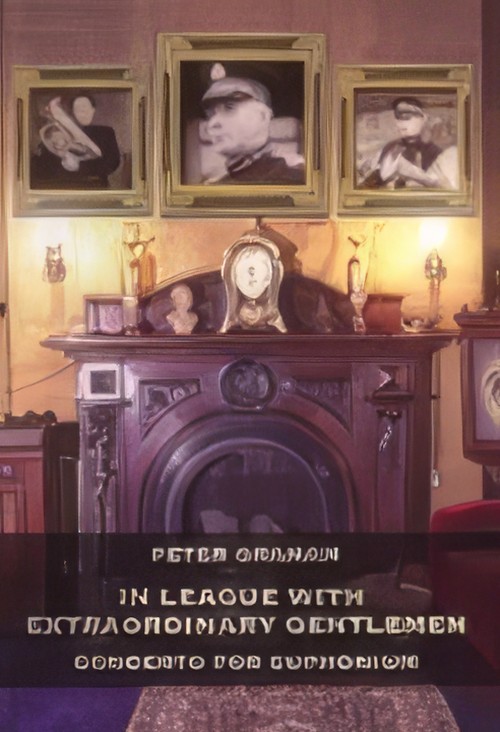
£84.95In League with Extraordinary Gentlemen (Euphonium Solo with Brass Band)
Concerto for EuphoniumIn League with Extraordinary Gentlemen combines two of composer Peter Graham's life interests - composition and 19th century popular fiction. Each of the concerto's three movements takes its musical inspiration from extraordinary characters who have transcended the original genre and have subsequently found mass audiences through film, television and comic book adaptations.The first movement follows a traditional sonata form outline with one slight modification. The order of themes in the recapitulation is reversed, mirroring a plot climax in the H.G. Wells novella The Time Machine (where the protagonist, known only as The Time Traveller, puts his machine into reverse bringing the story back full circle).The Adventure of the Final Problem is the title of a short story published in The Memoirs of Sherlock Holmes by Arthur Conan Doyle. This is an account of the great detective's final struggle with his long-time adversary Professor Moriarty at the Reichenbach Falls in Switzerland. The music takes the form of a slowed down lndler (a Swiss/Austrian folk dance) and various acoustic and electronic echo effects call to mind the alpine landscape. The final bars pose a question paralleling that of Conan Doyle in the story - have we really seen the last of Sherlock Holmes?The final movement, The Great Race, (available separately) follows Phileas Fogg on the last stage of his epic journey "Around the World in Eighty Days" (from the novel by Jules Verne). The moto perpetuo nature of the music gives full rein to the soloist's technical virtuosity. As the work draws to a conclusion, the frantic scramble by Fogg to meet his deadline at the Reform Club in Pall Mall, London, is echoed by the soloist's increasingly demanding ascending figuration, set against the background of Big Ben clock chimes.In League with Extraordinary Gentlemen was first performed in the brass band version by David Thornton and the Black Dyke Band, conductor Nicholas Childs, at the RNCM Concert Hall Manchester on January 30, 2009.
Estimated dispatch 7-14 working days
-
£64.95Platform to the Heavens
The piece takes its inspiration from the mountain ranges from one of my favourite countries, Switzerland.I have visited the Swiss Alps on many occasions and I am still taken back by its sheer awesome beauty with every visit. This commission gave me the opportunity to pay homage to this wonderful landscape and paint my own musical picture of it.The piece opens with what I imagine daybreak would be like at one of its many peaks. With the sun growing behind the mountain range, the piece builds from a single note to a huge climatic chord revealing Mother Nature's creation.Then at rehearsal figure 'C' the tempo changes dramatically as we fly through the many slopes of the mountains as if on a manic skiing expedition, revealing the many dangers within the Swiss Alps.The twists, turns and climaxes begin to die away as we enter rehearsal figure 'M' - nightfall over the mountains. As the sun disappears, the sky darkens to reveal the beautiful starlit sky above the mountain range. This middle section starts with the various cadenzas that serve as echoes around the Alps. It then leads to a lyrical solo at rehearsal figure 'O' as the moonlight illuminates the icy mountain peaks. A final cadenza to conclude this section highlights the end of nightfall as the sun starts to rise again.This recapitulation from the opening, signals a new dawn as the sun rises above the snowy peaks once again. The music at this point in its slightly altered state highlights the dawn of a new day in the Alps. The fast manic ski ride follows which takes the piece to its grand finale conclusion.The idea behind the title of this piece is that the Swiss Alps are so beautiful and vast; I can only imagine that they could be a platform connecting the earth to the heavens above.Paul Lovatt-Cooper
Estimated dispatch 7-14 working days
-
£33.63King Lily of the Valley (Euphonium & Baritone Feature w/Brass Band) Espen Haukas
Based on a poem by Gustaf Froding, King Lily of the Valley is a poetic and regal musical tribute to the delicate flower that, in Froding's verse, appears as a young king surrounded by both sorrow and beauty. Originally composed by David Wikander and arranged for male choir (TTBB) by Rasmus Krigstrom, this evocative work has been masterfully reimagined for brass band by Norwegian arranger and composer Espen Wallacher Haukas and created for Bjorsvik Brass's performance at Siddis Brass 2025. The brass band version retains the choral character and emotional depth of the original, weaving lush harmonies and lyrical phrasing into a rich soundscape. A deeply expressive addition to any brass band repertoire - blending Nordic choral tradition with the grandeur and warmth of the brass band sound. Scoring: Standard brass band instrumentation.(Note: Solo Cornets are marked TACET, providing a welcome opportunity for rest in longer programmes.) To view a rolling score video of the work please visit https://www.youtube.com/watch?v=AK5YPW4t3Oo Duration: Approx. 3.30 minutes Difficulty Level: 3rd Section + This PDF download includes the full score and parts. Sheet music available at www.brassband.co.uk (UK) or www.cimarronmusic.com (USA) Instrumentation: 1st Baritone Bb 1st Euphonium Bb 2nd Baritone Bb 2nd Euphonium Bb Soprano Cornet Eb Repiano Cornet Bb 2nd Cornet Bb 3rd Cornet Bb Flugel Horn Bb Solo Horn Eb 1st Horn Eb 2nd Horn Eb 1st Trombone Bb 2nd Trombone Bb Bass Trombone Bass Eb Bass Bb Timpani Percussion 1-2
In Stock: Estimated dispatch 1-3 working days
-
£29.89Dance from the Othello Suite (Brass Band) Coleridge-Taylor arr. Bushnell
Samuel Coleridge-Taylor is a British composer, who, from a young age, showed talent on the violin and entered the Royal College of Music, studying with Charles Villers Standford. His music become so popular that his Hiawatha trilogy was the second most performed choral piece (joint with Mendelssohn's Elijah, and only beaten by Handel's Messiah) with choral societies up and down the British Isles. In fact, Hiawatha was arranged by Charles Godfrey as a test-piece for the 1902 National Brass Band Championship of Great Britain, held at Crystal Palace.Commissioned by the theatre impresario Herbert Beerbohm, Coleridge-Taylor composed incidental music for His Majesty's Theatre London production of the Shakespeare play, Othello, in the West End, in 1909. In 1912, the play opened to the public, with a suite of five movements put together soon afterwards. The Dance, arranged here by Rob Bushnell, makes a great concert opener.This arrangement is for the British-style brass band, with alternative parts for horns in F and bass-clef lower brass. A recording of the original composition can be found at www.youtube.com/watch?v=OQeO_Ij9CV8 Duration: approx. 2.30 minutes Difficulty Level: 3rd Section + PDF download includes parts and score. Sheet music available at www.brassband.co.uk (UK) or www.cimarronmusic.com (USA) Instrumentation: Soprano Cornet Eb Solo Cornet Bb Repiano Cornet Bb 2nd Cornet Bb 3rd Cornet Bb Flugel Horn Bb Solo Horn Eb 1st Horn Eb 2nd Horn Eb 1st Baritone Bb 2nd Baritone Bb 1st Trombone Bb 2nd Trombone Bb Bass Trombone Euphonium Bb Bass Eb Bass Bb Timpani Percussion - Triangle, Cymbal & Bass Drum
In Stock: Estimated dispatch 1-3 working days
-
£37.37Polonaise from 'Scenes de Ballet' (Brass Band) Glazunov arr. Rob Bushnell
Alexander Glazunov was a Russian composer who was a gifted musician from childhood. He was seen as the natural heir to the nationalist revolution that had started with the Mighty Handful. Despite quickly turning from this to absolute forms of music, taking a keen interest in ballet music, his compositions still alludes to Russian folk tunes. He wrote four dance compositions, of which Scenes de Ballet was the first in 1894. The suite Scenes de Ballet, opus 52 has eight movements and was dedicated to the orchestra of the Russian Opera, St Petersburg. First performed in 1895 at a concert of the Imperial Music Society with Glazunov conducting. This arrangement of the final movement is for the British-style brass band, with alternative parts for horns in F and bass-clef lower brass. A recording of the original composition can be found here: https://www.youtube.com/watch?v=BS-Yx-bmxPg Duration: approx. 5.20 minutes Difficulty Level: 2nd Section + PDF download includes parts and score. Sheet music available at www.brassband.co.uk (UK) or www.cimarronmusic.com (USA) Instrumentation: Soprano Cornet Eb Solo Cornet Bb Repiano Cornet Bb 2nd Cornet Bb 3rd Cornet Bb Flugel Horn Bb Solo Horn Eb 1st Horn Eb 2nd Horn Eb 1st Baritone Bb 2nd Baritone Bb 1st Trombone Bb 2nd Trombone Bb Bass Trombone Euphonium Bb Bass Eb Bass Bb Timpani Percussion 1 - Snare Percussion 2 - Triangle, Cymbal & Bass Drum
In Stock: Estimated dispatch 1-3 working days