
Results
-
 £54.99
Till We Meet Again - Philip Sparke
Till We Meet Again was commissioned by Floraskulen Brassband, Floro, Norway, as a tribute to their former tuba player, Gunstein Stromsnes, who died tragically young in a traffic accident in 2017. They gave the premiere in December 2018. After a short introduction, a solo euphonium intones a modal, folk-like melody. This is taken up by the flugel horn and leads to a series of short solos which build to a majestic chorale for the full band. The mood subsides to reintroduce the modal melody before hints of the introduction and a short euphonium cadenza bring the work peacefully to a close.
Estimated dispatch 5-14 working days
-
 £104.99
Crossing Worlds - Thierry Deleruyelle
Crossing Worlds is a cornet concerto commissioned by the Swiss cornet player Kathleen Gaspoz who made history when after 200 years she became the first woman to hold the post of principal cornet in both the famous Brighouse & Rastrick Band and the Grimethorpe Colliery Band. Crossing Worlds is written in three separate movements ('Getaway', 'Skylights' & 'Welcome Parade') and follows the journey of a musician. Through their travels, the artist discovers a variety of countries, cultures and landscapes.
Estimated dispatch 5-14 working days
-
 £149.99
Redbad - Jan de Haan
Redbad was written for the Championship Section of the Dutch Brass Band Championships - and thus it contains plenty of musical and technical challenges. In this work of seven connected movements we get to know Redbad, who was the King of the Frisians from c. 680 to 719. The composer drew his inspiration from historical information, but also from stories, anecdotes, myths and legends around this figure. The themes within the composition are closely interwoven whereas the music is varied and appealing - from heroic motifs to the melancholy of elegies. Impressive tutti passages alternate with fragments that sound more open and in which various players can take centre stage. To crown it all, the work concludes with a majestic finale.
Estimated dispatch 5-14 working days
-
 £51.99
Into your Eyes - Kevin Houben
Into Your Eyes was commissioned by the Nielse ConcertBand (Belgium) to celebrate its tenth anniversary. The band was formed through the fusion of two existing music societies by the late Michel Versavel, who was the combined ensemble's first conductor. This wonderful chorale is a hymn to his memory, and is dedicated to the further growth and advancement of the band.
Estimated dispatch 5-14 working days
-
 £115.60
Vem kan segla forutan vind - Torstein Aagaard-Nilsen
Who can Sail without the Wind is an old folk tune from Aland in Finland. I believe the song was one of the first one I learnt to sing and play on the guitar. The melancholic character of the song is something I have brought with me ever since.
Estimated dispatch 5-14 working days
-
 £59.99
This Is Me - Michael Brown
From the songwriting team who brought us Dear Evan Hansen and La La Land, the movie musical The Greatest Showman is based on the true story of P. T. Barnum, with Hugh Jackman in the title role. This arrangement of the powerful anthem from the film is a dynamic showcase for the concert stage.
Estimated dispatch 5-14 working days
-
 £74.99
Dreamsong - Philip Sparke
Dreamsong was commissioned by Geir Ulseth and the Nidaros Brass Band from Trondheim, Norway. After a short introduction, the soloist introduces a rather nostalgic melody, accompanied by the lower brass parts. A fast central section is then played by the band, which leads to a climax. Eventually, the main melody played by the solo Cornet and Flugel Horn returns, overlaid with an ornamented counter-melody from the soloist, who then closes the piece with a short cadenza.
Estimated dispatch 5-14 working days
-
 £40.00
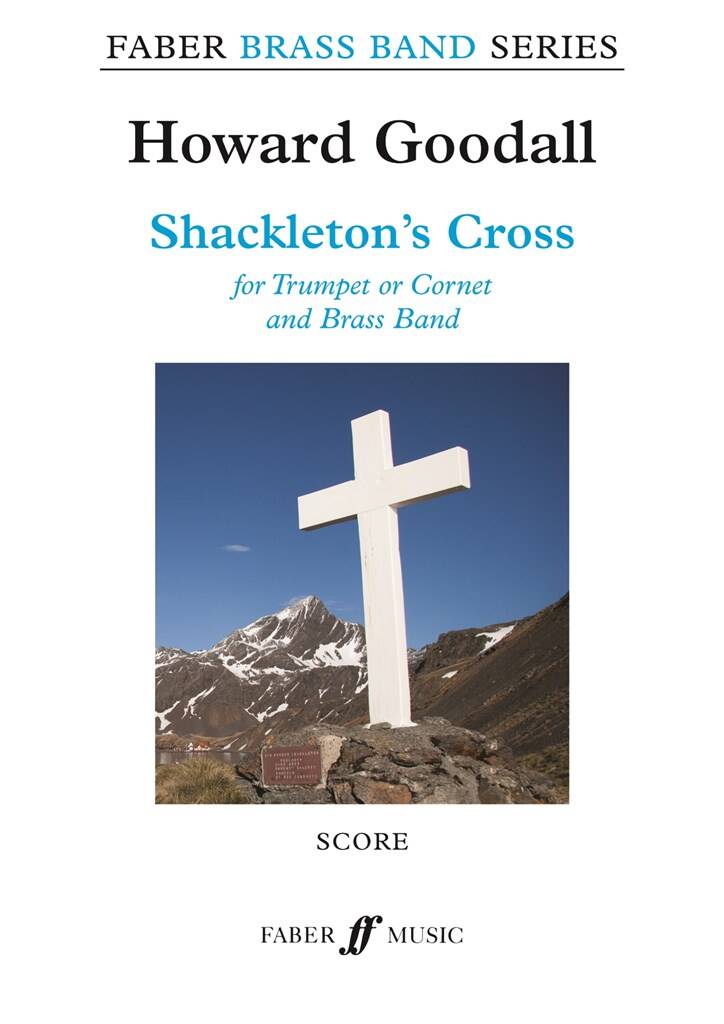
Shackleton's Cross - Howard Goodall
Shackleton s Cross was inspired by a painting created in 1957 by the English artist Edward Seago (1910 1974). The title refers to a cross which was erected to the memory of Sir Ernest Shackleton, who led a number of explorations to the Antarctic. Shackleton died in 1922 whilst on a Polar expedition, and the cross can be found on a promontory at the entrance to the bay at Grytviken Whaling Station in South Georgia. The painting is owned by HRH The Duke of Edinburgh, and was part of an exhibition at Buckingham Palace from October 2011 to April 2012. Originally scored for oboe, trumpet and small orchestra, Daniel Hall s sensitive arrangement fortrumpet or cornet and brass band follows the composer s alternative version for solo trumpet and organ, created for Crispian Steele-Perkins (trumpet) and David Goode (organ).
Estimated dispatch 5-14 working days
-
 £69.99
Theme from "Star Trek(R)" - Alexander Courage - Thomas Doss
Who doesn't know the famous introduction 'To boldly go where no man has gone before' at the beginning of each Star Trek sequel? Many generations grew up with Star Trek - one of the most iconic Sci-Fi series ever written.The original theme is as iconic as the opening line. A great warm up for the next Star Trek series in 2017, arranged by Thomas Doss.
Estimated dispatch 5-14 working days
-
£84.99
Alpine Variations - Bertrand Moren
Grandiose is probably the word that best defines the character of the alpine regions. The magnificence of the mountains is fascinating. It makes anyone who has visited this region feel nostalgic and cherishing the hope of returning to see them again one day.Alpine Variations is a four-movement work written in the theme and variations form which reflects the majestic grandure of this breathtaking region in music.
Estimated dispatch 5-14 working days
 View Music
 Listen to MP3