
Results
-
 £17.50
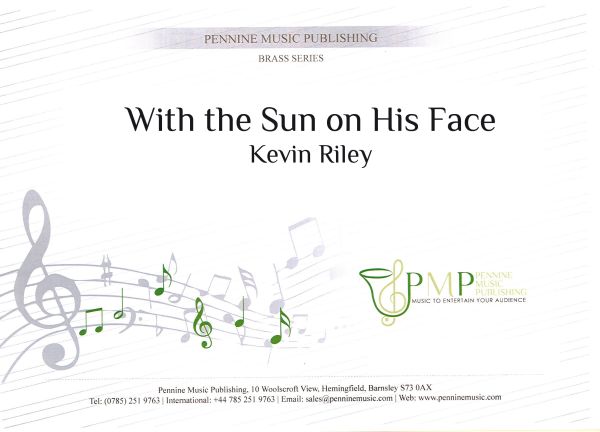
With the Sun on His Face
Estimated dispatch 7-14 working days
-
£29.50
Masquerade - Carl Nielson - Bill Willis
The opera, Masqurade, plot revolves around Leander and Leonora, two young persons who meet fortuitously at a masquerade ball, swear their undying love for each other and exchange rings. The following day, Leander tells a servant of his newfound love. He soon becomes distraught when informed by the servant that his parents have betrothed him in marriage to a neighbour's daughter. Things get complicated when Leonard, the neighbour whose daughter is the other part of the previously unknown arrangement, comes complaining to Leander's father that his daughter is in love with someone she met at the masquerade last night. In the third act, all is resolved when the various parties slip off to the night's masquerade, where all is revealed to everyone's mutual satisfaction. The overture is a stunning work, very entertaining for audiences and players alike.
In Stock: Estimated dispatch 1-3 working days
-
 £24.50
Praise My Soul - John Goss - Andi Cook
This special arrangement of the well-known hymn tune was crafted by arranger Andi Cook for his recent wedding, to be played by an all-star group of players made up of instrumentalists from Grimethorpe, Black Dyke, Hepworth, Faireys & EYMS. Whilst originally scored for a congregation to sing along to, with optional organ part (included in this publication), Andi had in mind that no one really likes to sing at weddings, and so the final verse was written to wow the congregation and show his wife's family the awe-inspiring sound a brass band can generate. Since then, this arrangement has been used several times and has found favor with adjudicators, winning best hymn tune at the Morley Contest and the Brighouse Contest this year. The work is a perfect addition to any bands repertoire, working perfectly in all manners of occasions.
In Stock: Estimated dispatch 1-3 working days
-
 £24.50
Swanee River - Stephen Foster - Alan Beaumont
The song "Old Folks At Home" over the years has become better known by the lyrics of its first line (Way Down Upon The) Swanee River. The composer Stephen Foster (also known for songs such as "Oh! Suzanna" & "Jeanie With The Light Brown Hair") struggled to find the perfect river to fit his melody, until his brother suggested the "Suwannee" river in Southern Georgia/Northern Florida, although, Foster misspelled the name intentionally to fit the melody line. The song has been the official state song of Florida since 1935. This rousing arrangement by Alan Beaumont will take your audience on a foot tapping, lighthearted journey. With the melody featured in a variety of different styles, the comedy sounds of duck calls, car horns, sirens & other surprises will keep the audience (& players) on their toes. A wonderful addition to any bands library, not to be missed.
In Stock: Estimated dispatch 1-3 working days
-
 £29.50
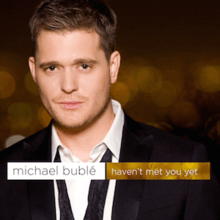
Haven't Met You Yet - Michael Buble - Gavin Somerset
This smash hit was the first single to be released by Canadian singer Michael BublA(c). Released on his forth album "Crazy Love", the singer co-wrote the song for his fiancA(c)e Luisana Lopilato. The song has had world-wide success, reaching No.1 in the Canadian charts and the U.S aswell as enjoying success here in the UK charts reaching No.5. The piece is a fantastic light-hearted swing number that both players & audiences will enjoy, with an optional feature in the middle that Soprano cornet players (or brave Solo cornet players!!!) will relish! A must for every bands library.
In Stock: Estimated dispatch 1-3 working days
-
£44.50
In Memoriam - Arthur Sullivan - Neville Buxton
Written before teaming up with W.S. Gilbert, the first performance of "In Memoriam" was in 1866 at the Norwich Festival. Just before Sullivan started the composition, his father passed away. Sullivan turned his grief to the completion of this overture. It is also thought that the work was initially inspired by a poem of the same name by the Lord Tennyson Alfred. The overture enjoyed much success during Sullivan's lifetime, although sadly is seldom heard today. This arrangement of the work is the 2013 set test piece for the Butlins Mineworkers Open Brass Band Festival, 2nd section.
In Stock: Estimated dispatch 1-3 working days
-
 £24.50
Rondo - Allegretto (from Clarinet Concerto) - Von Weber - Andi Cook
Born in Oldenburg, Germany, Weber composed his first two operas aged just 16. Being one of the finest pianists around, his music is filled with vigour and spirit. Weber wrote three concertos for clarinet in 1811 at the age of 25, for the Munich clarinettist, Heinrich Barmann. The most famous movement from the first concerto has been skilfully arranged for solo cornet and brass band. A perfect showcase of a piece.
In Stock: Estimated dispatch 1-3 working days
-
 £37.50
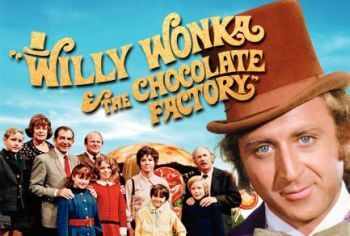
Willy Wonka (Selections From) - Leslie Bricusse & Anthony Newman - Gavin Somerset
Few people have not seen the 1971 film starring Gene Wilder as the eccentric chocolatier, offering tours of his chocolate factory to those lucky enough to find the hidden golden ticket. Whilst initialy a box office failure, the film went on to become a favourite in households across the world, years after its initial release. Now for the first time, your band can enjoy the music from the film in this selection that includes 'Golden Ticket', 'The Candy Man' and of course, the unforgettable 'Pure Imagination'. The music of Leslie Bricusse & Anthony Newley has been a hit for many years and continues to make TV and radio appearances. 'The Candy Man' was perhaps best known when covered by Sammy Davis Jr where it made it to number one in the USA. 'Pure Imagination' has been used countless times in adverts in the media and more recently, recorded by Jamie Callum for his album 'Momentum'. 'Pure Imagination' can also be performed as a stand-alone item. This is truly an all-time classic filled with a feast of musical variety that fits well into just about any concert. A must for all band libraries. To download the Solo Cornet part, please CLICK HERE . To download the Solo Horn part, please CLICK HERE . To download the Solo Euphonium part, please CLICK HERE . To download the playback audio to play along to, please RIGHT CLICK HERE & Save As .
In Stock: Estimated dispatch 1-3 working days
-
£24.50
Fakenham Fair - Traditional - A. Cook
The origins of the song Fakenham Fair are somewhat obscure. It was collected by Peter Bellamy, who performed it unaccompanied on his first solo LP, "Mainly Norfolk" in 1968, giving credit to a Peter Bullen of Norwich from whom he had learned it, Bullen in turn giving credit to his grandfather. But beyond that, other than it definitely being a Norfolk folk song, the rest is a mystery.Over the years, Fakenham Fair has become a firm favourite among folk audiences, probably the most famous version being the 2008 recording by folk supergroup 'Bellowhead' which this setting for brass band pays tribute to. A bright, quirky, and bouncy 5:4/10:8 waltz, the band parts dance back and forth from simple time to compound time and back again, giving a constant flow that somehow always feels natural despite the irregular rhythm... but which will also keep your audience guessing where the beat will land next! With solos and features for principal chairs around the band, nobody is left out of the fun. Engaging to listen to and even more so to play, Fakenham Fair is a perfect light concert item for the band that likes to show off their rhythmic and lyrical sides at the same time.
In Stock: Estimated dispatch 1-3 working days
-
 £29.50
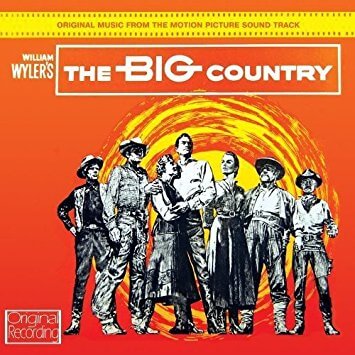
The Big Country - Jerome Moross - Andi Cook
The opening of the main theme from 'The Big Country' is as iconic as any western theme ever written. The flourish from the strings (or cornets in our case!) allow your band to show off with detailed playing that is sure to grab your audience's attention from the word go. The film's composer, Jerome Moross was nominated for an Academy Award for his work on the soundtrack, but lost to 'The Old Man and the Sea' scored by Dimitri Tiomkin. This arrangement by Andi Cook faithfully recreates the excitement from the main theme that is now known throughout the world. This title has never before been publicly available to brass bands until now and is sure to be a hit with bands and audiences.
In Stock: Estimated dispatch 1-3 working days
 View Music
 Listen to MP3