
Results
-
 £62.00
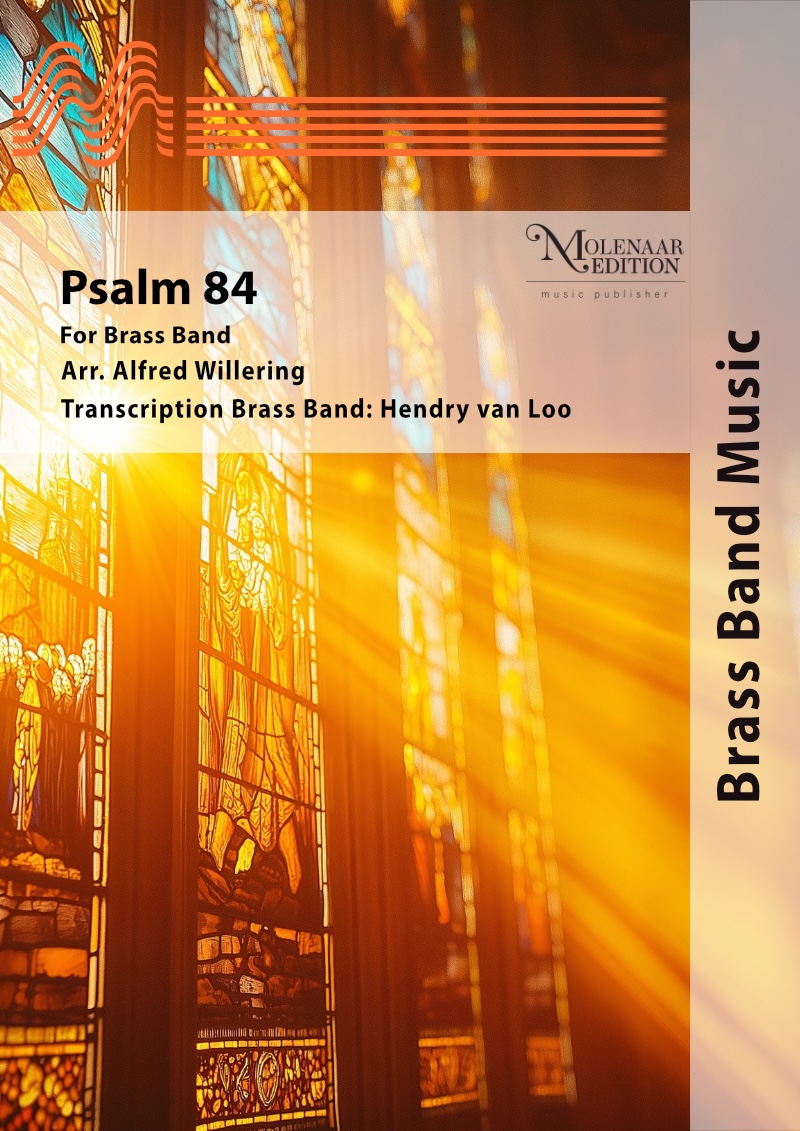
Psalm 84 - Alfred Willering/Hendry van Loo
This is a splendid choral in which the Dutch historical song 'Merck toch hoe sterk' is skillfully arranged. This composition was commissioned by Hendry van Loo and written by Alfred Willering for a symphonic wind orchestra. The premiere took place during the jubilee concert celebrating the 60th anniversary of Henk van Loo Sr.'s conductorship, performed by Wilhelmina Glanerbrug under the direction of Hendry van Loo.
Estimated dispatch 10-14 working days
-
£44.95
KINGDOM TRIUMPHANT, The (Brass Band Set) - Eric Ball
This landmark composition written in 1962 is perhaps the most universally known Eric Ball classic. With its magnificent finale treatment of the hymn tune 'Helmsley,' this is ideal concert repertoire.
Estimated dispatch 7-14 working days
-
 £25.00
Breakaway Fanfare and Romance - David Hext
A grand fanfare of an opening instantly catches the attention of the audience. This is then followed by the delightfully gentle melody of the Romance, reflected around the sections with some wonderful chordal sounds to build the intensity.The piece closes with a return to the fanfare theme and a definitive flourish to the end.This is an ideal work to add some original composition interest to a concert of entertainment contest programme
In Stock: Estimated dispatch 3-5 working days
-
 £30.00
Frost - Lucy Pankhurst
A spotlight composition from Lucy Pankhurst for baritone soloist with brass accompaniment.Opening with a rich combination of melody and harmony, the resulting sound draws in the audience with its beauty. The sounds grow and the accompaniment starts to introduce moments of extra rhythmic interest. This then progresses into a more playful section where the melody line is developed further. Eventually the solo returns to a more reflective section and once again the further development of the rich warm harmonies.This is a lovely addition to the baritone repertoire and brings with it a new level of appreciation for the instrument.
In Stock: Estimated dispatch 3-5 working days
-
 £30.00
Stuck In The Middle With You - Egan/Rafferty
Arranged by Lucy Pankhurst, this is a refreshing remake of the original 70's hit song for Stealers Wheel, that combines nostalgia with some showy and innovative solo work.The melody travels around the band and the overall feel of the melody, rhythms and beat are brilliantly scored to recapture the original song, with the added benefit of soloists being to shine in riff spotlight moments. This classy makeover ensures thepiece can't help but get those toes tapping with its funky beat.A great concert feature which is bound to bring back fond memories for the audience and band members alike!
In Stock: Estimated dispatch 3-5 working days
-
 £49.99
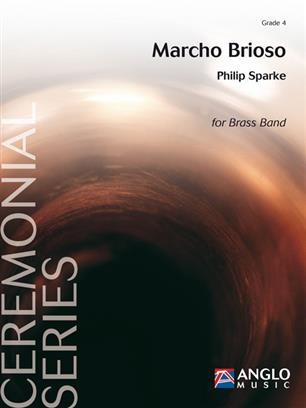
Marcho Brioso (Brass Band - Score and Parts)
Marcho Brioso was commissioned by The Brioso Brass, a British-style brass band from Hokkaido, Japan. They gave the first performance in January 2012.The commission was for a bright and breezy march that the band could use as their theme tune, so Marcho Brioso falls into the composer's series of Broadway-style marches, which includes Slipstream, The Bandwagon and Jubiloso. After a short introduction a solo cornet plays the main theme, accompanied by a euphonium counter-melody. A secondary phrase from the horns and baritones leads to a tutti version of the main theme which is followed by the traditional 'bass' strain. A change of key heralds the trio section, which features a cantabile melody on euphonium; this is then taken up by the full band after a short bridge passage and further change of key.This takes us back to the home key which sees a quiet staccato version of the main theme lead to a recapitulation and a short coda which brings the march to a close.Duration: 3:40
Estimated dispatch 7-14 working days
-
 £39.99
Congestion Charge (from New London Pictures) (Brass Band - Score and Parts)
This is the third movement of Nigel Hesss New London Pictures As with all modern cities, London is over-crowded with motor vehicles. London was the first major city in Europe to adopt a Congestion Charge, and this lighthearted work includes musical images of frustrated rush hour traffic leading to a freer flowing galop. Suitable for 1st Section Bands and above. Duration: 7.00
Estimated dispatch 7-14 working days
-
 £164.99
Music of the Spheres (Brass Band - Score and Parts)
Music of the Spheres was commissioned by the Yorkshire Building Society Band and first performed by them at the European Brass Band Championships in Glasgow, May 2004. The piece reflects the composers fascination with the origins of the universe and deep space in general. The title comes from a theory, formulated by Pythagoras, that the cosmos was ruled by the same laws he had discovered that govern the ratios of note frequencies of the musical scale. ('Harmonia' in Ancient Greek, which means scale or tuning rather than harmony - Greek music was monophonic). He also believed that these ratios corresponded to the distances of the six known planets from the sun and thatthe planets each produced a musical note which combined to weave a continuous heavenly melody (which, unfortunately, we humans cannot hear). In this work, these six notes form the basis of the sections Music of the Spheres and Harmonia. The pieces opens with a horn solo called t = 0, a name given by some scientists to the moment of the Big Bang when time and space were created, and this is followed by a depiction of the Big Bang itself, as the entire universe bursts out from a single point. A slower section follows called The Lonely Planet which is a meditation on the incredible and unlikely set of circumstances which led to the creation of the Earth as a planet that can support life, and the constant search for other civilisations elsewhere in the universe. Asteroids and Shooting Stars depicts both the benign and dangerous objects that are flying through space and which constantly threaten our planet, and the piece ends with The Unknown, leaving in question whether our continually expanding exploration of the universe will eventually lead to enlightenment or destruction.Duration: 18:00
Estimated dispatch 7-14 working days
-
 £74.95
Variations on an Enigma (Score and Parts)
Variations on an Enigma was commissioned by Howard Snell for the Desford Colliery Band and first performed by them in Gillingham, Dorset, England in September 1986.The 'Enigma' is a short snatch of a phrase taken from a well-known brass band test piece - a phrase which caught the imagination of the composer who took it as the basis of a sort of concerto for band with each section featured in turn. First the cornets have their turn, with a 'moto perpetuo', and they are followed by the horns and flugel whose variation is delicate and decorative. Trombones follow, each having there own tune in turn and then combining them together. Euphoniums and baritones have an expressive funeral march which is interrupted by percussion and basses who share a rhythmic, syncopated variation. A climax is reached and this is followed by a fugue (based on the theme) against which snatches of the preceding variations appear. The fugue heralds what turns out to be the theme on which all the variations are based, appearing in full at last, whose first five notes are derived from the 'enigma' theme. The piece ends with an emphatic final statement by the timpani.
Estimated dispatch 7-14 working days
-
 £37.95
Variations on an Enigma (Score Only)
Variations on an Enigma was commissioned by Howard Snell for the Desford Colliery Band and first performed by them in Gillingham, Dorset, England in September 1986.The 'Enigma' is a short snatch of a phrase taken from a well-known brass band test piece - a phrase which caught the imagination of the composer who took it as the basis of a sort of concerto for band with each section featured in turn. First the cornets have their turn, with a 'moto perpetuo', and they are followed by the horns and flugel whose variation is delicate and decorative. Trombones follow, each having there own tune in turn and then combining them together. Euphoniums and baritones have an expressive funeral march which is interrupted by percussion and basses who share a rhythmic, syncopated variation. A climax is reached and this is followed by a fugue (based on the theme) against which snatches of the preceding variations appear. The fugue heralds what turns out to be the theme on which all the variations are based, appearing in full at last, whose first five notes are derived from the 'enigma' theme. The piece ends with an emphatic final statement by the timpani.
Estimated dispatch 7-14 working days
 View Music