Results
-
 £33.62
Libera Me from 'Requiem' (Brass Band) Faure arr. Rob Bushnell
Composed between 1887 and 1890, Gabriel Faure's Requiem is not only one of his best-known works but one of the most popular piece of choral music in the Classical repertoire, coming 23rd in the Classic FM's Hall of Fame 2024. Believed to be a tribute to his father (who died in 1885), Faure himself said "My Requiem wasn't written for anything - for pleasure, if I may call it that!" It started life as a five-movement work but was later expanded to be the final seven-movement work we know today. The first version (which Faure called "un petit Requiem") was first performed on 16 January 1888, with Faure conducting, a second version premiered on 21 January 1893 before the final version (reworked for full orchestra) was played on 12 July 1900; the Requiem was performed at the composer's own funeral in 1924.The Libera Me, or Deliver Me, was actually written in 1877 and is the sixth part of the Requiem.Faure once said of the work, "Everything I managed to entertain by way of religious illusion I put into my Requiem, which moreover is dominated from beginning to end by a very human feeling of faith in eternal rest." Upon interview, he also said, "It has been said that my Requiem does not express the fear of death and someone has called it a lullaby of death. But it is thus that I see death: as a happy deliverance, an aspiration towards happiness above, rather than as a painful experience. The music of Gounod has been criticised for its inclination towards human tenderness. But his nature predisposed him to feel this way: religious emotion took this form inside him. Is it not necessary to accept the artist's nature? As to my Requiem, perhaps I have also instinctively sought to escape from what is thought right and proper, after all the years of accompanying burial services on the organ! I know it all by heart. I wanted to write something different."This arrangement is for the British-style brass band, with alternative parts for horns in F and bass-clef lower brass. The tenor solo is featured on the euphonium. A recording of the original composition can be found here: www.youtube.com/watch?v=fXwFNoBHCf0 Duration: 4.20 minutes approx. Difficulty Level: 4th Section + PDF download includes parts and score. Sheet music available from www.brassband.co.uk Instrumentation: Soprano Cornet Eb Solo Cornet Bb Repiano Cornet Bb 2nd Cornet Bb 3rd Cornet Bb Flugel Horn Bb Solo Horn Eb 1st Horn Eb 2nd Horn Eb 1st Baritone Bb 2nd Baritone Bb 1st Trombone Bb 2nd Trombone Bb Bass Trombone Euphonium Bb Bass Eb Bass BbTimpani
In Stock: Estimated dispatch 1-3 working days
-
 £33.62
Love Divine (Blaenwern) (Brass Band) William Rowlands arr. Kenneth Downie
This delightful setting for brass band by Kenneth Downie is based on the much loved hymn Love Divine, All Loves Excelling, alternatively known as Blaenwern. An optional organ part which will enhance the last verse is included. Kenneth Downie writes: 'It has been a delight to work on this wonderful Welsh hymn tune called Blaenwern, a tune which perfectly suits the majestic words by Charles Wesley, 'Love divine, all loves excelling'. This hymn is all about a big, expansive, all-embracing God, and I have tried to capture this aspect of the words. The rising interval in the introduction is an important feature in developing the notion of a 'big God', and its reappearance near the end is intended to be very significant. The hymn is full of memorable phrases which will hopefully inspire players, singers and conductors as they contemplate the text in preparation for any performance. 'Joy of Heaven, to earth come down', 'Enter every longing heart', 'Finish then thy new creation', and then the last amazing four lines: 'Changed from glory into glory, Till in Heaven we take our place, Till we cast our crowns before thee, Lost in wonder, love and praise'. The addition of the organ in the last verse, by special request of Peggy and Scott Thomas who commissioned the arrangement, should add to the majesty of the music, but of course, it is not fundamental to any performance. May this music bring honour to our amazing God!' To view a video of the Melbourne Staff Band playing the piece please visit www.youtube.com/watch?v=BUszRQh40lQ A rolling score video can be viewed here: www.youtube.com/watch?v=y4dM0fZaVug Sheet music available from www.brassband.co.uk Difficulty Level: 4th Section + Length: 4.00 minutes Instrumentation: Soprano Cornet Eb Solo Cornet Bb Repiano Cornet Bb 2nd Cornet Bb 3rd Cornet Bb Flugel Horn Bb Solo Horn Eb 1st Horn Eb 2nd Horn Eb 1st Baritone Bb 2nd Baritone Bb 1st Trombone Bb 2nd Trombone Bb Bass Trombone Euphonium Bb Bass Eb Bass Bb Timpani Percussion 1-2 Organ (optional)
In Stock: Estimated dispatch 1-3 working days
-
 £33.62
Love Eternal (Cornet/Flugel Solo with Brass Band) Jarrod Cooper arr. Lamplough
Love Eternal was written by Gavin Lamplough for Neil Blessett, who at the time of writing was the Principal Horn player of both Birmingham (UK) Citadel Band and the International Staff Band of The Salvation Army. After popular demand, it was set as a cornet or flugel horn solo, both with piano accompaniment and this version with brass band. The arranger uses Jarod Cooper's popular contemporary worship song King of Kings, Majesty as the basis for the work and the piece seeks to provide a vehicle for the rich timbres of the tenor horn to be enjoyed by the listener. The music reflects the Christian musician's desire to offer their talents to God to be used by Him, and the lyrics of the song are ones of contrast as the musical journey of this piece seeks to emulate the juxtaposition through contrasting moods. To view a video of Helen Williams performing the solo (version with piano accompaniment) please visit www.youtube.com/watch?v=ww3B06TBKMM PDF download includes score and parts. Sheet music available from: UK - www.brassband.co.uk USA - https://satradecentral.org Difficulty Level: 4th Section + Length: 5.00 minutes Instrumentation: Cornet/Flugel Horn Soloist Bb Soprano Cornet Eb 1st Cornet Bb 2nd Cornet Bb Flugel Horn Bb 1st Horn Eb 2nd Horn Eb 1st Baritone Bb 2nd Baritone Bb 1st Trombone Bb 2nd Trombone Bb Bass Trombone Euphonium Bb Bass Eb Bass Bb Percussion 1-3
In Stock: Estimated dispatch 1-3 working days
-
 £33.62
Love Eternal (Tenor Horn Solo with Brass Band) Jarrod Cooper arr.Gavin Lamplough
Love Eternal was written by Gavin Lamplough for Neil Blessett, who at the time of writing was the Principal Horn player of both Birmingham (UK) Citadel Band and the International Staff Band of The Salvation Army. The arranger uses Jarod Cooper's popular contemporary worship song King of Kings, Majesty as the basis for the work and the piece seeks to provide a vehicle for the rich timbres of the tenor horn to be enjoyed by the listener. The music reflects the Christian musician's desire to offer their talents to God to be used by Him, and the lyrics of the song are ones of contrast as the musical journey of this piece seeks to emulate the juxtaposition through contrasting moods. To view a video of Neil Blessett performing the solo with Birmingham (UK) Citadel Band please visit www.youtube.com/watch?v=Jx5G-MDpD_g This title is also available as a trombone solo with brass band here. PDF download includes score and parts. Sheet music available from: UK - www.brassband.co.uk USA - https://satradecentral.org Difficulty Level: 4th Section + Length: 5.00 minutes Instrumentation: Tenor Horn Soloist Eb Soprano Cornet Eb 1st Cornet Bb 2nd Cornet Bb Flugel Horn Bb 1st Horn Eb 2nd Horn Eb 1st Baritone Bb 2nd Baritone Bb 1st Trombone Bb 2nd Trombone Bb Bass Trombone Euphonium Bb Bass Eb Bass Bb Percussion 1-3
In Stock: Estimated dispatch 1-3 working days
-
 £48.56
Perspectives from Gallipoli (Brass Band) Fendall Hill
This powerful and evocative work by Australian-New Zealand composer Fendall Hill pays tribute to the ANZAC soldiers who passed through Weymouth, Dorset during World War I. Inspired by first-hand accounts, the piece follows the emotional journey of a young soldier - from eager enlistment, through the harrowing Gallipoli campaign, to recovery and reflection in Weymouth. Structured in four movements, the music captures anticipation, fear, fierce resistance, and eventual healing, culminating in a moment of remembrance. The hymn tune Wareham -written by Dorset composer William Knapp - features prominently as a thematic thread, honouring the region's historical connection to the ANZAC legacy. A deeply moving addition to the brass band repertoire, this work is both a musical narrative and a heartfelt gesture of gratitude to the people of Dorset for their care and ongoing commemoration of the ANZACs. To view a performance of the work featuring ANZAC Brass please visit www.youtube.com/watch?v=diz9TRz7rwE Duration: approx. 8.00 minutes Difficulty Level: 1st Section + PDF download includes parts and score. Sheet music available at www.brassband.co.uk (UK) or https://satradecentral.org (USA) Instrumentation: Soprano Cornet Eb Solo Cornet Bb Repiano Cornet Bb 2nd Cornet Bb 3rd Cornet Bb Flugel Horn Bb Solo Horn Eb 1st Horn Eb 2nd Horn Eb 1st Baritone Bb 2nd Baritone Bb 1st Trombone Bb 2nd Trombone Bb Bass Trombone Euphonium Bb Bass Eb Bass Bb Timpani Percussion 1-3
In Stock: Estimated dispatch 1-3 working days
-
 £79.95
Corineus - Christopher Bond
Corineus, in medieval British legend, was a prodigious warrior, a fighter of giants, and the eponymous founder of Cornwall. The first of the legendary rulers of Cornwall, he is described as a character of strength and power. It is on the medieval ruler that this new work, Corineus, is based, presented in three contrasting sections. The work opens with heraldic fanfares and a sense of jubilance before presenting musical material which changes and develops organically, portraying the journey taken by Corineus, Brutus, and the Trojans from modern-day mainland Europe to Britain. The central section of the work is slower, creating a feeling of longing. Brutus' son, Locrinus, had agreed to marry Corineus' daughter, Gwendolen, but instead fell in love with a German princess. In writing this part of the work, the composer portrays the longing of Gwendolen for her husband, knowing he is in love with somebody else. After Corineus died, Locrinus divorced Gwendolen, who responded by raising an army in Cornwall and making war against her ex-husband. Locrinus was killed in battle, and legend suggests that Gwendolen threw Locrinus' lover into the River Severn. This dramatic battle provides the inspiration for the final part of the work. In writing this work, the composer hopes to flare the imagination of young brass players around the country, in an engaging new take on a firm fixture in British folklore.
Estimated dispatch 10-14 working days
-
 £34.95
New Dawn, A - Christopher Bond
A New Dawn (2013) was commissioned by and written for British tenor horn virtuoso Owen Farr in late 2013, to provide the title track of his new CD album. With a specific brief, the work was to include a bold ear-catching 'fanfare-esque' opening to bring maximum impact to the opening of the album, before settling in a rhythmic groove which allows the new tempo and reduced texture to settle before the entry of the tenor horn, who's initial four bar motif is what forms the basis of much of the work. Following this, structurally, the work follows with a set of variations, carefully demonstrating the capabilities of the instrument and indeed the player. Bar 90 sees the return of the bold opening gestures, this time followed with a harmonic transformation, before a recapitulation at bar 120 which sees a return to the original tenor horn material and an increase in intensity, volume and virtuosity through to the close. A New Dawn was premiered by Owen Farr and the Cornwall Youth Brass Band on 30th December 2013, and was recorded by Owen and the Cory Band in March 2014, featuring as the title track on his CD release of the same name.
Estimated dispatch 10-14 working days
-
 £34.00
Meditation: It is Well With My Soul
ABOUT THIS PIECE: Cantatio are pleased to release this hymn meditation on the much-loved hymn by Adam D J Taylor. Commissioned by the world famous Wingates Band, this arrangement became a centrepiece of the band's online presence during the COVID pandemic. Story time... Horatio Spafford was a successful attorney and real estate investor who lost a fortune in the great Chicago fire of 1871. Around the same time, his beloved four-year-old son died of scarlet fever. Thinking a vacation would do his family some good, he sent his wife and four daughters on a ship to England, planning to join them after he finished some pressing business at home. However, while crossing the Atlantic Ocean, the ship was involved in a terrible collision and sunk. More than 200 people lost their lives, including all four of Horatio Spafford's precious daughters. His wife, Anna, survived the tragedy. Upon arriving in England, she sent a telegram to her husband that began: "Saved alone. What shall I do?" Horatio immediately set sail for England. At one point during his voyage, the captain of the ship, aware of the tragedy that had struck the Spafford family, summoned Horatio to tell him that they were now passing over the spot where the shipwreck had occurred. As Horatio thought about his daughters, words of comfort and hope filled his heart and mind. He wrote them down, and they have since become a well-beloved hymn: When peace like a river, attendeth my way, When sorrows like sea billows roll-- Whatever my lot, thou hast taught me to say It is well, it is well with my soul. ENSEMBLE: Standard British Brass Band WHEN YOU BUY THIS PRODUCT, YOU GET: High-quality printed score and parts LEVEL: 2 - 3 LISTEN: DURATION: c. 7-minutes, 30-seconds EXAMPLE SCORE: Click here LEVEL GUIDE: Level 1- Accessible to all Level 2 - c. UK third section and higher Level 3 - c. UK second section and higher Level 4 - c. UK first section and higher Level 5 - c. UK championship section level
Estimated dispatch 5-7 working days
-
 £42.00
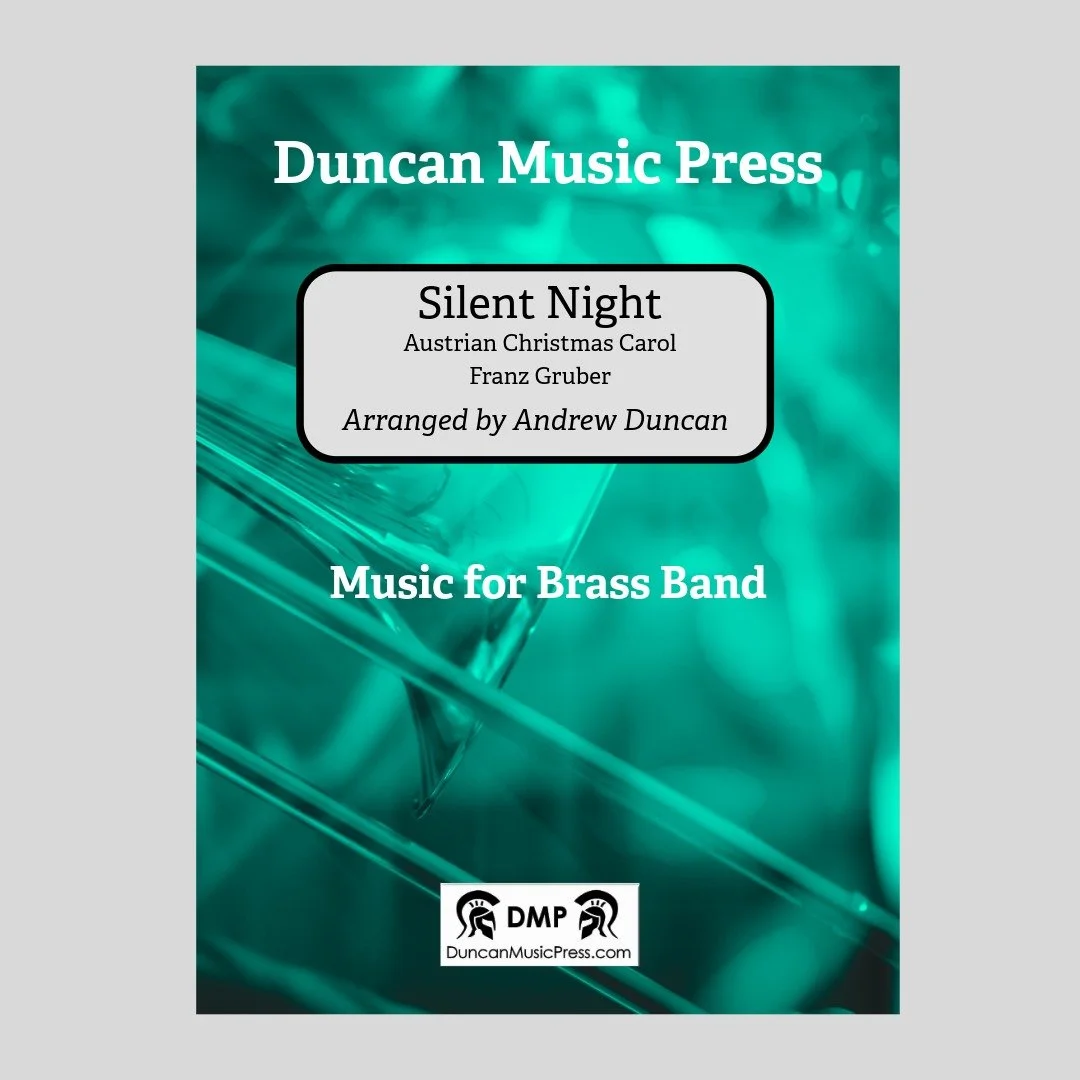
Silent Night. Franz Gruber arranged for brass band by Andrew Duncan
Silent Night is an Austrian Christmas Carol written by Franz Gruber, (1787-1863). Franz Gruber was an primary school teacher, organist and composer who lived in the village of Arndorf in Austria. Silent Night (Stille Nacht) has become one of the best loved Christmas Carols ever written. This arrangement for brass band imagines Christmas morning in a small Austrian village, such as Arndorf, with the sound of the local church bells ringing out along with the sound of a choir singing Silent Night accompanied by the local band.. The arrangement features the tubular bells playing a simple descending scale, which is also played by muted cornets (2nd and 3rd cornets). After 2 verses of the hymn the coda features a short trombone trio with a jazzy feel which leads into a final scale from the tubular bells and cornets bringing the piece to a peaceful close. To hear a sound file of Silent Night scroll down.
-
£95.00
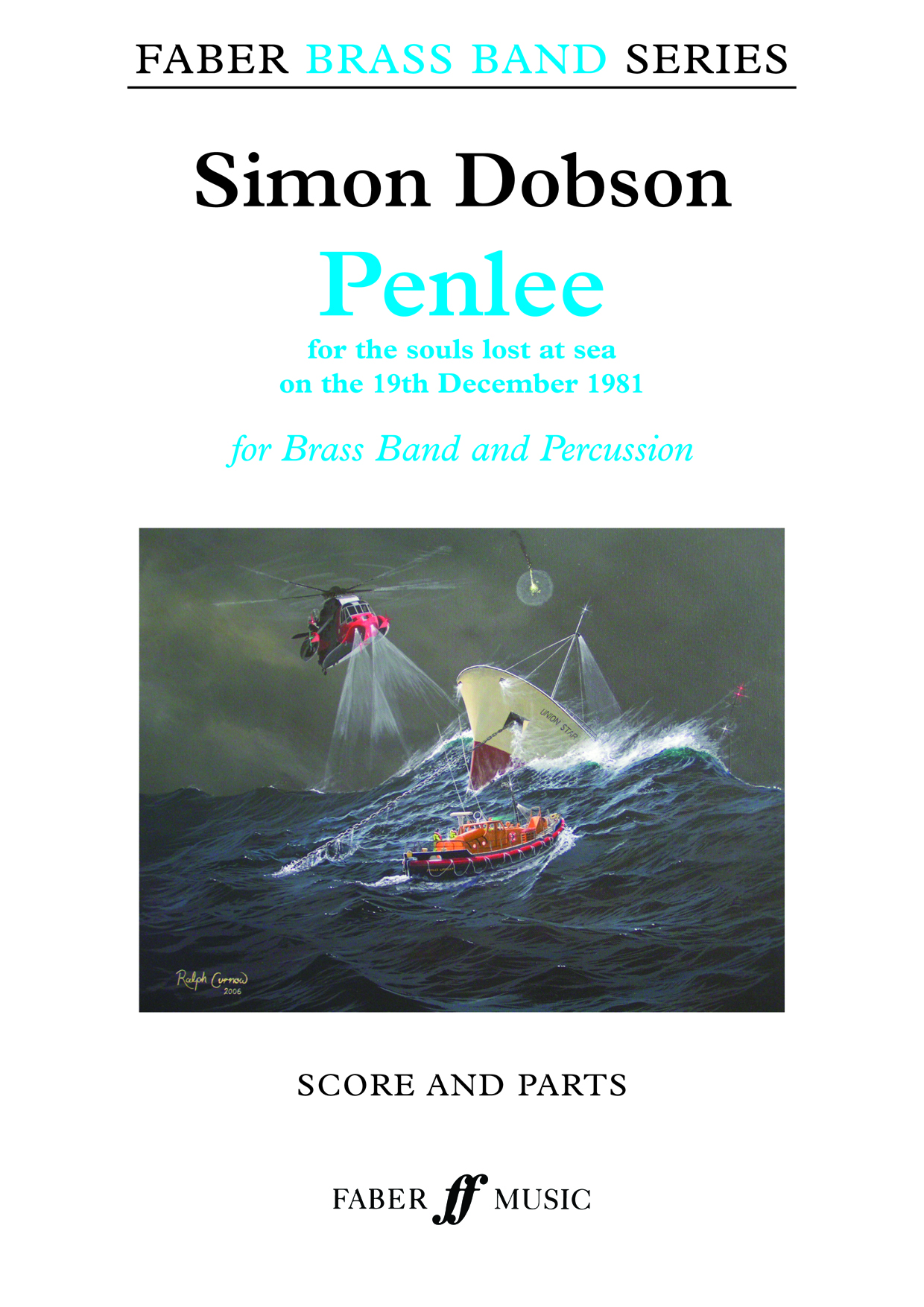
Penlee (Score & Parts) - Simon Dobson
To some, the tragic story of the Penlee lifeboat, Solomon Browne, would need no introduction, and to some the pain felt is still very much a reality. The composer, born just a few weeks before that fateful night on the 19th December 1981, has created this work as a musical homage to the bravery of the souls who lost their lives and has dedicated it to their memory.Penlee was commissioned by the Cornwall Youth Brass Band using funds bequeathed by Michael Pickett. The first performance was given by the Cornish Youth Brass Band, conducted by Ian Porthouse, at St. Michael's Church, Newquay, on 30th December 2008.Penlee has been voted into the Classic FM Hall of Fame 2011 at No.106. Not only is it the first time a brass work has been featured in the Hall of Fame, but it was also the highest new entry.The work has subsequently been recorded by the Leyland Band, conducted by Jason Katsikaris, on the CD entitled Penlee.Brass Band Grade 4: Advanced Youth and 3rd SectionDuration: 13 minutes
In Stock: Estimated dispatch 1-3 working days