Searching for Wind Band Music? Visit the Wind Band Music Shop
We've found 867 matches for your search. Order by

Results

  • £79.99

    The Duke of Marlborough - Percy Aldridge Grainger

    Based on the English folkong "The Duke of Marlborough". The first thime heard (behind platform) it typifies memories of long-past wars - vague, far-off, poetic. The second time (on platform) it typifies war in the present - fast-moving, close at hand, debonair, drastic.

    Estimated dispatch 5-14 working days
  • £72.99

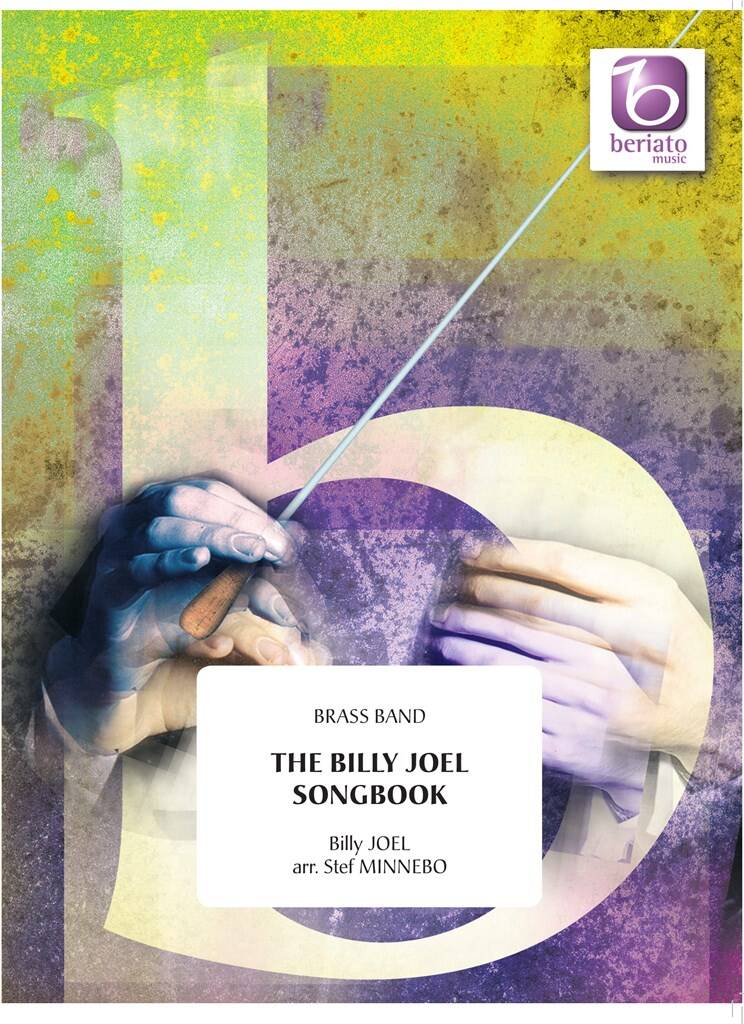
    The Billy Joel Songbook - Billy Joel - Stef Minnebo

    Billy Joel (1949) was determined to become a pop star after he had experienced a performance of The Beatles who were extremely popular when he was young. He played in several bands before his breakthrough and then the hits just kept coming. This medley includes "Piano Man", "She's Always a Woman", "Just the Way You Are", "Honesty", "The Longest Time" and "Tell Here About It".

    Estimated dispatch 5-14 working days

     PDF View Music

  • £39.95

    Meditation (From The Triumph of Time) - Peter Graham

    Estimated dispatch 5-14 working days
  • £159.99

    Time Machine (Brass Band - Score and Parts) - Doss, Thomas

    Time Machine is a journey through time that begins in the Stone Age. Evolution and the coming of man take place. The journey takes us into the present, in which disorientation and chaos abound. We travel further into the future. An unfamiliar, quiet and surreal landscape lies before us and we wander through it, bewildered as we become aware of the destruction of the environment. Suddenly, and for no reason, memories from our childhood are awoken. Cultures have become completely mixed into one and the evolution of man has run its course. We realise that there is no "afterwards" as before us lies the Stone Age once again... The wheel of time spins blindly on and all is repeated.Duration: 13:30

    Estimated dispatch 7-14 working days

     PDF View Music

  • £34.95

    Time Eternal - Christopher Bond

    Time Eternal (2011) was written as a showcase for band in the form of a seven-minute journey which demonstrates the ability of the band and its soloists. As the title suggests, the idea of time is important in the work, with bell-like gestures forming the opening and closing sections. Rhythmic material is heard, often juxtaposing more lyrical passages, sometimes with dramatic percussion or semiquaver running accompaniments in the cornets.A slow and expressive middle section hears soloistic contributions from the flugel horn and euphoniums, as well as fuller tutti passages, before a return to the energetic tempo of the opening where material is heard again, often presented in different ways with a real sense of drive through to the close.

    Estimated dispatch 10-14 working days
  • £41.95

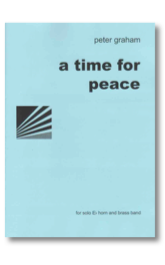
    A Time for Peace - Peter Graham

    Also available as a solo for cornet or flugel horn and band, the composer fist made this arrangement of the theme from The Essence of Time especially for tenor horn. At a time when dark clouds are gathering, and life becomes increasingly hectic, it seems to offer solace and resolve. This new arrangement should quickly establish itself in the repertoire for concerts and entertainment contests.

    Estimated dispatch 7-9 working days
  • £34.95

    Fire & the Phoenix, The - Christopher Bond

    The Fire & the Phoenix (2015) was commissioned by Brett Baker in early 2015 as the opening track to his solo CD 'Myths & Legends'. Whilst structurally a single-movement work, it is presented so that it can link directly into the next work on the CD, adding to a continuous theme comprising a number of pieces from a number of composers. Opening with huge strident chords in the full band, the representation of the phoenix is instantly reflected; bold, powerful and a bird of great intensity. This makes way for a more mystical section marked 'distant' which reflect the beauty of the Phoenix and it's mythical nature where the trombone soars up into its higher register with a sweeping melody. Soon after, the music takes a sharp turn, becoming dramatic and instantly moving away from the mystical mood created previously. Here, we imagine the Phoenix catching fire, burning intensely with huge flames as it gradually turns into ash. We reach a tonic pedal point in the music, over which chord progressions subtly weave in and out of the texture. Here, we imagine the Phoenix rising from the ashes, with the dynamics gradually increasing to reflect this, slowly taking shape as it is born again. A return to earlier material follows, this time manipulated to reflect the Phoenix in its new form - the same bird; the same animal; but at the same time different. A beautiful chorale-like passage is heard before the music transports us back into a magical land, where delicate rhythmic ideas are juxtaposed against bolder lower chords; both ideas together transporting the listener forward into the next piece.

    Estimated dispatch 10-14 working days
  • £55.00

    Teens At The Junkyard - Brass Band Full Score & Parts - LM995

    COMPOSER: Chris AllenProgramme NotesWriting about beautiful rural scenes and seascapes seems to be a very British thing to do. The themes of the English Pastoral School seem especially alive and well in the brass band musical repertoire, featuring in popular works such as John McCabe's Cloudcatcher Fells and Ray Steadman-Allen's Seascapes among many others. McCabe's engrossing depictions of place in Cloudcatcher, Maunsell Forts and Scenes in America Deserta conviced me that music really can transport the listener to a different environment, but rather than describing a landmark or a pastoral scene, I decided to give some attention to an ugly, neglected place.In Square Enix's Life is Strange, an episodic adventure game released in 2015, two teens use the local junkyard as a place of escape from the drama of their lives, unbeknowst to the fact that their friend, recently missing, was murdered and buried in that very place. Inspired by these dark images, I sought to write music that reflected the strewn broken glass, the piles of trash, the stories left behind in the waste of the junkyard. In keeping with this theme of buried history, I unearthed a musical relic from the brass band repertoire, cannibalising themes from Eric Ball's Journey into Freedom. In fragmenting and distorting such a treasured work I hope to make the listener feel a process of wasting away of precious memories.The first movement should be spiky, clinical and bleak, with a similar character to that of Harrison Birtwistle's Grimethorpe Aria, and the second, an intense, reminiscing, lyrical slow section. The final movement is in a similar vein to Elgar Howarth's Songs for B.L., ending with a blazing finish as if standing upon the tallest pile of trash in the junkyard and looking down upon the chaos below.Chris Allen (2021)About the Composer:Chris Allen, 22, studied Music at the University of Birmingham, graduating with a 1st in his Bachelor's degree in 2020 and achieving a Distinction in his Master's in Composition in 2021. Chris won the University of Birmingham Music Society's Composition Competition in 2019 with his piece for brass band, The Sirens, and was published for the first time by Modrana Music after winning the Durham University Brass Band's inaugural composition competition with his suite, Three Images of North-East England. Both pieces have been performed in concert and recorded recently and Chris continues to write new, original works for brass band.Chris started playing the tenor horn at the age of 7 under the tutelage of Don Blakeson, first joining the Melton Band and then moving onto Hathern Band,conducted by David Newman. Upon moving to university in Birmingham,Chris studied performance on the tenor horn with Owen Farr for a year,started playing with the University of Birmingham Brass Band, under thebaton of Stuart Birnie, and began writing and occasionally conducting his ownworks for brass band. However, his work is not confined to this ensemble,and as part of his studies, he has written for the Ligeti Quartet and theBirmingham Contemporary Music Group.

    In Stock: Estimated dispatch 3-5 working days
  • £80.00

    The Unfortunate Traveller (Brass Band - Score and Parts) - Holst, Imogen - Hindmarsh, Paul

    Imogen Holst (1907-1984) submitted The Unfortunate Traveller (1929) as her final work as a student portfolio at the Royal College of Music, where her composition teacher was Gordon Jacob. The title was taken from Thomas Nashe's famous 1594 picaresque novel of the same title. The Suite was first performed on 12 February 1933 at her Majesty's Theatre, Carlisle, by the St. Stephen's Band, with the composer conducting. Te concert was given in memory of Holst's uncle, Dr. H.A. Lediard. Holst had been impressed with the band's performance of his A Moorside Suite at the 1928 National Brass Band Championships (The Crystal Palace, South London) and was keen to work with them. Writing in Imogen Holst, a life in music, Christopher Grogan indicates that it was Gustav Holst's suggestion to include his daughter's work in the programme, quoting Imogen Holst's remarks made in interview to The Daily Mail as follows: "....it is the first time, so far as I know, that a woman has conducted a brass band at a public concert....It has been a delight to rehearse the St. Stephen's Band. It was their performance at the Crystal Palace Festival that inspired me to write this Suite, which I have dedicated to them."Imogen Holst accompanied her father to the Crystal Palace in 1928 to hear the performances of A Moorside Suite, and was so excited by the played and, audibly, by her father's music that she decided to write a brass band piece for her final examination. Te result was The Unfortunate Traveller (1929). However, it was not possible for her to present a brass band work for examination. She arranged it for string orchestra so that it could be played before she left the RCM in July 1930. Following the premiere of the original in 1933, the manuscripts did not resurface until 1969 Imogen found them among her late mother's effects. Although she requested score and parts be destroyed, they ended up in the possession of Manchester composer John Golland, who marked up the score presumably with the intention of creating a new performing edition. The original scoring reveals a lack of experience with what can be a tricky medium.With the agreement of the Holst Foundation, a revised edition, with additional percussion, was prepared in 2011 since when the work has been fortunate to travel round the world as a concert and contest piece. The original includes drums in the March only. The title was taken from Tomas Nashe's famous 1594 picaresque novel of the same title. Several Morris Dance tunes are introduced during the course of the four short movements, including Bonnie Green Garters, Shepherd's Hey, The Rose and The Wind Blaws Cauld. Quirky twists and turns of harmony and spirited rhythms that remind us how much Imogen Holst loved tradition English dance music.In September 2025, I made a performing edition of the composer's arrangement for string orchestra. The manuscript lacks the final movement, which I arranged in a similar style, ie. without extending the upper ranges. Making this edition raised some issues regarding the accuracy of my band version and some of the solutions I used to smooth out the voicing. I have used the composer's second thoughts to refine my performing edition and to correct a textual errors.- Paul HindmarshDuration: 10.00

    Estimated dispatch 7-14 working days

     PDF View Music

  • £40.00

    The Unfortunate Traveller (Brass Band - Score only) - Holst, Imogen - Hindmarsh, Paul

    Imogen Holst (1907-1984) submitted The Unfortunate Traveller (1929) as her final work as a student portfolio at the Royal College of Music, where her composition teacher was Gordon Jacob. The title was taken from Thomas Nashe's famous 1594 picaresque novel of the same title. The Suite was first performed on 12 February 1933 at her Majesty's Theatre, Carlisle, by the St. Stephen's Band, with the composer conducting. Te concert was given in memory of Holst's uncle, Dr. H.A. Lediard. Holst had been impressed with the band's performance of his A Moorside Suite at the 1928 National Brass Band Championships (The Crystal Palace, South London) and was keen to work with them. Writing in Imogen Holst, a life in music, Christopher Grogan indicates that it was Gustav Holst's suggestion to include his daughter's work in the programme, quoting Imogen Holst's remarks made in interview to The Daily Mail as follows: "....it is the first time, so far as I know, that a woman has conducted a brass band at a public concert....It has been a delight to rehearse the St. Stephen's Band. It was their performance at the Crystal Palace Festival that inspired me to write this Suite, which I have dedicated to them."Imogen Holst accompanied her father to the Crystal Palace in 1928 to hear the performances of A Moorside Suite, and was so excited by the played and, audibly, by her father's music that she decided to write a brass band piece for her final examination. Te result was The Unfortunate Traveller (1929). However, it was not possible for her to present a brass band work for examination. She arranged it for string orchestra so that it could be played before she left the RCM in July 1930. Following the premiere of the original in 1933, the manuscripts did not resurface until 1969 Imogen found them among her late mother's effects. Although she requested score and parts be destroyed, they ended up in the possession of Manchester composer John Golland, who marked up the score presumably with the intention of creating a new performing edition. The original scoring reveals a lack of experience with what can be a tricky medium.With the agreement of the Holst Foundation, a revised edition, with additional percussion, was prepared in 2011 since when the work has been fortunate to travel round the world as a concert and contest piece. The original includes drums in the March only. The title was taken from Tomas Nashe's famous 1594 picaresque novel of the same title. Several Morris Dance tunes are introduced during the course of the four short movements, including Bonnie Green Garters, Shepherd's Hey, The Rose and The Wind Blaws Cauld. Quirky twists and turns of harmony and spirited rhythms that remind us how much Imogen Holst loved tradition English dance music.In September 2025, I made a performing edition of the composer's arrangement for string orchestra. The manuscript lacks the final movement, which I arranged in a similar style, ie. without extending the upper ranges. Making this edition raised some issues regarding the accuracy of my band version and some of the solutions I used to smooth out the voicing. I have used the composer's second thoughts to refine my performing edition and to correct a textual errors.- Paul HindmarshDuration: 10.00

    Estimated dispatch 7-14 working days

     PDF View Music