
Results
-
 £30.00
Reach - S Club 7
When the group S Club 7, (an able bunch with a wide appeal to all ages), released the song Reach in the year 20, it soon became a hit with many people, and still is. My wife Julie and myself were at a large event recently, and saw the effect of this song on a mixed audience - it brought the house down! Besides more serious projects, I am a great believer in entertaining the brass band's largest audience, the general public, which is why I have been very happy to produce this arrangement of a song which is full of fun.
In Stock: Estimated dispatch 3-5 working days
-
 £54.99
Rock da House (Brass Band - Score and Parts)
Rock da House is not just the name of this new piece, it is also what it will do at your next concert! A hip tune and a groovy beat will have everyone dancing in (or on) their chairs. Whether for a concert hall, an outdoor show or any other occasion, if you are looking for a new piecethat everyone will love and enjoy, look no further; Rock da House is the piece for you! 03:50
Estimated dispatch 7-14 working days
-
 £43.99
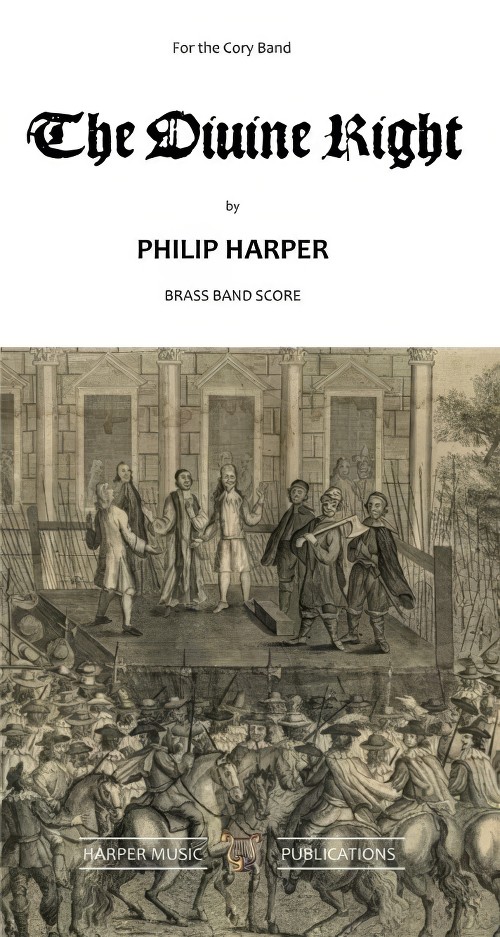
The Divine Right (Brass Band - Score only) - Harper, Philip
At the time of composing this piece, the Arab Spring was sweeping through the Middle East. It seemed that almost every week a new country's people had risen up against the regimes and dictatorships which had prevailed for generations, leaving many nations at a defining crossroads in their history. There were so many possible ways ahead: so many hopes, yet so many uncertainties.This music is a depiction of these revolutionary times, and several musical themes are in turn presented, discussed, considered, fought over, altered, rejected or accepted.Most nations have had, or probably will have, their own Arab Spring, including the United Kingdom. Events of 17th Century Britain provide the context for this piece, particularly those following the execution of the tyrant King Charles I on 30 January 1649. The regicide was in part due to Charless steadfast belief in the Divine Right of Kings, and led to a tumultuous interregnum, where England stood at its own defining crossroads. The music begins turbulently, before King Charles appears and is led to the gallows outside Banqueting House in central London where he is brutally decapitated. From the assembled crowd rose, according to one observer,a moan as I never heard before and desire I may never hear again.The music descends to emptiness.The musical argument which follows is not strictly programmatic, but a number of musical themes are all thrown into the melting pot, representing ideas such as: religion; military force; reasoned Parliamentary debate; and the chattering, irrepressible voice of the people. Additionally, there are some quotations from the music of royalist composer Thomas Tomkins (1572-1656), who was often in tune with the feeling of the times.This defining episode in England's history was brought to a close with the Restoration of the monarchy in 1660, and as the exiled King Charles II rode back into London the diarist John Evelyn wrote:Never was so joyful a day seen in this nation. I stood in the Strand and beheld it, and blessed God.At the end of the piece the bells ring out, and the musical appearance of the King has transformed from turbulent to triumphant.Duration: 17.00
Estimated dispatch 7-14 working days
-
£104.99
The Divine Right (Brass Band - Score and Parts) - Harper, Philip
At the time of composing this piece, the Arab Spring was sweeping through the Middle East. It seemed that almost every week a new country's people had risen up against the regimes and dictatorships which had prevailed for generations, leaving many nations at a defining crossroads in their history. There were so many possible ways ahead: so many hopes, yet so many uncertainties.This music is a depiction of these revolutionary times, and several musical themes are in turn presented, discussed, considered, fought over, altered, rejected or accepted.Most nations have had, or probably will have, their own Arab Spring, including the United Kingdom. Events of 17th Century Britain provide the context for this piece, particularly those following the execution of the tyrant King Charles I on 30 January 1649. The regicide was in part due to Charless steadfast belief in the Divine Right of Kings, and led to a tumultuous interregnum, where England stood at its own defining crossroads. The music begins turbulently, before King Charles appears and is led to the gallows outside Banqueting House in central London where he is brutally decapitated. From the assembled crowd rose, according to one observer,a moan as I never heard before and desire I may never hear again.The music descends to emptiness.The musical argument which follows is not strictly programmatic, but a number of musical themes are all thrown into the melting pot, representing ideas such as: religion; military force; reasoned Parliamentary debate; and the chattering, irrepressible voice of the people. Additionally, there are some quotations from the music of royalist composer Thomas Tomkins (1572-1656), who was often in tune with the feeling of the times.This defining episode in England's history was brought to a close with the Restoration of the monarchy in 1660, and as the exiled King Charles II rode back into London the diarist John Evelyn wrote:Never was so joyful a day seen in this nation. I stood in the Strand and beheld it, and blessed God.At the end of the piece the bells ring out, and the musical appearance of the King has transformed from turbulent to triumphant.Duration: 17.00
Estimated dispatch 7-14 working days
-
 £75.00
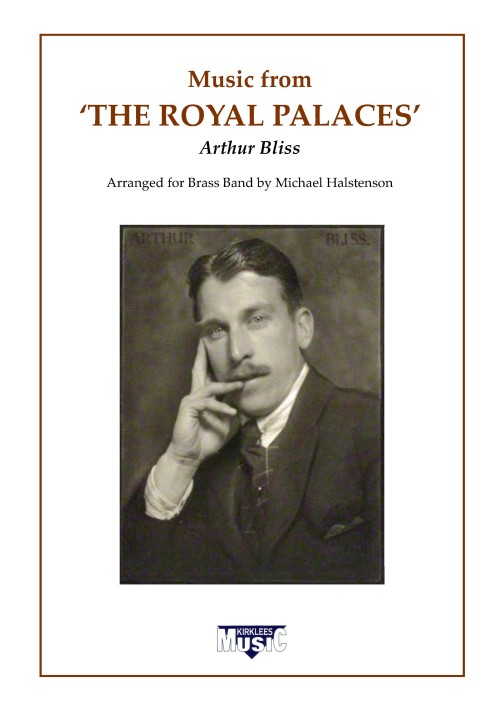
Music from The Royal Palaces (Brass Band - Score and Parts) - Bliss, Arthur - Halstenson, Michael
Selected as the Section 3 test piece for the National Brass Band Championships of Great Britain 2025Music from 'The Royal Palaces', arranged by Michael Halstenson in 2023, is also cast in five movements: the quietly regal 'Queen Victoria's Call to the Throne'; 'The Ballroom in Buckingham Palace' waltz evoking the gaiety of functions at Buckingham Palace; 'Joust of the Knights in Armour' (George V's reign) depicting knights preparing to joust; 'Melodrama' characterising the murder at Holyrood House (Edinburgh) of Mary, Queen of Scots' Secretary, David Rizzio; and the majestic 'The Royal Palace Theme' march.
Estimated dispatch 7-14 working days
-
£29.95
Music from The Royal Palaces (Brass Band - Score only) - Bliss, Arthur - Halstenson, Michael
Selected as the Section 3 test piece for the National Brass Band Championships of Great Britain 2025Music from 'The Royal Palaces', arranged by Michael Halstenson in 2023, is also cast in five movements: the quietly regal 'Queen Victoria's Call to the Throne'; 'The Ballroom in Buckingham Palace' waltz evoking the gaiety of functions at Buckingham Palace; 'Joust of the Knights in Armour' (George V's reign) depicting knights preparing to joust; 'Melodrama' characterising the murder at Holyrood House (Edinburgh) of Mary, Queen of Scots' Secretary, David Rizzio; and the majestic 'The Royal Palace Theme' march.
Estimated dispatch 7-14 working days
-
£24.95
David Of The White Rock (Cornet Solo with Brass Band - Score and Parts) - Bowes, Ray
This melody is reputed to have originated in Caernarvonshire, North Wales. Tradition holds that a bard called David, lying on his deathbed, called for his harp and performed this plaintive tune, expressing a desire that it should be played at his funeral. Ever since the tune has been called by his name and that of his house 'Garagwen' ('Druid Stone' or 'White Rock'). The solo is not just a slow melody with brass band accompaniment but is a composite whole, the band needing as much sensitivity as the soloist in the presentation.
Estimated dispatch 7-14 working days
-
£12.50
David Of The White Rock (Cornet Solo with Brass Band - Score only) - Bowes, Ray
This melody is reputed to have originated in Caernarvonshire, North Wales. Tradition holds that a bard called David, lying on his deathbed, called for his harp and performed this plaintive tune, expressing a desire that it should be played at his funeral. Ever since the tune has been called by his name and that of his house 'Garagwen' ('Druid Stone' or 'White Rock'). The solo is not just a slow melody with brass band accompaniment but is a composite whole, the band needing as much sensitivity as the soloist in the presentation.
Estimated dispatch 7-14 working days
-
 £104.99
Kefas - Rob Goorhuis
The composition Kefas was written for the brass band 'Apollo' from Grou (The Netherlands), by order of the Unisono Foundation, the organisation for wind music in The Netherlands.The assignment was given on account of earning the Champions Title during the Dutch Brass Band Championships in the year 2001 (4th division). The theme of the composition links the tradition of the village Grou, not to celebrate Sint Nicolaas but Sint Pieter.By this typical Dutch festivity (in December) the holy Nicolaas gives presents to the children. It is a popular custom where young and old participate. Grou is the only place where this is not done by Sint Nicolaas but by Sint Pieter.Apart from that, on the 22th of Februari, a lot of festivities that take place,resemble those of the Sinterklaas celebration. In the composition two Sint Pieter songs are processed, set through bible scenes, wherein in among others the visit of Christ to the house of Peter's Mother-in-law and the calling of Peter are depicted. The title refers to the pronouncement of Christ, where he named Peter the rock on which he shall build his church. The Hebrew word for rock is Kephas. Kefas was premiered in 2003.
Estimated dispatch 5-14 working days
-
 £59.95
Music from Kantara - Kenneth Downie
Despite the exotic sounding title, the origins of Kenneth Downies fine composition are somewhat more prosaic. When the composer and his wife moved into a new home they were intrigued to find it called Kantara. Not wanting to upset the outgoing owners, and wishing to find out more, they decided to keep the name.Some judicious research found that Kantara was a ruined castle in Northern Cyprus which the previous owners had once visited. A picture of it was left hanging on the wall of the house for the new owners to enjoy.Written in 1993 for the National School Band Association Composer Competition, it has subsequently been used at youth and senior level - from the National Youth Band Championships of Great Britain to the Pontins Championship.The three-movement work is in no way descriptive, but each has individual character - from a light hearted spiritoso followed by a short lyrical middle section to an animated presto finale.
Estimated dispatch 5-14 working days
 View Music