
Results
-
 £24.95
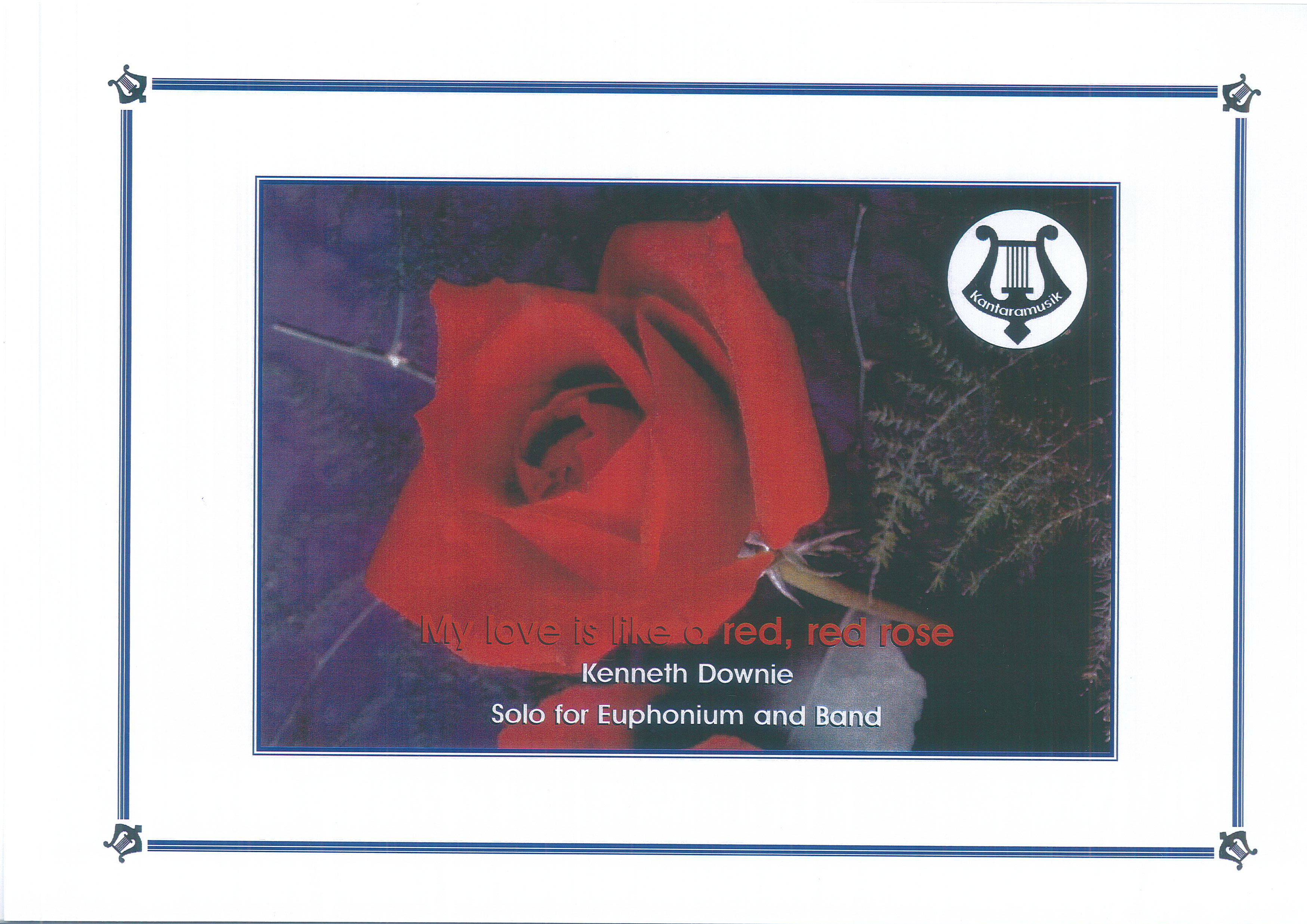
My Love is Like a Red, Red Rose (Euphonium Solo Brass Band - Score and Parts)
An arrangement for Euphonium solo with brass band accompaniment of surely one of the world's greatest melodies. Its wide-ranging intervals and exquisitely shaped climax near the end give it a natural line that is truly memorable.
Estimated dispatch 7-14 working days
-
 £79.00
The Bitter End - Placebo - Adkins Leroy
Estimated dispatch 7-14 working days
-
£34.95
JINGLE BELLS (Brass Band Set) - Norman Bearcroft
Norman Bearcroft gives us a very 'different' treatment of this Christmas favourite, in which he depicts an imaginary sleigh ride - including falling off at the end!
Estimated dispatch 7-14 working days
-
 £34.95
Judd: Jingle Bells
Norman Bearcroft gives us a very 'different' treatment of this Christmas favourite, in which he depicts an imaginary sleigh ride - including falling off at the end!
Estimated dispatch 7-14 working days
-
 £37.50
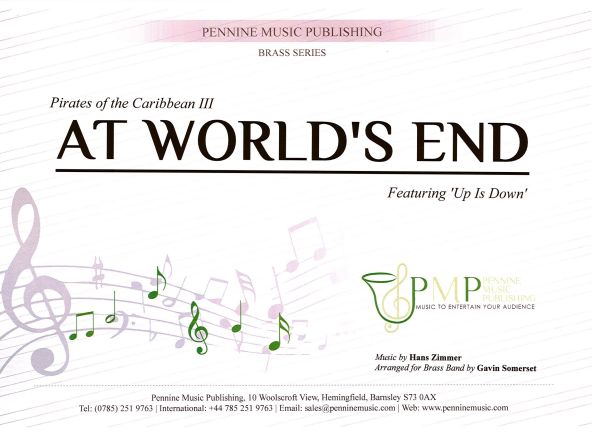
At World's End (Pirates of the Caribbean III)
Estimated dispatch 7-14 working days
-
 £44.50
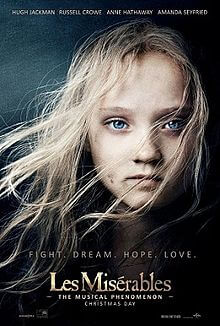
Les Miserables (Concert Suite) - Alain Boublil and Claude-Michel Schonberg - Gavin Somerset
Based on the book by Victor Hugo, Les Misrables has been entertaining audiences around the world since its first performance in London in 1985. Whilst the initial critical reviews were not favourable, the paying public disagreed and the success of the West End musical led to a Broadway production. The show had a big revival in 2012 with the release of the hit film. In this new specially arranged Concert Suite, which features a built in encore - the Epilogue to the show (should you wish to use it) and an optional cut omitting the more difficult sections (making the work accessible to lower section bands), this work gives your band the chance to bring a touch of Broadway to your audience. The Suite features the Prologue, On My Own, Bring Him Home, Master of the House, One Day More & Can You Hear The People Sing? A great audience pleaser and grand concert or contest work that belongs in every bands library.
In Stock: Estimated dispatch 1-3 working days
-
 £44.50
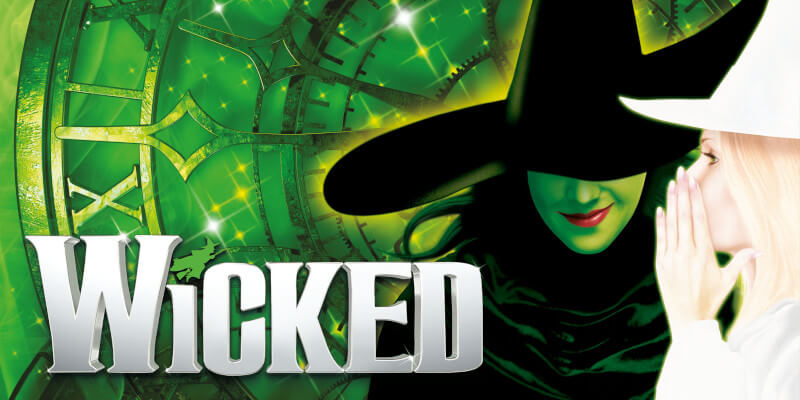
Wicked (Selections From) - Stephen Schwartz - Gavin Somerset
Since 2003, this smash hit musical telling the untold stories of the witched of Oz, has been entertaining audiences across the globe. The show has achieved worldwide success and broken box office records for weekly-gross-takings in New York, Los Angeles, Chicago, St. Louis, and London as well as holding the record for the biggest opening in the West End (�100,000 in its first hour on sale!) The music by Stephen Schwartz is a hit amongst audiences of all ages. Now, for the first time, the music is available for Brass Band in an arrangement personally approved by the composer. The arrangement by Gavin Somerset includes the well-known items "What Is The Feeling", "Dancing Through Life", "Popular" and the dazzling "Defying Gravity", of which "Defying Gravity" can be played as a stand-alone item, perfect for entertainments contests & encores etc. This is a feast of music, bringing variety to your concerts and a must for every bands library.
In Stock: Estimated dispatch 1-3 working days
-
 £25.50
Coconut Dance - Traditional - Andi Cook
The Rochdale coconut dance is a traditional Morris dance, often used by the dancers who accompany the rush-cart during the Rochdale rushbearing festival. It probably dates from the 1850s, and though the dancers were said to have half a coconut shell on each knee and in each hand, the term 'coconut' is also used as local slang for the wooden end of a wool bobbin, so nobody can be sure if they were always real coconuts. Written for the Milnrow band's 150th birthday celebrations (1869-2019) this arrangement uses a combination of Caribbean rhythms and a disco groove for a modern take on an old favourite that's impossible to sit still to. Enormously catchy, great fun to play and with something for everyone to enjoy, your audiences will be whistling this one all the way home.
In Stock: Estimated dispatch 1-3 working days
-
 £24.50
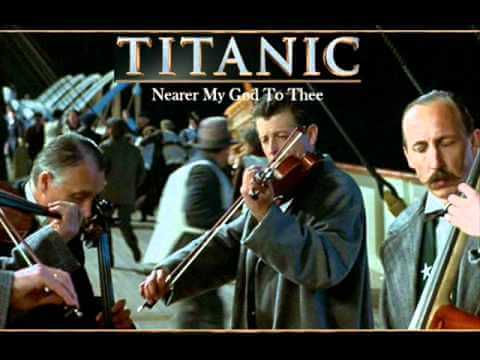
Nearer My God To Thee - Traditional - Gavin Somerset
As the Titanic sank on the 15th April, 1912, eye-witness accounts recall the band playing to the very end in an attempt to keep the passengers calm. This piece played a major part in James Cameron's hit motion picture "Titanic" in 1997, as the heartbreaking scenes of people fighting for survival, and those simply saying good-bye rolled on our screens. This stunning arrangement of the work, as featured in the film, will allow your band to pay tribute to the story of the unsinkable ship, and the 1,517 souls she took with her.
In Stock: Estimated dispatch 1-3 working days
-
 £107.95
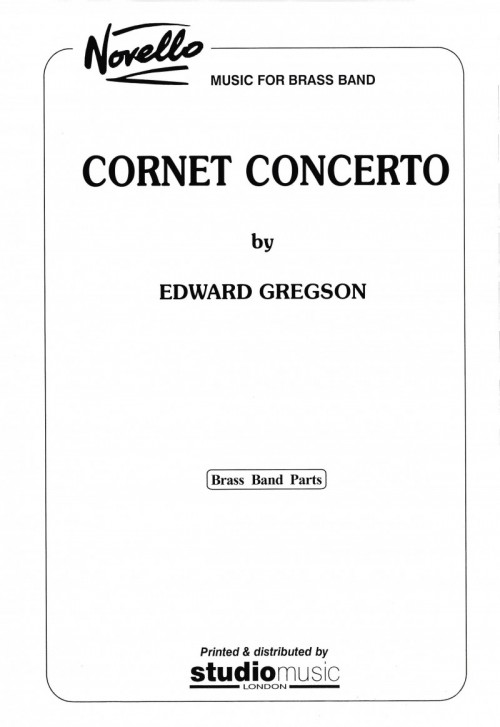
Cornet Concerto (Brass Band - Score and Parts) - Gregson, Edward
The Cornet Concerto was commissioned by Black Dyke Band for their principal cornet, Richard Marshall, and was premiered at the European Brass Band Festival's Gala Concert in Lille, France, on 30 April 2016 by the same performers, conducted by Nicholas Childs.It is challenging work, both musically and technically, and one that exploits the wide range of the instrument's capabilities. Lasting for some 17 minutes, it is in the usual three movements: Sonata, Intermezzo (subtitled 'Of More Distant Memories') and Rondo.The first movement presents four main ideas:Cadenzas (which recur throughout the movement, and indeed appear at the end of the work); a fast and rhythmically energetic motive; Bugle calls (echoing the ancestor of the cornet), and a lyrical and expressive melody, full of yearning. These four ideas are juxtaposed within the broad shape of a Sonata form structure, although here the word 'Sonata' is used in its original meaning of 'sounding together'.The second movement is music in search of a theme, which eventually comes at the end of the movement. In the middle section there are brief quotations, albeit mostly hidden, from three cornet solos written by the Swedish/American composer Erik Leidzen for the Salvation Army in the 1940s and 50s; these are solos I loved as a teenager, and my use of them is by way of tribute, not imitation - a sort of memory bank, just as the main theme of the movement, when it eventually comes, is reminiscent of the tune from my earlier work for brass band, 'Of Distant Memories'.The final Rondo, the shortest of the three movements, is a lively and 'fleet-of foot' Scherzo, its main theme full of cascading arpeggios, but with a contrasting lyrical second theme intertwined in the structure. There is much interplay between soloist and band in the development of the music, but eventually a brief reprise of the opening cadenzas leads to an exciting and climactic coda.Click here for the piano reduction
Estimated dispatch 7-14 working days
 View Music