
Results
-
 £37.50
A Small Christmas Suite - Jonathan Mead
This fresh new Christmas Suite is an upbeat 'festive suite' from the pen of Welsh Composer, Jonathan Mead. It features three well known carols that have been given an overhaul concerts this year. The three movements can be played as one continuous suite, or separated and performed individually if time doesn't permit for the full suite to be performed. The first Movement features a 'jazzed up' version of O Come All Ye Faithful. Movement 2 allows the bands soloists to shine if a stunningly reflective setting of See Amid the Winter's Snow. The final movement sees Silent Night in a way you've never heard before and has all the 'razzmatazz', and big finish that your concert needs. A must for your band and audiences this Christmas Season.
In Stock: Estimated dispatch 1-3 working days
-
 £44.50
Les Miserables (Concert Suite) - Alain Boublil and Claude-Michel Schonberg - Gavin Somerset
Based on the book by Victor Hugo, Les Misrables has been entertaining audiences around the world since its first performance in London in 1985. Whilst the initial critical reviews were not favourable, the paying public disagreed and the success of the West End musical led to a Broadway production. The show had a big revival in 2012 with the release of the hit film. In this new specially arranged Concert Suite, which features a built in encore - the Epilogue to the show (should you wish to use it) and an optional cut omitting the more difficult sections (making the work accessible to lower section bands), this work gives your band the chance to bring a touch of Broadway to your audience. The Suite features the Prologue, On My Own, Bring Him Home, Master of the House, One Day More & Can You Hear The People Sing? A great audience pleaser and grand concert or contest work that belongs in every bands library.
In Stock: Estimated dispatch 1-3 working days
-
 £39.95
Suite for Saturday - Don Bateman
This work was originally written for a Junior Brass Band with the title Suite for Saturday and was road-tested at a Band Day organized by West Sussex Music Service. It became a piece for 2 clarinets with a version for clarinet and piano. Its title then was Suite for Chloe. As you can see, the original title has been restored as being more appropriate for a full junior brass band and, inevitably, with regard to an Educational project, there is a strong didactic thread running through the sections of the Suite.For Openersrequires a decisive attack, fanfare style. Metro Gnomesdemands articulative skill and metronomic precision.Smooth Operatorsencourages an efficient legato style.Best Foot Forwardstresses rhythmic drive (alla militare).
Estimated dispatch 5-14 working days
-
£69.99
Suite Symetrique - Jacob de Haan - Menno Haantjes
This playful three-part suite is largely based on symmetry. This of course is largely due to the relations of the arrangement of the themes; however, on the other hand, to the larger structures in form. The first part, (Prelude et Scherzo) has a solemn opening. Followed by it a related scherzo with many changes in time, this too is composed in a symmetrical form. In the second movement, Choral Dorian, the theme of the prelude is reversed and used in chorale in Dorian tonality. The suite comes to a close with Rondo d'Avignon. An annual theatre festival in a French city on the Rhone inspired this suite. It is a lively movement, symmetrically bought to a finish with a repeat of theprelude from the first movement.
Estimated dispatch 5-14 working days
-
£127.30
Beginner's Suite - Øystein Sjøvaag Heimdal
This is a four-part suite written for beginning bands at grade level 1. The four movements are different in character and style, and can be performed as a suite or as single movements.Every part is challenging and the melody are played by various instruments throughout the piece.Several doublings makes itplayable also with a smaller band than the scoring indicate.
Estimated dispatch 5-14 working days
-
£60.99
Little Christmas Suite - Robert Finn
This Little Christmas Suite, arranged for concert band by Robert Finn, contains three European Christmas carols of uncertain origin. The three movements Baile de Nadal (from Spain), Still, Still, Still (from Germany) and The First Noel (from England) create a delightful suite for any concert band and can also be performed with a choir.
Estimated dispatch 5-14 working days
-
 £60.99
Easy Baroque Suite - Jeremiah Clarke - Robert van Beringen
This three-part Easy Baroque Suite has been written for flexible instrumentation, making it possible for almost any instrument to participate. Robert van Beringen made sure the level of difficulty was appropriate for youth and school bands. The suite combines the Voluntary by Jeremiah Clarke, Menuett by Johann Krieger, Spring from Vivaldi's Four Seasons and the Hallelujah Chorus from Handel's Messiah.
Estimated dispatch 5-14 working days
-
£60.99
Cowboy Suite - Alan Laken
In the tripartite 'Cowboy Suite' Alan Laken takes us to the Wild West, the domain of cowboys, indians, trappers and other fortune hunters. Around 1890 the west coast of America was reached, which in effect meant the end of the Wild West. Its stories, however, survived and have been a source of inspiration for many books, films, and, of course, music. Some characters, such as Jesse James, Billy the Kid, and Buffalo Bill are forever linked to these tales. In the 'Cowboy Suite' we first hear the 'Hoedown'. At the end of an exhausting workday the labourers used to lay down their tools, among others the 'hoes' and spontaneously began to play music on the instruments which they then possessed (guitars, fiddles, and banjos) and to dance. After being jolted on the 'Wagon Trail' we reach the third part, the 'Cowboy Roundup'. In this last part it becomes clear that as a cattle driver it is imperative to stay firmly seated in the saddle. As the cattle are rounded up, i.e. driven together, spectacular things happen.
Estimated dispatch 5-14 working days
-
 £115.60
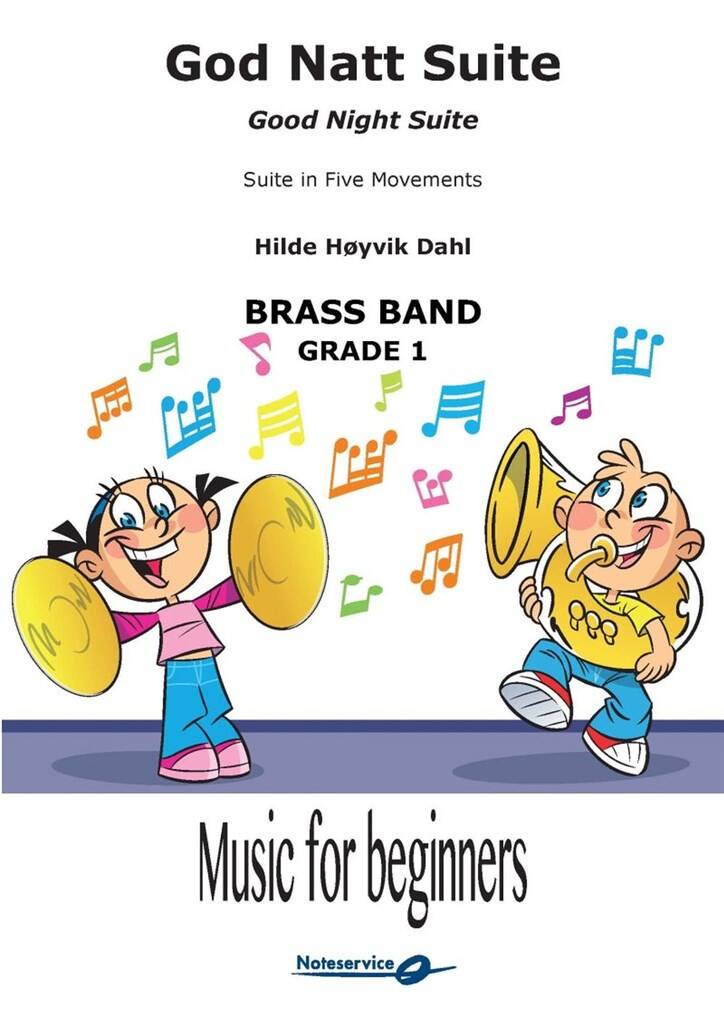
God Natt Suite - Hilde Høyvik Dahl
Good Night Suite is written for beginning band and suitable for the youngest musicians. The level of difficulty is at lowest grade and the rhythms are equal in all wind parts. The register on each instrument is also customized to each part. Some easy solos appears in some sections and in Mvt. 4 there are different rhythm in the melody and bass parts. The level of difficulty is the same for all five movements. The movements may of course be played as single pieces. When all movements are mastered it's possible to play the suite as a kind of fairytale with simple dramaturgy or choreography. Maybe the whole band can be dressed in their pajamas?
Estimated dispatch 5-14 working days
-
 £115.60
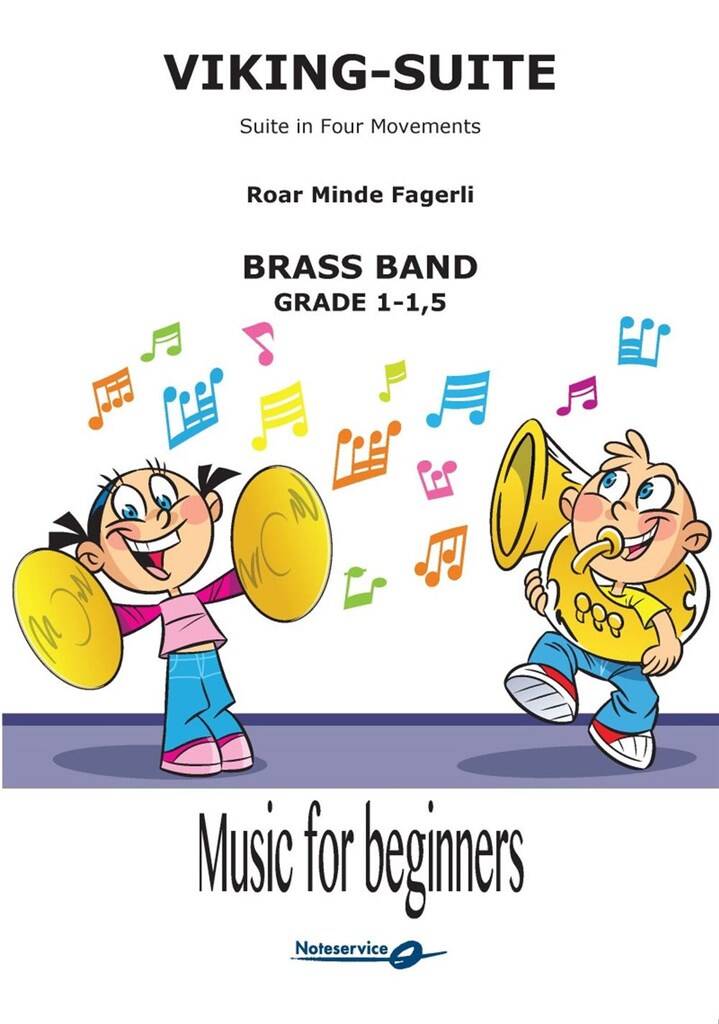
Viking-Suite (Suite in Four Movements) - Roar Minde Fagerli
Viking-Suite is a four movement suite of music originally composed for a summer course arranged by The Norwegian Band Federation. The composer has been inspired by Viking TV-series and films. The music is written especially for beginners.
Estimated dispatch 5-14 working days
 View Music