
Results
-
 £127.30
Batbygger Jo - Ragnhild Furebotten - Idar Torskangerpoll
This song from the band Hekla Stalstrenga is about Joe the boatbuilder. Joe builds the most fabulous boats, but has a deal with the devil that every seventh boat is going to him.Norwegian band Hekla Stalstrenga started as a duo in 2005. Since then, they have extended to a quintet and have released eight record albums. Five of these have been nominated to "Spellemannsprisen", the Norwegian equivalent to Grammy.In this arrangement watch the articulation and give the song the slow groove it needs.
Estimated dispatch 5-14 working days
-
 £115.60
Joyful Life - Jerker Johansson
When Jerker Johansson in the 80's started to compose he was for a while obsessed with writing music in odd time signatures, more specifically 7/8. He was asked during the fall of 2020 by Leif Karlsson (former member of the legendary percussion ensemble Kroumata and nowadays conductor) to write something challenging for Uppsala Blasarsymfoniker and this resulted in Joyful Life. The piece is, to say the least, difficult to tap the pulse along to and is something of a baptism of fire for the musicians, regarding rhythmic precision. Joyful Life is dedicated to the always likeable Leif Karlsson (Joyful Leif!) and was premiered on the 15th November 2020 by The Swedish Air Force Band under the baton of the composer.
Estimated dispatch 5-14 working days
-
 £127.30
Model T - Sammy Nestico - Idar Torskangerpoll
Sammy Nestico's legendary car ride in an old T-Ford has long been a classic in the wind band repertoire. Now, the brass bands also can enjoy this car ride.In the piece Nestico uses percussion and wind players to make a sonic landscape where the listener easily hears how an old veteran car is started, with some problems, and then is accelerated into narrow country lanes.This is a piece for bands looking for programmatic music of a certain character. It's a big crowd-pleaser which appeals to most listeners, especially those who are into nice, old cars.
Estimated dispatch 5-14 working days
-
 £115.60
Minnen fran Holmen - Jerker Johansson
The first theme was written the summer 1997 when Jerker Johansson was composing in Swedish folk music style for an intended radio programme in which his father should participate reading poems in local dialect. Unfortunately, the project was discontinued. In the spring 2015 Mr. Johansson however started to work on the theme again, this time adding a song theme of broader character. Holmen is the name of the homestead where Mr. Johansson's father Arne grew up. It is beautifully located in the parish of Skarv, situated east of Skara, one of the oldest towns in Sweden. At Holmen, the composer spent his childhood summers and his recollections are filled with many bright moments andhappy memories. The piece was premiered May 22, 2015 by the Goteborg Wind Orchestra conducted by the composer.
Estimated dispatch 5-14 working days
-
 £59.99
Eloise - Paul Ryan - Philip Sparke
Paul and Barry Ryan were identical twin sons of 1950's pop singer Marion Ryan and were born on 24th October 1948. They were groomed for stardom and had started singing as a duo before their fifteenth birthday. They were signed by Decca in 1965 and brilliantly marketed as clean-cut fashion icons. Their first single 'Don't Bring Me Your Heartaches' reached the UK top twenty but their success as twin performers lasted only three years. In 1968 Barry embarked on a solo career while Paul concentrated on writing and producing. Eloise with its melodramatic vocal style and heavily orchestrated backing was an early success of this new collaboration and went on to be covered by a variety ofartists, including punk legends The Damned
Estimated dispatch 5-14 working days
-
 £69.99
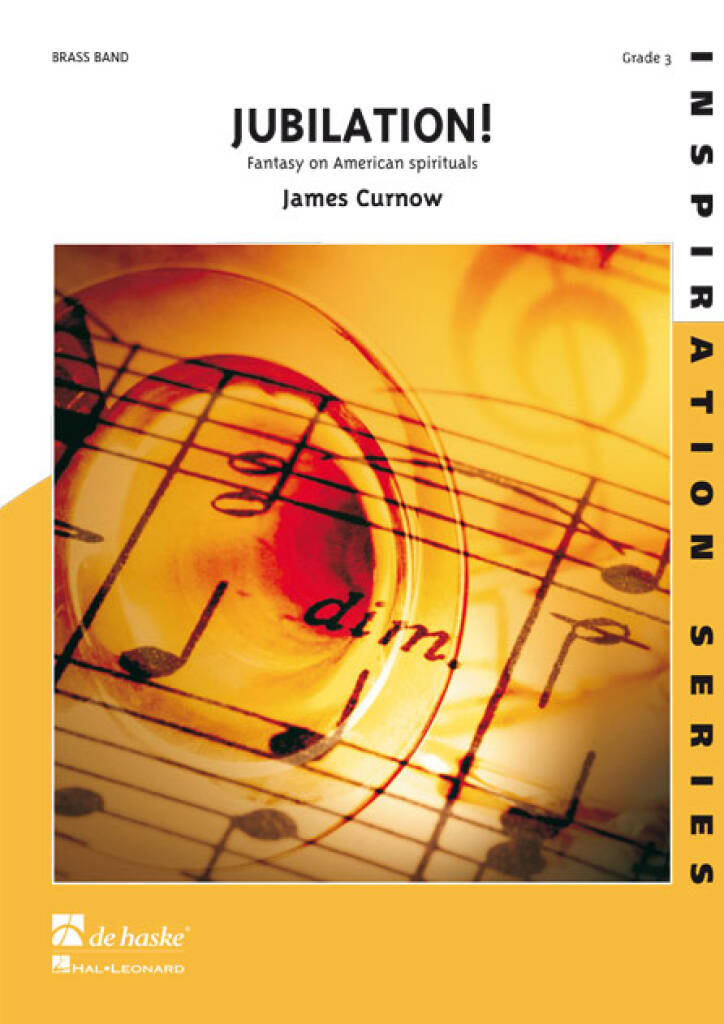
Jubilation! - James Curnow
In 1868 William Francis Allen published a collection of spirituals, songs sung by slaves whilst they worked. This book started a flood of enthusiasm for the spiritual which continues to this day. Jubilation (a time for celebration) uses the spiritual 'My Lord, What A Morning' as the main melody for transitions and modulations throughout and to introduce three further spirituals: I'm Gonna Sing, Steal Away and Ev'ry Time I Feel the Spirit.
Estimated dispatch 5-14 working days
-
 £54.99
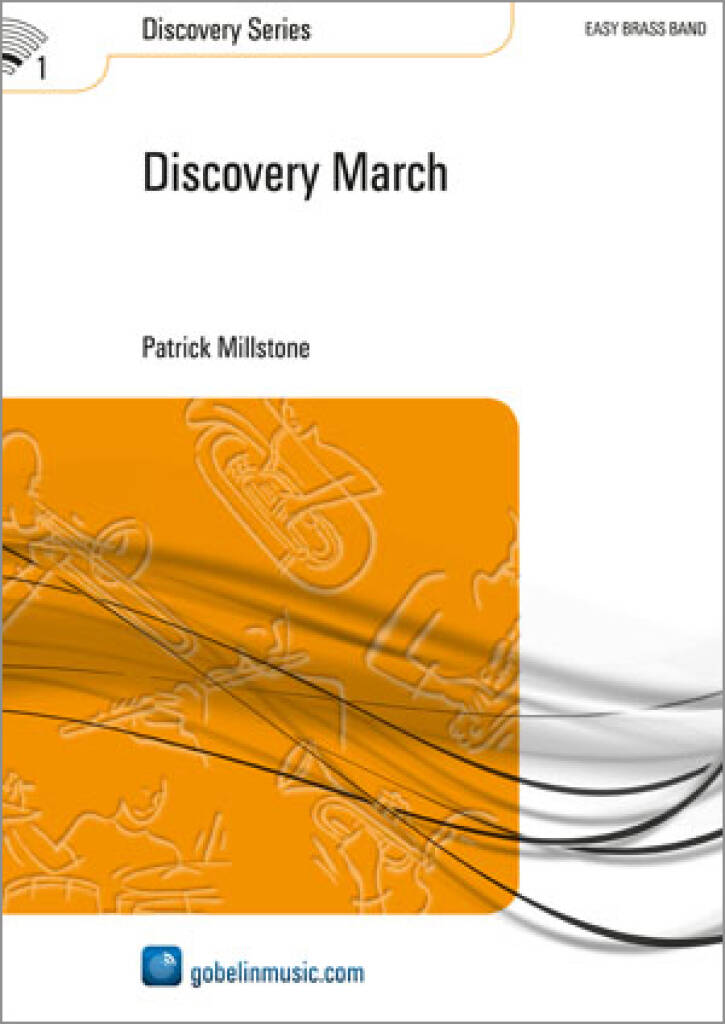
Discovery March - Patrick Millstone
Patrick Millstone composed his 'Discovery March' for Gobelin Music Publications' 'Discovery Series' : The music in this series is meant to be a journey of discovery for incipient musicians who have started playing in an ensemble. 'Discovery March' is a cheerful march in which the melody part is not only played by the lead instrument, but rather by all instruments in turn.
Estimated dispatch 5-14 working days
-
£29.95
Rhapsody in Brass (Score Only)
Rhapsody in Brass is in three movements and was written for the British Open Championships in 1949, held at Belle Vue in Manchester. The contest winners were Fairey Aviation Works Band under the baton of Harry Mortimer. Eric Ball came second with Ransome & Marles and Stanley Boddington 3rd with Munn and Felton Band. Rhapsody in Brass had the unusual distinction of being written as a test piece by a Salvation Army composer. Eric Ball's Resurgam was the only other piece to achieve that dual personality in that era.Dean Goffin was born in 1916 in Wellington, New Zealand, son of Henry Goffin, a Salvation Army officer and composer. At 19 he was appointed Bandmaster of the Wellington South Band and when World War II started, he enlisted in the New Zealand Armed Forces where he became Bandmaster of the 20th Infantry Battalion and later the 4th Brigade Band. During the time he served with them in the Middle East and Europe, he composed and arranged numerous pieces among which Rhapsody in Brass and the march Bel Hamid, later adapted for Salvation Army use and renamed Anthem of the Free.After the war, Dean kept on composing and his work was featured by the Wellington South Band. Later he transferred to Timaru for another job and became Bandmaster there. He was studying music at the time and as he wanted to take part in a competition for devotional selections for Salvation Army use, he sent some of his compositions to the International Headquarters. When Rhapsody for Brass was chosen as the test-piece for the British Open Championships, people at the Salvation Army started asking questions about the lack of publications of his work. It was discovered that the pieces submitted for the competition didn't meet the exact criteria. Among these pieces was one of his most appealing works The Light of the World which was published a year later, in 1950, the same year as he completed his Bachelor of Music studies at Otagu University.After entering the Salvation Army Training College in Wellington with his wife, Marjorie, Dean was in 1956 appointed National Bandmaster in the British Territory. Later he became National Secretary for Bands and Songster Brigades and in this period he organised the yearly festival in the Royal Albert Hall and was responsible for the national music schools in the UK. Dean returned to his home country in 1966 and to mark the centenary of the Salvation Army in New Zealand he was knighted by the Queen in 1983. Sir Dean Goffin died on 23 January 1984.
Estimated dispatch 7-14 working days
-
£83.00
A Bournemouth Suite - Benjamin Tubb
Bournemouth Suite was written by Benjamin Tubb in 2005, when the composer was just 17 years of age. After spending many school holiday weeks with his grandparents in the coastal town of Bournmouth, it was obvious that these experiences would make a great basis for a composition.This testpiece is split into three separate movements: Balloon Ride, The Pier at Night and The BIC. Each movement has its own unique character, although there are ideas shared by all three throughout, one of which is the opening syncopation.Balloon RideThe First movement, Balloon Ride, describes a journey on "The Bournemouth Eye", a tethered hot air balloon that takes you up 500 feet. It's located in the middle of the town centre, which enables you to see surrounding countryside for up to 20 miles! The movement begins rather ominously as the balloon raises from the ground which leads into a more lively section caharacteresed by the repeating quavers in the lower brass and woodblock. The movement ends in much the same way as it started - signalling the return to terra firma.The Pier At NightDuring the summer there are several large firework displays in the town centre. The second movement, The Pier At Night descirbes an evening spent on the beach in deckchairs watching the montage of colours in the night-time sky. With demanding solos for horn and cornet, as well as exposed playing spread throughout the band, this slow movement will really test a band's expressive and lyrical playing.The 'BIC'The Bournemouth INternational Centre, also known as "The BIC" is one of Bournemouth's most visited attractions, and regularly hosts shows such as 'Riverdance' and pantomimes. Inside is a world of entertainment and the centre itself is just a stone's throw from both "The Bournemouth Eye" and the Pier. The 3rd movement has been written to describe the buzz of activity surrounding the BIC, and the entire works ends with the same syncopated motif from the beginning.A Bournemouth Suite was set as the 'set-test' at the Pontins Brass Band Championships 2009.
Estimated dispatch 7-14 working days
-
 £14.94
Finale from Symphony No.3 (Organ Symphony) (Brass Band) Additional Parts
Saint-Saens' magnificent Finale from Symphony No.3 (widely known as the 'Organ Symphony') has here been arranged for brass band with optional organ by Kevin Norbury. It was recorded by The International Staff Band on its CD Manuscripts, although this version has been revised in places. Saint-Saens decided to add the organ and piano to his 3rd symphony as a pragmatic orchestration innovation. The composition of this symphony was probably started in 1885 and a first draft was completed in Prague in 1886. Saint-Saens later recalled its eventful genesis: 'The Symphony in C was three-quarters sketched out when I found it impossible to write the finale. I did not know how to resolve this situation, until one night I suddenly woke up and, in a sort of hallucination, I heard the whole finale, which I hastily wrote down in outline, knowing that if I went back to sleep without having put anything on paper, I would have forgotten it all the next day.' The symphony was first performed under the composer's direction at Saint James's Hall in London on May 19, 1886. This arrangement by Kevin Norbury can both function as a stand-alone brass band piece, and be performed with an organ by omitting the notes found in square brackets in the parts and score. To view a rolling score video please visit www.youtube.com/watch?v=OlUd_FppBY8 PDF download includes additional parts as listed below. Full set including score available here. Sheet music available from: UK - www.brassband.co.uk USA - https://satradecentral.org Difficulty Level: 1st Section + Length: 8.30 mins. Alternative Parts included in this download: Solo Horn F 1st Horn F 2nd Horn F 1st Baritone B.C. 2nd Baritone B.C. 1st Trombone B.C. 2nd Trombone B.C. Euphonium B.C. Tuba 1 B.C. (Bass Eb equivalent) Tuba 2 B.C. (Bass Bb equivalent)
In Stock: Estimated dispatch 1-3 working days
 View Music