
Results
-
 £15.00
HYMN TO BAROSSA (Brass Band Parts) - Scott, Andy
Brass Band parts only. Scored for brass band (without percussion), 'Hymn to Barossa' is a re-scoring by the composer of the hymn section from 'Battle of Barossa'. This new arrangement is a melancholy and melodic hymn that mid-piece features a poignant cornet solo. 'Hymn to Barossa' gradually builds, but deliberately only so far, and is a statement of controlled emotions. Dur: 2:30
Estimated dispatch 7-14 working days
-
£10.00
HYMN TO BAROSSA (Brass Band Score) - Scott, Andy
Brass Band score only. Scored for brass band (without percussion), 'Hymn to Barossa' is a re-scoring by the composer of the hymn section from 'Battle of Barossa'. This new arrangement is a melancholy and melodic hymn that mid-piece features a poignant cornet solo. 'Hymn to Barossa' gradually builds, but deliberately only so far, and is a statement of controlled emotions. Dur: 2:30
Estimated dispatch 7-14 working days
-
 £32.50
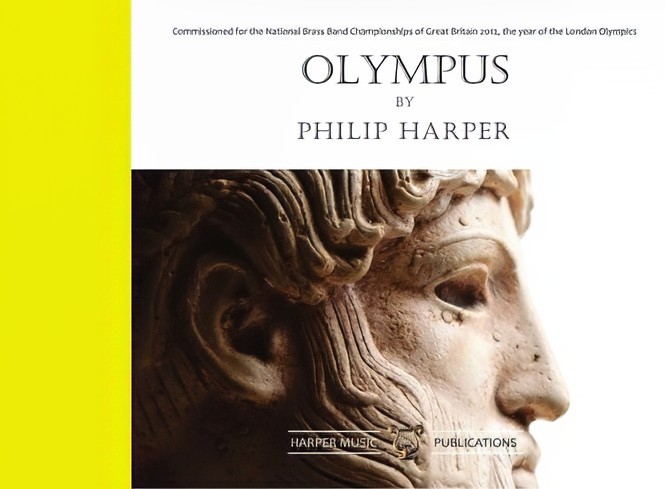
Olympus (Brass Band - Score only) - Harper, Philip
Selected as the test-piece for the 3rd Section Regional contests of the National Brass Band Championships 2012The music begins with a depiction of the exciting Opening Ceremony where noisy fanfares and sudden swells add to the cosmopolitan flag-waving clamour. Without a break the music leads to The Chariot Race, a fast compound-time gallop with thundering hooves in the basses and percussion, and a heroic melody introduced by the tenor horns. Chariot racing was the main equestrian event in the Ancient Greek Games, which were founded in memory of King Oenomaus. In the Greek legend he suffered defeat in a chariot race to his son-in-law and Zeus' grandson, Pelops, but much of the music is bitter-sweet to symbolise the fact that Pelops had to cheat to win - drawing parallels with some of the issues still facing modern-day athletics.A slow, mystical passage follows, describing The Temple of Zeus at Olympia. The statue of Zeus, who was honoured throughout the Ancient Games' history, was housed inside the temple and was one of the Seven Wonders of the Ancient World. The music depicts this period of the dawn of one of mankind's most ancient civilisations and there is a series of solo passages above a drone.The next section is called The Olympic Flame and a broad and lyrical anthem-like melody develops slowly in the euphoniums, which gradually ascends until the horns can take it over before passing upwards again to the cornets (Higher). The music bursts into bright life at the lighting of the flame and the regular rhythmic pattern which has been established goes through an accelerando (Faster).The final section is called The Olympic Truce and aims to capture the cooperative spirit of the ancient practice of ending wars for the duration of the games. The anthem-like melody makes an affirmatory return (Stronger) and the work ends as it began - with a blaze of colour and a real sense of optimism and global celebration.Citius, Altius, Fortius (Faster, Higher, Stonger)Duration: 11:30
Estimated dispatch 7-14 working days
-
£74.99
Olympus (Brass Band - Score and Parts) - Harper, Philip
Selected as the test-piece for the 3rd Section Regional contests of the National Brass Band Championships 2012The music begins with a depiction of the exciting Opening Ceremony where noisy fanfares and sudden swells add to the cosmopolitan flag-waving clamour. Without a break the music leads to The Chariot Race, a fast compound-time gallop with thundering hooves in the basses and percussion, and a heroic melody introduced by the tenor horns. Chariot racing was the main equestrian event in the Ancient Greek Games, which were founded in memory of King Oenomaus. In the Greek legend he suffered defeat in a chariot race to his son-in-law and Zeus' grandson, Pelops, but much of the music is bitter-sweet to symbolise the fact that Pelops had to cheat to win - drawing parallels with some of the issues still facing modern-day athletics.A slow, mystical passage follows, describing The Temple of Zeus at Olympia. The statue of Zeus, who was honoured throughout the Ancient Games' history, was housed inside the temple and was one of the Seven Wonders of the Ancient World. The music depicts this period of the dawn of one of mankind's most ancient civilisations and there is a series of solo passages above a drone.The next section is called The Olympic Flame and a broad and lyrical anthem-like melody develops slowly in the euphoniums, which gradually ascends until the horns can take it over before passing upwards again to the cornets (Higher). The music bursts into bright life at the lighting of the flame and the regular rhythmic pattern which has been established goes through an accelerando (Faster).The final section is called The Olympic Truce and aims to capture the cooperative spirit of the ancient practice of ending wars for the duration of the games. The anthem-like melody makes an affirmatory return (Stronger) and the work ends as it began - with a blaze of colour and a real sense of optimism and global celebration.Citius, Altius, Fortius (Faster, Higher, Stonger)Duration: 11:30
Estimated dispatch 7-14 working days
-
 £59.95
My Strength, My Tower - Rhapsodic Variations (Brass Band - Score and Parts) - Goffin, Dean
This music consists of a theme followed by five extensive variations. The theme is the composer's own tune set to the words, 'Thee will I love, my strength, my tower', a hymn by Johann Scheffler translated by John Wesley. A strong modal flavour is characteristic of the theme. Variation 1: This is a light and graceful variation with a good deal of imitative writing. It leads, without a break, into the next variation. Variation 2: Fire and ferocity are asked for in the course of this variation. Variation 3: This variation demonstrates the original approach of the composer. Solo lines for cornet and euphonium are included with their arabesques and arpeggii. Variation 4: Taking the form of a passacaglia, the 'ground' is given out at once by the basses. Fragments of the 'ground', plain or decorated, are combined and used in a number of ways, revealing the composer's mastery of counterpoint. Variation 5: The briskly moving and scintillating final variation abounds in sudden variations of dynamic. The tempo remains constant until an increase is called for in the coda. This 'contest' version has been prepared by Brian Bowen who was asked to re-work the percussion part and introduce a repiano cornet part (Salvation Army band publications do not, in general, have a part for repiano cornet).
Estimated dispatch 7-14 working days
-
£29.95
My Strength, My Tower - Rhapsodic Variations (Brass Band - Score only) - Goffin, Dean
This music consists of a theme followed by five extensive variations. The theme is the composer's own tune set to the words, 'Thee will I love, my strength, my tower', a hymn by Johann Scheffler translated by John Wesley. A strong modal flavour is characteristic of the theme. Variation 1: This is a light and graceful variation with a good deal of imitative writing. It leads, without a break, into the next variation. Variation 2: Fire and ferocity are asked for in the course of this variation. Variation 3: This variation demonstrates the original approach of the composer. Solo lines for cornet and euphonium are included with their arabesques and arpeggii. Variation 4: Taking the form of a passacaglia, the 'ground' is given out at once by the basses. Fragments of the 'ground', plain or decorated, are combined and used in a number of ways, revealing the composer's mastery of counterpoint. Variation 5: The briskly moving and scintillating final variation abounds in sudden variations of dynamic. The tempo remains constant until an increase is called for in the coda. This 'contest' version has been prepared by Brian Bowen who was asked to re-work the percussion part and introduce a repiano cornet part (Salvation Army band publications do not, in general, have a part for repiano cornet).
Estimated dispatch 7-14 working days
-
 £40.00
Fanfare for a New Era (Brass Band - Score and Parts) - Gregson, Edward
Fanfare for a New Era is the most substantial of Edward Gregson's fanfares and was the result of a private commission by Lady Sheila Stoller to celebrate the opening in April 2017 of the Stoller Hall at Chetham's School of Music, Manchester. Gregson dedicated it to Sir Norman Stoller, who donated the funding for the new concert hall. The Fanfare was designed to fill the whole space, with separate brass choirs - trumpets, horns, trombones and tuba - playing their own music. A solo trumpeter playing 'on high' announces first the four horns and timpani, who enter with a stately measure. Next the herald trumpeter ushers in trombones, tuba and drums, with a faster dance. Finally, the remaining three trumpets amplify the peeling of bells. All four elements then come together, surrounding the audience with a 'joyful noise' of festive brass and percussion.Duration: 3.00
Estimated dispatch 7-14 working days
-
£14.00
Fanfare for a New Era (Brass Band - Score only) - Gregson, Edward
Fanfare for a New Era is the most substantial of Edward Gregson's fanfares and was the result of a private commission by Lady Sheila Stoller to celebrate the opening in April 2017 of the Stoller Hall at Chetham's School of Music, Manchester. Gregson dedicated it to Sir Norman Stoller, who donated the funding for the new concert hall. The Fanfare was designed to fill the whole space, with separate brass choirs - trumpets, horns, trombones and tuba - playing their own music. A solo trumpeter playing 'on high' announces first the four horns and timpani, who enter with a stately measure. Next the herald trumpeter ushers in trombones, tuba and drums, with a faster dance. Finally, the remaining three trumpets amplify the peeling of bells. All four elements then come together, surrounding the audience with a 'joyful noise' of festive brass and percussion.Duration: 3.00
Estimated dispatch 7-14 working days
-
 £152.99
Hymn of the Highlands, Suite from (Brass Band - Score and Parts) - Sparke, Philip
Suite from Hymn of the Highlands draws three expressive musical pictures of the Scottish highlands.The first movement, Ardross Castle, contains solo passages for horn and baritone and features a fascinating bagpipe melody.The second movement, Alladale, is a trio for tenor horn, flugel horn and baritone with an accompaniment featuring the percussion section.The final movement, Dundonnell,features two highly contrasting melodies, a wild presto and the bagpipe melody first heard in the first movement.Duration: 17:00
Estimated dispatch 7-14 working days
-
 £59.70
William Tell Overture, Finale from (Xyolphone Solo with Brass Band - Score and Parts) - Rossini, Gioachino - Jenkins, Christian
Feature your mallet percussion in this frenzied finale.
Estimated dispatch 7-14 working days
 View Music