
Results
-
£59.99
All Cried Out - Peter Kleine Schaars
At the beginning of the 1980s Alison Moyet was discovered by Vince Clarke, who - in search of greater independence - had left the successful band Depeche Mode. The soulful singing style of Moyet and the electronic, innovative pop that Clarke made melded well together in the group Yazoo with hits such as Only You and Don't Go. However, after a number of years Moyet went her own way and forged a solo career, during which she demonstrated a somewhat more traditional sound. She recorded several covers (such as The First Time I Ever Saw Your Face and That Ole Devil Called Love) but she also wrote fine songs herself, such as Love Resurrection and, of course, the expressive song AllCried Out. This arrangement by Peter Kleine Schaars does justice to the atmosphere of the original song.
Estimated dispatch 5-14 working days
-
 £89.95
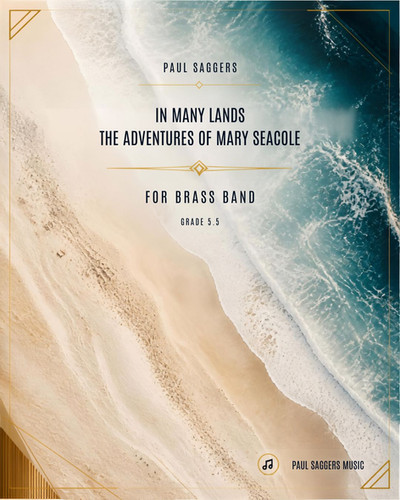
In Many Lands - The Adventures of Mary Seacole - Paul Saggers
In Many Lands - The Adventures of Mary Seacole was commissioned by The Royal Marines Band Service for The National Youth Brass Band of Great Britain. The first performance of the piece was on 16 April 2022 in Huddersfield Town Hall to celebrate the 70th anniversary of the NYBBGB. It was next performed in Birmingham Town Hall (on 28 April 2022) at a joint charity concert of the NYBBGB and The Band of Her Majesty's Royal Marines, Collingwood, for the European Brass Band Association Prelude Concert. The work is a musical account of the life of Mary Seacole who was a British-Jamaican nurse and businesswoman who set up the "British Hotel" behind the lines during the Crimean War. The work takes inspiration from Seacole's biography Wonderful Adventures of Mrs. Seacole in Many Lands. The work is divided into three movements:I Leave Kingston for Isthmus of PanamaIn 1851, Seacole travelled to Cruces to visit her brother. Shortly after her arrival, the town was struck by cholera, a disease which had reached Panama in 1849. Seacole was on hand to treat the first victim, who survived, which established Seacole's reputation and brought her a succession of patients as the infection spread. The rich paid, but she treated the poor for free. She avoided opium, preferring mustard rubs and poultices, the laxative calomel (mercuric chloride), sugars of lead, and rehydration with water boiled with cinnamon. While her preparations had moderate success, she faced little competition, the only other treatments coming from a "timid little dentist", who was an inexperienced doctor sent by the Panamanian government, and the Roman Catholic Church.The Predatory Tribes of BalaclavaSeacole was in London in 1854 when reports of the lack of necessities and breakdown of nursing care for soldiers in the Crimean War began to be made public. Despite her experience, her offers to serve as an army nurse were refused, and she attributed her rejection to racial prejudice. In 1855, with the help of a relative of her husband, she went to Crimea as a sutler, setting up the British Hotel to sell food, supplies, and medicines to the troops. After transferring most of her stores to the transport ship Albatross, with the remainder following on the Nonpareil, she set out on the four-day voyage to the British bridgehead into Crimea at Balaclava. Lacking proper building materials, Seacole gathered abandoned metal and wood in her spare moments, with a view to using the debris to build her hotel. The hotel was completed in July 1855 at a total cost of �800. Seacole's hotel was constantly targeted by thieves, she lost many resources and livestock.NYBBGB YOUTUBE PERFORMANCEhttps://www.youtube.com/watch?v=aCGzYWiKsqY
-
 £29.95
A Little Prayer - Evelyn Glennie - Robert Childs
Originally composed for solo marimba, this popular version of A Little Prayer was made in 1998 following Evelyn Glennie's collaboration with Black Dyke Band during the recording of their Grammy nominated Reflected in Brass CD. Robert Childs, then principal euphonium with Black Dyke, requested Evelyn's permission to make the arrangement for his son, David. The composer obliged, and Robert presented the score and parts to his son as a seventeenth birthday present. Evelyn Glennie revealed: "When I wrote this chorale for marimba, it expressed my spiritual feelings and displayed a pleasantly relaxed dimension of the instrument. Over the years my exposure to brass bands has filled me with wonder; their musical diversity is considerable. I had no hesitation in giving A Little Prayer to Robert Childs to bring this little melody to life." Having composed the work when she was only 13, Evelyn continued: "As a child I would never have believed that such a short and simple piece of music, would come to grow this much. A little Prayerserves to prove that one should always bet their chips on what they believe in, for nine out of ten it will be worth it!" After twenty years of exclusivity, Prima Vista Musikk is proud to make this beautiful arrangement available to all. A Little Prayer provides the perfect reflective interlude for concert or devotional use by euphonium soloists and bands of all abilities.
Estimated dispatch 5-14 working days
-
 £30.00
Black Bottom Stomp - Jelly Roll Morton
Ferdinand Joseph LaMothe, professionally known as Jelly Roll Morton, was an American ragtime and early jazz pianist, bandleader and composer who started his career in New Orleans, Louisiana. Widely recognised as a pivotal figure in early jazz, Morton is perhaps most notable as jazz's first arranger, proving that a genre rooted in improvisation could retain its essential spirit and characteristics when notated. His composition "Jelly Roll Blues" was the first published jazz composition in 1915. Morton is also notable for writing such standards as "King Porter Stomp", "Wolverine Blues", "Black Bottom Stomp", and "I Thought I Heard Buddy Bolden Say". Notorious for his arrogance and self-promotion, Morton claimed to have invented jazz outright in 1902, much to the derision of fellow musicians and the critics. At the age of fourteen, Morton began working as a piano player in a brothel (or, as it was referred to back then, a sporting house). In that atmosphere, he often sang smutty lyrics and took the nickname "Jelly Roll". While working there, he was living with his religious, church-going great-grandmother; who he convinced that he worked as a night watchman in a barrel factory. After Morton's grandmother found out that he was playing jazz in a local brothel, she kicked him out of her house and told him that "devil music" would surely bring about his downfall. Born in downtown New Orleans, Louisiana, his exact birth date differs depending to whichever source you want to believe; his half-sisters claimed he was born in September 1885, but his World War 1 draft card showed September 1884 and his California death certificate listed his birth as September 1889. He died in 1941 in Los Angeles.
-
 £80.00
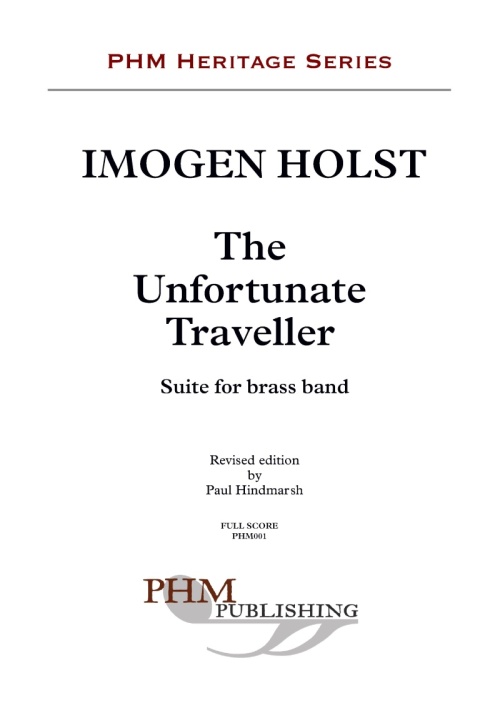
The Unfortunate Traveller (Brass Band - Score and Parts)
Imogen Holst (1907-1984) submitted The Unfortunate Traveller (1929) as her final work as a student portfolio at the Royal College of Music, where her composition teacher was Gordon Jacob. The title was taken from Thomas Nashe's famous 1594 picaresque novel of the same title. The Suite was first performed on 12 February 1933 at her Majesty's Theatre, Carlisle, by the St. Stephen's Band, with the composer conducting. Te concert was given in memory of Holst's uncle, Dr. H.A. Lediard. Holst had been impressed with the band's performance of his A Moorside Suite at the 1928 National Brass Band Championships (The Crystal Palace, South London) and was keen to work with them. Writing in Imogen Holst, a life in music, Christopher Grogan indicates that it was Gustav Holst's suggestion to include his daughter's work in the programme, quoting Imogen Holst's remarks made in interview to The Daily Mail as follows: "....it is the first time, so far as I know, that a woman has conducted a brass band at a public concert....It has been a delight to rehearse the St. Stephen's Band. It was their performance at the Crystal Palace Festival that inspired me to write this Suite, which I have dedicated to them."Imogen Holst accompanied her father to the Crystal Palace in 1928 to hear the performances of A Moorside Suite, and was so excited by the played and, audibly, by her father's music that she decided to write a brass band piece for her final examination. Te result was The Unfortunate Traveller (1929). However, it was not possible for her to present a brass band work for examination. She arranged it for string orchestra so that it could be played before she left the RCM in July 1930. Following the premiere of the original in 1933, the manuscripts did not resurface until 1969 Imogen found them among her late mother's effects. Although she requested score and parts be destroyed, they ended up in the possession of Manchester composer John Golland, who marked up the score presumably with the intention of creating a new performing edition. The original scoring reveals a lack of experience with what can be a tricky medium.With the agreement of the Holst Foundation, a revised edition, with additional percussion, was prepared in 2011 since when the work has been fortunate to travel round the world as a concert and contest piece. The original includes drums in the March only. The title was taken from Tomas Nashe's famous 1594 picaresque novel of the same title. Several Morris Dance tunes are introduced during the course of the four short movements, including Bonnie Green Garters, Shepherd's Hey, The Rose and The Wind Blaws Cauld. Quirky twists and turns of harmony and spirited rhythms that remind us how much Imogen Holst loved tradition English dance music.In September 2025, I made a performing edition of the composer's arrangement for string orchestra. The manuscript lacks the final movement, which I arranged in a similar style, ie. without extending the upper ranges. Making this edition raised some issues regarding the accuracy of my band version and some of the solutions I used to smooth out the voicing. I have used the composer's second thoughts to refine my performing edition and to correct a textual errors.- Paul HindmarshDuration: 10.00
Estimated dispatch 7-14 working days
-
£40.00
The Unfortunate Traveller (Brass Band - Score only)
Imogen Holst (1907-1984) submitted The Unfortunate Traveller (1929) as her final work as a student portfolio at the Royal College of Music, where her composition teacher was Gordon Jacob. The title was taken from Thomas Nashe's famous 1594 picaresque novel of the same title. The Suite was first performed on 12 February 1933 at her Majesty's Theatre, Carlisle, by the St. Stephen's Band, with the composer conducting. Te concert was given in memory of Holst's uncle, Dr. H.A. Lediard. Holst had been impressed with the band's performance of his A Moorside Suite at the 1928 National Brass Band Championships (The Crystal Palace, South London) and was keen to work with them. Writing in Imogen Holst, a life in music, Christopher Grogan indicates that it was Gustav Holst's suggestion to include his daughter's work in the programme, quoting Imogen Holst's remarks made in interview to The Daily Mail as follows: "....it is the first time, so far as I know, that a woman has conducted a brass band at a public concert....It has been a delight to rehearse the St. Stephen's Band. It was their performance at the Crystal Palace Festival that inspired me to write this Suite, which I have dedicated to them."Imogen Holst accompanied her father to the Crystal Palace in 1928 to hear the performances of A Moorside Suite, and was so excited by the played and, audibly, by her father's music that she decided to write a brass band piece for her final examination. Te result was The Unfortunate Traveller (1929). However, it was not possible for her to present a brass band work for examination. She arranged it for string orchestra so that it could be played before she left the RCM in July 1930. Following the premiere of the original in 1933, the manuscripts did not resurface until 1969 Imogen found them among her late mother's effects. Although she requested score and parts be destroyed, they ended up in the possession of Manchester composer John Golland, who marked up the score presumably with the intention of creating a new performing edition. The original scoring reveals a lack of experience with what can be a tricky medium.With the agreement of the Holst Foundation, a revised edition, with additional percussion, was prepared in 2011 since when the work has been fortunate to travel round the world as a concert and contest piece. The original includes drums in the March only. The title was taken from Tomas Nashe's famous 1594 picaresque novel of the same title. Several Morris Dance tunes are introduced during the course of the four short movements, including Bonnie Green Garters, Shepherd's Hey, The Rose and The Wind Blaws Cauld. Quirky twists and turns of harmony and spirited rhythms that remind us how much Imogen Holst loved tradition English dance music.In September 2025, I made a performing edition of the composer's arrangement for string orchestra. The manuscript lacks the final movement, which I arranged in a similar style, ie. without extending the upper ranges. Making this edition raised some issues regarding the accuracy of my band version and some of the solutions I used to smooth out the voicing. I have used the composer's second thoughts to refine my performing edition and to correct a textual errors.- Paul HindmarshDuration: 10.00
Estimated dispatch 7-14 working days
-
£72.99
Music featured in the Film Lilo and Stitch - Peter Kleine Schaars
In this great Disney musical a little girl, Lilo, adopts what she believes is a puppy but is what turns out to be an alien that has landed on earth by mistake. Their friendship is sealed by their mutual love of the music of the king - Elvis Presley. This arrangement contains a selection of Elvis classics that were featured in the film and is sure leave your audience humming Elvis songs long after they have left the concert.
Estimated dispatch 5-14 working days
-
 £34.95
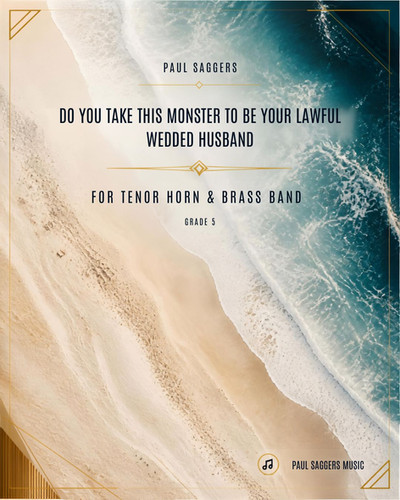
Do You Take This Monster to be Your Lawful Wedded Husband - Paul Saggers
Solo for Tenor Horn and Lower Brass BandWritten for Ross Dunne and The Tredegar Town Band for Brass in Concert 2021 for their theme based on The Strange Case of Dr Jekyll & Mr Hyde.Programme NotesSoon, Dr Jekyll's increasingly erratic behaviour and prolonged absences from home begin to worry Millicent.On the eve of their wedding, she is overcome by a sense of fear.Is this the man who she loves - the Doctor who administers to the sick and poor amid the squalor and deprivation?Why does he return there night after night - only to return each morning exhausted, bedraggled, blood stained and deeply troubled?A sad melancholy seeps deep into Millicent's own soul as the distant sound of the bells of the local church ring out in a wedding day celebration - or warning.The questions remain unanswered as she tries to find a meaning to her future husband's bouts of strangeness.Is her love enough to save him - or is she about to take a monster to be her lawful wedded husband...?
-
 £80.00
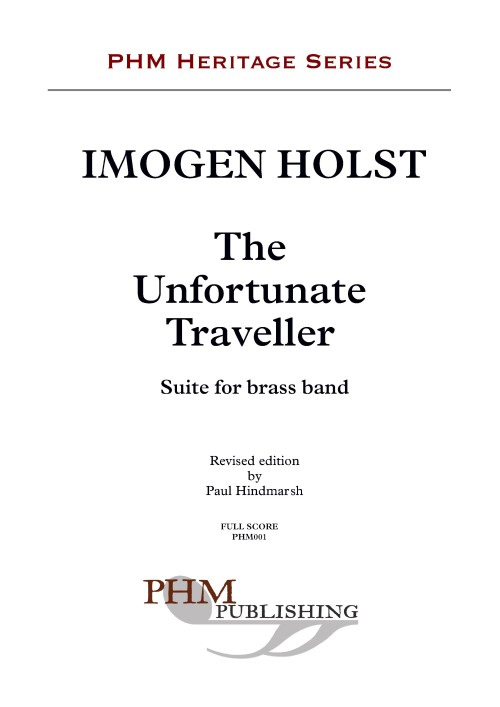
The Unfortunate Traveller (Brass Band - Score and Parts) - Holst, Imogen - Hindmarsh, Paul
Imogen Holst (1907-1984) submitted The Unfortunate Traveller (1929) as her final work as a student portfolio at the Royal College of Music, where her composition teacher was Gordon Jacob. The title was taken from Thomas Nashe's famous 1594 picaresque novel of the same title. The Suite was first performed on 12 February 1933 at her Majesty's Theatre, Carlisle, by the St. Stephen's Band, with the composer conducting. Te concert was given in memory of Holst's uncle, Dr. H.A. Lediard. Holst had been impressed with the band's performance of his A Moorside Suite at the 1928 National Brass Band Championships (The Crystal Palace, South London) and was keen to work with them. Writing in Imogen Holst, a life in music, Christopher Grogan indicates that it was Gustav Holst's suggestion to include his daughter's work in the programme, quoting Imogen Holst's remarks made in interview to The Daily Mail as follows: "....it is the first time, so far as I know, that a woman has conducted a brass band at a public concert....It has been a delight to rehearse the St. Stephen's Band. It was their performance at the Crystal Palace Festival that inspired me to write this Suite, which I have dedicated to them."Imogen Holst accompanied her father to the Crystal Palace in 1928 to hear the performances of A Moorside Suite, and was so excited by the played and, audibly, by her father's music that she decided to write a brass band piece for her final examination. Te result was The Unfortunate Traveller (1929). However, it was not possible for her to present a brass band work for examination. She arranged it for string orchestra so that it could be played before she left the RCM in July 1930. Following the premiere of the original in 1933, the manuscripts did not resurface until 1969 Imogen found them among her late mother's effects. Although she requested score and parts be destroyed, they ended up in the possession of Manchester composer John Golland, who marked up the score presumably with the intention of creating a new performing edition. The original scoring reveals a lack of experience with what can be a tricky medium.With the agreement of the Holst Foundation, a revised edition, with additional percussion, was prepared in 2011 since when the work has been fortunate to travel round the world as a concert and contest piece. The original includes drums in the March only. The title was taken from Tomas Nashe's famous 1594 picaresque novel of the same title. Several Morris Dance tunes are introduced during the course of the four short movements, including Bonnie Green Garters, Shepherd's Hey, The Rose and The Wind Blaws Cauld. Quirky twists and turns of harmony and spirited rhythms that remind us how much Imogen Holst loved tradition English dance music.In September 2025, I made a performing edition of the composer's arrangement for string orchestra. The manuscript lacks the final movement, which I arranged in a similar style, ie. without extending the upper ranges. Making this edition raised some issues regarding the accuracy of my band version and some of the solutions I used to smooth out the voicing. I have used the composer's second thoughts to refine my performing edition and to correct a textual errors.- Paul HindmarshDuration: 10.00
Estimated dispatch 7-14 working days
-
£40.00
The Unfortunate Traveller (Brass Band - Score only) - Holst, Imogen - Hindmarsh, Paul
Imogen Holst (1907-1984) submitted The Unfortunate Traveller (1929) as her final work as a student portfolio at the Royal College of Music, where her composition teacher was Gordon Jacob. The title was taken from Thomas Nashe's famous 1594 picaresque novel of the same title. The Suite was first performed on 12 February 1933 at her Majesty's Theatre, Carlisle, by the St. Stephen's Band, with the composer conducting. Te concert was given in memory of Holst's uncle, Dr. H.A. Lediard. Holst had been impressed with the band's performance of his A Moorside Suite at the 1928 National Brass Band Championships (The Crystal Palace, South London) and was keen to work with them. Writing in Imogen Holst, a life in music, Christopher Grogan indicates that it was Gustav Holst's suggestion to include his daughter's work in the programme, quoting Imogen Holst's remarks made in interview to The Daily Mail as follows: "....it is the first time, so far as I know, that a woman has conducted a brass band at a public concert....It has been a delight to rehearse the St. Stephen's Band. It was their performance at the Crystal Palace Festival that inspired me to write this Suite, which I have dedicated to them."Imogen Holst accompanied her father to the Crystal Palace in 1928 to hear the performances of A Moorside Suite, and was so excited by the played and, audibly, by her father's music that she decided to write a brass band piece for her final examination. Te result was The Unfortunate Traveller (1929). However, it was not possible for her to present a brass band work for examination. She arranged it for string orchestra so that it could be played before she left the RCM in July 1930. Following the premiere of the original in 1933, the manuscripts did not resurface until 1969 Imogen found them among her late mother's effects. Although she requested score and parts be destroyed, they ended up in the possession of Manchester composer John Golland, who marked up the score presumably with the intention of creating a new performing edition. The original scoring reveals a lack of experience with what can be a tricky medium.With the agreement of the Holst Foundation, a revised edition, with additional percussion, was prepared in 2011 since when the work has been fortunate to travel round the world as a concert and contest piece. The original includes drums in the March only. The title was taken from Tomas Nashe's famous 1594 picaresque novel of the same title. Several Morris Dance tunes are introduced during the course of the four short movements, including Bonnie Green Garters, Shepherd's Hey, The Rose and The Wind Blaws Cauld. Quirky twists and turns of harmony and spirited rhythms that remind us how much Imogen Holst loved tradition English dance music.In September 2025, I made a performing edition of the composer's arrangement for string orchestra. The manuscript lacks the final movement, which I arranged in a similar style, ie. without extending the upper ranges. Making this edition raised some issues regarding the accuracy of my band version and some of the solutions I used to smooth out the voicing. I have used the composer's second thoughts to refine my performing edition and to correct a textual errors.- Paul HindmarshDuration: 10.00
Estimated dispatch 7-14 working days
 View Music