
Results
-
 £74.95
The Pilgrim's Progress (Brass Band - Score and Parts)
Drawing inspiration from John Bunyan's Christian allegory, 'The Pilgrim's Progress' and Eric Ball's setting of Bunyan's 'Pilgrim's Hymn', Rodney Newton has expertly crafted a set of variations, each outlining a chapter in the Pilgrim's journey to the Celestial City.The work was written in 2003 (Eric Ball's centenary year) for Bandmaster Stephen Cobb and The International Staff Band of The Salvation Army to whom it is dedicated.Suitable for 2nd Section Bands and aboveDuration: 14.00
Estimated dispatch 7-14 working days
-
 £65.00
Music for Jock Tamson (Brass Band - Score and Parts)
Scottish Dances Set 2An original suite in three movements:Nyah Fearties!InchkeithWha's Like Us?This work was one of twelve works commissioned by the Scottish Brass Band Association and Funded by Creative Scotland Targeted Fund - 2021 to aid Covid Recovery and support composers in Scotland.Jock Tamson - a Scottish name explained... The phrase more often occurs in an extended form: We're a' Jock Tamson's bairns. This is interpreted in a metaphorical sense as a statement of egalitarian sentiments equivalent to "we're all the same under the skin" or "we are all God's children". i.e. This is music for everyone!
Estimated dispatch 7-14 working days
-
 £65.00
Rise of the Phoenix (Brass Band - Score and Parts)
As the title suggests, the phoenix was a fabulous mythical bird, who every morning at dawn, sang a song so enchanting that even the sun God, Apollo, would stop and listen. The bird would live for a hundred years, and at the end of its life, would build a pyre, set it on fire and be consumed by the flames. After three days, the phoenix would be reborn from the ashes, to sing once more.This work was commissioned by Clifton and Lightcliffe Band and reflects the difficulties and rebirth of the band to make music once more.Suitable for second section bands and above.
Estimated dispatch 7-14 working days
-
 £74.95
Radio City (Trombone Solo with Brass Band)
As youngsters growing up on the west coast of Scotland, my brother and I fell heir to an old valved radiogram which provided us with our first experiences of radio broadcasts. On the short wave signal, and through the static, we could pick up a whole range of programmes from across the Atlantic. I particularly recall the baseball games, the American accents of the announcers providing a window to a evocative world far removed from our small Ayrshire town. These memories form the basis of Radio City.The work is set in three movements, each introduced by a pastiche radio announcer narrative written by Philip Coutts. The first, City Noir, is a nod towards Raymond Chandler's eponymous private eye Philip Marlow and the dark cityscape of 1940s California.Movement two, Cafe Rouge, takes its title from the main restaurant in New York's famous Hotel Pennsylvania. Two of the most famous band leaders of the 1940s, trombonists Glenn Miller and Tommy Dorsey, broadcast live from the cafe on numerous occasions and the movement echoes with a collage of imagined sounds from the period.The finale, Two-Minute Mile, derives from an event dubbed in the USA as "the most exciting two minutes in sport", namely the Kentucky Derby. The virtuoso soloist figurations have their roots in Kentucky bluegrass fiddle music, with the galloping bluegrass clog-dancing rhythms providing the backdrop.- Peter Graham, Cheshire, January 2013
Estimated dispatch 7-14 working days
-
 £30.00
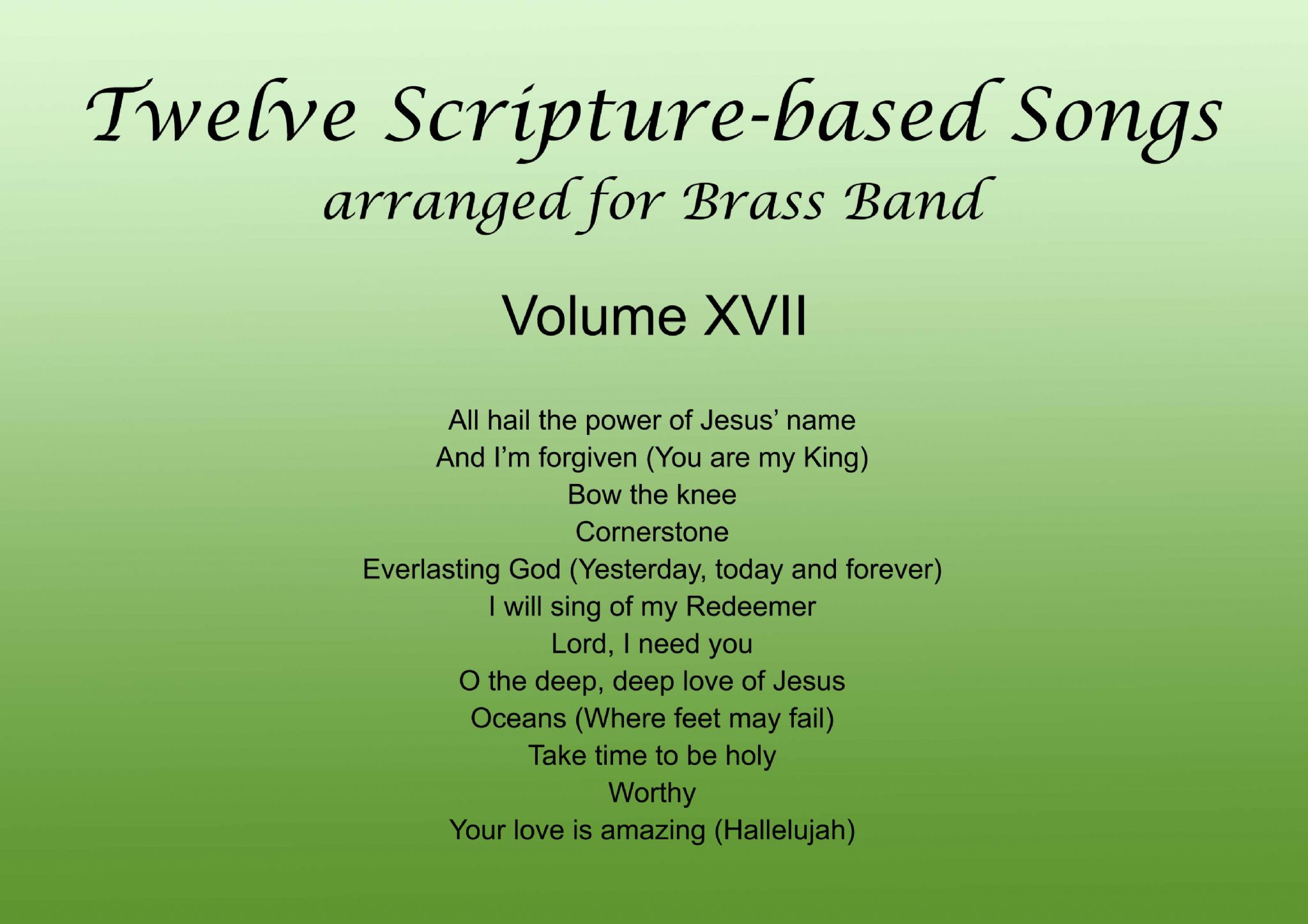
Twelve Scripture-based Songs Volume XVII
Twelve scripture-Based Songs arranged for Brass Band (Volume XVII) are packaged and marketed in complete sets which include a full score and a set of master parts. It is intended that these parts be used as 'masters', for the purpose of photocopying a quantity of parts to accommodate the precise instrumentation needs of the band for which this has been purchased.All hail the power of Jesus' nameAnd I'm forgiven (You are my King)Bow the kneeCornerstoneEverlasting God (Yesterday, today and forever)I will sing of my RedeemerLord, I need youO the deep, deep love of JesusOceans (Where feet may fail)Take time to be holyWorthyYour love is amazing (Hallelujah)
Estimated dispatch 7-14 working days
-
 £30.00
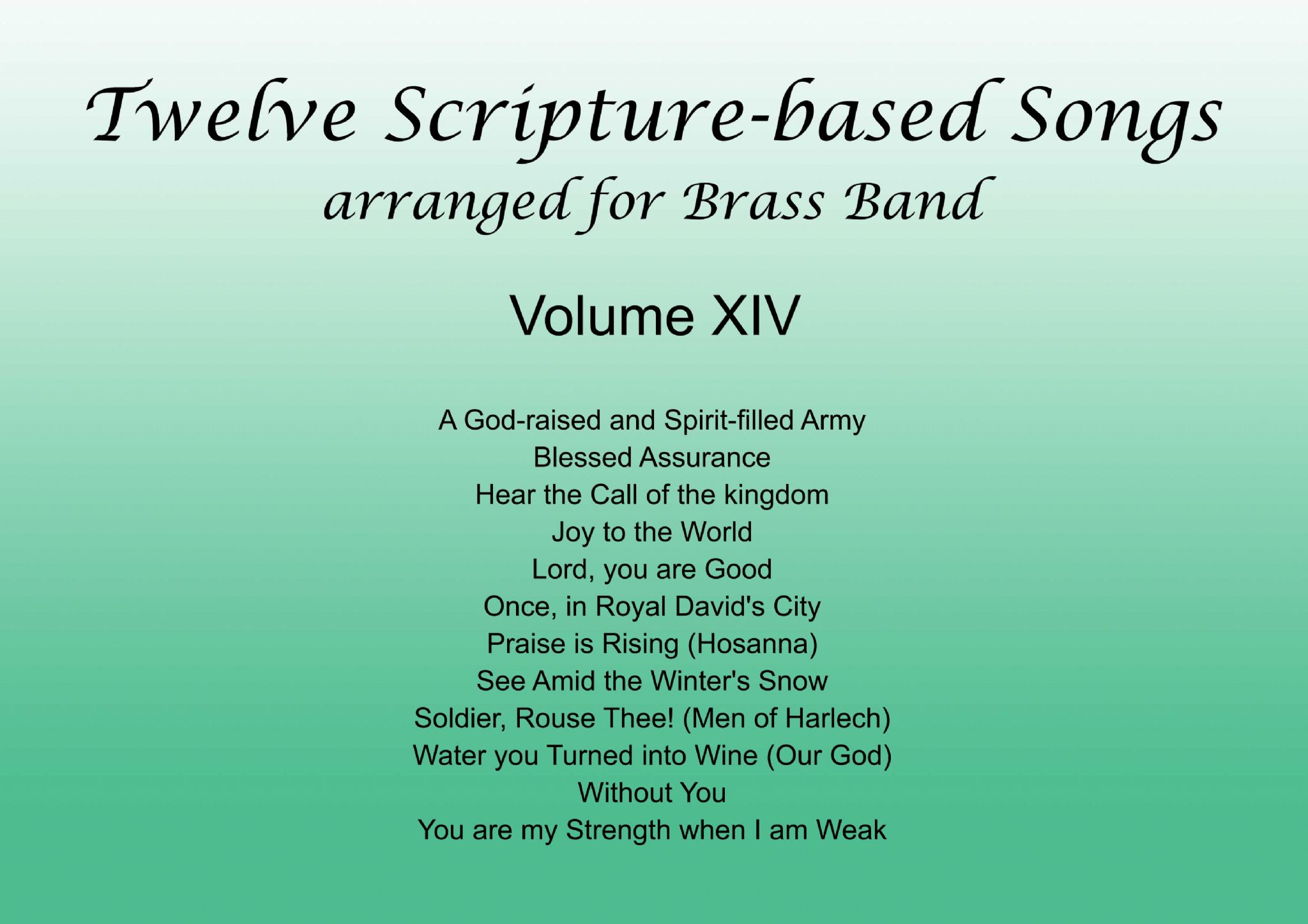
Twelve Scripture-based Songs Volume XIV
Twelve scripture-Based Songs arranged for Brass Band (Volume XIV) are packaged and marketed in complete sets which include a full score and a set of master parts. It is intended that these parts be used as 'masters', for the purpose of photocopying a quantity of parts to accommodate the precise instrumentation needs of the band for which this has been purchased.A God-raised and Spirit-filled ArmyBlessed AssuranceHear the Call of the kingdomJoy to the WorldLord, you are GoodOnce, in Royal David's CityPraise is Rising (Hosanna)See Amid the Winter's SnowSoldier, Rouse Thee! (Men of Harlech)Water you Turned into Wine (Our God)Without YouYou are my Strength when I am Weak
Estimated dispatch 7-14 working days
-
 £24.95
Judd: Love Divine
Sir John Stainer's fine tune is often associated with Charles Wesley's hymn, 'Love divine, all loves excelling'. The introduction is designed to evoke a feeling of awe, and a broad, confident style will set the pattern for the whole arrangement. Contrast in colour has been sought in the scoring but special effects must not be allowed to obscure the melody. The arrangement ends in an atmosphere suggested by the final line of the hymn, 'Lost in wonder, love and praise'.
Estimated dispatch 7-14 working days
-
 £30.00
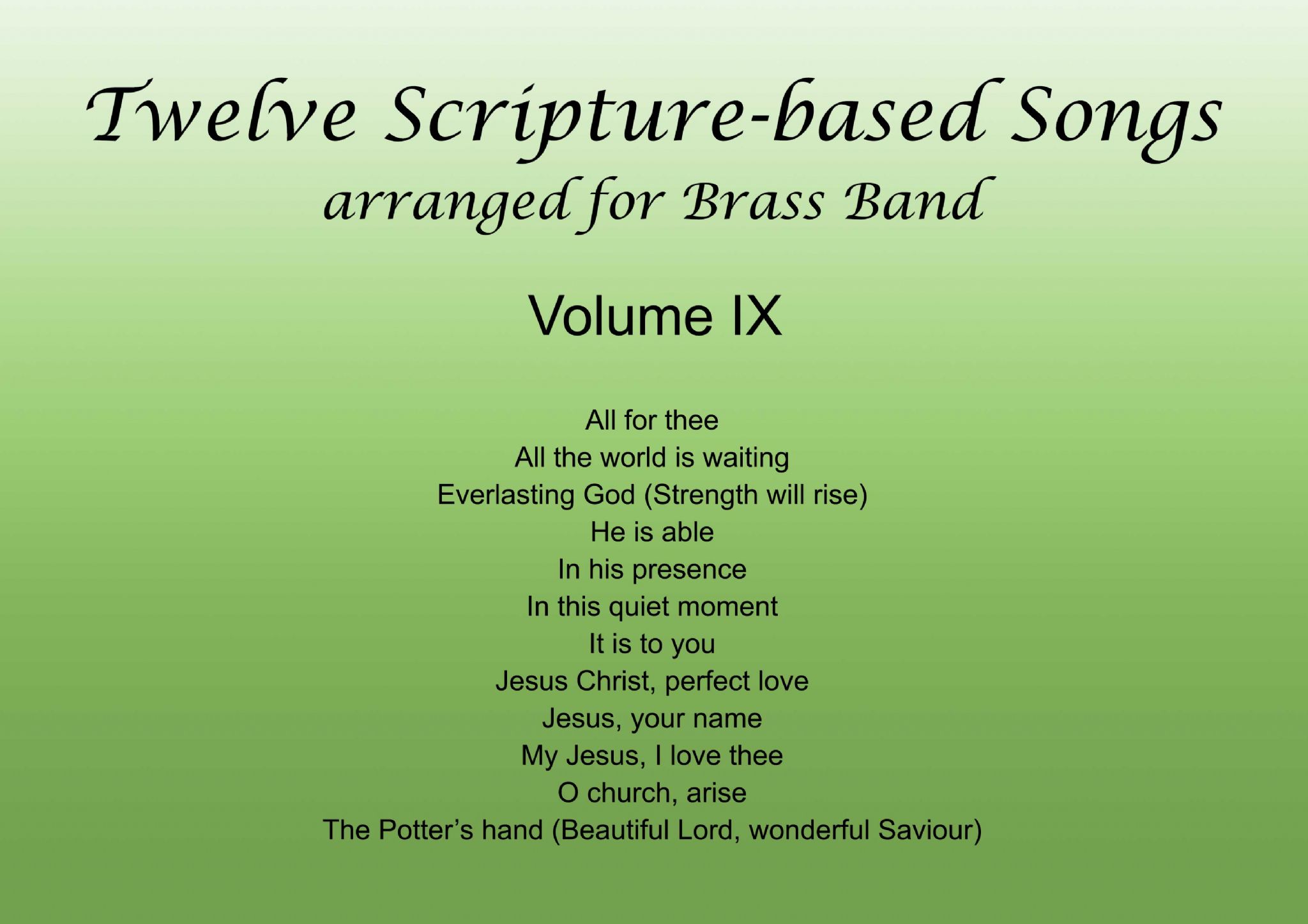
Twelve Scripture-Based Songs Volume IX
Twelve scripture-Based Songs arranged for Brass Band (Volume IX) are packaged and marketed in complete sets which include a full score and a set of master parts. It is intended that these parts be used as 'masters', for the purpose of photocopying a quantity of parts to accommodate the precise instrumentation needs of the band for which this has been purchased.All for theeAll the world is waitingEverlasting God (Strength will rise)He is ableIn his presenceIn this quiet momentIt is to youJesus Christ, perfect loveJesus, your nameMy Jesus, I love theeO church, ariseThe Potter's hand (Beautiful Lord, wonderful Saviour)
Estimated dispatch 7-14 working days
-
 £30.00
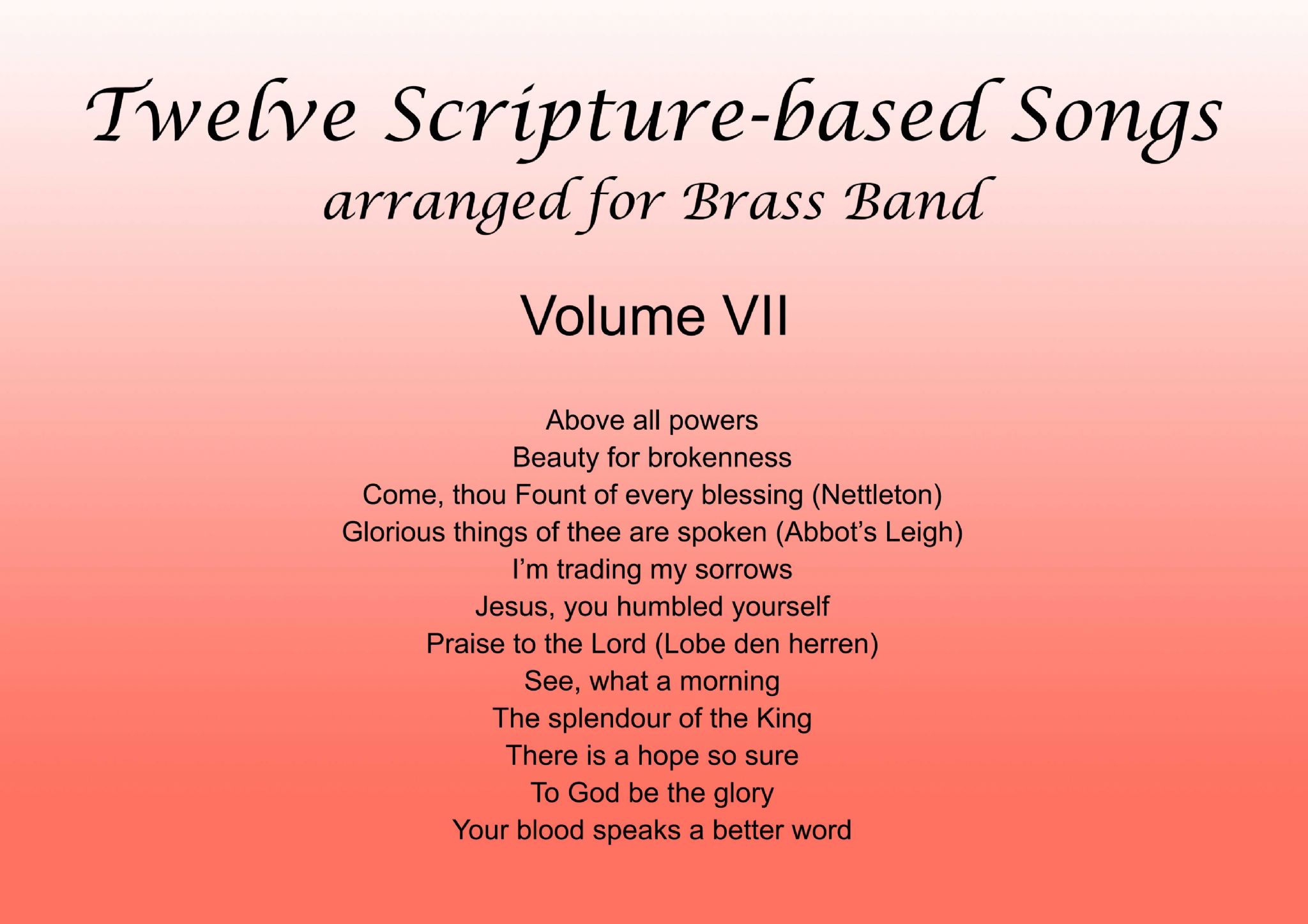
Twelve Scripture-Based Songs Volume VII
Twelve scripture-Based Songs arranged for Brass Band (Volume VII) are packaged and marketed in complete sets which include a full score and a set of master parts. It is intended that these parts be used as 'masters', for the purpose of photocopying a quantity of parts to accommodate the precise instrumentation needs of the band for which this has been purchased.Above all powersBeauty for brokennessCome, thou Fount of every blessing (Nettleton)Glorious things of thee are spoken (Abbot's Leigh)I'm trading my sorrowsJesus, you humbled yourselfPraise to the Lord (Lobe den herren)See, what a morningThe splendour of the KingThere is a hope so sureTo God be the gloryYour blood speaks a better word
Estimated dispatch 7-14 working days
-
 £30.00
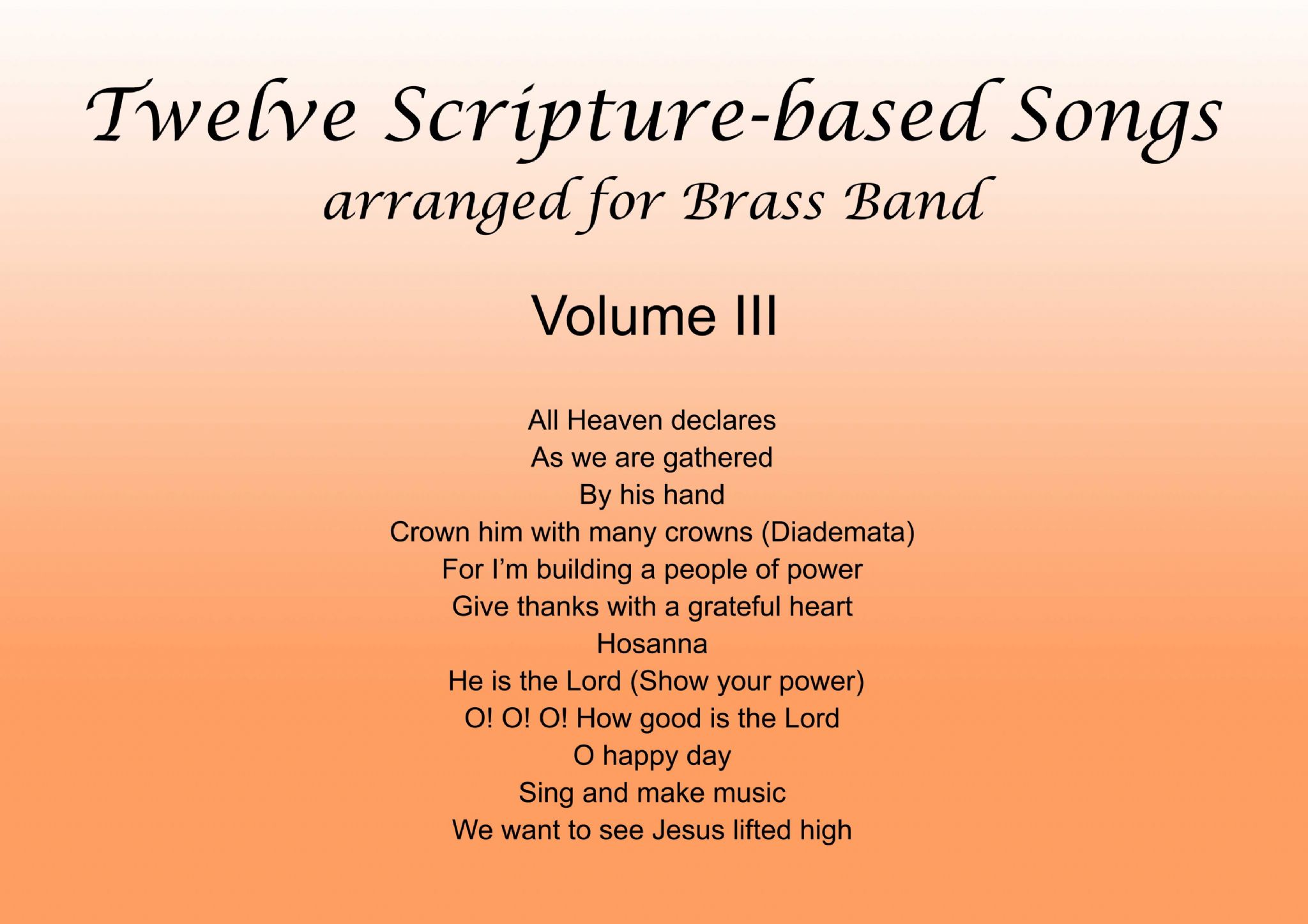
Twelve Scripture-Based Songs Volume III
Twelve scripture-Based Songs arranged for Brass Band (Volume III) are packaged and marketed in complete sets which include a full score and a set of master parts. It is intended that these parts be used as 'masters', for the purpose of photocopying a quantity of parts to accommodate the precise instrumentation needs of the band for which this has been purchased. All Heaven declaresAs we are gatheredBy his handCrown him with many crowns (Diademata)For I'm building a people of powerGive thanks with a grateful heartHosanna He is the Lord (Show your power)O! O! O! How good is the LordO happy daySing and make musicWe want to see Jesus lifted high
Estimated dispatch 7-14 working days