
Results
-
 £90.00
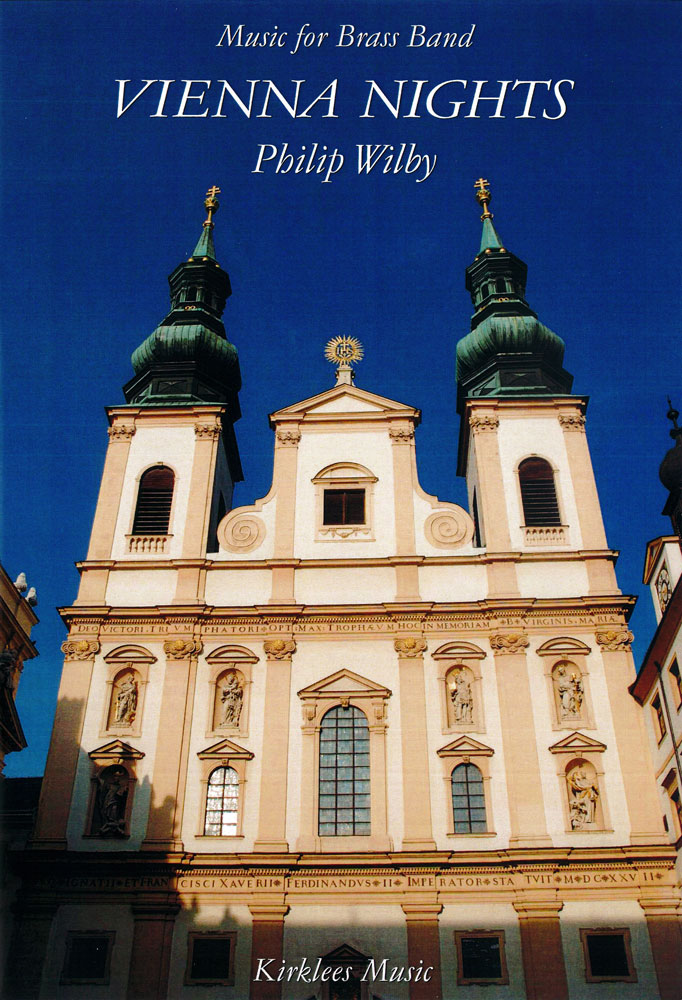
Vienna Nights (Brass Band - Score and Parts)
The City of Vienna stands at one of the historic crossroads of the world, linking east and west and embracing artistic influences from all sides. In the 250th anniversary year of Mozart's birth, this fantasy on Mozart's celebrated Piano Sonata in A (K331), has been composed true to the form and content of the original, but also to the underlying substance of the conception.One of Mozart's distinguishing features, and one that links him to later music by Beethoven, Schubert, Mahler and Schoenberg, is the breadth of his musical vision. His music links intellectual rigour with ecstatic utterance and darker preoccupations. It is, perhaps, this shadow-laden side of his musical nature which gives his work a profundity often absent in the work of his contemporaries. Admirers of his Requiem Mass or the Statue music in Don Giovanni will recognise that it is this extra sense of reality which makes Mozart so relevant to the modern age, and where he may link hands with the other great Viennese thinkers such as Berg, Webern and Adorno.The composer follows the three movement plan of the Sonata closely. The original begins with a Theme and Variations which is freely quoted. His Minuet is mirrored in the Recitative and Notturno, where each section of the band lays down a metaphoric rose to his memory. Famously, the sonata ends in populistic style with a Turkish Rondo. Ever since the Hapsburg-Ottoman Wars, which came to an end in the seventeenth century, Viennese composers have included Turkish elements in their music, not least in the use of certain percussion instruments. Vienna Nights is thusly a homage.It celebrates the world's greatest composer, but also the city which fostered his work. Here, in your imagination, you might easily conjure up a caf table near the Opera House, where Mozart, Mahler and Sigmund Freud, observed by us all from a discreet distance, may meet as old friends.
Estimated dispatch 7-14 working days
-
£12.00
Vienna Nights (Brass Band - Study Score)
The City of Vienna stands at one of the historic crossroads of the world, linking east and west and embracing artistic influences from all sides. In the 250th anniversary year of Mozart's birth, this fantasy on Mozart's celebrated Piano Sonata in A (K331), has been composed true to the form and content of the original, but also to the underlying substance of the conception.One of Mozart's distinguishing features, and one that links him to later music by Beethoven, Schubert, Mahler and Schoenberg, is the breadth of his musical vision. His music links intellectual rigour with ecstatic utterance and darker preoccupations. It is, perhaps, this shadow-laden side of his musical nature which gives his work a profundity often absent in the work of his contemporaries. Admirers of his Requiem Mass or the Statue music in Don Giovanni will recognise that it is this extra sense of reality which makes Mozart so relevant to the modern age, and where he may link hands with the other great Viennese thinkers such as Berg, Webern and Adorno.The composer follows the three movement plan of the Sonata closely. The original begins with a Theme and Variations which is freely quoted. His Minuet is mirrored in the Recitative and Notturno, where each section of the band lays down a metaphoric rose to his memory. Famously, the sonata ends in populistic style with a Turkish Rondo. Ever since the Hapsburg-Ottoman Wars, which came to an end in the seventeenth century, Viennese composers have included Turkish elements in their music, not least in the use of certain percussion instruments. Vienna Nights is thusly a homage.It celebrates the world's greatest composer, but also the city which fostered his work. Here, in your imagination, you might easily conjure up a caf table near the Opera House, where Mozart, Mahler and Sigmund Freud, observed by us all from a discreet distance, may meet as old friends.
Estimated dispatch 7-14 working days
-
 £45.00
The Thunderer (Brass Band - Score and Parts)
This march, one of Sousa's most popular compositions, was written in 1889 and was dedicated to the Knights Templar of Washington, D.C. Sousa had been knighted by that organization three years earlier. The origins of the name of the march are unclear and the march is noteworthy not only for Sousa's usual creative skills but also for the use, in two sections of the march, of military-style percussion and, in the last section, of featured fanfares.This arrangement was prepared for the 2009 Summer concerts of Brass Band of the Western Reserve, musical director Dr Keith M Wilkinson. The arrangement highlights the particular features mentioned above and performances will be enhanced by following the indicated staging directions.
Estimated dispatch 7-14 working days
-
 £50.00
Triumph Series Band Journal November 2016 Numbers 1279-1282
No. 1279 March - In the fellowship (Stephen Bulla)This march was written at the request of Bandmaster Jamie Hood who commissioned the piece for the 125th Anniversary of his home corps band at Basel 1 Corps. Within the march are two well-loved songs from the SA's Swiss song book, both of which are still sund frequently at the corps.No. 1280 Shout and sing! (Steven Ponsford)This light-hearted, lively piece of music is based on David Fellingham's song 'Shout for joy and sing your praises to the King'.No. 1281 (1) Sweet hour of prayer (trs. Doug Engle)Prayer offers us an opportunity to communicate with the Lord. The words of this hymn invite us to bring our concerns to a God who listens. As you listen to this arrangement, take time to reflect on how God has remained faithful through times of peace and distress.No. 1281 (2) The Lord bless you and keep you (arr. Andrew Wainwright)Peter Lutkin's beloved choral benediction is well known in vocal circles. Here it is given a simple treatment that it is hoped will inspire prayer reflection and renewed confidence in God's protection and guidance.No. 1282 March - I serve a risen Saviour (Noel Jones)This Easter march features the following songs: 'Look, ye saints! the sight is glorious' and 'I serve a risen Saviour'. The motif 'I serve a risen Saviour' is used throughout the first section of this march.
Estimated dispatch 7-14 working days
-
 £44.99
Cartoon Classics (Brass Band - Score and Parts)
In Cartoon Classics, Andrew Duncan has brought together four classic cartoon themes in one medley that will be a sure-fire hit with audiences everywhere. It features the Looney Tunes Theme (Merrily We Roll Along), The Pink Panther, The Flintstones and The Simpsons.Suitable for Advance Youth/3rd Section Bands and aboveDuration: 4.00
Estimated dispatch 7-14 working days
-
 £49.99
Into the Sky (Brass Band - Score and Parts)
This music is a fanfare prelude that is designed to open concert programs with an impressive display of brass fireworks. It features every section of the band and reflects a modern spin on the style of the great Strauss fanfares for brass from the past.
Estimated dispatch 7-14 working days
-
 £89.99
A Symphony of Colours (Brass Band - Score and Parts)
A Symphony Of Colours contains four movements, which merge seamlessly together; Joy; Chroma (a journey through the composers perception of synesthesia); Endless Time (where tuned percussion features alongside extended solos for the euphonium); and the final, climactic Ascent. This virtuoso score won a BASCA British Composer Award in the Brass & Wind Band category for its composer, Simon Dobson. Suitable for Championship Section Bands. Duration: 17.00
Estimated dispatch 7-14 working days
-
 £59.99
Marcho Brioso (Brass Band - Score and Parts)
Marcho Brioso was commissioned by The Brioso Brass, a British-style brass band from Hokkaido, Japan. They gave the first performance in January 2012.The commission was for a bright and breezy march that the band could use as their theme tune, so Marcho Brioso falls into the composer's series of Broadway-style marches, which includes Slipstream, The Bandwagon and Jubiloso. After a short introduction a solo cornet plays the main theme, accompanied by a euphonium counter-melody. A secondary phrase from the horns and baritones leads to a tutti version of the main theme which is followed by the traditional 'bass' strain. A change of key heralds the trio section, which features a cantabile melody on euphonium; this is then taken up by the full band after a short bridge passage and further change of key.This takes us back to the home key which sees a quiet staccato version of the main theme lead to a recapitulation and a short coda which brings the march to a close.Duration: 3:40
Estimated dispatch 7-14 working days
-
 £38.50
CMS March
A traditional march which features the delightful Romanic folk song named "O cara Surselva" in the trio section.
Estimated dispatch 7-14 working days
-
 £35.00
Blues On The March (Score and Parts)
Traditional marches are great, but sometimes you want something different to kick off your concert. This piece gives your band a chance to get into the 'swing' of things, based on the traditional twelve bar blues it features a contrasting middle section with a trombone trio and a flugel (cornet) obligato.
Estimated dispatch 7-14 working days