
Results
-
 £12.00
Gallery (Brass Band - Study Score)
The commissioned test-piece for the Scottish Open Contest 2015, Gallery was welcomed as a great success both by performers and audience. The title refers to six pictures, four of them by Scottish artists. Each picture has a movement, in addition to which there is a very short introduction. They are all linked, though there are short gaps between each movement, the lengths of which are at the conductor's discretion.
Estimated dispatch 7-14 working days
-
 £55.00
Triumph Series Brass Band Journal, Numbers 1379 - 1382, November 2025
1379: March - True to the colours (Noel Jones)This march is a reminder of the symbolism of The Salvation Army flag - blue representing God's purity, red for the blood of Christ and yellow for the fire of the Holy Spirit. I love the dear old Army flag, I'll be true and Yellow star and red and blue are three songs featured where writers have been equally inspired and have made declaration of their allegiance to God by service in The Salvation Army.1380: In all its fullness (Alan Williams)This music was written for the East of England Youth Summer School in 2024, where the delegates explored the theme 'Living life in full colour with Jesus' and as such this work is a joyous and fun-filled celebration of all the good things God has provided.1381: Eternal Spring (Nick Simmons-Smith) This simple hymn tune arrangement is based on the tune Martyrdom which is associated with the words 'As pants the heart for cooling streams'. It is a Scottish tune written around 1800 by Hugh Wilson.1382: March Medley - Emblems of service (Stephen Bulla)This march celebrates the occasion of the Coorparoo Corps' reunion (now Carindale Corps, Australia) in 2022. The music itself features a spirited medley: Joy! joy! joy! there is joy in The Salvation Army, What a friend we have in Jesus and Steadily forward march!
Estimated dispatch 7-14 working days
-
 £29.95
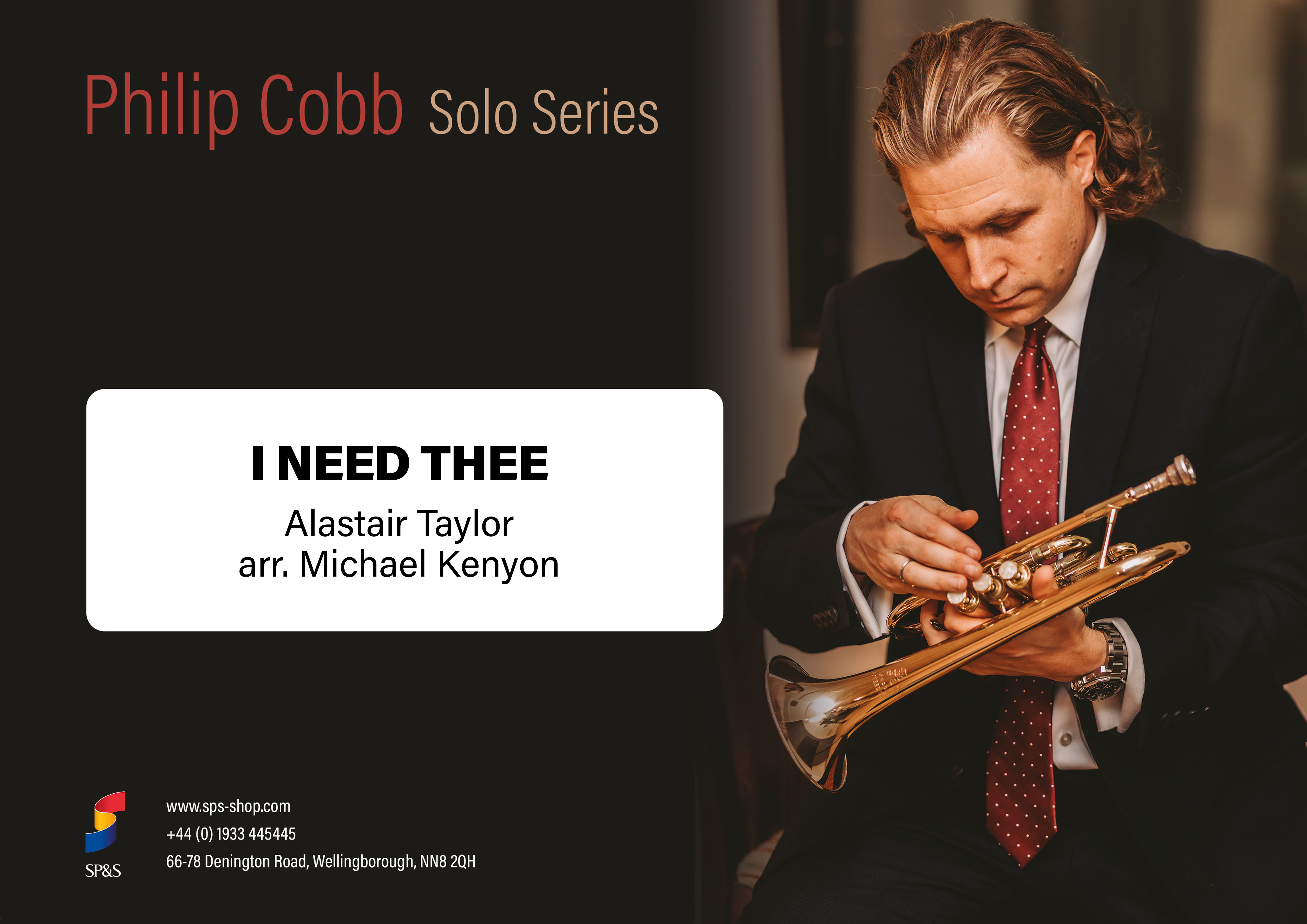
I Need Thee (Cornet Solo with Brass Band - Score and Parts)
In the late 1980s, Scottish composer Alastair Taylor bought a new setting to words by Annie S. Hawkes entitled I Need Thee. The impact of Taylor's setting was instant, and has since become a popular and much-loved song.Duration: 5.30
Estimated dispatch 7-14 working days
-
 £44.95
Ae Fond Kiss (Tenor Horn Solo with Brass Band - Score and Parts)
Ae Fond Kiss, by the Scottish poet Robert Burns, is widely recognised as being one of the most poignant songs of lost love ever written. A brief affair with a Mrs Agnes Craig McLehose (known to Burns as Nancy) ended with her decision to join her estranged husband in Jamaica. Her parting gift to Burns was a lock of her hair which he had set in a ring. His gift to her included the poem, the first verse of which reflects Burns' feelings of resignation and despair:Ae fond kiss, and then we sever;Ae fareweel, alas, for ever!Deep in heart-wrung tears I'll pledge thee,Warring sighs and groans I'll wage thee!
Estimated dispatch 7-14 working days
-
 £24.95
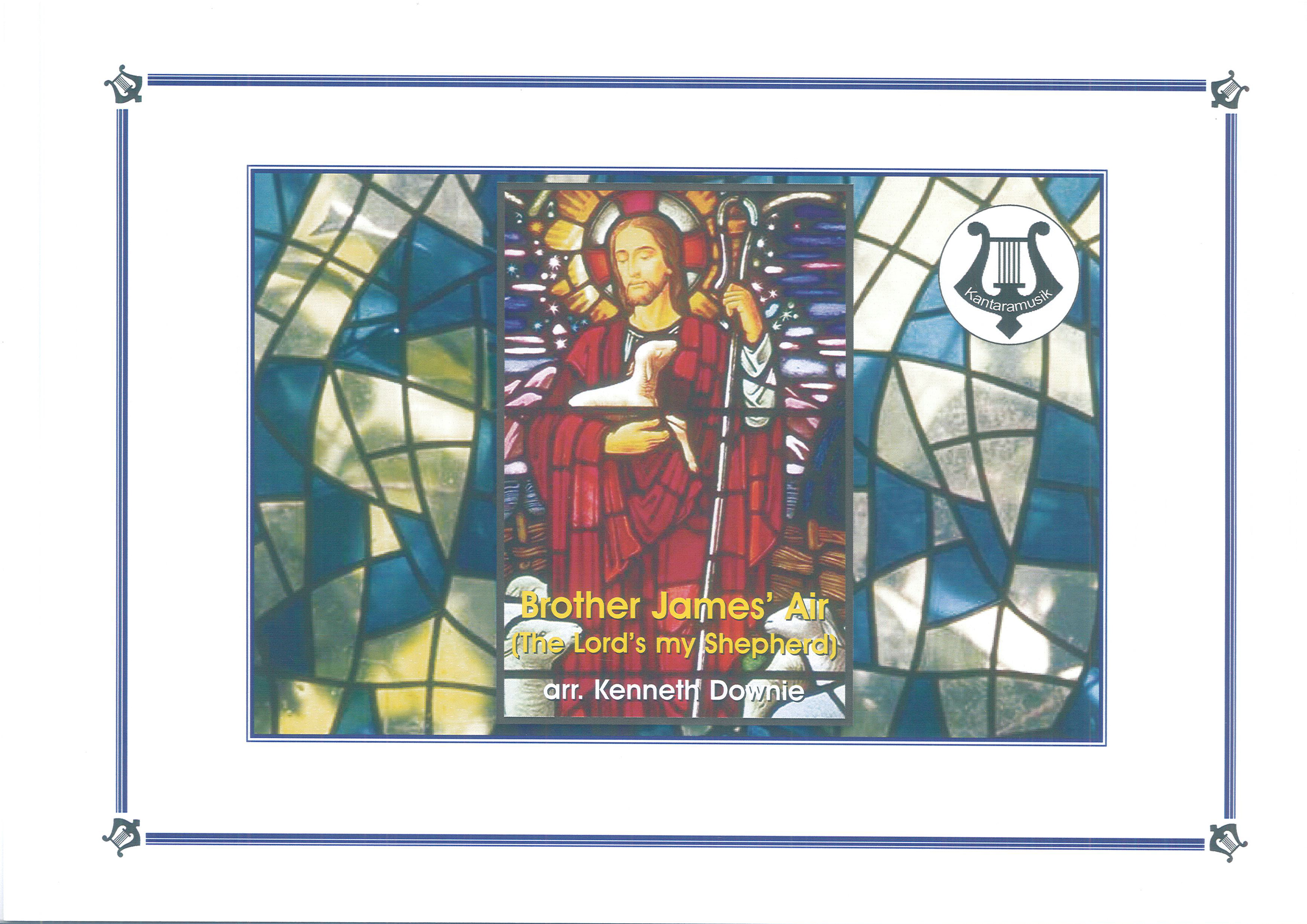
Brother James' Air (Brass Band - Score and Parts)
The 'brother James' who wrote this beautiful tune was James Leith Macbeth Bain. He was born in Scotland in 1840 and died in Liverpool in 1925. Besides being a musician, he was a poet, mystic and had a great interest in healing. He published a book called 'The brotherhood of healing' in 1906 and spent the latter years of his life working with the underprivileged in Liverpool. He wrote this simple but charming tune to accompany the familiar paraphrase of Psalm 23 which comes from the Scottish Psalter of 1650; 'The Lord's my shepherd, I'll not want'.
Estimated dispatch 7-14 working days
-
 £24.95
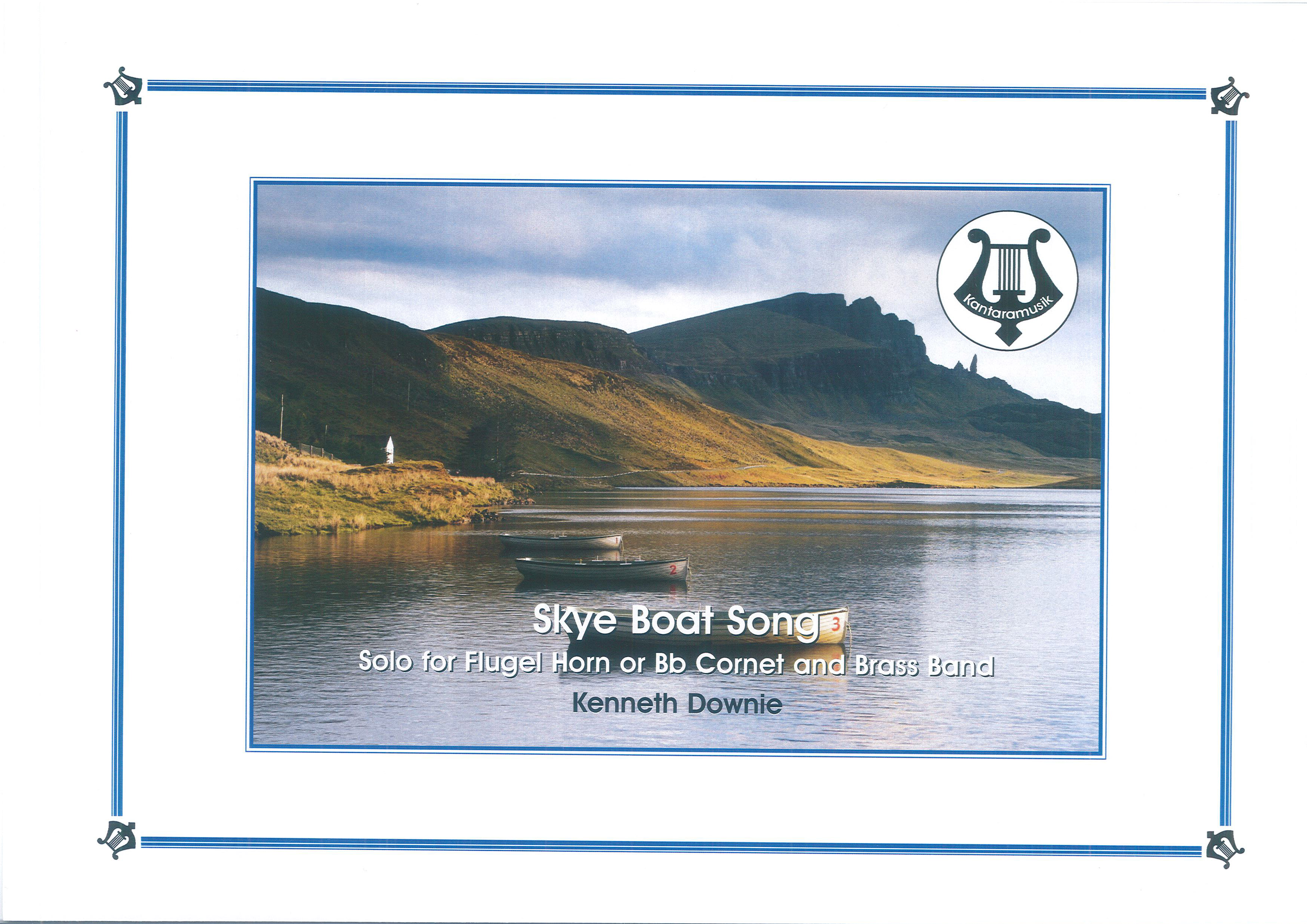
Skye Boat Song (Flugel Horn Solo with Brass Band - Score and Parts)
This wistful Scottish folk song tells the story of the escape of Bonnie Prince Charlie from Uist to Skye after the battle of Culloden in 1746. His defeat effectively ended the Jacobite movement as a political threat in Britain. The gentle tune has great charm and is often used as a lullaby.
Estimated dispatch 7-14 working days
-
 £149.99
Hymn of the Highlands, Suite from (Brass Band - Score and Parts)
Suite from Hymn of the Highlands draws three expressive musical pictures of the Scottish highlands.The first movement, Ardross Castle, contains solo passages for horn and baritone and features a fascinating bagpipe melody.The second movement, Alladale, is a trio for tenor horn, flugel horn and baritone with an accompaniment featuring the percussion section.The final movement, Dundonnell,features two highly contrasting melodies, a wild presto and the bagpipe melody first heard in the first movement.Duration: 17:00
Estimated dispatch 7-14 working days
-
 £59.95
Bonnie Northumbria - Brass Band - LM786
COMPOSER: Laurie JohnstonProgramme NotesNorthumberland, or Northumbria as it is also known, is the most northern county in England and has magnificent and stunning landscapes just waiting to be explored. Filled with mystical castles, atmospheric ruins and historical sites and edged by spectacular coastal scenery, there is something wonderful to see at every turn. The Devils Causeway passes through Northumbria and reaches Berwick upon Tweed at the coast. Walkers and cyclists can also take the Coast and Castles Cycle Route or the North Sea Trail which journey through some of the most beautiful scenery along the way.The Blaydon Races is aGeordiefolk songwritten in the 19th century byGeordie Ridley, in a style deriving frommusic hall. It is regarded by many as the unofficialanthemofTynesideand is frequentlysungby supporters ofNewcastle United Football ClubandNewcastle Falconsrugby club.Blaydonis a small town inGateshead, situated about 4 miles (6.4km) fromNewcastle upon Tyne, inNorth East England. The race used to take place on the Stella Haugh 1 mile (1.6km) west of Blaydon.Stella South Power Station(demolished in 1995) was built on the site of the track in the early 1950s, after the races had stopped taking place in 1916.Water of Tyne (sometimes rendered as The Waters of Tyne) is a folk song (Roud number1364) from the north-east of England. The song is sung by a girl or woman lamenting the fact that her paramour is on the opposite bank of theRiver Tyne. Sleeve notes to Michael Hunt's recording of Tyneside songs states that "the ferry is believed to be that atHaughton Castleon theNorth Tyne". Alternatively the "rough river" in the last line may indicate a point further downstream, possiblyTynemouth.The song was collected byJohn Bellin 1810 and published two years later inRhymes of Northern Bards.The Keel Row is a traditional Tyneside folk song evoking the life and work of thekeelmenofNewcastle upon Tyne. A closely related song was first published in aScottishcollection of the 1770s, but may be considerably older, and it is unclear whether the tune is Scottish or English in origin.The opening lines of the song set it inSandgate, that part of the quayside overlooking the River Tyne to the east of the city centre where the keelmen lived and which is still overlooked by theKeelmen's Hospital.Versions of the song appear in both England and Scotland, with Scottish versions referring tothe Canongaterather than Sandgate. The earliest printing was in the 1770s inEdinburghin A Collection of Favourite Scots Tunes, edited by Charles Maclean, though the tune was also found in several late eighteenth-century English manuscript collections. As the term "keel" was used both sides of the border, it has not been determined which version was the original, althoughFrank Kidsonsurmised that like many other songs collected by Maclean it may originally have been aJacobiteair from the time of the1745 rebellion. Some versions of the song make reference to a "blue bonnet[...] with a snowy rose upon it", a clear attempt to evoke Jacobite symbolism, whether dating from 1745 or not.Kidson, however, also noted that he had found the tune of The Keel Row associated with an early dance called "The Yorkshire Lad" as early as 1748.By the 19th century the tune was well associated with the River Tyne; a few years before the 1850s the keelmen had met yearly to celebrate the founding of the Keelmen's Hospital, perambulating the town to the accompaniment of bands playing The Keel Row.Dance To Thy Daddyis a traditional Englishfolksong, originating inNorth East England. An early source for the lyrics, Joseph Robson's "Songs of the bards of the Tyne", published 1849, can be found on the Farne archive. In Farne's notes to the song, it is stated that these lyrics were written by William Watson around 1826.
In Stock: Estimated dispatch 3-5 working days
-
£44.95
SCOTTISH FOLK VARIANTS (Euphonium Solo with Brass Band Set) - Stephen Bulla
This solo was written for the ISB120 event in June 2011 especially for Derick Kane and The International Staff Band. The material for the solo is indicative of Derick's Scottish roots and features in turn, 'The dashing white sergeant', 'My bonnie lies over the ocean', 'Skye boat song' and 'Bonnie Dundee'.
Estimated dispatch 7-14 working days
-
 £30.00
A Scottish Visit (Traditional arr. by Chris Cobon) - Brass Band Sheet Music Full Score & Parts - LM409
COMPOSER: TraditionalARRANGER: Chris CobonISMN : 9790570004096Take a trip to Scotland with your band. This medley comprises ofCock 'O The NorthWi' A Hundred PipersScotland The BraveGet the audience clapping along and maybe a highland fling....!LM409 - ISMN : 9790570004096
In Stock: Estimated dispatch 3-5 working days
