Results
-
£80.00
Exposure (Bra) - Nick Van Elsen
Exposure is a short opening piece commissioned by Royal Fanfare Band 'De Werkmanszonen' from Zichen (Belgium) and conductor Yves Wuyts for their participation at the World Music Contest 2017 in Kerkrade (NL).
Estimated dispatch 7-14 working days
-
Eye Level - Jack Trombey - Len Jenkins
Eye Level was originally produced for the De Wolfe Music Library and selected by Thames Television for the theme tune to their Netherlands based detective series Van der Valk. Based on a German/Dutch nursery rhyme, which in turn takes its melody line from Mozart's Nozze di Figaro, Dutch composer Jan Stoeckart adapted it under the name Jack Trombey, and Simon Park arranged it for his own orchestra. In 1973 his single was top of the UK charts for 4 weeks and in the top 40 for 22 weeks. It gained the award of a platinum disc. Fully entitled 'Eye Level (Theme from the TV series Van der Valk)', the tune has also been used in various TV adverts for clients such as KLM Royal Dutch Airlines in the 70's and Oranjeboom lager in the 1980's. This new arrangement is straightforward and within the capabilities of most 4th section and village brass bands. The tune is instantly recognisable and ideally suited to fetes, concerts and programmes of light entertainment.
-
£105.00
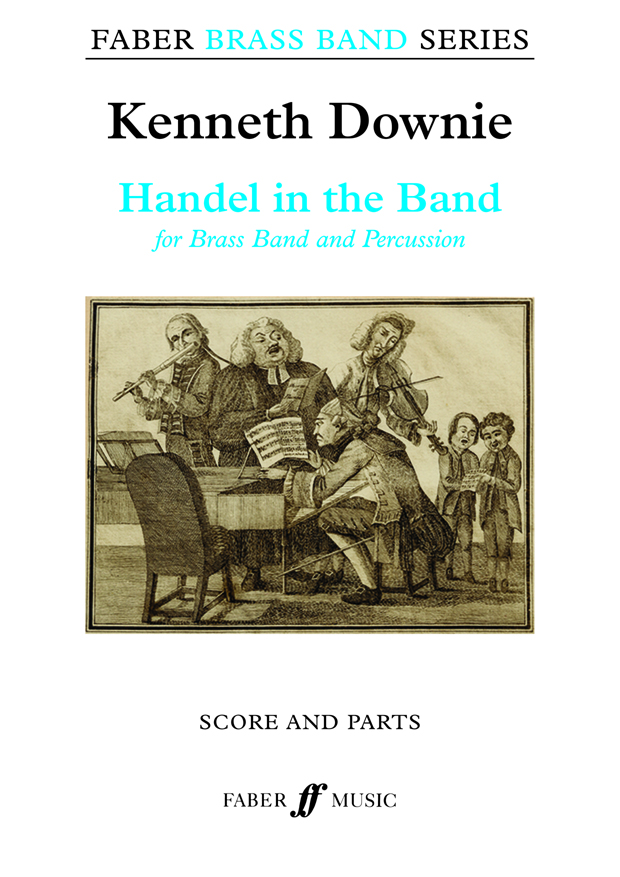
Handel in the Band - Kenneth Downie
Handel in the Band is a virtuoso set of symphonic variations on one of Handel's best known keyboard dances, the Sarabande from his Suite in D minor, HWV 437, based on the Spanish traditional dance La Folia. Kenneth Downie's work was commissioned by Brass Band Treize Etoiles, for performance at the 2013 Swiss National Brass Band Championships, where it was conducted by James Gourlay. The title is a reference to Percy Grainger's popular Handel in the Strand, and is indicative of the witty and theatrical nature of the music, which is more playful than conventional competition pieces and as such offers different challenges to brass bands as well as being thoroughly entertaining for audiences. Kenneth Downie is one of the most respected and experienced brass band composers. His music has been widely performed and published throughout the brass band world since the 1960s. Handel in the Band has been selected as the set work for the Championship Section final of this year's National Brass Band Championships of Great Britain, which takes place at the Royal Albert Hall, London, on 6th October 2018.
In Stock: Estimated dispatch 1-3 working days
-
£45.00
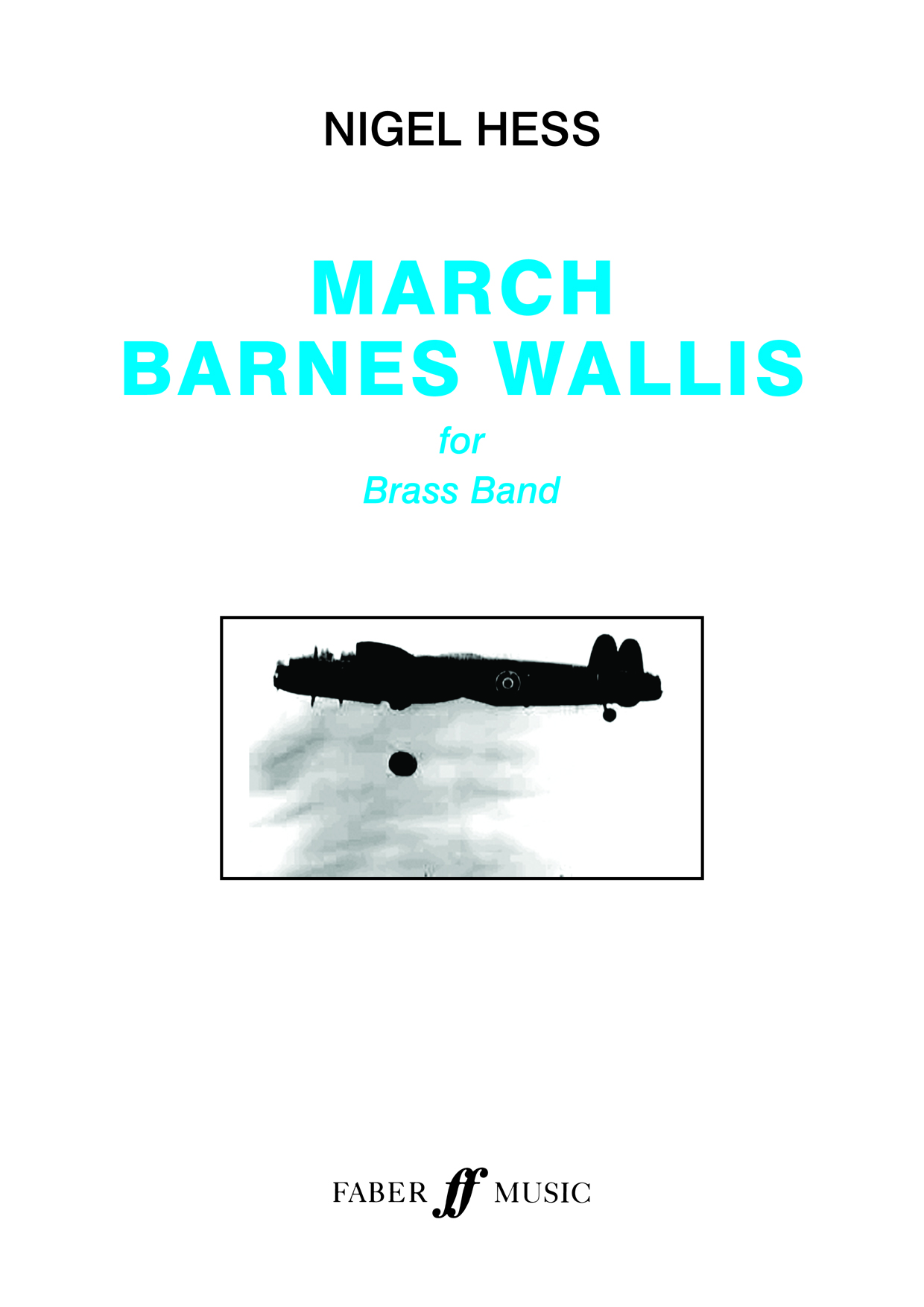
March Barnes Wallis - Nigel Hess
March Barnes Wallis was commissioned by Royal Air Force Music Services to commemorate the 70th anniversary of the famous Dambuster's raid and received its first performance on BBC Radio 2's Friday Night is Music Night, broadcast live from Biggin Hill Airport on 17 June 2013 by the Central Band of the RAF, Director of Music Wing Commander Duncan Stubbs.Additional transposed parts are available to download from the website.
In Stock: Estimated dispatch 1-3 working days
-
£85.00
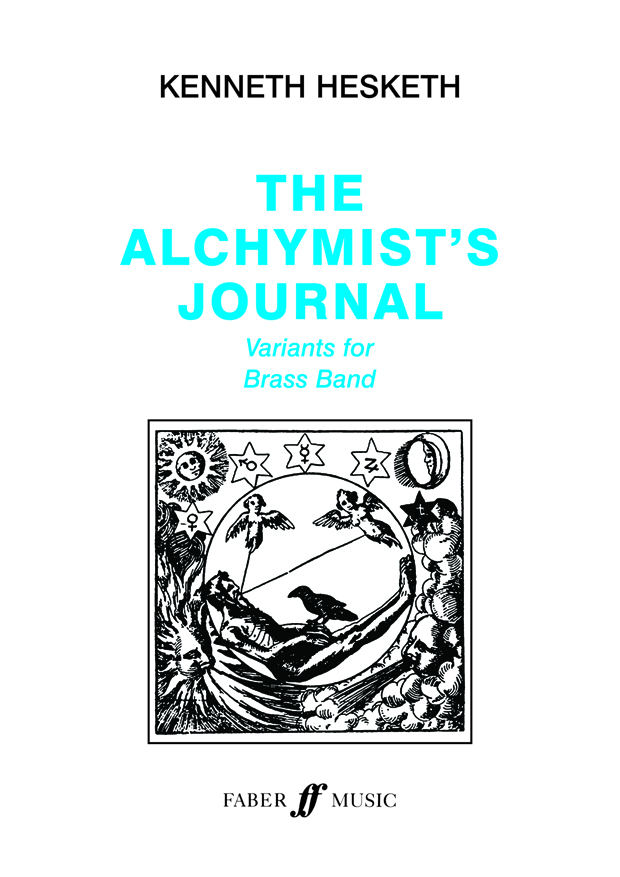
The Alchymist's Journal - Kenneth Hesketh
The Alchymist's Journal (Variants for Brass Band) was commissioned by Faber Music Band Consultant Paul Hindmarsh in 2001, with the support of the Brass Band Heritage Trust, as a substantial concert/contest challenge that would be within the compass of the country's most able youth and first section bands. It received its first performance in January 2002, by Black Dyke Band under Nicholas Childs, as part of the Royal Northern College of Music Festival of Brass.Since its original publication, composer Kenneth Hesketh has made a number of revisions to the work. Most of these were included in the recording made by Foden's Band (Bramwell Tovey) for NMC Recordings (NMC D142). This definitive new edition, including all the composer's revisions, has been specially prepared for the 2015 National Brass Band Championships of Great Britain and is the text that all bands performing will be required to use.Brass Band Grade 5: 1st SectionDuration: 12 minutes.
In Stock: Estimated dispatch 1-3 working days
-
 £30.00
Rhapsody - Tim Paton
Composer, Tim Paton comments: Rhapsody began life in 1971, as Rhapsody in three movements. It was originally written for wind and brass octet with timpani, and was performed at the Royal Manchester College of Music (soon to become the RNCM) in 1972.Ten years later, it was expanded into a piece for wind band. In 22, I decided to make another major revision, and create a lower section test piece for brass band. I removed the middle movement, and published it as a "Romance" for brass band. I composed a link between what had initially been the outer movements, and renamed the piece Rhapsody".The link is inspired by the minimalist music of Philip Glass. In the lead up to the grand finale of the Rhapsody, I have used an accompanyingmotif/obligato which is directly inspired by a passage in the final movement of Janacek's "Sinfonietta".
In Stock: Estimated dispatch 3-5 working days
-
£100.00
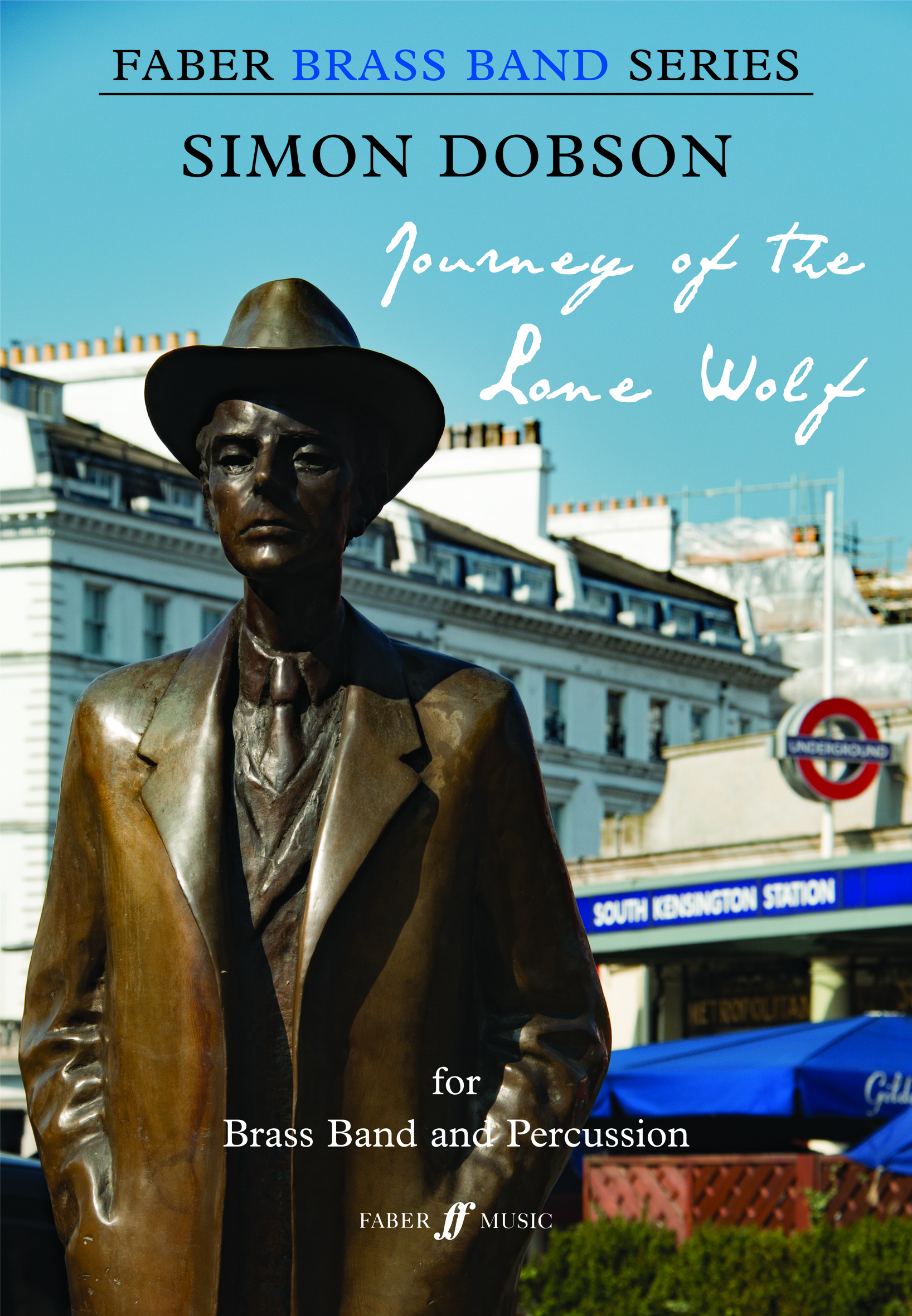
Journey of the Lone Wolf (score & parts) - Simon Dobson
Journey of the Lone Wolf tells the story of the hungarian composer Bla Bartk. It was commissioned by Dr. Nicholas Childs for Black Dyke Band, who gave the first performance on Sunday 26 January 2014 at the Bridgewater Hall, Manchester as part of the Royal Northern College of Music Festival of Brass.The composer's programme notes for each movement: 1. Capturing the Peasants' SongAfter the upheaval of moving to Budapest the young Bla Bartk meets Zoltn Kodly and the pair embark on summertime adventures throughout the Hungarian countryside to collect and catalogue the astonishing variety (both harmonically and rhythmically) of gypsy and folk music heard in the Balkans. The arrival of WW1 plunges Bartk's beloved Hungary into chaos.2. Night MusicBartk was at times a cold man, aloof and lonely. The odd moments of tenderness he showed are portrayed here in a series of evocative solos. His brief but intense affairs speak of a love he could only long for. Jazz is my night music and here there are hints of what Bartk may have heard in the USA later in his life.3. Flight and FightHaving been forced by the world's evils to leave his homeland of Hungary for America, Bartk, the anti-fascist, felt isolated and angry. In this movement we hear his longing for a simpler time of gypsy folk dances as well as his maturity and depth as a composer finally exploring deeper colours and darker themes. Duration: 15 minutes.Level: Championship
In Stock: Estimated dispatch 1-3 working days
-
 £29.95
Cafe 1719 - Jonathan Bates
DURATION: 2'30". DIFFICULTY: 1st Section+. 'Caf 1719' was composed for the Wantage Silver Band as part of their entertainment contest sets based on the music of Johann Sebastian Bach in 2019. This particular short, jazz-inspired work is composed in tribute to the great French Pianist Jacques Loussier (1934-2019) who received global acclaim for his jazz interpretations of Bach's music, along with many other classical composers. Despite being born in the same year and living in the same country, Bach and Handel never actually met, but what if they had? Cafe 1917 acts as a musical meeting point - in a fictional Jazz Cafe by the Rhine, with the tenor horn section performing a 'Loussier-esque' version of Bach's 'Prelude No.2 in C Minor' whilst on the other side of the cafe, the trombone section follow suit with their take on Handel's 'Bourree from Music for the Royal Fireworks'. Eventually the two meet, share ideas and incorporate them into each other's melodies. Amongst the 2 main featured works by Bach and Handel, the tutti interludes are constructed on music from Bach's 'Toccata and Fugue in D Minor'. .
In Stock: Estimated dispatch 1-3 working days
-
 £89.95
Songs of Ascent - Jonathan Bates
DURATION: 14 minutes. DIFFICULTY: Championship. 'Songs of Ascent' was composed for the Royal Northern College of Music Brass Band, as part of their programme for the 2019 RNCM Festival of Brass. In my view, the festival itself is the leading showcase for original contemporary music for the medium (in a concert setting) in the world and therefore an ideal place to explore new ideas and sounds, which was a notion fundamental to the construction of this work. The piece is subtitled 'Out of the Depths, I cry to you, O Lord'; the opening line of Psalm 130 (which forms part of a set of 15 psalsm, 120-134 known as the Songs of Ascent") which forms the main inspiration for much of the musical material. Following an extended opening for four individual tuba lines, there are a number of solos for members of the band off stage, with bleak and deep accompaniment lines, reflecting the words of Psalm 130. Amongst these 'songs of ascents', the most common and strong themes are repentance and redemption; with the central core of this work emerging 'from the depths' to reveal one of very few calming and reflective passages of the work utilising the tune of 'Guide Me O Thy Great Redeemer' in a new setting, featuring the Solo Horn and Bass Trombone, before returning to the ethereal and dark timbres that form much of the music up to this point. In terms of compositional technique, this work is solely based on a set of 4 9-note scales in their various unique transpositions (below). Each of these scales provide a set of 2 whole tone scales, 6 minor triads, 6 major triads and is built on 9 augmented triads. Whilst most of the music in this work is based melodically on the set of notes (heard right at the outset in the motif in the tuba line), the central section delves into the harmonic capabilities of these 'modes', using a number of the 7 'keys' which can be derived from the minor & major chords derived in each scale. All 4 scales are used independantly to each other, with whole sections of the work focussing on each mode. 'Songs of Ascent' was selected as the set work for the Championship Section at the Butlin's Mineworker's Championships in 2020.
In Stock: Estimated dispatch 1-3 working days
-
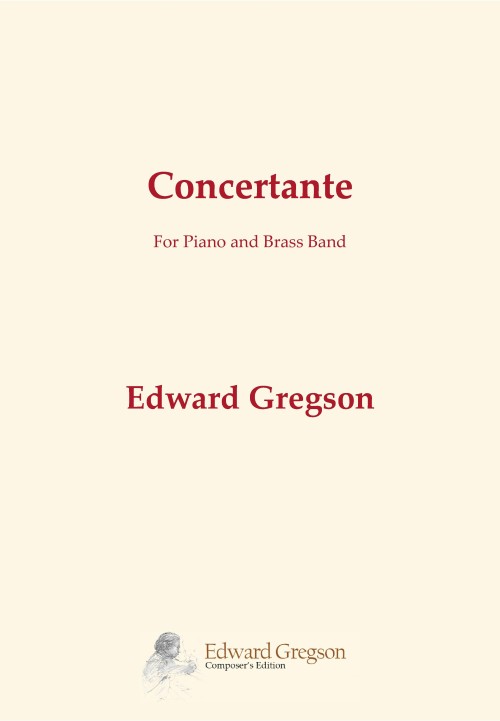 £95.00
Concertante (Piano Solo with Brass Band - Score and Parts) - Gregson, Edward
This work was written in 1966, when I was a student at the Royal Academy of Music in London. It was the first major work to be written for this combination. The Concertante is unashamedly romantic in idiom and is cast in three movements: Prelude, Nocturne and Rondo.The Prelude is in sonata form with a contracted recapitulation. There are two main themes, the first announced after the opening flourish on piano. The second theme is lyrical in character and the interplay between these two themes forms the main focus of the movement.The pensive Nocturne opens with an introduction from the band which contains hints of the two main ideas to follow. The solo piano announces the main theme, which has a slightly 'blues' character in its flattened third and seventh notes of the scale. The band enters with the chorale theme already heard in the introduction. Eventually the first theme returns, this time from piano and band and building to a powerful climax before subsiding to a peaceful ending.The Rondo is full of energetic rhythms and changing time patterns. The main theme is 'giocoso' in character and in the first episode there is more than a hint of the tune 'Onward Christian Soldiers' in what amounts to a good humoured parody. Before the final coda there is a long piano cadenza underlying the virtuoso element of the work.The work had a number of public performances leading up to a memorable one in the Royal Albert Hall in 1989 as part of the Gala Concert that used to be held after the National Brass Band Championship in the Royal Albert Hall. That year, the 'centre band' in the massed bands concert were the GUS Band (then known for sponsorship reasons as 'Rigid Containers Group Band'!) conducted by my great friend and champion, Bramwell Tovey, with myself as the soloist.- Edward GregsonDuration: 18.00
Estimated dispatch 7-14 working days

 View Music