
Results
-
 £77.00
General Series Brass Band Journal, Numbers 2265 - 2268, April 2026
2265: Holy God, we praise your name (Micael Dikantsa)This bolero introduces composer Micael Dikantsa of the Amriswil Corps, Switzerland, and is based on the hymn Holy God, We Praise Your Name (Grosser Gott, wir loben dich). Set in the traditional slow, dramatic bolero style, the work builds steadily from a distinctive percussion figure as the melody passes through different instrumental groups. With its growing intensity and rich scoring, this piece offers an engaging and atmospheric addition to concert programmes.2266: Tell the story (Barrie Gott)This work continues the Swing series that began nearly 40 years ago with Light'Walk. After a bold introduction, the melody unfolds through unison and close'harmony writing, leading to a Flugel Horn solo with scope for improvisation. The well'known hymn I Love to Tell the Story is heard in a New Orleans style before a modulation launches an energetic shout chorus and lively coda. Smooth, relaxed swing style is key throughout.2267: The old rugged cross (Erik Leidzn)This arrangement by Erik Leidzn is an early and lesser'known setting of a well'loved hymn, rediscovered during research into his work. Edited from a rare score found in the USA East Music Department archives, it demonstrates Leidzn's economical and effective style, creating a practical and expressive arrangement at a time when concise, serviceable hymn settings were greatly needed.2268: Heaven came down! (Michael Cooper)Inspired by William Booth's famous challenge to use contemporary styles for sacred purpose, this piece blends high'energy jazz'fusion big'band writing with a joyful gospel hymn. Driven by rhythm, syncopation and precision, the music proclaims its message of transformation and spiritual joy with vitality, clarity and infectious swing.
Estimated dispatch 7-14 working days
-
 £38.95
Unity Series Band Journal - Numbers 534 - 537, October 2024
534: Boldly Going (Wycliffe Kortin)This arrangement is derived from a Kenyan Swahili gospel melody Simama Imara, which means 'to stand firm'. The song is an encouragement to Christians to stay strong in the Lord, even in times of difficulty. The piece has a lively rock feel which requires precision in articulation and a sense of drive throughout.535: Fill me anew (Mark Feltwell)The melody Fill me anew (T.B. 611) has always been a favourite of the composer and this composition was used at the Worchester Corps in their Pentecost services. It is a simple melody with a simple purpose and associated prayer that is the focus of the piece, 536: There's something about that name (William Gaither arr. Kingsley Layton)The chorus (S.A.S.B. 80) from which this piece takes its title was composed by Bill and Gloria Gaither. They wrote it in 1970, having watched their grandparents near the end of their lives and pass away. At the same time, they were, as a couple, embracing parenthood. It resonated with them how the young loved to say the name of Jesus as well as those that were nearing the end of their lives. The chorus reflects the peace and comfort which comes to us when we call on that name during both the good and challenging times in life. The Gaithers are a performing and songwriting couple who have become well-known within the Southern Gospel music genre.537: Selection - Singing Praises! (Noel Jones)A motif, based on the phrase 'Praise him!, Praise him!, Ever in joyful song', appears throughout the selection. Songs also featured include I love to sing of the Saviour (S.A.S.B. 845) and Singing glory, glory, Glory be to God on high (S.A.S.B. 840)
Estimated dispatch 7-14 working days
-
 £77.00
General Series Brass Band Journal, Numbers 2242 - 2245, April 2024
2242: Fanfare Prelude - Faithful in every way (Simon Gash)Lord, I come before your throne of grace (S.A.S.B. 378) has become a popular song for Sunday worship. These words of great assurance are married to a strong tune which, unlike many contemporary worship songs, suits the brass band idiom well. Although this piece will work without Percussion, the Snare Drum part, which underpins a lot of the piece, will help drive the music forward.2243: The wonders of thy grace (Norman Bearcroft)Herbert Booth's song Within my heart, O Lord, fulfil (S.A.S.B. 211) was the inspiration behind Lieut-Colonel Norman Bearcroft's three-verse setting of the hymn tune Wareham, with the title being taken from the lyrics of verse two.2244: Trombone Solo - I will wait (Andrew Mackereth)Major Leonard Ballantine has an astonishing gift for contemporary song writing. This song is a brilliant example of this, taking the idea of Jesus waiting patiently for us to accept the fullness of his offer of love.This arrangement was made at the request of Andrew Justice, former Principal Trombonist of The International Staff Band. For many years, Andrew has used this song with piano accompaniment. In making this arrangement, the composers aim was to capture the transparency you can create in piano playing.2245: The battle cry! (David Edmonds)Inspired by Lorne Barry's Trinity (F.S. 599), this piece would be well suited as a concert opener but would work in many settings as a contribution to worship. Its main feature is the driving rhythmic pattern in the Bass and Percussion sections. The music needs to be played with confidence and purpose. As the title suggests, it is a strong, inspiring battle cry, corralling the troops. This is a setting of the song by Stuart Townend and Keith Getty, O Church, arise (S.A.S.B. 819), which has become popular in recent years, not only within The Salvation Army, but also the wider Christian church.
Estimated dispatch 7-14 working days
-
 £30.00
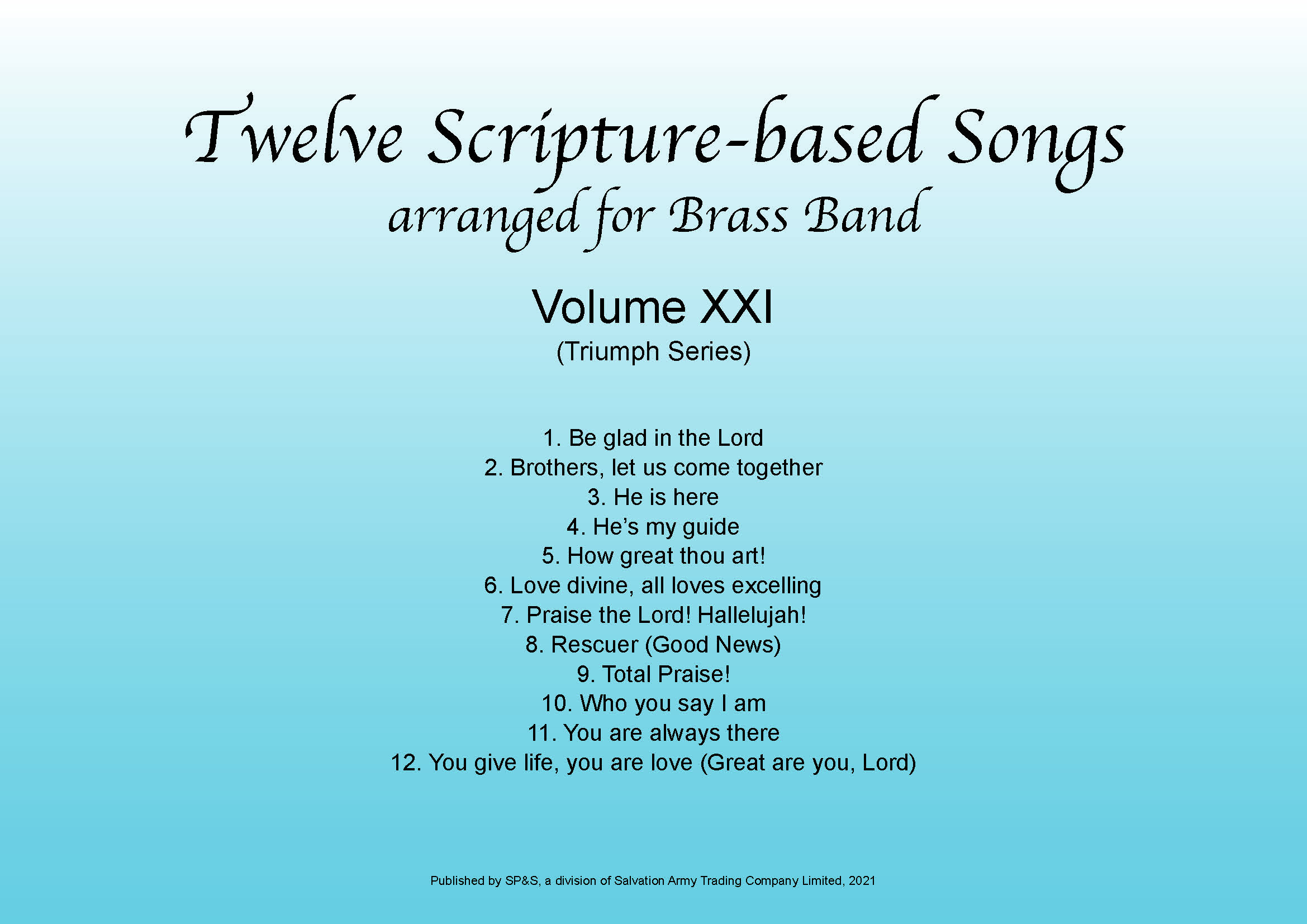
Twelve Scripture-based Songs Volume XXI
Twelve scripture-Based Songs arranged for Brass Band (Volume XXI) are packaged and marketed in complete sets which include a full score and a set of master parts. It is intended that these parts be used as 'masters', for the purpose of photocopying a quantity of parts to accommodate the precise instrumentation needs of the band for which this has been purchased. 1. Be glad in the Lord2. Brothers, let us come together3. He is here4. He's my guide5. How great thou art!6. Love divine, all loves excelling7. Praise the Lord! Hallelujah!8. Rescuer (Good News)9. Total Praise!10. Who you say I am11. You are always there12. You give life, you are love (Great are you, Lord)
Estimated dispatch 7-14 working days
-
 £30.00
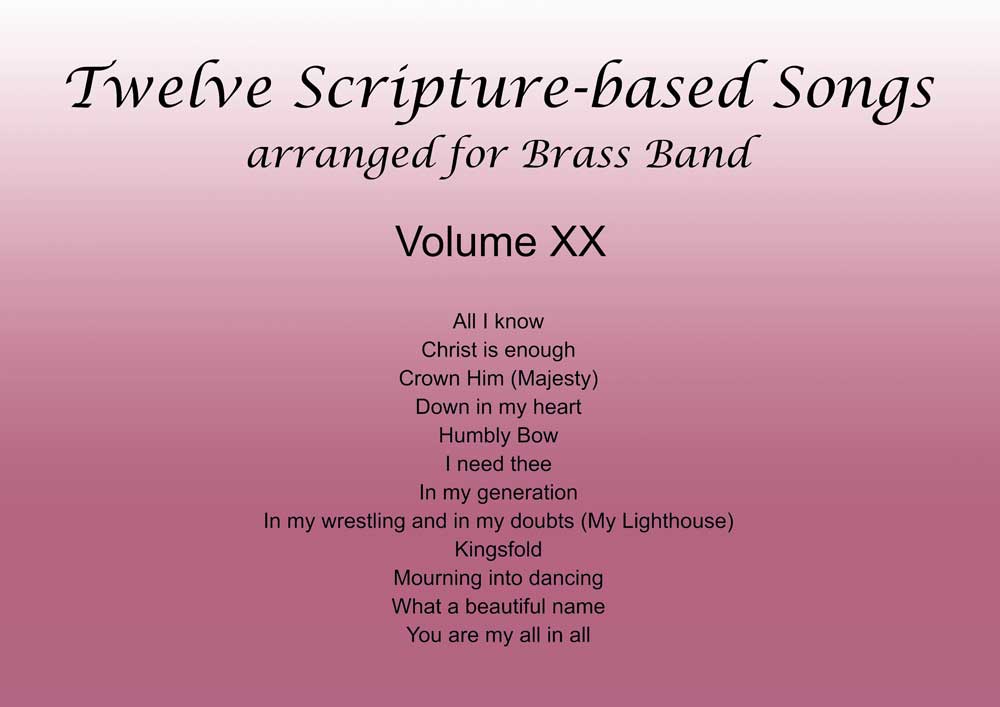
Twelve Scripture-based Songs Volume XX
Twelve scripture-Based Songs arranged for Brass Band (Volume XIX) are packaged and marketed in complete sets which include a full score and a set of master parts. It is intended that these parts be used as 'masters', for the purpose of photocopying a quantity of parts to accommodate the precise instrumentation needs of the band for which this has been purchased.All I knowChrist is enoughCrown Him (Majesty)Down in my heartHumbly BowI need theeIn my generationIn my wrestling and in my doubts (My Lighthouse)KingsfoldMourning into dancingWhat a beautiful nameYou are my all in all
Estimated dispatch 7-14 working days
-
 £30.00
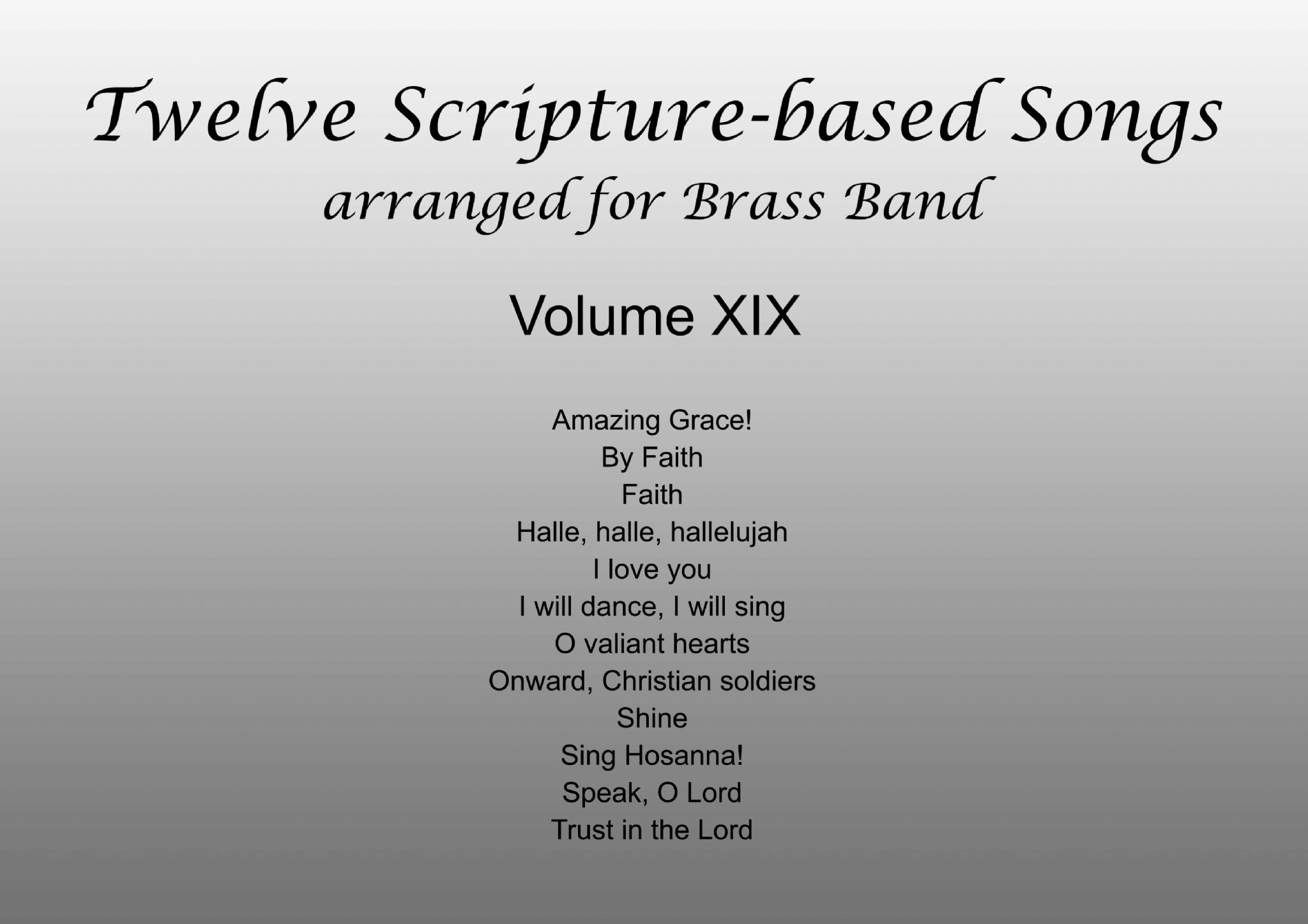
Twelve Scripture-based Songs Volume XIX
Twelve scripture-Based Songs arranged for Brass Band (Volume XIX) are packaged and marketed in complete sets which include a full score and a set of master parts. It is intended that these parts be used as 'masters', for the purpose of photocopying a quantity of parts to accommodate the precise instrumentation needs of the band for which this has been purchased.1. Amazing Grace!2. By Faith3. Faith4. Halle, halle, hallelujah5. I love you6. I will dance, I will sing7. O valiant hearts8. Onward, Christian soldiers9. Shine10. Sing Hosanna!11. Speak, O Lord12. Trust in the Lord
Estimated dispatch 7-14 working days
-
 £30.00
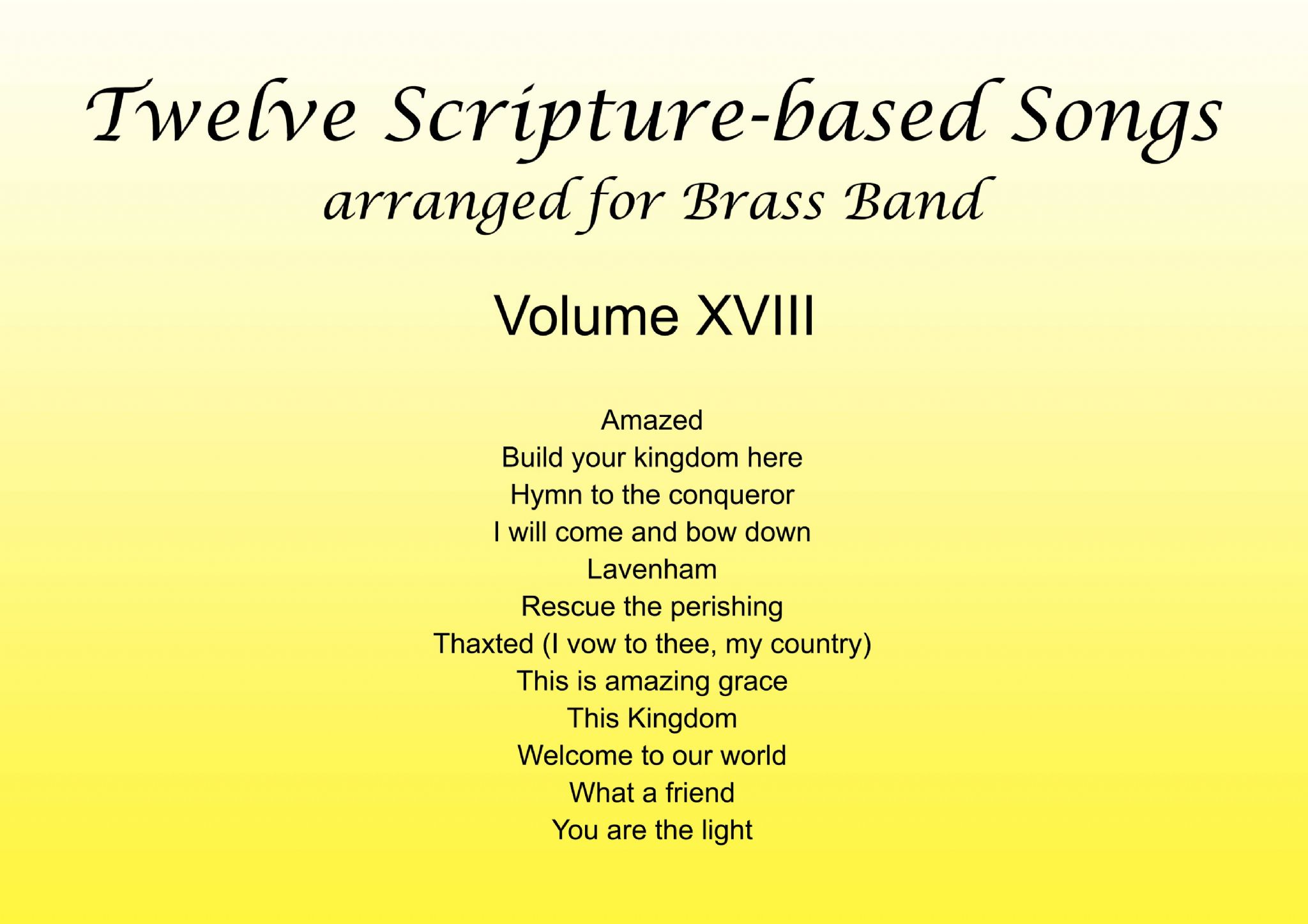
Twelve Scripture-based Songs Volume XVIII
Twelve scripture-Based Songs arranged for Brass Band (Volume XVIII) are packaged and marketed in complete sets which include a full score and a set of master parts. It is intended that these parts be used as 'masters', for the purpose of photocopying a quantity of parts to accommodate the precise instrumentation needs of the band for which this has been purchased.1. Amazed2. Build your kingdom here3. Hymn to the conqueror4. I will come and bow down5. Lavenham6. Rescue the perishing7. Thaxted (I vow to thee, my country)8. This is amazing grace9. This Kingdom10. Welcome to our world11. What a friend12. You are the light
Estimated dispatch 7-14 working days
-
 £30.00
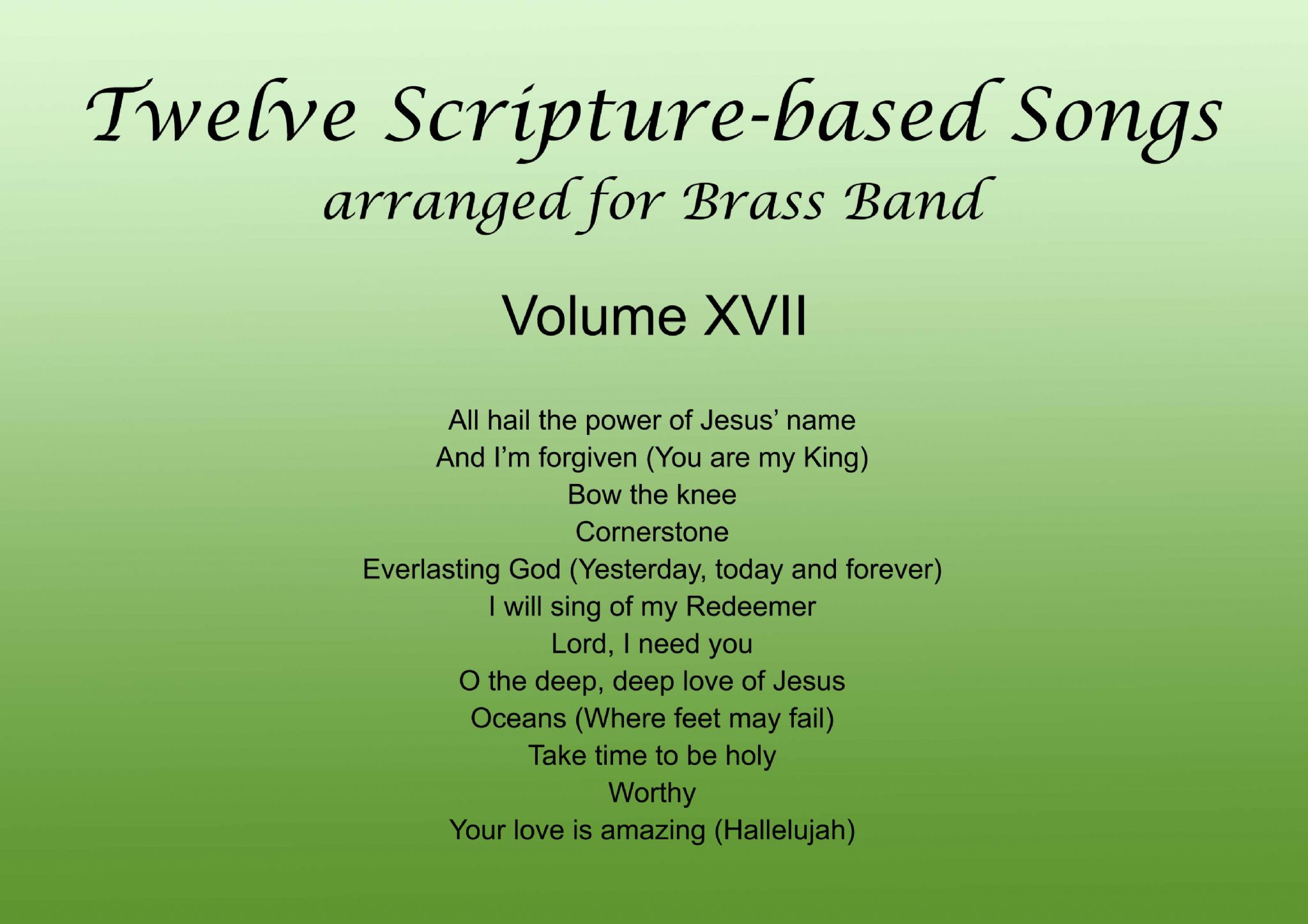
Twelve Scripture-based Songs Volume XVII
Twelve scripture-Based Songs arranged for Brass Band (Volume XVII) are packaged and marketed in complete sets which include a full score and a set of master parts. It is intended that these parts be used as 'masters', for the purpose of photocopying a quantity of parts to accommodate the precise instrumentation needs of the band for which this has been purchased.All hail the power of Jesus' nameAnd I'm forgiven (You are my King)Bow the kneeCornerstoneEverlasting God (Yesterday, today and forever)I will sing of my RedeemerLord, I need youO the deep, deep love of JesusOceans (Where feet may fail)Take time to be holyWorthyYour love is amazing (Hallelujah)
Estimated dispatch 7-14 working days
-
 £30.00
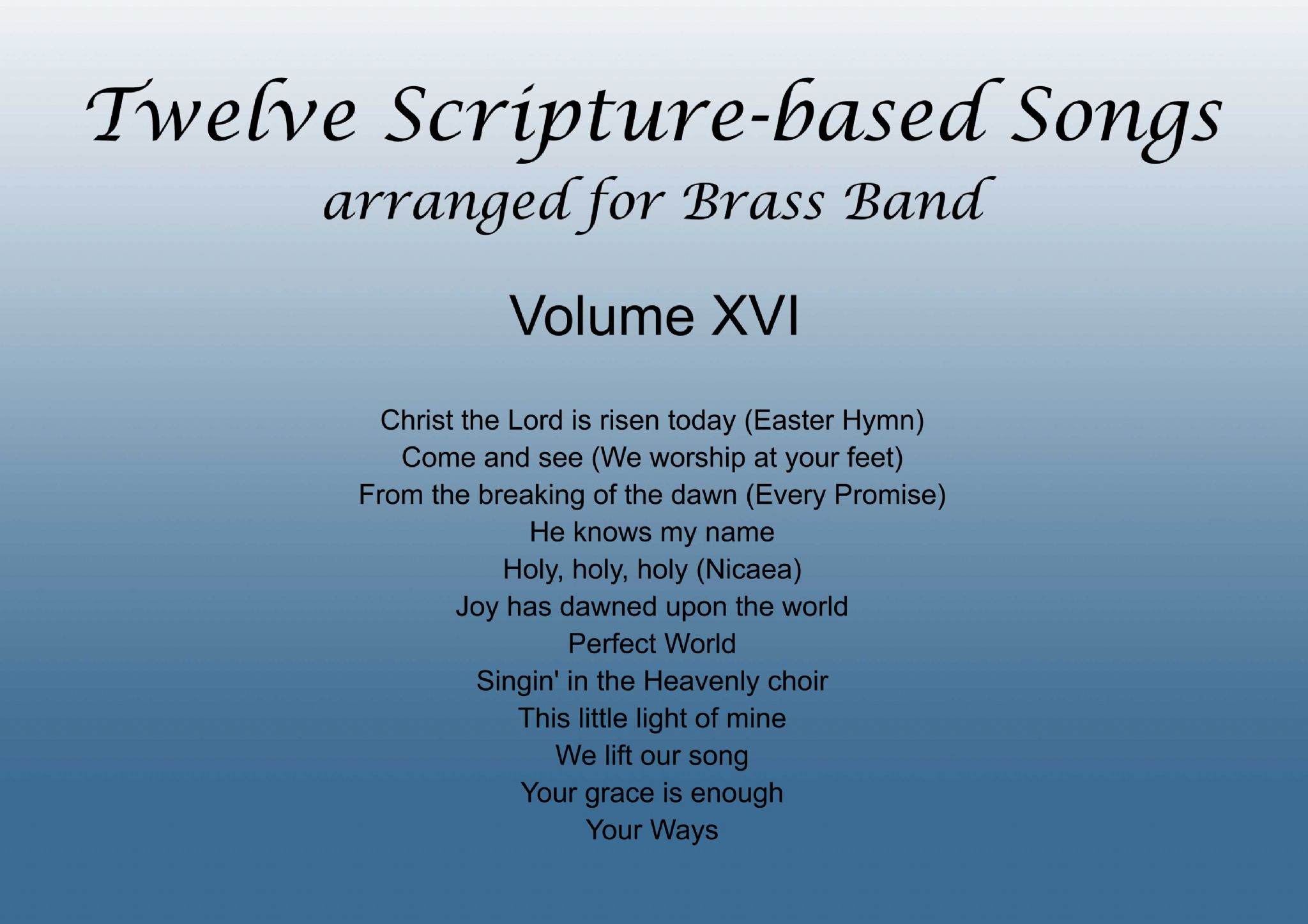
Twelve Scripture-based Songs Volume XVI
Twelve scripture-Based Songs arranged for Brass Band (Volume XVI) are packaged and marketed in complete sets which include a full score and a set of master parts. It is intended that these parts be used as 'masters', for the purpose of photocopying a quantity of parts to accommodate the precise instrumentation needs of the band for which this has been purchased.Christ the Lord is risen today (Easter Hymn)Come and see (We worship at your feet)From the breaking of the dawn (Every Promise)He knows my nameHoly, holy, holy (Nicaea)Joy has dawned upon the worldPerfect WorldSingin' in the Heavenly choirThis little light of mineWe lift our songYour grace is enoughYour Ways
Estimated dispatch 7-14 working days
-
 £30.00
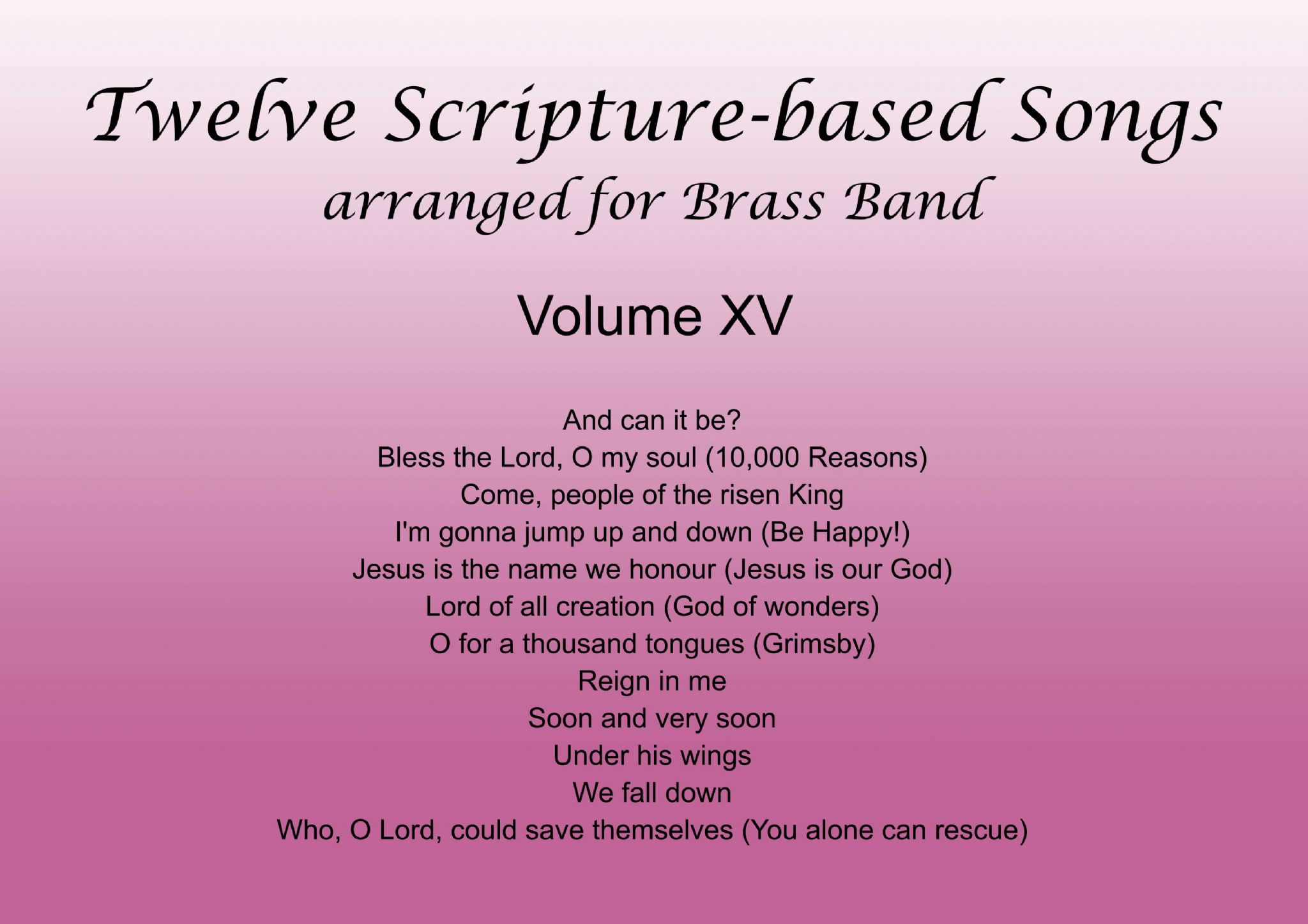
Twelve Scripture-based Songs Volume XV
Twelve scripture-Based Songs arranged for Brass Band (Volume XV) are packaged and marketed in complete sets which include a full score and a set of master parts. It is intended that these parts be used as 'masters', for the purpose of photocopying a quantity of parts to accommodate the precise instrumentation needs of the band for which this has been purchased.And can it be?Bless the Lord, O my soul (10,000 Reasons)Come, people of the risen KingI'm gonna jump up and down (Be Happy!)Jesus is the name we honour (Jesus is our God)Lord of all creation (God of wonders)O for a thousand tongues (Grimsby)Reign in meSoon and very soonUnder his wingsWe fall downWho, O Lord, could save themselves (You alone can rescue)
Estimated dispatch 7-14 working days