
Results
-
 £15.00
Harrison's Dream (Brass Band - Study Score) - Graham, Peter
At 8.00pm on the 22nd of October 1707, the Association, flagship of the Royal Navy, struck rocks off the Scilly Isles with the loss of the entire crew. Throughout the rest of the evening the remaining three ships in the fleet suffered the same fate. Only 26 of the original 1,647 crew members survived. This disaster was a direct result of an inability to calculate longitude, the most pressing scientific problem of the time. It pushed the longitude question to the forefront of the national consciousness and precipitated the Longitude Act. Parliament funded a prize of �20,000 to anyone whose method or device would solve the dilemma.For carpenter and self-taught clockmaker John Harrison, this was the beginning of a 40 year obsession. To calculate longitude it is necessary to know the time aboard ship and at the home port or place of known longitude, at precisely the same moment. Harrison's dream was to build a clock so accurate that this calculation could be made, an audacious feat of engineering.This work reflects on aspects of this epic tale, brilliantly brought to life in Dava Sobel's book Longitude. Much of the music is mechanistic in tone and is constructed along precise mathematical and metrical lines. The heart of the work however is human - the attraction of the �20,000 prize is often cited as Harrison's motivation. However, the realisation that countless lives depended on a solution was one which haunted Harrison. The emotional core of the music reflects on this, and in particular the evening of 22ndOctober 1707.- Peter GrahamJuly 2000 Recorded on Polyphonic QPRL219D Master Brass (Volume Fifteen). Duration: 14'30"
Estimated dispatch 7-14 working days
-
 £119.95
Harrison's Dream (Brass Band - Score and Parts) - Graham, Peter
At 8.00pm on the 22nd of October 1707, the Association, flagship of the Royal Navy, struck rocks off the Scilly Isles with the loss of the entire crew. Throughout the rest of the evening the remaining three ships in the fleet suffered the same fate. Only 26 of the original 1,647 crew members survived. This disaster was a direct result of an inability to calculate longitude, the most pressing scientific problem of the time. It pushed the longitude question to the forefront of the national consciousness and precipitated the Longitude Act. Parliament funded a prize of �20,000 to anyone whose method or device would solve the dilemma.For carpenter and self-taught clockmaker John Harrison, this was the beginning of a 40 year obsession. To calculate longitude it is necessary to know the time aboard ship and at the home port or place of known longitude, at precisely the same moment. Harrison's dream was to build a clock so accurate that this calculation could be made, an audacious feat of engineering.This work reflects on aspects of this epic tale, brilliantly brought to life in Dava Sobel's book Longitude. Much of the music is mechanistic in tone and is constructed along precise mathematical and metrical lines. The heart of the work however is human - the attraction of the �20,000 prize is often cited as Harrison's motivation. However, the realisation that countless lives depended on a solution was one which haunted Harrison. The emotional core of the music reflects on this, and in particular the evening of 22ndOctober 1707.- Peter GrahamJuly 2000 Recorded on Polyphonic QPRL219D Master Brass (Volume Fifteen). Duration: 14'30"
Estimated dispatch 7-14 working days
-
£44.95
Harrison's Dream (Brass Band - Score only) - Graham, Peter
At 8.00pm on the 22nd of October 1707, the Association, flagship of the Royal Navy, struck rocks off the Scilly Isles with the loss of the entire crew. Throughout the rest of the evening the remaining three ships in the fleet suffered the same fate. Only 26 of the original 1,647 crew members survived. This disaster was a direct result of an inability to calculate longitude, the most pressing scientific problem of the time. It pushed the longitude question to the forefront of the national consciousness and precipitated the Longitude Act. Parliament funded a prize of �20,000 to anyone whose method or device would solve the dilemma.For carpenter and self-taught clockmaker John Harrison, this was the beginning of a 40 year obsession. To calculate longitude it is necessary to know the time aboard ship and at the home port or place of known longitude, at precisely the same moment. Harrison's dream was to build a clock so accurate that this calculation could be made, an audacious feat of engineering.This work reflects on aspects of this epic tale, brilliantly brought to life in Dava Sobel's book Longitude. Much of the music is mechanistic in tone and is constructed along precise mathematical and metrical lines. The heart of the work however is human - the attraction of the �20,000 prize is often cited as Harrison's motivation. However, the realisation that countless lives depended on a solution was one which haunted Harrison. The emotional core of the music reflects on this, and in particular the evening of 22ndOctober 1707.- Peter GrahamJuly 2000 Recorded on Polyphonic QPRL219D Master Brass (Volume Fifteen). Duration: 14'30"
Estimated dispatch 7-14 working days
-
 £84.95
In League with Extraordinary Gentlemen (Euphonium Solo with Brass Band - Score and Parts) - Graham, Peter
Concerto for EuphoniumIn League with Extraordinary Gentlemen combines two of composer Peter Graham's life interests - composition and 19th century popular fiction. Each of the concerto's three movements takes its musical inspiration from extraordinary characters who have transcended the original genre and have subsequently found mass audiences through film, television and comic book adaptations.The first movement follows a traditional sonata form outline with one slight modification. The order of themes in the recapitulation is reversed, mirroring a plot climax in the H.G. Wells novella The Time Machine (where the protagonist, known only as The Time Traveller, puts his machine into reverse bringing the story back full circle).The Adventure of the Final Problem is the title of a short story published in The Memoirs of Sherlock Holmes by Arthur Conan Doyle. This is an account of the great detective's final struggle with his long-time adversary Professor Moriarty at the Reichenbach Falls in Switzerland. The music takes the form of a slowed down lndler (a Swiss/Austrian folk dance) and various acoustic and electronic echo effects call to mind the alpine landscape. The final bars pose a question paralleling that of Conan Doyle in the story - have we really seen the last of Sherlock Holmes?The final movement, The Great Race, (available separately) follows Phileas Fogg on the last stage of his epic journey "Around the World in Eighty Days" (from the novel by Jules Verne). The moto perpetuo nature of the music gives full rein to the soloist's technical virtuosity. As the work draws to a conclusion, the frantic scramble by Fogg to meet his deadline at the Reform Club in Pall Mall, London, is echoed by the soloist's increasingly demanding ascending figuration, set against the background of Big Ben clock chimes.In League with Extraordinary Gentlemen was first performed in the brass band version by David Thornton and the Black Dyke Band, conductor Nicholas Childs, at the RNCM Concert Hall Manchester on January 30, 2009.
Estimated dispatch 7-14 working days
-
 £29.95
Ben-Hur 1925 (Brass Band - A4 Study Score) - Graham, Peter
Lew Wallace's Ben-Hur: A Tale of the Christ has inspired numerous adaptations for film, television and radio, each distilling the vast eight-part novel while preserving its enduring themes of compassion and forgiveness.Using the 1925 silent film as a starting point, I have reimagined the story as Ben-Hur, late in life, looks back on its defining moments, his memories coming alive before him.Part I: Ben-Hur's life unfolds in epic flashes: from Rome's splendour and tyranny to the haunting strains of Veni, Veni Emmanuel hinting at Christ's coming; a family betrayed, the galleys, heroic battles, and a chariot triumph--yet even victory offers no peace.Part II: Ben-Hur is torn by inner turmoil as he discovers his suffering family. In desperation he turns to Christ whose message of compassion and forgiveness transforms him, his thirst for vengeance giving way to healing and reconciliation.The work also acknowledges the profound infuence of Eric Ball, whose biblical tone poems -- including King of Kings (1931) and Exodus (1937) -- helped shape the brass band repertoire of their time.The hymn Veni, Veni Emmanuel, symbolising the parallel narrative of Christ within this story, was likewise central to Ball's epic The Kingdom Triumphant.The work concludes with the well-known Dresden Amen, also heard in the closing bars of The Kingdom Triumphant.Ben-Hur 1925 was commissioned by The Whitburn Band, MD Nicholas Childs, and is dedicated to the memory of Derek Smith.
Estimated dispatch 7-14 working days
-
 £44.95
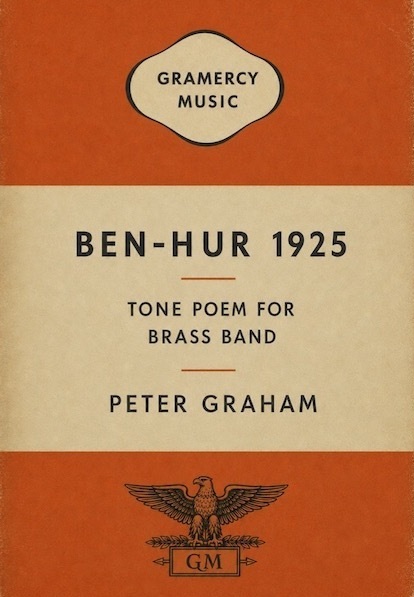
Ben-Hur 1925 (Brass Band - B4 Score only) - Graham, Peter
Lew Wallace's Ben-Hur: A Tale of the Christ has inspired numerous adaptations for film, television and radio, each distilling the vast eight-part novel while preserving its enduring themes of compassion and forgiveness.Using the 1925 silent film as a starting point, I have reimagined the story as Ben-Hur, late in life, looks back on its defining moments, his memories coming alive before him.Part I: Ben-Hur's life unfolds in epic flashes: from Rome's splendour and tyranny to the haunting strains of Veni, Veni Emmanuel hinting at Christ's coming; a family betrayed, the galleys, heroic battles, and a chariot triumph--yet even victory offers no peace.Part II: Ben-Hur is torn by inner turmoil as he discovers his suffering family. In desperation he turns to Christ whose message of compassion and forgiveness transforms him, his thirst for vengeance giving way to healing and reconciliation.The work also acknowledges the profound infuence of Eric Ball, whose biblical tone poems -- including King of Kings (1931) and Exodus (1937) -- helped shape the brass band repertoire of their time.The hymn Veni, Veni Emmanuel, symbolising the parallel narrative of Christ within this story, was likewise central to Ball's epic The Kingdom Triumphant.The work concludes with the well-known Dresden Amen, also heard in the closing bars of The Kingdom Triumphant.Ben-Hur 1925 was commissioned by The Whitburn Band, MD Nicholas Childs, and is dedicated to the memory of Derek Smith.
Estimated dispatch 7-14 working days
-
 £144.95
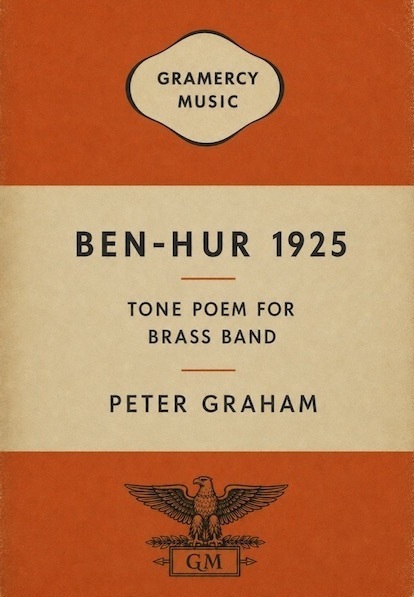
Ben-Hur 1925 (Brass Band - Score and Parts) - Graham, Peter
Lew Wallace's Ben-Hur: A Tale of the Christ has inspired numerous adaptations for film, television and radio, each distilling the vast eight-part novel while preserving its enduring themes of compassion and forgiveness.Using the 1925 silent film as a starting point, I have reimagined the story as Ben-Hur, late in life, looks back on its defining moments, his memories coming alive before him.Part I: Ben-Hur's life unfolds in epic flashes: from Rome's splendour and tyranny to the haunting strains of Veni, Veni Emmanuel hinting at Christ's coming; a family betrayed, the galleys, heroic battles, and a chariot triumph--yet even victory offers no peace.Part II: Ben-Hur is torn by inner turmoil as he discovers his suffering family. In desperation he turns to Christ whose message of compassion and forgiveness transforms him, his thirst for vengeance giving way to healing and reconciliation.The work also acknowledges the profound infuence of Eric Ball, whose biblical tone poems -- including King of Kings (1931) and Exodus (1937) -- helped shape the brass band repertoire of their time.The hymn Veni, Veni Emmanuel, symbolising the parallel narrative of Christ within this story, was likewise central to Ball's epic The Kingdom Triumphant.The work concludes with the well-known Dresden Amen, also heard in the closing bars of The Kingdom Triumphant.Ben-Hur 1925 was commissioned by The Whitburn Band, MD Nicholas Childs, and is dedicated to the memory of Derek Smith.
Estimated dispatch 7-14 working days
 View Music