
Results
-
£105.00
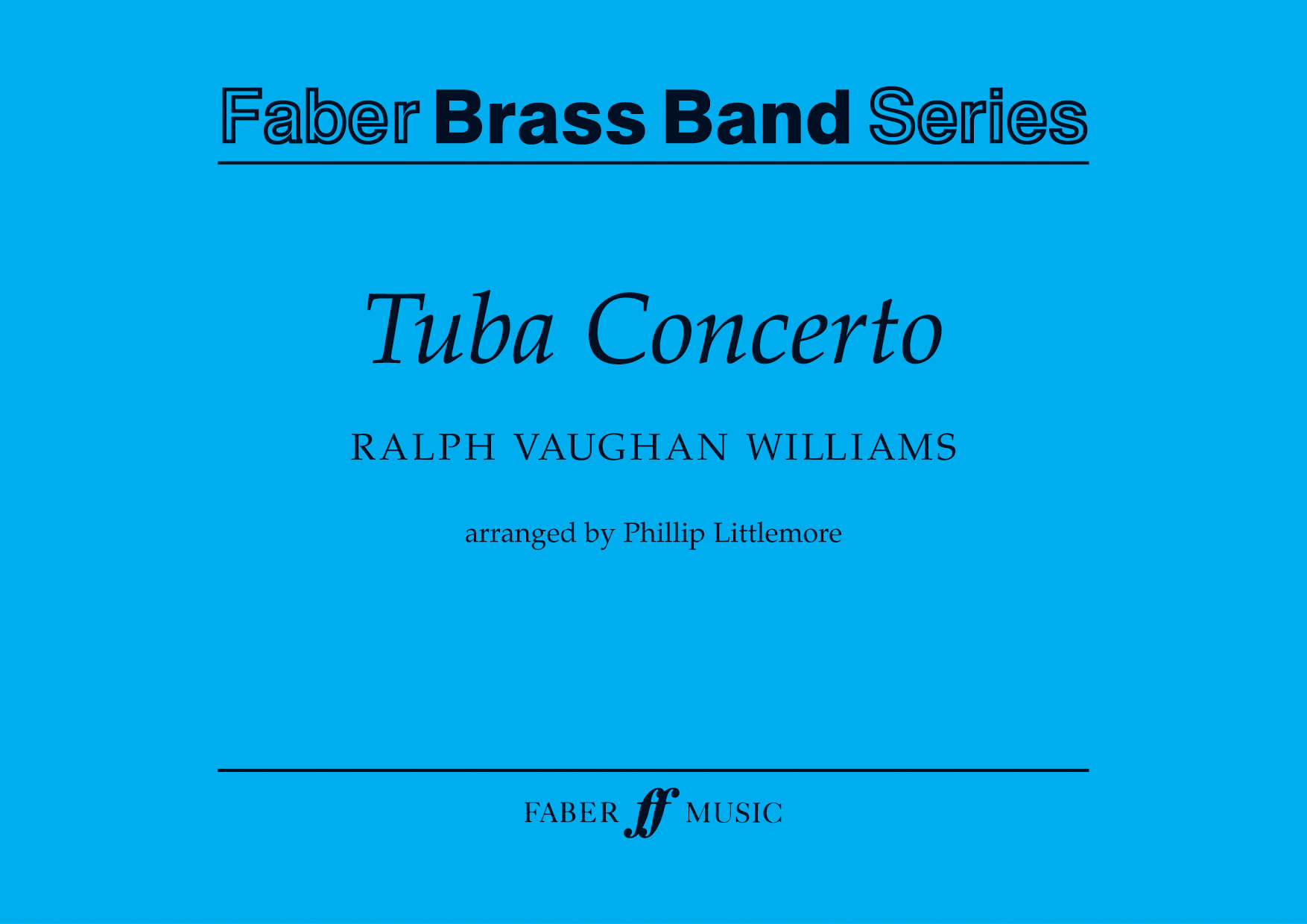
Tuba Concerto - Ralph Vaughan Williams
Ralph Vaughan Williams' Tuba Concerto was written in 1953/4 in response to an invitation to compose a work for the Golden Jubilee of the London Symphony Orchestra. Vaughan Williams was by then in his eighty-second year. The lively, outer movements both conclude with extended cadenzas, while the beautifully lyrical Romanza is Vaughan Williams at his best. Phillip Littlemore's brass band arrangement is a welcome addition to the brass band repertoire.Brass Band Grade 6: ChampionshipDuration: 15 minutes
In Stock: Estimated dispatch 1-3 working days
-
 £29.95
Tireless Flame, The - Jonathan Bates
DIFFICULTY: 1st+. DURATION: 6'00". Commissioned by the Reg Vardy Brass Band for their 2019 appearance at the Brass in Concert Championships, held at The Sage in. Gateshead, 'The Tireless Flame' is an energetic and driven concert finisher inspired by the idea of a fire burning at different velocities. but never truly going out. The outer 2 sections are the work are in a minimalist style using effects typical of the style such as phasing. and development throughout, whilst the central section is almost hymn like in nature, showcasing the band's ability to control the . extremes of dynamics. .
In Stock: Estimated dispatch 1-3 working days
-
 £34.95
Sirocco - Darrol Barry
Published posthumously, Sirocco is a lively duet for Flugel Horn and Tenor Horn. Cast in ternary form, and consisting of rhythmic Brioso outer sections and a contrasting bluesy central section, the piece takes its name from the Mediterranean wind that...
Estimated dispatch 5-7 working days
-
£34.95
FLOURISH (Trumpet Solo wth Brass Band Set) - Paul Sharman
This solo was written for Philip Cobb and takes its inspiration from Virtuosity, a trumpet solo by Kenny Baker. The song Hand me down my silver trumpet is referred to in the two outer sections while the laid-back, jazzy central section features the song When the roll is called up yonder. The reason for including this song is the first line of the first verse which reads When the trumpet of the Lord shall sound.
Estimated dispatch 7-14 working days
-
£35.00
Sentinel - Peter Meechan
Sentinel was written in the summer of 2010 and follows on from another work by the composer, The Karman Line - a piece which describes the point where the earthas atmosphere ends and Outer Space begins.Sentinel goes further into space and takes the idea that the stars are somehow guardians of the sky that we can see, and Space further beyond.The opening section, which prominently features metallic percussion and broad melodies, portrays the grand open space that the stars inhabit. The middle, slower, section is more reflective depicting the isolation of Space, before we hear a reprise of the first section as the finale.Sentinel was written for the 2011 National Youth Brass Band Championships of Great Britain.
Estimated dispatch 12-14 working days
-
 £35.00
Ascension - Lucy Pankhurst
A major work written for the RNCM Brass Festival Competition 2005, and inspired by the nature of Ascension - creating a Musical depiction of the spiritual journey towards enlightenment, sanctuary and ultimate inner peace.As aninitial muse for this work, the 'Tibetan Singing Bowl' is utilised with the Brass Band in order to represent this path to Serenity, together withBaoding Balls(Chinese Health Balls) to mark the point of Final Ascension.Programme notes from the composer, Lucy Pankhurst:Ascension is a Musical depiction of the Spiritual Journey towards enlightenment, sanctuary and ultimate inner peace.As my initial muse for this work, the Singing Bowl is utilised with the Brass Band in order to represent this path to Serenity. "Tibetan" Singing Bowls date back to the 8th Century A.D., originating in the pre-Buddhist shamanic Bon Po culture in the Himalayas and are still used in modern Monasteries. The original purpose of them still remains a mystery, with accounts stating that it is forbidden to disclose the true function of the Bowls, as the "secrets of sound" yield so much Power, that they must be kept hidden.Listening to the tones created by the Singing Bowl effectively silences the internal dialogue of the listener, making it an excellent tool for Meditation, Centering and entering trance-like states. In Buddhism, as with many cultures, sound is an important part of Spiritual Practice. There are 9 methods to reach Enlightenment in the Buddhist Doctrine ; the seventh is SOUND.These Bowls are used by Healers in a similar way to help balance the body's residual energies. The Bowls are usually made from seven different sacred metals, intended to correlate directly to the seven sacred "Planets" : GOLD (Sun), SILVER (Moon), MERCURY (Mercury), COPPER (Venus), IRON (Mars), TIN (Jupiter), ANTIMONY (Saturn). Any one Bowl can create up to seven different frequencies (tones) simultaneously. In Healing, the Singing Bowl is played whilst balanced on the palm of the hand, struck three times to stabilise the surrounding energies, before rotating the wooden "beater" around the outer circumference of the Bowl to create the "singing" effect.I have included an optional Vibraphone part (to be played with a Double Bass Bow) with Tubular Bells, to be used only in performances where a Singing Bowl cannot be acquired. However, a traditional Bowl should be used whenever possible, to create this specific and unique sound.Baoding Balls or Chinese Health Balls are also utilised in this work. Their appearance in the Music here, however, is to mark the point of Final Ascension, where the music reaches its ultimate goal. These delicate cloisonne iron Balls are said to stimulate the acupressure points on the hand, thus improving the Chi and Energy Paths (Life Force) throughout the entire body. The delicate "tinkle" produced by these spheres is hypnotic and captivating. For this reason, where no Baoding Balls are obtainable for performance, only delicate metallic percussion should be used in replacement (i.e. Crotales, Antique Cymbals or (liberal) single strikes on a Triangle etc.). Bell Trees, Wind Chimes and Cow Bells should not be used.As in many cultures, the number three is important in Ascension, as it represents not only the purification from the Singing Bowl, but also it is a number of confirmation, reiterated throughout the music in the metallic percussion in addition to the Brass, re-affirming the correct path to Enlightenment.
In Stock: Estimated dispatch 3-5 working days
-
 £40.00
Concerto for Trombone (with brass band) - Andrew Duncan
Andrew Duncan composed this extraordinary solo for trombone with brass band accompaniment for his friend and trombone virtuoso, Andrew Berryman.This piece is a true showcase for the soloist across three movements - Allegro, Lullaby and Rondo.The outer movements demonstrate the technical skill of the soloist, whilst the slow movement (Lullaby) displays the beautiful lyrical style of the Trombone.Look and Listen (courtesy of Thomas Callaux and Brassage Brass Band):Discography: Concerto for Trombone has been recorded byAndrew Berryman (English Landscapes)Brett Baker (Bakers Dozen)Jacques Mauger (Reflections of Freedom)Concerto for Trombone is suitable for advanced trombone players and is also available with piano accompaniment.
In Stock: Estimated dispatch 3-5 working days
-
 £36.30
Rhapsody - Tim Paton
Composer, Tim Paton comments: Rhapsody began life in 1971, as Rhapsody in three movements. It was originally written for wind and brass octet with timpani, and was performed at the Royal Manchester College of Music (soon to become the RNCM) in 1972.Ten years later, it was expanded into a piece for wind band. In 22, I decided to make another major revision, and create a lower section test piece for brass band. I removed the middle movement, and published it as a "Romance" for brass band. I composed a link between what had initially been the outer movements, and renamed the piece Rhapsody".The link is inspired by the minimalist music of Philip Glass. In the lead up to the grand finale of the Rhapsody, I have used an accompanyingmotif/obligato which is directly inspired by a passage in the final movement of Janacek's "Sinfonietta".
In Stock: Estimated dispatch 3-5 working days
-
 £42.00
Concerto 1945 (Score only) - Philip WIlby
At a time when we are being encouraged to survey the recent past, its title aims to catch a flavour of that spirit of optimistic vision which coloured the British psyche at the end of the Second War, at once heroic, elegiac, and confident. The concerto's three movements are arranged in a circular pattern around a reflective slow movement. At the heart of that movement is a Cadenza, marked to be played off-stage, where the soloist is surrounded and supported by an additional group of fanfare players. By contrast, the outer movements are energetic and brisk, at times heroic, and at times virtuosic. Also available with piano accompaniment.
Estimated dispatch 7-9 working days
-
 £54.00
Concerto 1945 (Parts only) - Philip WIlby
At a time when we are being encouraged to survey the recent past, its title aims to catch a flavour of that spirit of optimistic vision which coloured the British psyche at the end of the Second War, at once heroic, elegiac, and confident. The concerto's three movements are arranged in a circular pattern around a reflective slow movement. At the heart of that movement is a Cadenza, marked to be played off-stage, where the soloist is surrounded and supported by an additional group of fanfare players. By contrast, the outer movements are energetic and brisk, at times heroic, and at times virtuosic. Also available with piano accompaniment.
Estimated dispatch 7-9 working days
 View Music