
Results
-
 £109.99
Nordic Moods - Tom Brevik
The composer:1st movement: Reflections by the Fjord.Overlooking one of the mighty fjords of Norway, my mind and thoughts are with an old religious Norwegian folk-tune, with words by the famous parson Peter Dass.The majestic fanfare-likeopening reflects the power of God our Father, the choral itself heard for the first time on flugelhorn. The choral is repeated a few times, separated only by some short variations. The movement ends in thriumph, with fanfares and the choral broughttogether.2nd movement: Reflections in the Old Church.In this movement my associations of a summer day, finding myself alone in an old deserted stone church. From the old walls I hear folk songs, perhaps like the ones sung in the church bypoor fishermen and farmers in days gone by. Suddenly the light from the sun breakes through the small circular window above the altar, and a lovely melody is heard, before the original figures take us to the end of the movement.3rd movement:Festive Reflections.Any festive occasion can be reflected in this movement. from the bonfire at midsummer-night to the children celebrating the return of the sun in the northern part of Norway. from the traditional sleigh-riding at Christmas tothe Celebrations of the National Day on the 17th of May each year.
Estimated dispatch 5-14 working days
-
 £54.95
Sonata - Derek Bourgeois
This work, composed in 1998, was commissioned by the American trombonist Don Lucas as a work for trombone and piano and first performed by him in Birmingham on 19th May 2000. Subsequently, I arranged the music for both solo trombone and brass band and solo trombone and wind band so that it now exists in three formats. The first movement, in B flat major, is brisk and energetic, and is cast in sonata form. The second subject is gentler and more lyrical. The second movement, a scherzo in C major, is the most complex of the four. Basically the structure is a rond. For a long time the music remains in the opening 5/8 time until a new theme introduces more broken rhythms in a more jazzy idiom. After a return of the opening theme the following episode is more tonally ambiguous. Finally, the main theme returns to round off the movement. The third movement, a lyrical adagio, is really one long extended melodic flow. The harmonies are lush and the textures simple and direct. The tonal center is A minor, but the music meanders through so many keys, that this key centre is heavily disguised. The finale is a fiery affair. G minor is really its home key, but throughout the movement the music moves about a lot and the second subject is first heard in A flat minor. The movement's underlying sonata structure is masked not only by its loose tonality but also by its frequently changing time signatures. Like the first movement the second subject is more lyrical in nature and for a while it seems that the music will end peacefully, but a final flurry heralds a triple forte unison on the home note of the first movement - B flat. Derek Bourgeois
Estimated dispatch 5-14 working days
-
 £104.99
Cambridgeshire Impressions - Rieks van der Velde
In a four-part composition Rieks van der Velde takes us to the richly varied area surrounding the university city of Cambridge. The Dutch composer was especially inspired by the atmosphere of Cambridgeshire, the county which lies north ofLondon. 1. The Journey. Although on arrival the area looks peaceful and friendly, the ruggedness of its inhabitants and landscape have an unmistakable influence on the music. In the course of the tour, which starts with an Allegromovement, we are shown the vitality, energy and freshness of the Cambridgeshire countryside. Short themes, swift and sudden motifs and rhythmical patterns supported by the drive of percussion instruments give expression to this image. Thefirst part is concluded by two Calmo movements in which the music expresses how the cathedral in the city of Ely comes into sight and is gradually approached. 2. Visit to Ely Cathedral. The famous Norman cathedral church of Ely, whichwas built in 1109, has attracted tourists from all over the world apart from being a place of worship and heritage site. A cornet solo introduces the contemplative mood of the composition at this point. The mystical atmosphere of thecathedral runs through this lyrical part like a continuous thread. 3. The Pub. The thirst caused by this intensive journey makes a visit to the local pub a definite must. These "public houses", which may be open until the earlyhours of the morning, offer all kinds of entertainment. Drinks are served liberally and the atmosphere is lively. 4. The Journey Back. Time has flown: In other words, the moment of departure has come sooner than one would havewished. In a flashback which recaptures elements of the first part of the composition we say goodbye to Cambridgeshire in a fitting manner. Two scintillating final measures bring us abruptly back to the present.
Estimated dispatch 5-14 working days
-
 £115.60
Dream a Little Dream of Me - Gus Kahn - Reid Gilje
This song was written in 1931 by Fabian Andre and Wilbur Schwandt with lyrics by Gus Kahn. It's now one of the most popular songs from the Great American Songbook and it's also recorded in many versions. Ella Fitzgerald, Louis Armstrong and Nat King Cole are among the most famous ones that have recorded it. In later years singers like Michael Buble, Diana Krall land Robin Williams have all recorded "Dream a Little Dream of Me". This arrangement is inspired by the version by American band Chicago from their 1995 album release "Night & Day".
Estimated dispatch 5-14 working days
-
 £119.50
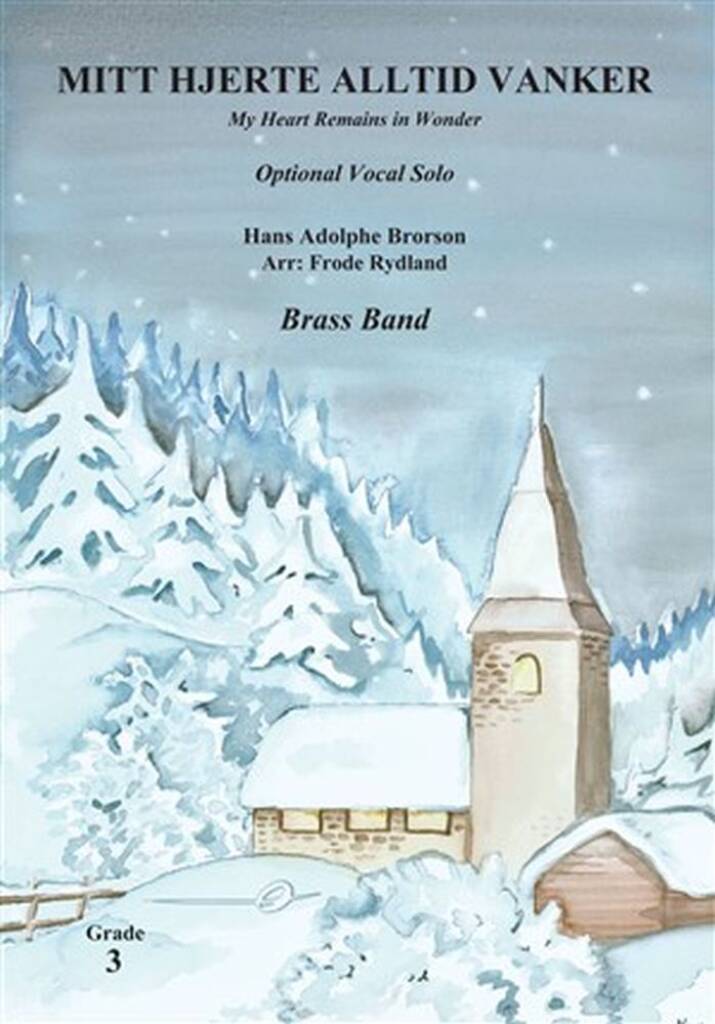
Mitt hjerte alltid vanker - Hans Adolphe Brorson - Frode Rydland
One of the world's most famous Christmas songs was composed by the Dane Hans Adolph Brorson, who was primarily a theologian and bishop, but is also recognized as one of Scandinavia's greatest composers of hymns. "My Heart Remains in Wonder" was first published in 1732.This arrangement was originally written for the Eikanger-Bjorsvik Musikklag with soloist Christine Gulbrandsen for their recording "A Christmas Journey with Eikanger-Bjorsvik."This published version has been adapted so that it can also be performed instrumental. What should be omitted when using a soloist is clearly noted in the score and parts.
Estimated dispatch 5-14 working days
-
 £154.60
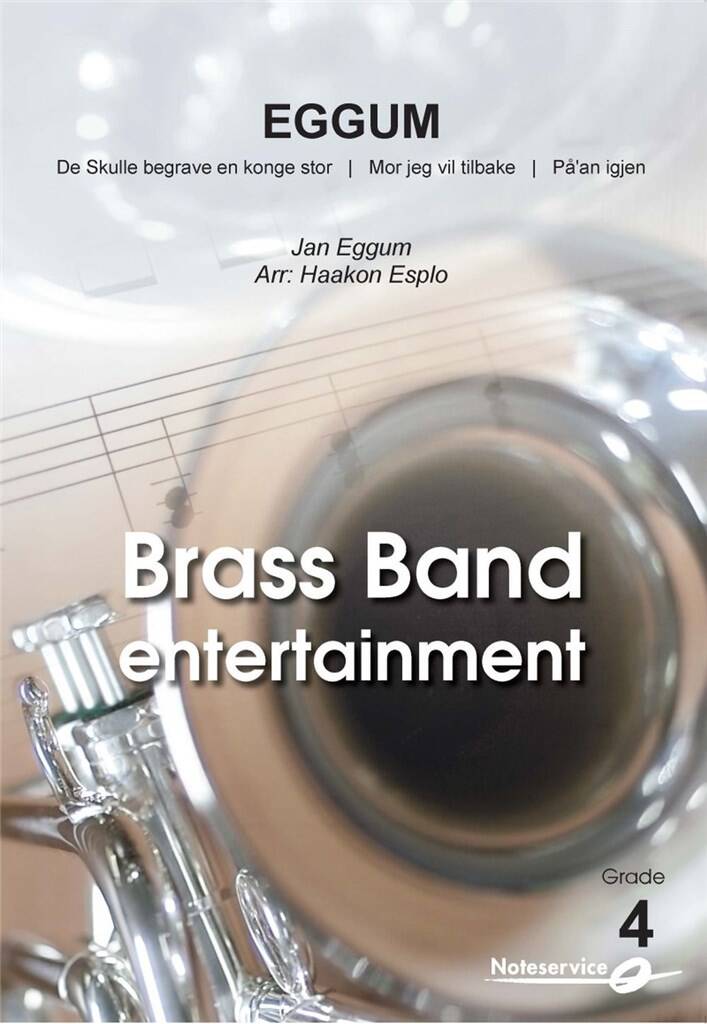
Eggum - Jan Eggum - Haakon Esplo
The Norwegian vocalist, guitarist and songwriter Jan Eggum is regarded as one of our most important musicians in the Norwegian folk art and popular music. He recorded his debut album "Jan Eggum" in 1975 and is since then recognized as a "cheerful melancholic". This medley include three of his best and most famous songs: De skulle begrave en konge stor (1979), Mor jeg vil tilbake (1990) and Pa'an igjen (1997). This arrangement was commissioned by Jernbanens Musikkorps in Oslo with support from NOPA (Norwegian Society of Composers and Lyricists). The durata of this arrangement is approx. 8 minutes. For a shorter version, it's facilliated to omit one orseveral repeats.
Estimated dispatch 5-14 working days
-
 £105.50
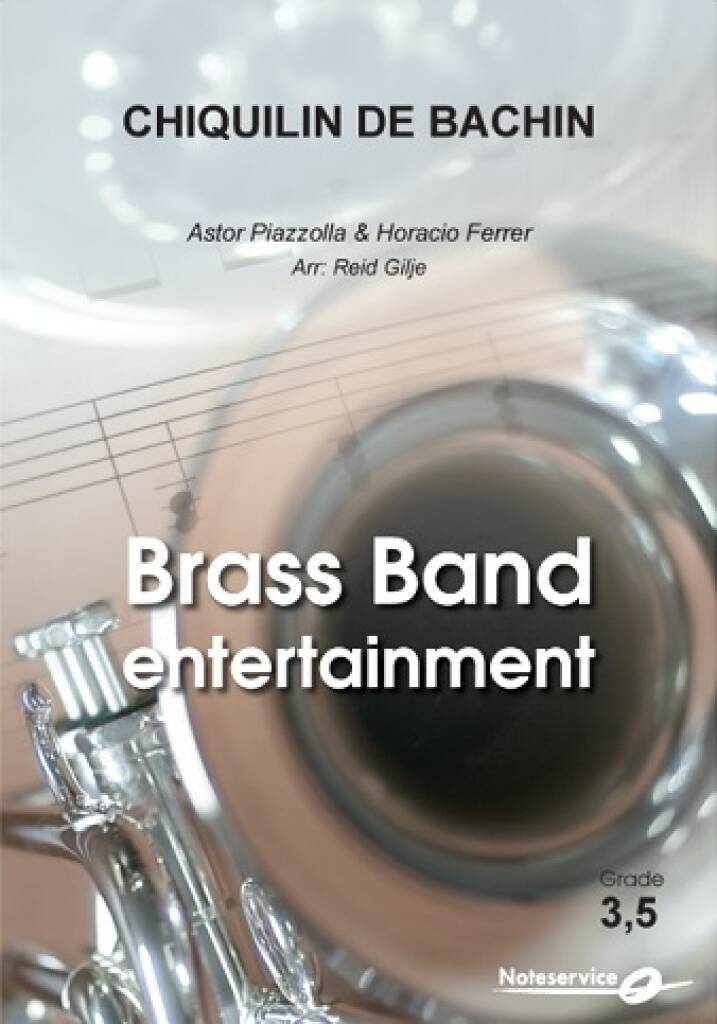
Chiquilin De Bachin - Reid Gilje
This beautiful waltz-tango is written by Astor Piazzolla (music) and Horacio Ferrer (lyrics). Together with "Balada Para Un Loco", this one is the most famous they composed together."Chiquilin de Bachin" ("The little boy at Bachin") is thehistory about a little boy bagging on the cafe Bachin in Buenos Aires. On one of the tables are Piazzolla and Ferrer enjoying their meal together with good friends.The meeting with this little boy became the inspiration for this song. Thethemes of the lyrics are poverty, mourning, yearning and shame. The boy's shame for his own situation and own mother, and our shame because we do not do more for these children.
Estimated dispatch 5-14 working days
-
£89.99
Elegy and March - Torstein Aagaard-Nilsen
Commissioned by the Norwegian Band Federation and Tom Brevik. Composed in 1991. The composer:Elegy and March was one of my first original compositions (no quotations, no folk-tunes) and it was one of my earliest attempts to experiment with form. The elegy-part is quite obvious, but the march is not quite a march. If the elegy-part tells a sad story, then the march should tell a happy story. My problem is that I don?t think life is like that. Result: the march collapses! De liefhebbers van de muziek van de Scandinavier Aagaard-Nilsen kunnen hun hart ophalen bij dit bijzondere werk. In de tweedelige compositie zijn de delen thematisch aan elkaarverwant. De Elegy is een verstild werkje met prachtige klankvelden. Alle instrumenten komen aan bod maar nooit tegelijk. Hoe anders is dat in de mars waarbij ragfijn orkestspel wordt gevraagd. De componist: Elegy and March was een van mijn eerste originele werken (geen citaten, geen volksliedjes) en het was een van mijn eerste pogingen om te experimenteren met vorm. De elegie deel is vrij duidelijk, maar de mars is niet helemaal een mars. Als het elegie-deel een triest verhaal vertelt, dan zou de mars een gelukkig verhaal moeten vertellen. Mijn idee is dat dat in het echte leven ook niet zo is. Resultaat: de mars stort totaal in!Weer iets totaal anders van de Noorse meester!
Estimated dispatch 5-14 working days
-
 £127.30
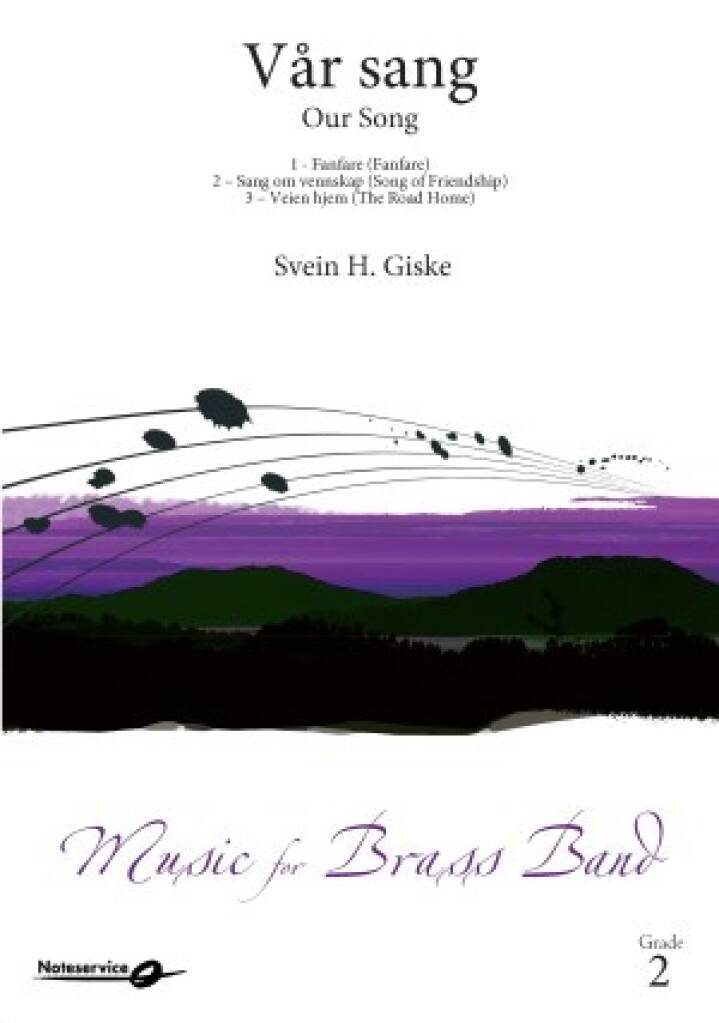
Var sang - Svein H. Giske
Our song was commissioned by Knarvik Skolekorps for their junior band in 2020. They wanted an original piece that could challenge their young players.This became a suite in three movements with themes that run through the whole piece.In the 2. movement there is a possibility for the band to sing in Song of friendship.. Young people finding friendship through music, as I myself have done, is one of the nicest things one can experience, in my opinion.Should you choose not to sing, you can just play the notes as printed.Svein H. Giske-September 2022-
Estimated dispatch 5-14 working days
-
 £106.99
Evolution - Philip Sparke
Evolution was commissioned by Kunstfactor for the 4th section of the Dutch National Brass Band Championships (NBK) 2011. It is dedicated to Jappie Dijkstra and the Music Information Centre (MUI), Arnhem, Holland, in acknowledgement of their outstanding work in developing brass band repertoire. The composer writes:-The idea for the piece came when I was reading an article about a branch of Chinese philosophy which is abbreviated as Wu Xing, which has no exact translation but can mean, for example, five elements, five phases or five states of change. It is central to all elements of Chinese thought, including science, philosophy, medicine and astrology, and in simpleterms tries to create various cyclic relationships between five elements in all walks of life. An example is: Earth - Metal - Water - Wood - Fire - (Earth) etc. where (in one cycle) earth bears metal, metal changes to liquid (water) when heated, water helps trees grow, wood burns to create fire, fire produces ash (earth) and the cycle continues.I was particularly interested in the cycle of emotions: Meditation - Sorrow - Fear - Anger - Joy - (Meditation) etc. and thought this cyclic principle would provide an effective emotional journey for a piece of music. So Evolution has five equal sections which loosely characterise this emotional cycle. I have tried to make the music grow organically, with minimal repetition, and each movement evolves from the musical elements at the end of the previous one, with the opening material appearing, transformed, at the end of the piece to complete the cycle.
Estimated dispatch 5-14 working days
 View Music