
Results
-
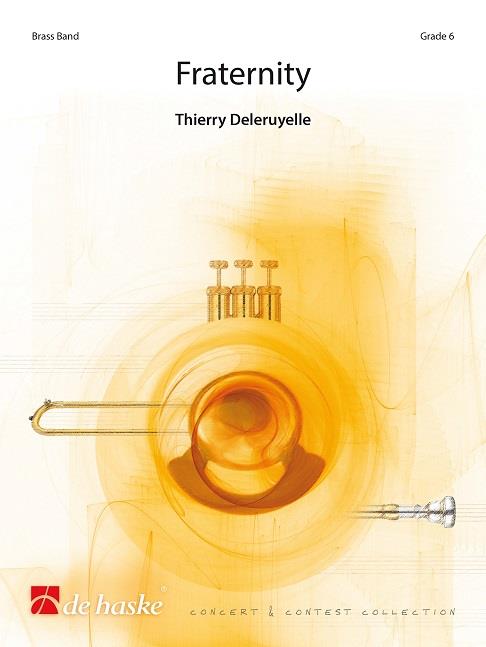
£70.00General Series Band Journal April 2013 Numbers 2119-2122
No.2119 Guardian of my soul (Darren Shaw)This arrangement combines the composer's own song 'I worship you', with the well-known hymn 'O Jesus, I have promised' (S.A.S.B. 862), both of which contain the phrase, 'Guardian of my soul', within their lyrics.No.2120 Festival March - Temple 125 (Kevin Larsson)This march was written for the 125th anniversary of Bromley Temple, which is where the composer grew up and still considers his 'home corps'. This arrangement uses two songs that are closely associated with Bromley, the first being 'Jesus is all I need' (STTL Vol.1, part 1) by Hans Knutzen, who was a soldier of the corps and a member of the 'Bill Booth Revival Machine'. The second song is 'He came to give us life (T.B. 662) from the Gowans and Larsson musical, 'Jesus Folk', which was premiered using a cast from Bromley Temple.No.2121 Trombone Solo - Nothing but thy blood (Harold Burmayer)Donna Peterson's recent melody, set to the time-honoured words of Richard Slater, provides a vehicle for solo trombone with band accompaniment.No.2122 Begone, vain world (Michael Davis)A setting of the hymn tune of the same title, with which we associate the words, 'I want, dear Lord, a heart that's true and clean'.
Estimated dispatch 7-14 working days
-
£54.95Festiva Brazilia (Brass Band - Score and Parts)
Using a variety of Latin American musical influences the piece opens with a bass riff that is to be the prominent feature in this work. Accompanied with lively Latin American Samba Percussion section the work is reminiscent of the music heard at the world famous Rio Carnival. There are lots of Latin 'Riffs' and 'Licks' throughout the piece that keep returning in true samba style. This is a real fun piece to perform and the performing notes below act as a guide to getting the most out of this performance.Performing Notes:There are opportunities for soloists within the piece, particularly Solo Cornet, Soprano and Bongo's.When the Cornet and Soprano soloist play their solo part they have an instruction to stand out at the front to perform. It is at the players and conductors discretion where they would like to stand for their solo line.Obviously the Drum Kit soloist is restricted to their current positioning within the band. However, the other percussionists are quite at liberty to come out to the front of the band to perform their solo at rehearsal figure P at the conductors discretion.NB - At the 5th bar of figure P there is an optional repeat section. Performers can repeat this section over and over to extend the percussion feature. Or even add more players from the band to play percussion. If you do not wish to use this opportunity then dismiss the repeat so that there is a 16 bar section between figure P and figure R.There are also a variety of cameo roles for other soloists and musical sections during the piece. Other players and sections can stand to perform various motifs during the piece again at the conductor's discretion.Festiva Brazilia was composed for performers to have fun and enjoy performing the piece as much as possible. Just like the many Samba festivals around Brazil.
Estimated dispatch 7-14 working days
-
£59.50El Camino Real (A Latin Fantasy)
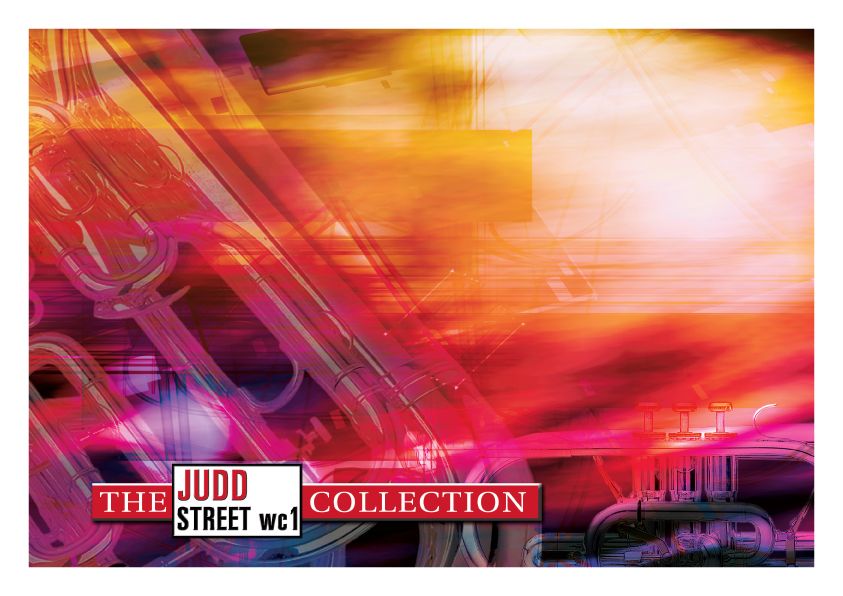
El Camino Real (literally "The Royal Road" or "The King's Highway") was commissioned by, and is dedicated to, the 581st Air Force Band (AFRES) and its Commander, Lt. Col. Ray E. Toler. Composed during the latter half of 1984 and completed in early '85, it bears the subtitle: "A Latin Fantasy."The music is based on a series of chord progressions common to countless generations of Spanish flamenco (and other) guitarists, whose fiery style and brilliant playing have captivated millions of music lovers throughout the world. These progressions and the resulting key relationships have become practically synonymous with what we feel to be the true Spanish idiom. Together with the folk melodies they have underscored, in part derived by a procedure known to musicians as the "melodizing of harmony," they have created a vast body of what most people would consider authentic Spanish music.The first section of the music is based upon the dance form known as the Jota, while the second, contrasting section is derived from the Fandango, but here altered considerably in both time and tempo from its usual form. Overall, the music follows a traditional three-part pattern: fast-slow-fast.The first public performance of El Camino Real took place on April 15th, 1985 in Sarasota, Florida, with the 581st Air Force Band under the direction of Lt. Col. Ray E. Toler.This arrangement for brass band has been made by Frode Rydland.
Estimated dispatch 7-14 working days
-
£19.50El Camino Real (Score Only)
El Camino Real (literally "The Royal Road" or "The King's Highway") was commissioned by, and is dedicated to, the 581st Air Force Band (AFRES) and its Commander, Lt. Col. Ray E. Toler. Composed during the latter half of 1984 and completed in early '85, it bears the subtitle: "A Latin Fantasy."The music is based on a series of chord progressions common to countless generations of Spanish flamenco (and other) guitarists, whose fiery style and brilliant playing have captivated millions of music lovers throughout the world. These progressions and the resulting key relationships have become practically synonymous with what we feel to be the true Spanish idiom. Together with the folk melodies they have underscored, in part derived by a procedure known to musicians as the "melodizing of harmony," they have created a vast body of what most people would consider authentic Spanish music.The first section of the music is based upon the dance form known as the Jota, while the second, contrasting section is derived from the Fandango, but here altered considerably in both time and tempo from its usual form. Overall, the music follows a traditional three-part pattern: fast-slow-fast.The first public performance of El Camino Real took place on April 15th, 1985 in Sarasota, Florida, with the 581st Air Force Band under the direction of Lt. Col. Ray E. Toler.This arrangement for brass band has been made by Frode Rydland.
Estimated dispatch 7-14 working days
-
£87.95Masquerade (Score and Parts)
The first performance took place on the 4th. September 1993 at the Free Trade Hall in Manchester during the British Open Brass Band Championships.Note by Philip Wilby:Masquerade is a centenary tribute to Verdi's last opera Falstaff and takes its final scene as the basis for my own piece. Thus I have used some of Verdi's music, and some of Shalespeare's plot, and woven them into a fabric with highly demanding music of my own to produce a work in the great tradition of operatically-based brass band pieces. Such scores date from the very beginnings of band repertory and are often not direct arrangements in the established sense but new compositions produced in homage to a past master. They may still offer performers and audience alike something familiar interwoven with something new. My own piece reuses some elements from the original story: . .Falstaff has been caught in a web of his own lies by the ladies of the town, who propose to teach him a lesson. The story opens at night in Windsor Great Park. The plotters, variously disguised in Hallowe'en fashion (as fairies,elves hobgoblins etc!) assemble in the park to await Falstaff's arrival (musicologists will, perhaps, note a rare use of 'large bottle in F' being used during this scene of suppressed alcoholic revelry!). Falstaff's companions, Bardolph,Piston and Robin, enter (represented here by the three trombones!), and are variously abused by the masqueraders. At the height of the Tout an alarm sounds and Falstaff (euphonium cadenza) enters as Midnight strikes. From a safe hiding place he watches as the disguised Nanetta (principal comet) sings a serene solo as the moon appcars above the trees. With sudden force the others seize him and drag him from his hiding place. As in the traditional game 'Blind Man's Buff', he is roughly turned seven times (a sequence of solo accelerandi) until, at last, he recognizes his assailants as his sometime friends. Far from complaining, Verdi's character concludes the opera with a good-humoured fugue on the words.... 'All the World's a Joke... Every mortal laughs at the others, But he laughs best who has the final laugh. Philip Wilby.
Estimated dispatch 7-14 working days
-
£44.95Masquerade (Score Only)
The first performance took place on the 4th. September 1993 at the Free Trade Hall in Manchester during the British Open Brass Band Championships.Note by Philip Wilby:Masquerade is a centenary tribute to Verdi's last opera Falstaff and takes its final scene as the basis for my own piece. Thus I have used some of Verdi's music, and some of Shalespeare's plot, and woven them into a fabric with highly demanding music of my own to produce a work in the great tradition of operatically-based brass band pieces. Such scores date from the very beginnings of band repertory and are often not direct arrangements in the established sense but new compositions produced in homage to a past master. They may still offer performers and audience alike something familiar interwoven with something new. My own piece reuses some elements from the original story: . .Falstaff has been caught in a web of his own lies by the ladies of the town, who propose to teach him a lesson. The story opens at night in Windsor Great Park. The plotters, variously disguised in Hallowe'en fashion (as fairies,elves hobgoblins etc!) assemble in the park to await Falstaff's arrival (musicologists will, perhaps, note a rare use of 'large bottle in F' being used during this scene of suppressed alcoholic revelry!). Falstaff's companions, Bardolph,Piston and Robin, enter (represented here by the three trombones!), and are variously abused by the masqueraders. At the height of the Tout an alarm sounds and Falstaff (euphonium cadenza) enters as Midnight strikes. From a safe hiding place he watches as the disguised Nanetta (principal comet) sings a serene solo as the moon appcars above the trees. With sudden force the others seize him and drag him from his hiding place. As in the traditional game 'Blind Man's Buff', he is roughly turned seven times (a sequence of solo accelerandi) until, at last, he recognizes his assailants as his sometime friends. Far from complaining, Verdi's character concludes the opera with a good-humoured fugue on the words.... 'All the World's a Joke... Every mortal laughs at the others, But he laughs best who has the final laugh. Philip Wilby.
Estimated dispatch 7-14 working days
-
£89.95Tuba Concerto (Score and Parts)
This work was commissioned by the Besses o' th' Barn Band with funds provided by the Arts Council of Great Britain. It was written for, and is dedicated to, John Fletcher, who gave the first performance in Middleton Civic Hall, near Manchester, on 24 April, 1976, with Besses o' th' Barn Band conducted by the composer. Another interesting feature about the premire was that it was recorded by BBC Television for an Omnibus programme with Andr Previn as presenter. The concerto exists in three versions: with brass band (1976), orchestra (1978) and wind band (1984).The concerto is in three movements, following the usual, quick-slow-quick pattern: Allegro deciso,Lento e mesto, Allegro giocoso. The first movement has a sonata form shell with two contrasting themes, the first one being rhythmic in character, the second lyrical. There is a reference made in passing to the Vaughan Williams Tuba Concerto, but this merges into the other material in the development section.The second movement begins with a chorale, but after the entry of the tuba it leads to a cantabile theme, softly unfolded by the soloist. The opening chorale passage returns, this time briefly on muted brass, and leads to a middle section which is more chromatic in style and soon builds to a powerful climax, where the opening cantabile theme triumphantly returns. The music subsides, returning to the opening chorale and ending peacefully.The finale is light and breezy in style, and is cast in rondo form. After a brief introduction the tuba announces the main rondo theme, which is dance-like and a little jaunty. There are two episodes: the first a broad sweeping tune, the second a slowish waltz and a little jazz-like. After a virtuoso cadenza reference is made to the very opening of the concerto before the work ends with a triumphal flourish.The Tuba Concerto has established itself as one of the main works in the solo tuba repertoire. It has been performed and broadcast in over 40 countries all over the world. There are currently six commercial recordings of the concerto in its various versions.resolution in C major, pointed by a simple but expansive melody towards which the piece has been heading, and ending in a blaze of joyful colour.
Estimated dispatch 7-14 working days
-
£77.00General Series Brass Band Journal, Numbers 2254 - 2257, April 2025
2254: Be glorified today (Martin Cordner)Built around Bob Kilpatrick's song In my life, Lord, be glorified today (S.A.S.B. 593), this concert opener was composed for Cambridge Citadel Band (UK and Ireland Territory) at the request of Bandmaster Simon Fisher. The piece pays homage to the city.2255: Driven by mission (Stephen Bulla)Stephen Bulla wrote this piece to commemorate Willis Howell and his wife's retirement from active officership. Bulla references St. Denio (S.A.S.B. 37), Melita (T.B. 442), For your mission and Men of Harlech (T.B. 756), and the assembling of the tunes and all they represent reflects the masterful artistry that always marks Bulla's works.2256: The Lord's my shepherd (Paul Sharman)This arrangement brings together two settings of Psalm 23; the familiar hymn tune Crimond (T.B. 68) and the more recent melody by Stuart Townend (T.B. 863).2257: Cornet Solo - I love you, Lord (Ian Robinson)Laurie Klein's chorus I love you, Lord (S.A.S.B. 369) has been popular for many years with Salvation Army congregations around the world and this work combines unconventional harmonies with sparse scoring to feature the soloist.
Estimated dispatch 7-14 working days
-
£55.00Triumph Series Brass Band Journal, Numbers 1347 - 1350, March 2023
1347: Intrada on 'St Magnus' (Ruben Schmidt)This is an energetic intrada based on the tune St. Magnus with the composer keeping the words The head that once was crowned with thorns (S.A.S.B. 22) in mind.1348: March - In every corner sing (Alan Williams)This is a bright march requiring plenty of vigour and imagination. Featuring and taking its title from Let all the world in every corner sing: My God and King! (S.A.S.B. 41), this bright melody is contrasted with the tune Lydia associating the words There is a name I love to hear, I love to sing its worth (S.A.S.B. 94).1349: I need thee (Craig Woodland)An expressive arrangement of the traditional hymn I need thee every hour (S.A.S.B. 707)1350: March - The great commission (Paul Sharman)This march was written for the Norwegian Christian brass band, Egersund Missionary Band, and is derived from the tune Onward, Christian soldiers (T.B. 188) as well as a brief fragment of the Norwegian National Anthem and the melody Die Sach is dein (The work is thine).
Estimated dispatch 7-14 working days
-
£59.95Judd: Quest
'Quest' was originally written for the Territorial Youth Band (UK) in 2012. It is a major work in three movements, Movement 1: Making a difference, Movement 2: Making time and Movement 3: Making progress. The music essentially charts the journey of the Christians life. The music commences with Ray Steadman-Allen's choral work and testimony 'So this is it! My day for living!' and has references and then a presentation to the tune 'Southport' associated with the words 'To serve the present age my calling to fufil'. The music displays the struggle of the Christian in maintaining a witness within this world. The second movement is a reflective and prayerful setting of the song 'This day' found in the Sing to the Lord journal. The imposing third movement features the tune 'Trust in God' with the associated words 'As the weary way of life we journey'. The piece has been recorded by the International Staff Band under the same title (SPS330)
Estimated dispatch 7-14 working days
