
Results
-
 £60.99
Walking on Sunshine - Kimberley Rew - Stefan Schwalgin
Walking on Sunshine has earned its place among the all-time favorite summer classics. Kimberley Rew, lead guitarist for the pop group Katrina and the Waves, wrote the song in 1985 and never looked back.Whether at a club or a cafe, everybody seems to smile when this song is heard. Bring sunshine to your next concert with Sefan Schwalgin's arrangement of this unforgettable classic!
Estimated dispatch 5-14 working days
-
£54.99
Heal the World - Michael Jackson - Ron Sebregts
Michael Jackson, the King of Pop, died in Los Angeles on June 25th 2009. He can without any shadow of a doubt be compared with artists such as Elvis Presley, Jimi Hendrix, and John Lennon - all of them musicians who will never die in the hearts of their fans. Why not keep the legend of Michael Jackson alive in your next concert with this hit from Michael Jackson's repertoire arranged for Brass Band.
Estimated dispatch 5-14 working days
-
 £54.99
Earth Song - Ron Sebregts
Michael Jackson, the King of Pop, died in Los Angeles on June 25th 2009. He can without any shadow of a doubt be compared with artists such as Elvis Presley, Jimi Hendrix, and John Lennon - all of them musicians who will never die in the hearts of their fans. Why not keep the legend of Michael Jackson alive in your next concert with this hit from Michael Jackson's repertoire arranged for Brass Band.
Estimated dispatch 5-14 working days
-
 £69.99
Auld Lang Syne - Menno Haantjes
Whereas 'Auld Lang Syne' may be considered the best-known Scottish song ever, yet at the same time it is an obscure one, for there are but few people who know the complete text by heart. After the familiar 'Should auld acquaintance be forgot .....' many people take their refuge to lyrics like 'rum tee dum ta dee ..... lah, lah, lah ........... for auld lang syne'. Even in Scotland only a handful of persons know the entire text and are able to give a correct rendering of it. The current lyrics have been attributed to the Scottish poet Robert Burns. Burns, however, he did not write the whole poem : after he had heard an old man sing the centuries-old Scotchballad, he wrote it down and added a number of stanzas (1788). Historical research teaches us that the ballad served many purposes, both political and religious. Nowadays, 'Auld Lang Syne' is sung as a Christmas Carol and it is also sung on New Year's Eve at the turning of the year. Apart from that, though, the song is also sung on many other occasions sometimes with different lyrics, which usually have Love, Friendship and/or Parting as their themes, as these go well with the fascinating melody. In this arrangement a low-sounding solo instrument is central. The harmonization in the accompaniment fits in perfectly with the sentiments this song will evoke. Should auld acquaintance be forgot And never brought to mind? Should auld acquintance be forgot. And days of auld lang syne? For auld lang syne, my dear, For auld lang syne, We'll take a cup of kindness yet, For auld lang syne.
Estimated dispatch 5-14 working days
-
 £104.99
Scottish Dances - Peter Martin - Menno Haantjes
Scottish Dances is based on three Scottish traditionals: Cock of the North, The Bonnie Bank's O'Loch Lomond and Marie's Wedding. I. Cock of the North's name is used for multiple things or events. For example for a locomotive to a famous, it seems, delicious liqueur, and rallies to snowboard competitions. Furthermore is "Cock O' the North " a nickname of a famous Duke. (The 4th Duke of Gordon). In this composition Cock of the North (a Jig) is a traditional Scottish bagpipe tune, regularly played on tattoos by Pipe Bands. Not infrequently the drummers sing the text. Auntie Mary, had a canary, Up the leg of her trousers While she was sleeping Iwas peeping Up the leg of her trousers. II. " The Bonnie Bank's O'Loch Lomond " is about a sad story that took place during an revolt against the British. In 1745 Bonnie Prince Charlie had to retreat. Two of his men were captured. One was convicted and executed, while the other was released. The spirit of the executed soldier would arrive in Scotland via the 'low road' (underworld) before his companion, who had still a long way to go. You'll take the high road And I'll take the low road And I'll be in Scotland afore ye But me and my true love will never meet again On the Bonnie Bonnie Banks of Loch Lomond III. In a Scottish wedding, after the official ceremonies, there is often danced. This is called a ceilidh. For this we use traditional Scottish music such as "Marie's Wedding '. Mid dance we go back to the church, where a lovely song in honor of the couple sounds. Marie's Wedding has been recorded by Van Morrison (among many others). Step we gaely, on we go, heel for heel and toe for toe Arm and arm and on we go, all for Marie's wedding
Estimated dispatch 5-14 working days
-
 £78.20
The Rocketeer - James Horner - Roland Smeets
Before Titanic,James Horner was not above composing scores for cartoonish family films, and many of those that brought him on their production board owe him greatly. The Rocketeer entails the story of a young pilot during World War II who happens upon a rocket pack that allows him to fly. The film is based on the tradition of old film serials that left theater-goers hanging with "To be continued," and aside from modern production, it is old fashioned and innocent fun. Horner's score begins and ends with the brilliant "Main Title," which is so moving it was used in previews for later films that did not yet have finished scores. Most of th Rocketeersoundtrack elicits the adventure and lifting spirit of the film and reveals how Horner incorporates rich instrumentals in the tiniest crevices. Even when the film involves danger, as in "Jenny's Rescue," the composer takes care when it is hardly even required. Instead of some "duh-duh-duhs," he brings on a full, stunning orchestra and when he overdoes it, it is in a jolly way -- he never exhausts his medium. That is what separates him from inferior composers, and what makes a nice film like The Rocketeer extra nice. It is a soundtrack worth listening to.
Estimated dispatch 5-14 working days
-
 £29.95
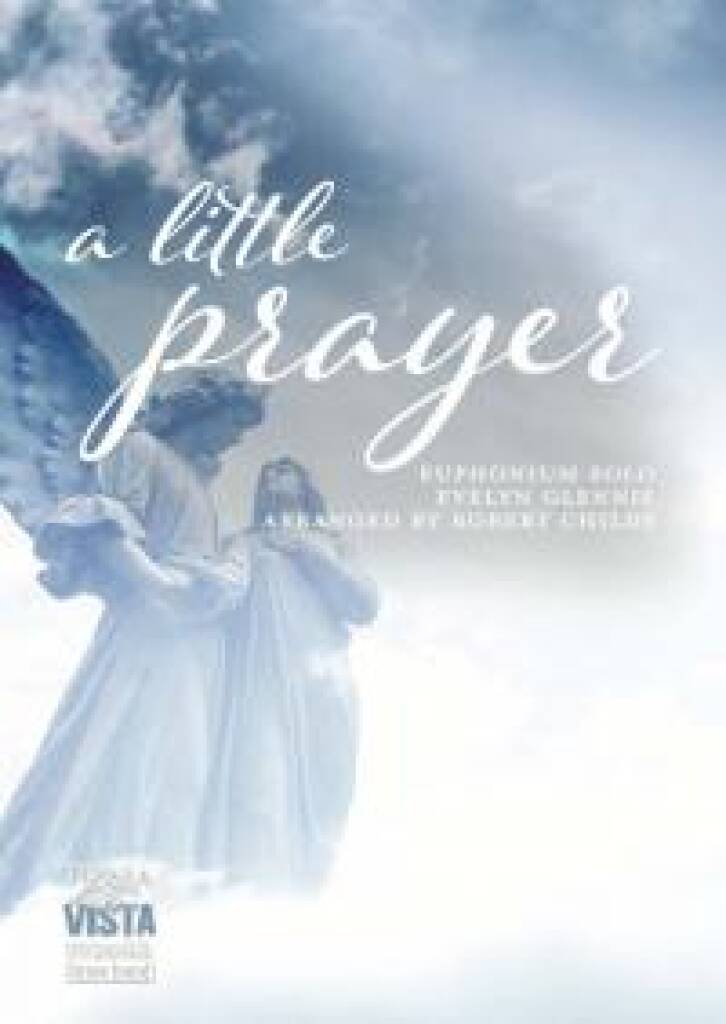
A Little Prayer - Evelyn Glennie - Robert Childs
Originally composed for solo marimba, this popular version of A Little Prayer was made in 1998 following Evelyn Glennie's collaboration with Black Dyke Band during the recording of their Grammy nominated Reflected in Brass CD. Robert Childs, then principal euphonium with Black Dyke, requested Evelyn's permission to make the arrangement for his son, David. The composer obliged, and Robert presented the score and parts to his son as a seventeenth birthday present. Evelyn Glennie revealed: "When I wrote this chorale for marimba, it expressed my spiritual feelings and displayed a pleasantly relaxed dimension of the instrument. Over the years my exposure to brass bands has filled me with wonder; their musical diversity is considerable. I had no hesitation in giving A Little Prayer to Robert Childs to bring this little melody to life." Having composed the work when she was only 13, Evelyn continued: "As a child I would never have believed that such a short and simple piece of music, would come to grow this much. A little Prayerserves to prove that one should always bet their chips on what they believe in, for nine out of ten it will be worth it!" After twenty years of exclusivity, Prima Vista Musikk is proud to make this beautiful arrangement available to all. A Little Prayer provides the perfect reflective interlude for concert or devotional use by euphonium soloists and bands of all abilities.
Estimated dispatch 5-14 working days
-
 £124.95
The Triumph of Time - Peter Graham
Like The Essence of Time, The Triumph of Time is a set of variations for band which follow roughly the same moods and characteristics of its older relative. Many years ago as I took up a university post and embarked on postgraduate compositionalstudy, my friend and colleague Ron Holz offered me some sage advice; to explore and assimilate unfamiliar compositional concepts and to develop and strengthen my technique, but never to stop writing tunes! This piece is dedicated to Dr Ronald W. Holzin gratitude.Peter Graham, June 2015
Estimated dispatch 5-14 working days
-
 £33.62
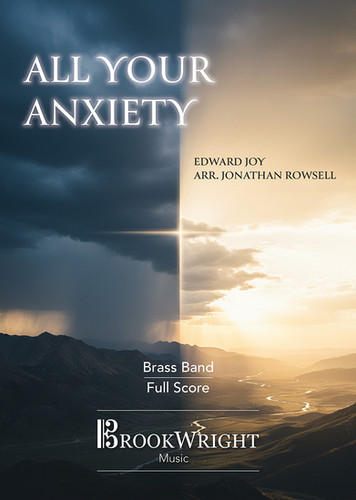
All Your Anxiety (Brass Band) Edward Joy arr. Jonathan Rowsell
All Your Anxiety is a reflective and expressive work for brass band inspired by Edward Joy's sacred song of the same name. Drawing deeply from the hymn's text and message, the piece explores the tension between human unease and the promise of peace found in faith. The work opens with a distinctive eighth-note figure in the euphonium that immediately establishes an unsettled character. Wide intervallic leaps and atypical slur groupings evoke a sense of fragility and uncertainty, musically portraying the weight of sorrow and care described in the opening verse of the hymn. This motivic material becomes the foundation of the entire arrangement, reappearing in varied forms as counter-melody, accompaniment, and featured solo lines across the ensemble. As the piece unfolds, the music gradually broadens and warms, reflecting the invitation of the text to "come to the cross" and leave one's burdens behind. Moments of lyricism and calm contrast with the earlier unease, leading toward a more settled and hopeful conclusion that mirrors the refrain's assurance: "Never a burden He cannot bear, never a friend like Jesus." To view a video of the Canadian Staff Band playing the piece please visit https://www.youtube.com/watch?v=5Ms8ubug4yA Sheet music available from www.brassband.co.uk or https://satradecentral.org Difficulty Level: 3rd Section + Length: 3.30 minutes Instrumentation: Soprano Cornet Eb Solo Cornet Bb 1st Cornet Bb 2nd Cornet Bb Flugel Horn Bb Solo Horn Eb 1st Horn Eb 2nd Horn Eb 1st Baritone Bb 2nd Baritone Bb 1st Trombone Bb 2nd Trombone Bb Bass Trombone Euphonium Bb Bass Eb Bass Bb Timpani Percussion
In Stock: Estimated dispatch 1-3 working days
-
£35.00
These Mist Covered Mountains - Peter Meechan
These Mist Covered Mountains was commissioned by Keith Johnson (KMJ Recordings) for soprano cornetist, Mandy Crowther, to whom the piece is dedicated.In an age where we seem to be inundated with endless news cycles of various wars that we as a nation are involved in, and also those that we are not, it seems that war is now a constant, and we are in a never ending state.This short piece is intended to represent the cyclic nature of war, and the way that war never seems to have a true conclusion.
Estimated dispatch 12-14 working days
 View Music