
Results
-
 £84.99
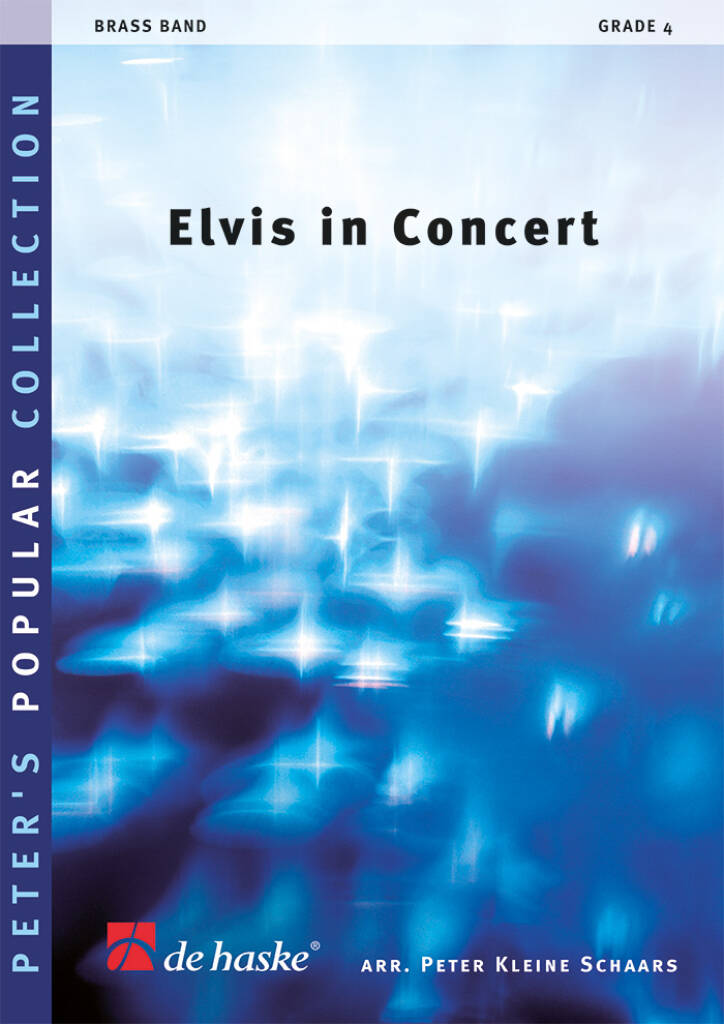
Elvis in Concert - Peter Kleine Schaars
In his capacity as staff arranger of the Royal Marine Band of the Dutch Navy this arrangement is one of the best loved by Peter Kleine Schaars' band. Elvis in Concert features the twelve greatest his of 'The King", so musicians won't have time to get bored! In addition, this compelling Elvis medley contains delightful moments of recognition for your audience too!
Estimated dispatch 5-14 working days
-
 £54.99
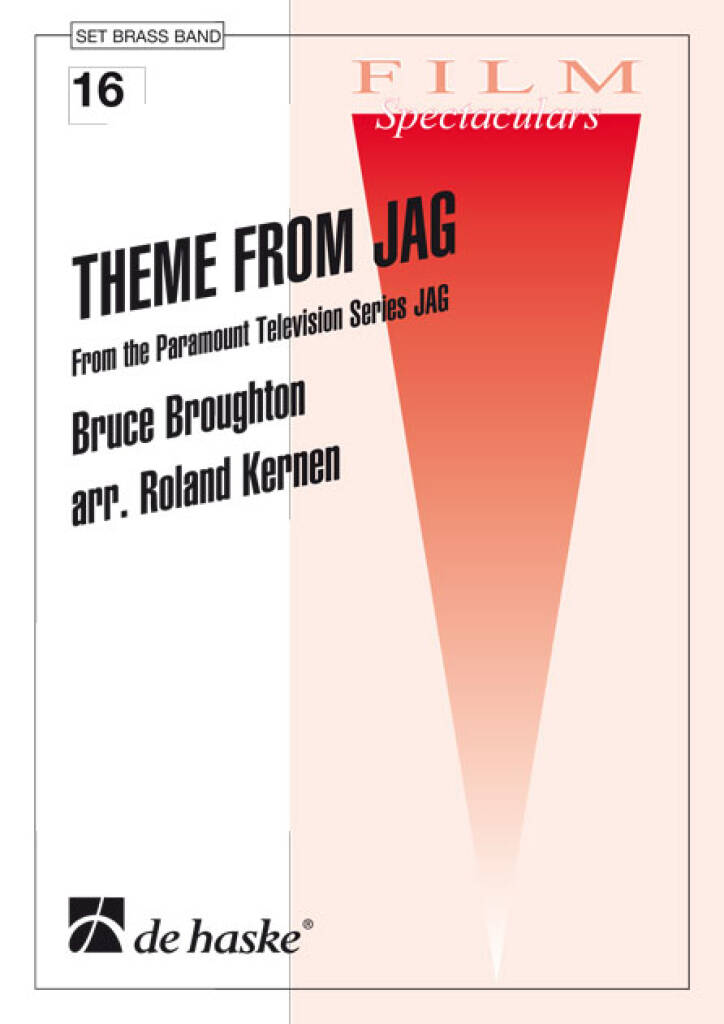
Theme from JAG - Bruce Broughton - Roland Kernen
The television series JAG (Judge Advocate General), which was first broadcast in America in 1995, has become internationally known over the years. In Europe, too, people have become acquainted with the legal wing of navy officers and the intrigues surrounding Commander Harmon "Harm" Rabb (David James Elliott) and his partner Lieutenant Colonel Sarah "Mac" MacKenzie (Catherine Bell). Both inside and outside the courtroom they fight with one major aim: winning! In their personal relationships, there's a good deal of tension too. The theme tune to this television series, full of action and adventure, has been arranged for brass band by Roland Kernen.
Estimated dispatch 5-14 working days
-
 £30.00
Amazing Grace (W. Walker arr. by Paul Pennicotte-Henrie) - Brass Band Sheet Music Full Score and Parts - LM642
COMPOSER: W. WalkerARRANGER: Paul Pennicotte-Henrie"Amazing Grace" is a Christian hymn published in 1779 by English Anglican clergyman, abolitionist, and poet John Newton. It is possibly the most sung and most recorded hymn in the world and is especially popular in the United States, where it is used for both religious and secular purposes. Newton wrote the words from personal experience; he grew up without any particular religious conviction, but his life's path was formed by a variety of twists and coincidences that were often put into motion by others' reactions to what they took as his recalcitrant insubordination. He was pressed into service with the Royal Navy, and after leaving the service, he became involved in the Atlantic slave trade.In 1748, a violent storm battered his vessel off the coast of County Donegal, Ireland, so severely that he called out to God for mercy. While this moment marked his spiritual conversion, he continued slave trading until 1754 or 1755, when he ended his seafaring altogether. Newton began studying Christian theology and later became an abolitionist.Ordained in the Church of England in 1764, Newton became the curate of Olney, Buckinghamshire, where he began to write hymns with poet William Cowper. "Amazing Grace" was written to illustrate a sermon on New Year's Day of 1773. It is unknown if there was any music accompanying the verses; it may have been chanted by the congregation. It debuted in print in 1779 in Newton's and Cowper's Olney Hymns, but settled into relative obscurity in England. In the United States, "Amazing Grace" became a popular song used by Baptist and Methodist preachers as part of their evangelizing, especially in the American South, during the Second Great Awakening of the early 19th century. It has been associated with more than 20 melodies. In 1835, American composer William Walker set it to the tune known as "New Britain" in a shape note format; this is the version most frequently sung today.
In Stock: Estimated dispatch 3-5 working days
-
 £30.00
La Musica Notturna Delle Strade di Madrid
DescriptionLuigi Boccherini was born in Lucca, Italy, into a musical family. His father, a cellist and double-bass player, sent him to study in Rome at a young age. In 1757 they both went to Vienna, where the court employed them as musicians in the Burgtheater. In 1761 Boccherini went to Madrid, entering the employ of Prince Luis Antonio of Spain, younger brother of King Charles III. There he flourished under royal patronage, until one day when the King expressed his disapproval at a passage in a new trio, and ordered Boccherini to change it. The composer, no doubt irritated with this intrusion into his art, doubled the passage instead, which led to his immediate dismissal. Then he accompanied Don Luis to Arenas de San Pedro, a little town in the Gredos mountains, where Boccherini wrote many of his most famous works. Although neglected after his death and throughout the 19th and early 20th century (he was known mockingly as 'Haydn's Wife' for a time), Boccherini's music has been rediscovered in recent decades.La Musica Notturna delle Strade di Madrid('Night Music of the Streets of Madrid') is a string quintet of seven short movements composed during Boccherini's exile in Arenas, no doubt to remind him and his prince of happier times. The music is reminiscent of "the gaiety and bustle of Spain's capital, recalling the sound of the city's church bells ringing for evening prayer, the popular dances that were the delight of its young people, and the blind beggars singing their typical songs". This arrangement excludes the first and last two movements, comprising the middle four:Il Tamburo di Soldati(The Soldier's Drum)Minuetto dei Ciechi(The Minuet of the Blind Beggars)Il Rosario(The Rosary)Passe Calle(The Passacaglia of the Street Singers)The music was featured in the Russell Crowe filmMaster and Commander: The Far Side of the World(2003) set during the Napoleonic Wars and featuring the adventures of the Royal Navy ship HMS Surprise and her captain Jack Aubrey as they pursue the French ship Acheron into the Pacific Ocean.You can listen to an audio preview while following the score in the video below!Duration approximately 5'00".
Estimated dispatch 7-14 working days
-
£103.00
Sviskemedley - Various - Torstein Aagaard-Nilsen
Torstein Aagaard-Nilsen wrote this medley to the 1992-93 Concert season for trumpeter Helge Haukas of The Norwegian Defence Band region West located in Bergen (today Norwegian Navy Band Bergen).Haukas choose thee titles in the "Sweet Trumpet" style suitable for any Entertainment concert. The result was this "Trumpet Sweets" medley consisting of the following three melodies:1. Gotlandsk sommernatt (A Summer night in Gotland)2. Estrellita3. Can't help falling in Love
Estimated dispatch 7-14 working days
-
£86.00
Var Flotta - Ivar Widner - Birger Jarl
One of the really great Swedish Marches is Our Fleet which he wrote in 1917 as op. 11. It was composed in Goden as Military March When Widner became conductor of the Royal Swedish Navy Band in Stockholm, he changed the title to Our Fleet.
Estimated dispatch 7-14 working days
-
 £35.00
A Suffolk Prelude - Andrew Duncan
Written for the Ipswich & Norwich Co-Op Band, A Suffolk Prelude is based around five traditional tunes from Suffolk:'Nutting Time','Blackberry Fold','Cupid's Garden','A Seaman's Life''The Bold Richard'The piece begins on the percussion and timpani alone leading through a crescendo into the first statement of the fanfare which is derived from a motif from the tune 'Nutting Time'. This leads into a playing of the 'Nutting Time' tune which is then developed as the tune is passed around the band.'Nutting Time' is a jolly lighthearted tune about a 'fair maid' who meets a handsome young farmer called 'Johnny' when out gathering nuts in the wood. After a pause on the tubular bells the slow tune 'Blackberry Fold' is presented as a solo for Flugel Horn, then as a full band version.'Blackberry Fold' is a touching song about a Suffolk squire who gets married well below his station to a beautiful milkmaid, simply because he loves her! They live happily ever after.The next tune to be heard is the juanty 'Cupid's Garden' played firstly as a solo on the Euphonium, and again this is about the subject of love. This song is sung from a sailors prospective and he tells how he met a lovely maiden and has promised to marry her when he returns from duty at sea.The trombones then play the noble tune 'A Seaman's Life'. This tune seems to serve as a warning to young girls about the fickle nature and the total unsuitability of marrying a sailor! 'Oh a seaman's life is a merry merry life, they'll rob young girls of their heart's delight, they will leave them behind for to sail one morn, but they never know when they'll return'. Despite this it is a fine tune!The last tune featured is 'The Bold Richard' which is played by all the bass instruments in the band. This is a song telling how the Royal Navy friggate 'The Bold Richard' went to battle against a French friggate destroying her and taking her crew as prisoners.Suffolk Prelude goes on to feature a slow version of the tune 'A Seaman's Life' played alongside a fast version of the tune 'Cupid's Garden'. The opening fanfare then returns leading into a final coda section.
In Stock: Estimated dispatch 3-5 working days
-
 £15.00
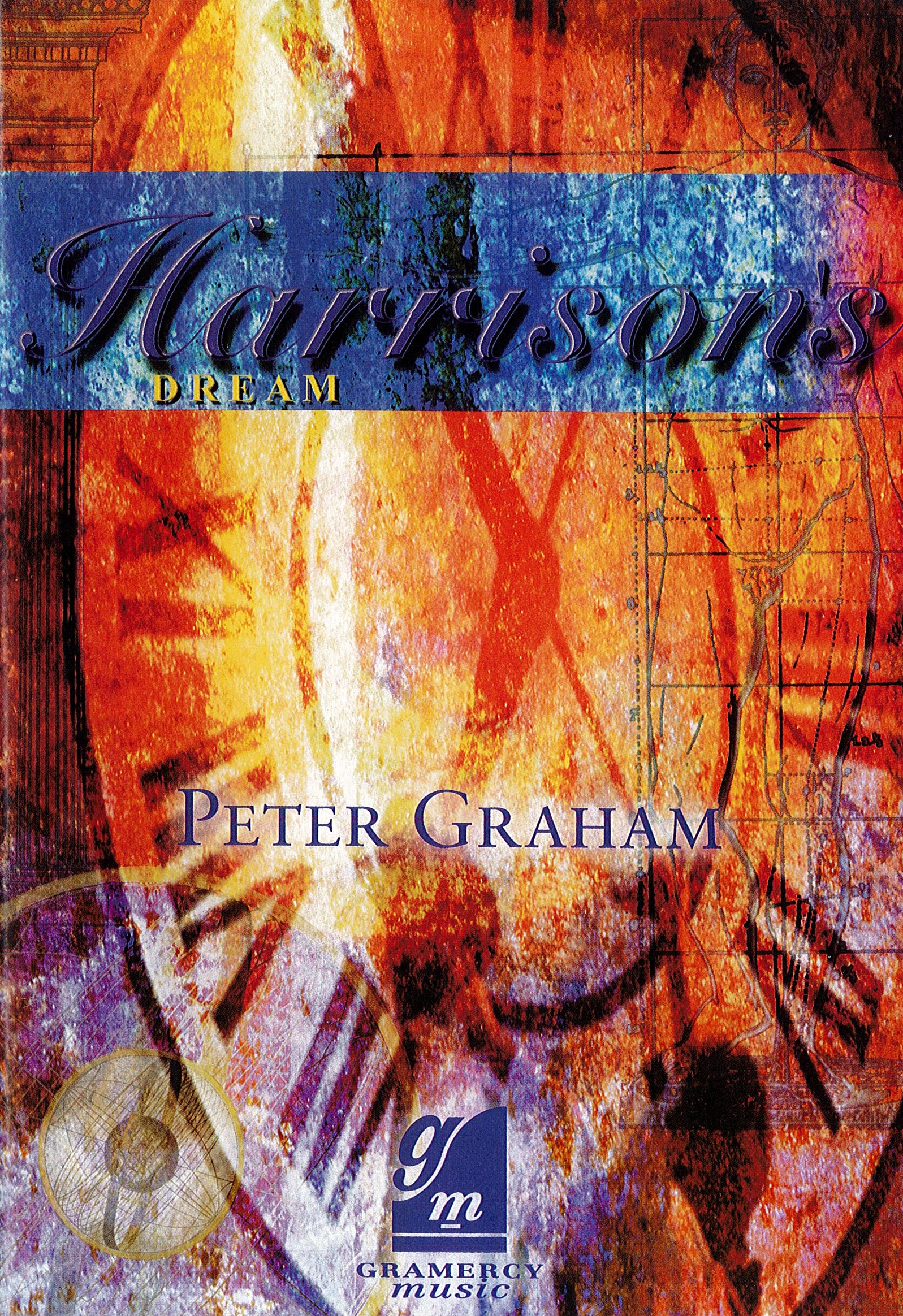
Harrison's Dream (Brass Band - Study Score)
At 8.00pm on the 22nd of October 1707, the Association, flagship of the Royal Navy, struck rocks off the Scilly Isles with the loss of the entire crew. Throughout the rest of the evening the remaining three ships in the fleet suffered the same fate. Only 26 of the original 1,647 crew members survived. This disaster was a direct result of an inability to calculate longitude, the most pressing scientific problem of the time. It pushed the longitude question to the forefront of the national consciousness and precipitated the Longitude Act. Parliament funded a prize of �20,000 to anyone whose method or device would solve the dilemma. For carpenter and self-taught clockmaker John Harrison, this was the beginning of a 40 year obsession. To calculate longitude it is necessary to know the time aboard ship and at the home port or place of known longitude, at precisely the same moment. Harrison's dream was to build a clock so accurate that this calculation could be made, an audacious feat of engineering. This work reflects on aspects of this epic tale, brilliantly brought to life in Dava Sobel's book Longitude. Much of the music is mechanistic in tone and is constructed along precise mathematical and metrical lines. The heart of the work however is human - the attraction of the �20,000 prize is often cited as Harrison's motivation. However, the realisation that countless lives depended on a solution was one which haunted Harrison. The emotional core of the music reflects on this, and in particular the evening of 22ndOctober 1707. Peter GrahamCheshireJuly 2000
Estimated dispatch 7-14 working days
-
 £119.95
Harrison's Dream (Brass Band - Score and Parts)
At 8.00pm on the 22nd of October 1707, the Association, flagship of the Royal Navy, struck rocks off the Scilly Isles with the loss of the entire crew. Throughout the rest of the evening the remaining three ships in the fleet suffered the same fate. Only 26 of the original 1,647 crew members survived. This disaster was a direct result of an inability to calculate longitude, the most pressing scientific problem of the time. It pushed the longitude question to the forefront of the national consciousness and precipitated the Longitude Act. Parliament funded a prize of �20,000 to anyone whose method or device would solve the dilemma. For carpenter and self-taught clockmaker John Harrison, this was the beginning of a 40 year obsession. To calculate longitude it is necessary to know the time aboard ship and at the home port or place of known longitude, at precisely the same moment. Harrison's dream was to build a clock so accurate that this calculation could be made, an audacious feat of engineering. This work reflects on aspects of this epic tale, brilliantly brought to life in Dava Sobel's book Longitude. Much of the music is mechanistic in tone and is constructed along precise mathematical and metrical lines. The heart of the work however is human - the attraction of the �20,000 prize is often cited as Harrison's motivation. However, the realisation that countless lives depended on a solution was one which haunted Harrison. The emotional core of the music reflects on this, and in particular the evening of 22ndOctober 1707. Peter GrahamCheshireJuly 2000
Estimated dispatch 7-14 working days
-
£37.95
Harrison's Dream (Brass Band - Score only)
At 8.00pm on the 22nd of October 1707, the Association, flagship of the Royal Navy, struck rocks off the Scilly Isles with the loss of the entire crew. Throughout the rest of the evening the remaining three ships in the fleet suffered the same fate. Only 26 of the original 1,647 crew members survived. This disaster was a direct result of an inability to calculate longitude, the most pressing scientific problem of the time. It pushed the longitude question to the forefront of the national consciousness and precipitated the Longitude Act. Parliament funded a prize of �20,000 to anyone whose method or device would solve the dilemma. For carpenter and self-taught clockmaker John Harrison, this was the beginning of a 40 year obsession. To calculate longitude it is necessary to know the time aboard ship and at the home port or place of known longitude, at precisely the same moment. Harrison's dream was to build a clock so accurate that this calculation could be made, an audacious feat of engineering. This work reflects on aspects of this epic tale, brilliantly brought to life in Dava Sobel's book Longitude. Much of the music is mechanistic in tone and is constructed along precise mathematical and metrical lines. The heart of the work however is human - the attraction of the �20,000 prize is often cited as Harrison's motivation. However, the realisation that countless lives depended on a solution was one which haunted Harrison. The emotional core of the music reflects on this, and in particular the evening of 22ndOctober 1707. Peter GrahamCheshireJuly 2000
Estimated dispatch 7-14 working days
 View Music