
Results
-
 £55.00
ROYAL MILE SUITE, A (Brass Band Set - Score and Parts) - Fernie, Alan
Score and Parts. National Brass Band Championships of Great Britain Section 4 Finals 2010 .
Estimated dispatch 7-14 working days
-
 £159.99
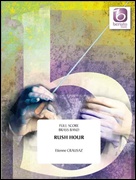
RUSH HOUR (Brass Band) - Crausaz, Etienne
Rush Hour was commissioned by the Swiss Brass Band Association (SBBV) on the occasion of the 38th Swiss National Brass Band Championships 2012 (Montreux SBBW) as the test piece in the Championship division. Structured in three parts without breaks, the work opens in a heavy, oppressive atmosphere, sometimes even noisy. After a short passage in a lighter mood a quick tempo takes over, the music becomes nervous and unrelenting, with constant twists and turns. The tension builds, leading to a slower movement in which various soloists are highlighted. A few humorous touches are heard in contrast to a majestic, powerful and dramatic chorale. The end of this part is brighter and more peaceful. This atmosphere is soon replaced by a return of the thematic material heard in the first movement, developing into an oppressive moos. The piece concludes with a last ecstatic tutti, reusing the harmonies of the introduction in a kind of final flurry. Rush Hour attempts to express the range of feelings we may experience when caught in various stressful situations in the middle of the rush hour. Duration: 13:45
Estimated dispatch 7-14 working days
-
 £75.90
SCOTS MISCELLANY, A (Brass Band Set - Score and Parts) - Fernie, Alan
National Finals of the British Brass Band Championships 2009 2nd Section test piece. A Suite in 3 Movements: The Smiling School for Calvanists; Regards to G. Robin Henderson, Esq. of Caithness; John Whyte's Reel.
Estimated dispatch 7-14 working days
-
 £69.95
SEASCAPES (Brass Band - Score and Parts) - Steadman-Allen, Ray
Seascapes was commissioned for the National Brass Band Championships of Great Britain in 1988.Seascapes takes its inspiration from the poem 'Cargos' by John Masefield. In the first movement, a gentle lyric theme, set against a pulsating background is contrasted with a dance. The dance reaches its climax and the music concludes with a quiet theme. The second movement has something of the nature of a sarabande, with a central section, which is a little lighter but retains a Spanish flavour. The composer adds a whimsical thought of his own that there may also have been a party of monks aboard. A variety of ingredients blend in the third movement: the coaster engines, the sea, some jovial shanty-music and the storm element through which the coaster steadily chugs.Suitable for Championship Section bands.
Estimated dispatch 7-14 working days
-
£34.95
SEASCAPES (Brass Band - Score only) - Steadman-Allen, Ray
Seascapes was commissioned for the National Brass Band Championships of Great Britain in 1988.Seascapes takes its inspiration from the poem 'Cargos' by John Masefield. In the first movement, a gentle lyric theme, set against a pulsating background is contrasted with a dance. The dance reaches its climax and the music concludes with a quiet theme. The second movement has something of the nature of a sarabande, with a central section, which is a little lighter but retains a Spanish flavour. The composer adds a whimsical thought of his own that there may also have been a party of monks aboard. A variety of ingredients blend in the third movement: the coaster engines, the sea, some jovial shanty-music and the storm element through which the coaster steadily chugs.Suitable for Championship Section bands.
Estimated dispatch 7-14 working days
-
 £85.00
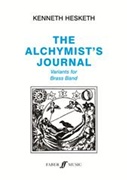
The Alchymist's Journal (Brass Band - Score and Parts) - Hesketh, Kenneth
The Alchymist's Journal (Variants for Brass Band) was commissioned by Faber Music Band Consultant Paul Hindmarsh in 2001, with the support of the Brass Band Heritage Trust, as a substantial concert/contest challenge that would be within the compass of the country's most able youth and first section bands. It received its first performance in January 2002, by Black Dyke Band under Nicholas Childs, as part of the Royal Northern College of Music Festival of Brass.Since its original publication, composer Kenneth Hesketh has made a number of revisions to the work. Most of these were included in the recording made by Foden's Band conducted by Bramwell Tovey. This definitive new edition, including all the composer's revisions, has been specially prepared for the 2015 National Brass Band Championships of Great Britain and is the text that all bands performing were required to use.Suitable for 1st Section Bands and aboveDuration: 12 minutes
Estimated dispatch 7-14 working days
-
 £82.95
THEME AND CO-OPERATION (Passacaglia for Brass) (Brass Band - Score and Parts) - Horovitz, Joseph
Commissioned for the Premier Division Finals of the Boosey & Hawkes National Brass Band Championships of Great Britain with funds provided by the Co-operative Union Limited on the occasion of the 150th anniversary of the Co-operative Movement. Published in 1994. Recorded on Polyphonic DPRL901D Joseph Horovitz (The Brass Band Music of)
Estimated dispatch 7-14 working days
-
£37.95
THEME AND CO-OPERATION (Passacaglia for Brass) (Brass Band - Score only) - Horovitz, Joseph
Commissioned for the Premier Division Finals of the Boosey & Hawkes National Brass Band Championships of Great Britain with funds provided by the Co-operative Union Limited on the occasion of the 150th anniversary of the Co-operative Movement. Published in 1994. Recorded on Polyphonic DPRL901D Joseph Horovitz (The Brass Band Music of)
Estimated dispatch 7-14 working days
-
 £37.95
TOCCATA from Organ Symphony No.5 (Brass Band) - Widor, Charles-Marie - Sparke, Philip
Recorded on Polyphonic QPRL056D National Brass Band Championships of Great Britain and Gala Concert - 1992, Polyphonic QPRL040D Pageantry
Estimated dispatch 7-14 working days
-
 £154.99
VARIETY OF SKILLS (Brass Band) - Pallhuber, Hermann
Commissioned for the 2012 Dutch National Brass Band Championships as the set test piece for the championship section. Duration: 17:00
Estimated dispatch 7-14 working days
 View Music