
Results
-
 £48.56
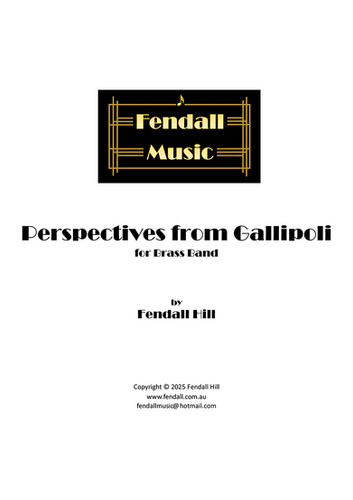
Perspectives from Gallipoli (Brass Band) Fendall Hill
This powerful and evocative work by Australian-New Zealand composer Fendall Hill pays tribute to the ANZAC soldiers who passed through Weymouth, Dorset during World War I. Inspired by first-hand accounts, the piece follows the emotional journey of a young soldier - from eager enlistment, through the harrowing Gallipoli campaign, to recovery and reflection in Weymouth. Structured in four movements, the music captures anticipation, fear, fierce resistance, and eventual healing, culminating in a moment of remembrance. The hymn tune Wareham -written by Dorset composer William Knapp - features prominently as a thematic thread, honouring the region's historical connection to the ANZAC legacy. A deeply moving addition to the brass band repertoire, this work is both a musical narrative and a heartfelt gesture of gratitude to the people of Dorset for their care and ongoing commemoration of the ANZACs. To view a performance of the work featuring ANZAC Brass please visit www.youtube.com/watch?v=diz9TRz7rwE Duration: approx. 8.00 minutes Difficulty Level: 1st Section + PDF download includes parts and score. Sheet music available at www.brassband.co.uk (UK) or https://satradecentral.org (USA) Instrumentation: Soprano Cornet Eb Solo Cornet Bb Repiano Cornet Bb 2nd Cornet Bb 3rd Cornet Bb Flugel Horn Bb Solo Horn Eb 1st Horn Eb 2nd Horn Eb 1st Baritone Bb 2nd Baritone Bb 1st Trombone Bb 2nd Trombone Bb Bass Trombone Euphonium Bb Bass Eb Bass Bb Timpani Percussion 1-3
In Stock: Estimated dispatch 1-3 working days
-
 £37.35
Resilience (Brass Band) Andrew Wainwright
Resilience was composed by Andrew Wainwright for the River City Brass Band Composer Competition 2022, later being awarded first prize. The work celebrates the band's short but rich history, with a particular focus on the determination it has shown, like so many bands around the world, to continue its tradition of musical excellence despite the unprecedented challenges of the pandemic that led to an extended hiatus in music making. To view a video of River City Brass performing the work please visit www.youtube.com/watch?v=6y_MEm2eEeQ PDF download includes score and parts. Sheet music available from: UK - www.brassband.co.uk USA - www.solidbrassmusic.com Difficulty Level: 1st Section + Instrumentation: Soprano Cornet Eb Solo Cornet Bb Repiano Cornet Bb 2nd Cornet Bb 3rd Cornet Bb Flugel Horn Bb Solo Horn Eb 1st Horn Eb 2nd Horn Eb 1st Baritone Bb 2nd Baritone Bb 1st Trombone Bb 2nd Trombone Bb Bass Trombone Euphonium Bb Bass Eb Bass Bb Percussion 1-3
In Stock: Estimated dispatch 1-3 working days
-
 £37.35
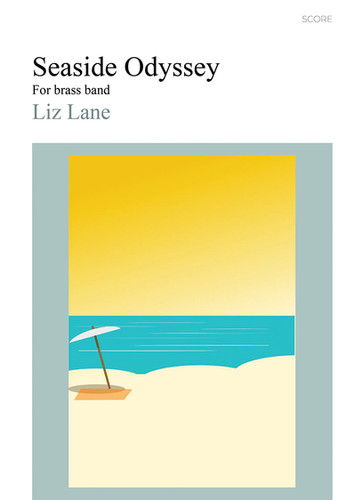
Seaside Odyssey (Brass Band) Liz Lane
Seaside Odyssey is a celebration of the British seaside! The music represents a juxtaposition between natural and manmade elements; there are two main musical themes - the reflective sea (a wordless setting of John Masefield's Sea Fever) and a more lively 'seaside' theme, heard separately in different ways and later together. From childhood memories, sand, beach and cliffs to cafes, ice creams, fish and chips, buckets and spades, boating trips, beach huts, bandstands, piers, theatres, gardens, mini golf, arcades and more, Seaside Odyssey is a journey from dawn to dusk with the sea at the heart of the music. This work was commissioned by Grimethorpe Colliery Band for its seaside tour, August 2023, where it performed at Paignton, Lyme Regis, Weymouth, Shanklin and Herne Bay. Includes optional poems and words specially curated from poets associated with the seaside towns, which can be read before a performance. Duration: approx. 5 minutes This PDF download includes parts and score. Sheet music available at www.brassband.co.uk (UK) or https://satradecentral.org (USA) Instrumentation: Eb Soprano Cornet Bb Solo Cornet Bb Repiano Cornet Bb Cornet 2 Bb Cornet 3 Bb Flugelhorn Eb Solo Tenor Horn Eb Tenor Horn 1 Eb Tenor Horn 2 Bb Baritone 1 Bb Baritone 2 Bb Trombone 1 Bb Trombone 2 Bass Trombone Bb Euphonium Eb Bass Bb Bass Percussion 1: timpani, triangle and optional 'arcade jackpot' effect (see score/part) Percussion 2: 3 suspended cymbals (2 ride, 1 crash) and hi-hat Percussion 3: snare, tom-toms and bass drum Percussion 4: glockenspiel
In Stock: Estimated dispatch 1-3 working days
-
 £63.51
Temperamental (Brass Band) Fendall Hill
This work by Fendall Hill was the set test for the 2021 National Brass Band Championships of New Zealand, B Grade. The composer writes: 'J.S. Bach (1685-1750) is deemed by many to be the 'Ulimate Composer'. He added an incredible proportion to the DNA of western music, and his influence is heard in the music of today. Like many artists, he was not overly recognised as a composer during his lifetime, and it took an 1829 performance of the St Matthew Passion by Mendelssohn to ignite a recognition of his place in the music world, a place he has maintained ever since. This piece starts with a similar spark of rediscovery of the music of Bach. It contains arrangements of various works, interspersed with composition based on Bach's chord structures, sections in the style of Bach, and original sections inspired by the moods created along the way. The first section explores the Toccata, and great organ works. This leads into an exploration of his choral works, and a finale based on the Preludes. The word 'Tempered' has different meanings, and all seem to apply to the music of Bach, and these appeal to the musical, engineering and spiritual aspects of my personal life. His music reaches to the humanity and divinity, it has strength, structure and order that creates frameworks in which incredible complexity reigns; and the complexity leads to a wildness, a kind of craziness that represents a range of human moods, and can change without warning. The same piece of music affects people in very different ways. I don't know if it's Bach's music, or us, but it can seem out of control and under control at the same time - the combination is highly temperamental. To view a follow-the-score video of the work please visit: https://youtu.be/zpNxITUqXZU Sheet music available from: UK - www.brassband.co.uk USA - www.solidbrassmusic.com Difficulty Level: 1st Section + Instrumentation: Soprano Cornet Eb Solo Cornet 1&2 Bb Solo Cornet 3&4 Bb 2nd Cornet Bb 3rd Cornet Bb Flugel Horn Bb Solo Horn Eb 1st Horn Eb 2nd Horn Eb 1st Baritone Bb 2nd Baritone Bb 1st Trombone Bb 2nd Trombone Bb Bass Trombone Euphonium Bb Bass Eb Bass Bb Timpani Percussion 1-4
In Stock: Estimated dispatch 1-3 working days
-
 £33.62
The Lonely Shepherd (Brass Band) James Last arr. Mark Ford
Few melodies possess the haunting beauty and instant recognizability of The Lonely Shepherd. Originally composed by legendary bandleader James Last for a solo project titled Filmmusik Ohne Filme (Film Music Without Films), the track eventually found its home on the 1977 album Memories of Russia. It was this recording that catapulted pan flutist Gheorghe Zamfir to international superstardom, reaching the Top 25 on the German charts and becoming a permanent fixture in the global musical lexicon. While the original album title suggested "films without movies," the track didn't stay "homeless" for long. Its evocative, melancholic atmosphere has made it a favorite for directors across decades and continents. This brass band arrangement preserves the ethereal quality of the original, the soaring melodic lines and rhythmic intensity of the finale offering a brilliant showcase of phrasing and emotional depth. To view a rolling score video of the work please visit https://youtu.be/DgwjIij93Os Duration: Approx. 4.00 minutes Difficulty Level: 3rd Section + This PDF download includes the full score and parts. Sheet music available at www.brassband.co.uk (UK) or https://satradecentral.org (USA) Instrumentation: Soprano Cornet Eb Solo Cornet Bb Repiano Cornet Bb 2nd Cornet Bb 3rd Cornet Bb Flugel Horn Bb Solo Horn Eb 1st Horn Eb 2nd Horn Eb 1st Baritone Bb 2nd Baritone Bb 1st Trombone Bb 2nd Trombone Bb Bass Trombone Euphonium Bb Bass Eb Bass Bb Drum Kit Percussion 1-2
In Stock: Estimated dispatch 1-3 working days
-
 £33.62
The Piano Preludes (Brass Band) George Gershwin arr. Rob Bushnell
First performed by the composer at the Roosevelt Hotel in New York in 1926, The Piano Preludes (or Three Preludes) are a collection of short pieces by George Gershwin, show casing early-20th-century American classical music, as influenced by jazz. Gershwin originally planned to compose 24 preludes, wrote seven, performed only six publically and was further reduced to three when first published. The work was dedicated to friend and musical advisor Bill Daly. The first prelude begins with a five-note blues motif. It features syncopated rhythms based on the Brazilian baiao and minor-seventh chords throughout. The second prelude, which Gershwin said was "a sort of blues lullaby" consists of two sections: the first a "lazy" melody upon a steady beat of crotchets; the second the bass takes the melody, continuing with the steady beats. The third prelude was called "Spanish" by Gershwin, and features a question-and-answer type melody, starting in a minor tonality and ending in major one. This arrangement is for the British-style brass band, with alternative parts for horns in F and bass-clef lower brass. To view a follow-the-score video please visit www.youtube.com/watch?v=XqIQ0j1SWlc PDF download includes score and parts. Sheet music available from: UK - www.brassband.co.uk USA - www.solidbrassmusic.com Difficulty Level: 1st Section + Instrumentation: Soprano Cornet Eb Solo Cornet Bb Repiano Cornet Bb 2nd Cornet Bb 3rd Cornet Bb Flugel Horn Bb Solo Horn Eb 1st Horn Eb 2nd Horn Eb 1st Baritone Bb 2nd Baritone Bb 1st Trombone Bb 2nd Trombone Bb Bass Trombone Euphonium Bb Bass Eb Bass Bb Timpani Drum Kit Mallet Percussion
In Stock: Estimated dispatch 1-3 working days
-
 £37.35
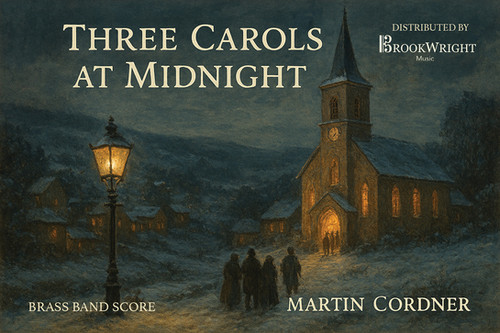
Three Carols at Midnight (Brass Band) Martin Cordner
Rooted in the sacred stillness of a French village on Christmas Eve, this suite by Martin Cordner draws upon traditional carols that have echoed through centuries of candlelit chapels and midnight vigils. Each movement offers a window into the Nativity story: I. Mystery: Noel Nouvelet (Christmas Comes Anew) opens with modal wonder, evoking the anticipation of Christ's coming and the quiet awe of Advent. II. Cradle: Entre le boeuf et l'ane gris (Between the Ox and the Grey Donkey) rests in pastoral tenderness, where the newborn Savior lies between humble beasts, watched over by angels and the Virgin. III. Joy: Il est ne, le divin enfant (He is born, the Divine Infant) bursts forth in celebration, proclaiming the divine birth with rustic dance and jubilant praise. Together, these carols form a musical triptych - moving from mystery to intimacy to exultation. Three Carols at Midnight invites listeners to step into the hush of a French Noel, where the sacred story is told not only in word, but in melody, memory, and light. All proceeds support the mission and ministry of The Salvation Army Delaware Command, USA. To view a rolling score video of the work please visit www.youtube.com/watch?v=fUcCluBS18Q Difficulty level: 4th Section + Duration: approx. 5.00 minutes This PDF download includes parts and score. Sheet music available at www.brassband.co.uk or www.durhammusicshop.co.uk (UK) or https://satradecentral.org (USA) Instrumentation: Soprano Cornet Eb 1st Cornet Bb 2nd Cornet Bb 1st Horn Eb 2nd Horn Eb 1st Baritone Bb 2nd Baritone Bb 1st Trombone Bb 2nd Trombone Bb Bass Trombone Euphonium Bb Bass Eb Bass Bb Percussion 1-2 Glockenspiel
In Stock: Estimated dispatch 1-3 working days
-
 £37.35
Unbounded Love (Brass Band) Bortniansky arr. Olaf Ritman
Unbounded Love is a deeply moving work that bridges the gap between sacred tradition and personal tribute. Drawing inspiration from the beloved 18th-century hymn Ich bete an die Macht der Liebe (I Pray to the Power of Love), this arrangement transforms a timeless spiritual message into a profound musical experience. The foundation of this work lies in the 1822 melody by Dmitri Bortniansky. Originally set to the poetry of Gerhard Tersteegen, this dignified and contemplative theme has served as a cornerstone of ceremonial music for centuries, symbolising solace, reverence, and the liberating power of divine love. Unbounded Love is an intimate memorial dedicated to Hein Voskamp, a cherished soprano player and close friend of the composer. Born from a simple final request - to hear this hymn one last time - the piece became the composer's way of navigating grief and expressing gratitude when words were no longer enough. To view a video of the Amsterdam Staff Band performing the work please visit https://youtu.be/Ug6tZwX7MiQ Duration: Approx. 5.45 minutes Difficulty Level: 4th Section + This PDF download includes the full score and parts. Sheet music available at www.brassband.co.uk (UK) or https://satradecentral.org (USA) Instrumentation: Soprano Cornet Eb Solo Cornet Bb Repiano Cornet Bb 2nd Cornet Bb 3rd Cornet Bb Flugel Horn Bb Solo Horn Eb 1st Horn Eb 2nd Horn Eb 1st Baritone Bb 2nd Baritone Bb 1st Trombone Bb 2nd Trombone Bb Bass Trombone Euphonium Bb Bass Eb Bass Bb Timpani Glockenspiel Percussion
In Stock: Estimated dispatch 1-3 working days
-
 £33.62
Vivace from Piano Sonata No.2 (Brass Band) Prokofiev arr. Yasuaki Fukuhara
Bristling with energy and vitality, this is a terrific arrangement of the fourth and final movement from Piano Sonata No. 2, which is Sergei Prokofiev's celebrated piano solo piece composed in 1912. The arranger writes: 'Whilst I have endeavoured to maintain the characteristics and flavours of the original piece, I altered and added dynamics and musical notations in a few cases where they seemed to fit the medium of the brass band and to reflect a general performance manner of this piece on a piano. I also added percussion parts which provide additional colour. After careful consideration, I decided to keep to the original key in order to maintain the brightness and clarity of the original work.' PDF download includes score and full set of parts. To view a rolling score video please visit www.youtube.com/watch?v=X3GUHQI3u7E Sheet music available from: UK - www.brassband.co.uk USA - www.solidbrassmusic.com Difficulty Level: 1st Section + Instrumentation: Soprano Cornet Eb Solo Cornet Bb Repiano Cornet Bb 2nd Cornet Bb 3rd Cornet Bb Flugel Horn Bb Solo Horn Eb 1st Horn Eb 2nd Horn Eb 1st Baritone Bb 2nd Baritone Bb 1st Trombone Bb 2nd Trombone Bb Bass Trombone Euphonium Bb Bass Eb Bass Bb Timpani Percussion 1-2
In Stock: Estimated dispatch 1-3 working days
-
 £59.77
We Seven (Brass Band) Derek Jenkins
We Seven, the title of this work, comes from a book by the same name written by the United States's first astronauts. The composer writes: 'In 1959, the United States entered the space race by starting a programme whose main aims included sending a solo astronaut into space and recovering him safely. Project Mercury, as this programme was so called, recruited the first seven American astronauts and successfully sent six of them into space. These men were Scott Carpenter, Gordon Cooper, John Glenn, Gus Grissom, Wally Schirra, Alan Shepard, and Deke Slayton, and collectively they became known as the 'Mercury Seven.' Through their efforts and those of countless others, the United States Space Program accomplished much with these six flights, including successfully sending an astronaut into space, putting a man in orbit, and keeping him up there for more than 24 hours. In 1962, shortly after Glenn and Carpenter's orbital flights, the 'Mercury Seven' co-wrote the book We Seven and throughout it, the astronauts discuss the events leading from their selection into the programme up through Carpenter's flight in May of 1962. The primary material for the work comes from two sources: the use of musical cryptograms to encode the astronauts names and initials into pitches and the aria 'Un bel di vedremo' from Giacomo Puccini's opera, Madame Butterfly. The inclusion of the latter comes directly from one of Glenn's chapters in the book. Together with a couple of the other astronauts, he would often listen to the opera to unwind from a long day of training. I would like to think that as he was orbiting the Earth that this opera, particularly this aria, would be running through his mind.' This work commemorates the Project Mercury on the 50th anniversary of its conclusion and was written for Joseph Parisi and the University of Missouri-Kansas City Wind Ensemble. This version for brass band has been prepared by the composer for the Fountain City Brass Band. To view a video of Fountain City Brass Band performing the work please visit: www.youtube.com/watch?v=yD3sBWhGkOo Sheet music available from: UK - www.brassband.co.uk USA - www.solidbrassmusic.com Difficulty Level: 1st Section + Instrumentation: 1 Soprano Cornet (Eb) 9 Cornets (Bb) [Both 3rd Cornets double Crystal Glasses] 1 Flugelhorn 3 Tenor Horns (Eb) [2nd Horn doubles Crystal Glasses] 2 Baritones (Bb) 2 Trombones (Bb) 1 Bass Trombone 2 Euphoniums (Bb) 2 Basses (Eb) 2 Basses (Bb) 4 Percussion
In Stock: Estimated dispatch 1-3 working days