
Results
-
£84.99
Utopia - Jacob de Haan
Utopia is the name of a book written by the English author Thomas More and was published in 1516. The title is a word thought up by More himself, after the Greek language, meaning "Nowhereland" and leading to the invention of the words utopian scheme and utopian. Utopia pictured an ideal state on an island far from the inhabited world. This idea was the basis of the composition. It makes one think of Oregon in variety of themes and style. Utopia also exists of a combination of styles that breathe the atmosphere of film music. However, Utopia sounds less American. The slow and stirring middle part for example is closer to the European romanticism: the chord signals in the brasssection remind of Wagner's music.
Estimated dispatch 5-14 working days
-
 £69.99
Fanfare for Christmas - Andrew R. Mackereth
Rousing opening fanfare including parts from Joy to the World. Challenging!
Estimated dispatch 5-14 working days
-
 £34.95
Escape Velocity (Brass Band - Score and Parts) - Cordner, Martin
Escape Velocity is the scientific term for the speed at which a body overcomes the gravitational pull of another body. Thematically, the music seeks to capture the busyness and 'gravitational pull' of the fallen world and the struggle of the believer to overcome and escape into the restful presence of God. Eventually, the believer breaks free from the world, the work culminating in a presentation of the popular Hillsong anthem, 'I will run to you'.
Estimated dispatch 7-14 working days
-
£17.50
Escape Velocity (Brass Band - Score only) - Cordner, Martin
Escape Velocity is the scientific term for the speed at which a body overcomes the gravitational pull of another body. Thematically, the music seeks to capture the busyness and 'gravitational pull' of the fallen world and the struggle of the believer to overcome and escape into the restful presence of God. Eventually, the believer breaks free from the world, the work culminating in a presentation of the popular Hillsong anthem, 'I will run to you'.
Estimated dispatch 7-14 working days
-
 £64.95
Canticle of the Sun (Percussion Solo with Brass Band - Score and Parts) - Ellerby, Martin
The Canticle of the Sun was commissioned by Birmingham Symphonic Winds conductor Keith Allen for Simone Rebello. The work is based on the canticle written by St. Francis of Assisi (1182-1226) whose ideas that nature and the material world were gifts from God and should be valued and appreciated. The brass band version was made especially for a studio recording by the Black Dyke Band conducted by Nicholas J. Childs with Simone Rebello on percussion. Duration: 13.00
Estimated dispatch 7-14 working days
-
 £49.99
Journey to the Past (from Anastasia) (Brass Band - Score and Parts) - Flaherty, Stephen - Bond, Christopher
Step into an enchanting world of nostalgia with the compelling sounds of Journey To The Past, a wonderful little gem by Stephen Flaherty, magically arranged for brass band by Christopher Bond. This song, originally composed for the popular animated film Anastasia, tells a story of hope, discovery and finding one's true self. The warm brass band sounds add a new dimension, infusing each note with emotion and passion.Duration: 3.15
Estimated dispatch 7-14 working days
-
 £59.99
The Bandwagon (Brass Band - Score and Parts) - Sparke, Philip
Band director and radio presenter Yutaka Nishida hails from Tokyo and is the Frank Renton of the Japanese brass band world. He presents a weekly two-hour music programme on the Japanese national radio station, Digital Radio Musicbird. The programme is called The Bandwagon and the station commissioned Philip Sparke to compose a march, which could be used as the theme tune. The result is this bright and breezy march in simple ABA form. A great lively item for any concert.Duration: 2:45
Estimated dispatch 7-14 working days
-
£100.00
Handel in the Band (Brass Band - Score and Parts) - Downie, Kenneth
Handel in the Band is a virtuoso set of symphonic variations on one of Handel's best known keyboard dances, the Sarabande from his Suite in D minor, HWV 437, based on the Spanish traditional dance La Folia. Kenneth Downie's work was commissioned by Brass Band Treize Etoiles, for performance at the 2013 Swiss National Brass Band Championships, where it was conducted by James Gourlay. The title is a reference to Percy Grainger's popular Handel in the Strand, and is indicative of the witty and theatrical nature of the music, which is more playful than conventional competition pieces and as such offers different challenges to brass bands as well as being thoroughly entertaining for audiences.Kenneth Downie is one of the most respected and experienced brass band composers. His music has been widely performed and published throughout the brass band world since the 1960s.Handel in the Band was selected as the set work for the Championship Section final of the 2018 National Brass Band Championships of Great Britain, which took place at the Royal Albert Hall, London, on 6th October 2018.Duration: 15.00
Estimated dispatch 7-14 working days
-
£19.99
Handel in the Band (Brass Band - Score only) - Downie, Kenneth
Handel in the Band is a virtuoso set of symphonic variations on one of Handel's best known keyboard dances, the Sarabande from his Suite in D minor, HWV 437, based on the Spanish traditional dance La Folia. Kenneth Downie's work was commissioned by Brass Band Treize Etoiles, for performance at the 2013 Swiss National Brass Band Championships, where it was conducted by James Gourlay. The title is a reference to Percy Grainger's popular Handel in the Strand, and is indicative of the witty and theatrical nature of the music, which is more playful than conventional competition pieces and as such offers different challenges to brass bands as well as being thoroughly entertaining for audiences.Kenneth Downie is one of the most respected and experienced brass band composers. His music has been widely performed and published throughout the brass band world since the 1960s.Handel in the Band was selected as the set work for the Championship Section final of the 2018 National Brass Band Championships of Great Britain, which took place at the Royal Albert Hall, London, on 6th October 2018.
Estimated dispatch 7-14 working days
-
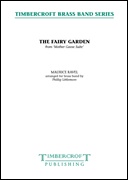 £35.00
Fairy Garden, The (from Mother Goose Suite) (Brass Band - Score and Parts) - Ravel, Maurice - Littlemore, Phillip
Ravel wrote his five short piano pieces entitled?Ma M?re l'Oye?(Mother Goose) for two young children, Mimie and Jean Godeski in 1910. The suite invites us to the enchanted world of childhood through these five atmospheric tales. The final part of Ravel's suite is a grand finale, although where Ravel got his inspiration for the fairy garden is unknown. Whatever its origin, it certainly is a delightful piece of music - slow in tempo, quiet to start, with rich harmonies and delicate solos, all leading to a tumultuous climax.?Duration: 3:00
Estimated dispatch 7-14 working days
 View Music