
Results
-
 £134.99
Tuba Concerto (Eb Bass Solo with Brass Band - Score and Parts) - Sparke, Philip
When writing his tuba concerto, Philip Sparke wanted to create a work which explored the many aspects of the instrument's technical and vocal qualities but without resorting to caricature. The result is a concerto in two joined movements, which can both be programmed individually, that contains both many lyrical lines together with stunning virtuosic passages. An outstanding concerto that tuba players and brass band audiences alike will enjoy and applaud.Duration: 13:15
Estimated dispatch 7-14 working days
-
 £106.99
Harlequin (Euphonium Solo with Brass Band - Score and Parts) - Sparke, Philip
Harlequin was commissioned by, and is dedicated to, euphonium virtuoso David Childs. The piece takes its inspiration from the happy and sad masks that symbolise the Commedia dell'Arte (which features Harlequin as one of its main characters) and comprises of two movements, a slow modal ballad followed by a frenetic faster movement. A fantastic showpiece for the euphonium and brass band.Duration: 9:15
Estimated dispatch 7-14 working days
-
 £86.00
Excalibur (Brass Band - Score and Parts) - Van der Roost, Jan
Jan Van der Roost based this concert piece in three movements on the legend of King Arthur.Please note that the score and set of parts are currently published in clear hand written manuscript format.Duration: 13:50
Estimated dispatch 7-14 working days
-
 £94.95
An Age of Kings (Mezzo-Soprano Solo with Brass Band and optional choir - Score and Parts) - Gregson, Edward
The origins of this work date back to 1988, when I was commissioned by the Royal Shakespeare Company to write the music for The Plantagenets trilogy, directed by Adrian Noble in Stratford-upon-Avon. These plays take us from the death of Henry V to the death of Richard III. Later, in 1991, I wrote the music for Henry IV parts 1 and 2, again in Stratford. All of these plays are concerned with the struggle for the throne, and they portray one of the most turbulent periods in the history of the British monarchy.Much of the music used in these productions was adapted into two large symphonic suites for wind band - The Sword and the Crown (1991) and The Kings Go Forth (1996). An Age of Kings is a new version for brass band incorporating music from both the symphonic suites for wind band. It was specially composed for a recording made by the Black Dyke Band, conducted by Nicholas Childs, in 2004.An Age of Kings is music on a large-scale canvas, scored for augmented brass band, with the addition of harp, piano, mezzo-soprano solo, male chorus, as well as two off-stage trumpets. The music is also organized on a large-scale structure, in three movements, which play without a break - "Church and State", "At the Welsh Court", and "Battle Music and Hymn of Thanksgiving".The first movement, "Church and State", opens with a brief fanfare for two antiphonal trumpets (off-stage), but this only acts as a preface to a Requiem aeternam (the death of Henry V) before changing mood to the English army on the march to France; this subsides into a French victory march, but with the English army music returning in counterpoint. A brief reminder of the Requiem music leads to the triumphal music for Richard Plantagenet, Duke of York, father of Edward IV and Richard III (the opening fanfare transformed). However, the mood changes dramatically once again, with the horrors of war being portrayed in the darkly-drawn Dies Irae and Dance of Death, leading to the final section of the first movement, a funeral march for Henry VI.The second movement, "At the Welsh Court", takes music from the Welsh Court in Henry IV part 1 with a simple Welsh folk tune sung by mezzo-soprano to the inevitable accompaniment of a harp. This love song is interrupted by distant fanfares, forewarning of battles to come. However, the folk song returns with variation in the musical fabric. The movement ends as it began with off-stage horn and gentle percussion.The final movement, "Battle Music and Hymn of Thanksgiving", starts with two sets of antiphonally placed timpani, drums and tam-tam, portraying the 'war machine' and savagery of battle. Trumpet fanfares and horn calls herald an heroic battle theme which, by the end of the movement, transforms itself into a triumphant hymn for Henry IV's defeat of the rebellious forces.- Edward GregsonDuration - 22'00"Optional TTBB available separately.
Estimated dispatch 7-14 working days
-
 £69.99
Thailand Impressions (Brass Band - Score and Parts) - Schoonenbeek, Kees
The source of inspiration for Thailand Impressions was a trip that the composer made to the magnificent country of Thailand. The three movements reflect the many different aspects of this fascinating part of the world including Bangkok - both modern and antique, Buddhist temples and the infamous Burma railway.Duration: 8.00
Estimated dispatch 7-14 working days
-
 £105.00
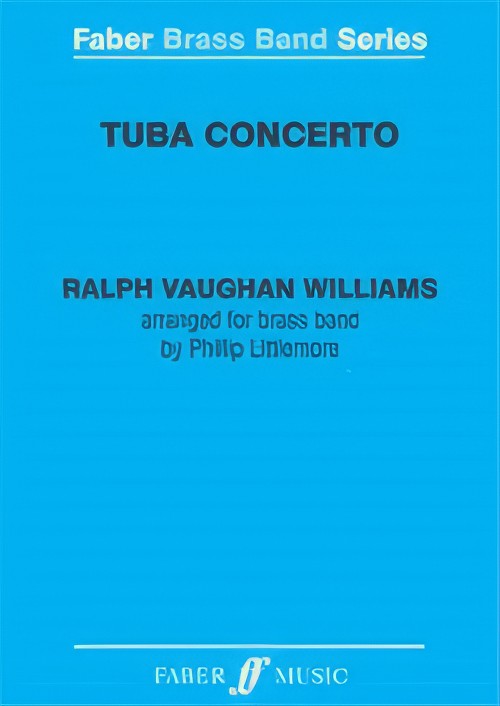
Tuba Concerto (Tuba Solo with Brass Band - Score and Parts) - Vaughan Williams, Ralph - Littlemore, Phillip
Ralph Vaughan Williams' Tuba Concerto was written in 1953/4 in response to an invitation to compose a work for the Golden Jubilee of the London Symphony Orchestra. Vaughan Williams was by then in his eighty-second year. The lively, outer movements both conclude with extended cadenzas, while the beautifully lyrical Romanza is Vaughan Williams at his best. Phillip Littlemore's brass band arrangement is a welcome addition to the brass band repertoire. Suitable for Championship Section Bands. Duration: 15.00
Estimated dispatch 7-14 working days
-
 £59.99
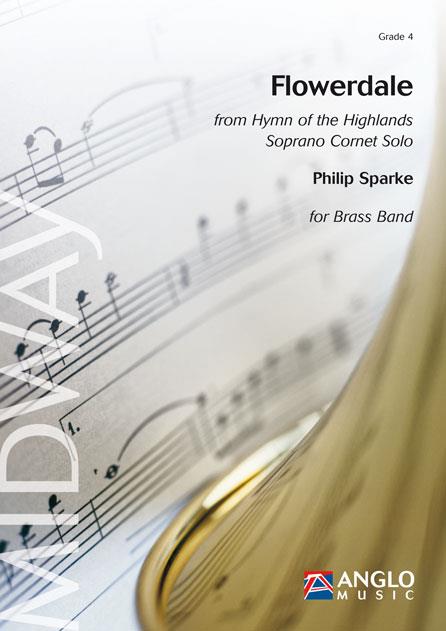
Flowerdale (from Hymn of the Highlands) (Soprano Cornet Solo with Brass Band - Score and Parts) - Sparke, Philip
Flowerdale is a forest in Wester Ross, Scotland, which is well-known for it's beautiful waterfall. This piece, for solo soprano cornet, is one of the movements from Philip Sparke's epic suite Hymn of the Highlands. It depicts the tall trees swaying gently in the wind with the serenity of the area being reflected by the subtle accompaniment of the band. Let your soprano player bloom into colour with this exquisite solo. A real show stopper.Duration: 4:20
Estimated dispatch 7-14 working days
-
 £49.95
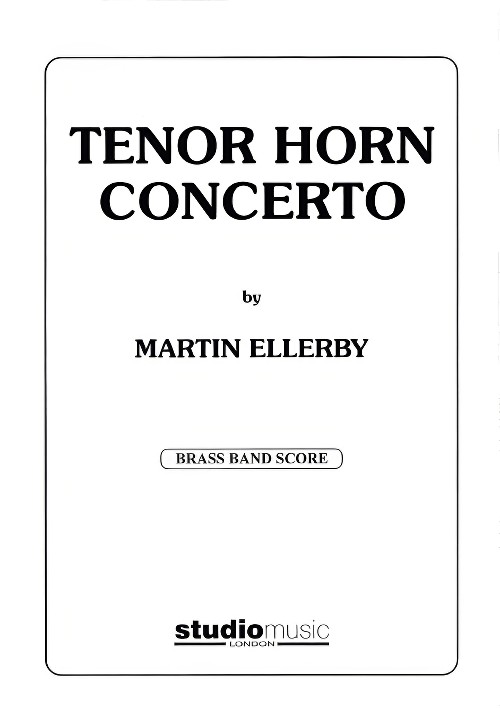
Tenor Horn Concerto (Brass Band - Score only) - Ellerby, Martin
Movements:SonataElegyRondoDuration 14.00Recorded on QPRL210D Tristan EncountersPiano accompaniment edition also available. Solo UK Grade 7+
Estimated dispatch 7-14 working days
-
 £94.95
Tenor Horn Concerto (Brass Band - Score and Parts) - Ellerby, Martin
Movements:SonataElegyRondoDuration 14.00Recorded on QPRL210D Tristan EncountersPiano accompaniment edition also available. Solo UK Grade 7+
Estimated dispatch 7-14 working days
-
 £99.95
Euphonium Concerto (Euphonium Solo with Brass Band - Score and Parts) - Ellerby, Martin
This Euphonium Concerto was written between late 1994 and early 1995 in response to a commission from Steven Mead to whom the work is dedicated. It is cast in four movements and lasts a little over 22 minutes.Includes: FantasyCapriccioRhapsody (for Luis)DiversionsDuration: 22.30
Estimated dispatch 7-14 working days
 View Music