
Results
-
 £38.95
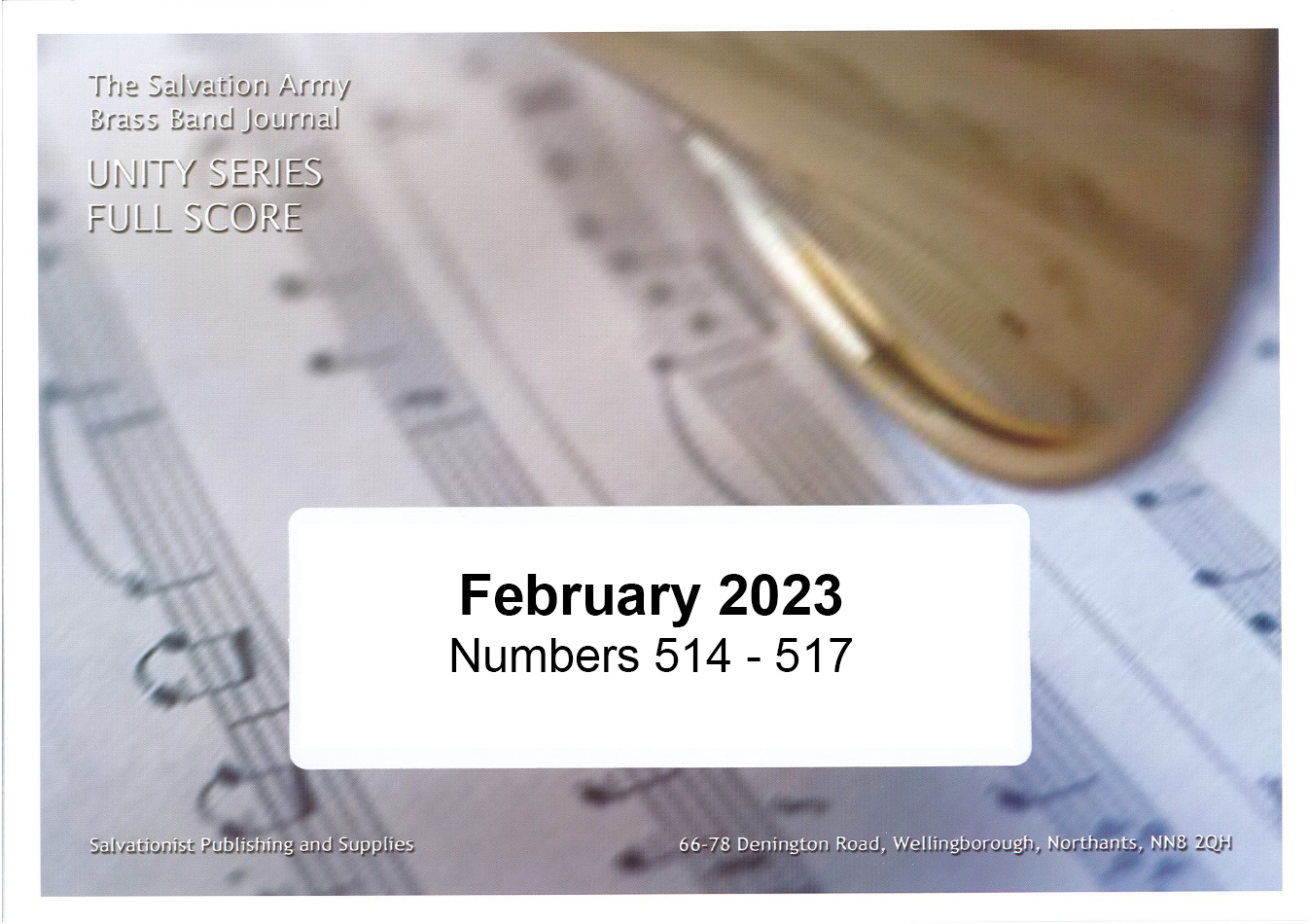
Unity Series Band Journal - Numbers 514 - 517, February 2023
514: Shine! (Samuel Shelley)This is a bright, energetic piece of work which Bandsman Samuel Shelley originally wrote at the request of Young People's Band Leader Neil Baker for Staple Hill YP Band. The two songs featured are Shine, by Nick Jackson, and Graham Kendrick's Shine, Jesus, shine.515: He's got the whole world in his hands (Morgan Juel Stavik)Morgan Juel Stavik has arranged one of the most widely known and loved spirituals, He's got the whole world in his hands, into a jazzy work perfect for family services.516: The blood will never lose its power (Stephen Hull)The blood will never lose its power, is an arrangement of Andra Crouch's gospel classic. It is composer Stephen Hull's debut work in the Brass Band Journals.517: You encircle me (Andrew Mackereth)You encircle me has been popular in Scandinavia for many years and is now available in this beautifully reflective setting by Andrew Mackereth.
Estimated dispatch 7-14 working days
-
 £29.95
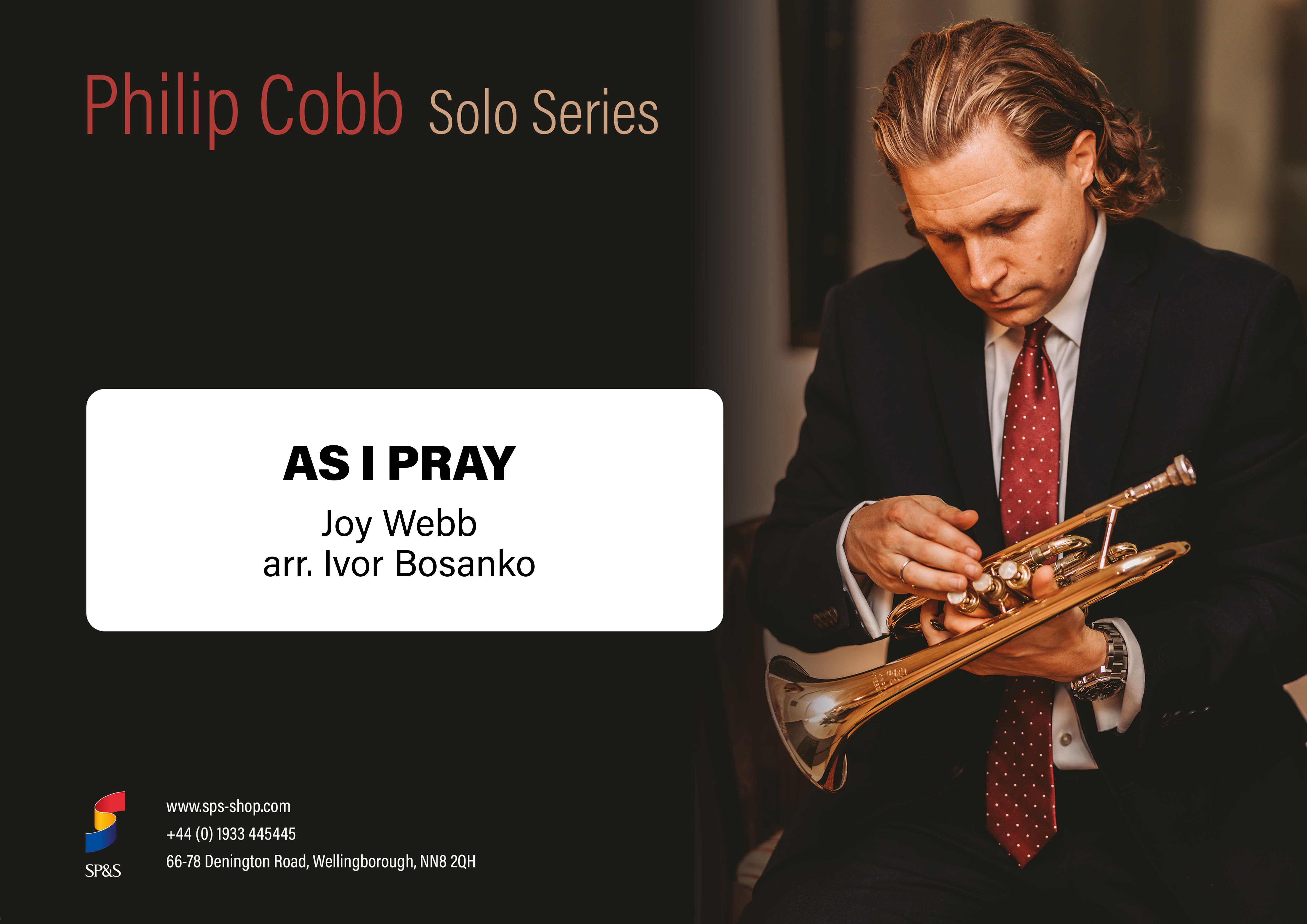
As I Pray (Cornet Solo with Brass Band - Score and Parts)
Joy Webb composed many Christian songs that continue to resonate with people today. As I Pray was originally written as a vocal solo and speaks of the constant need to communicate with God.Duration: 3.00
Estimated dispatch 7-14 working days
-
 £30.00
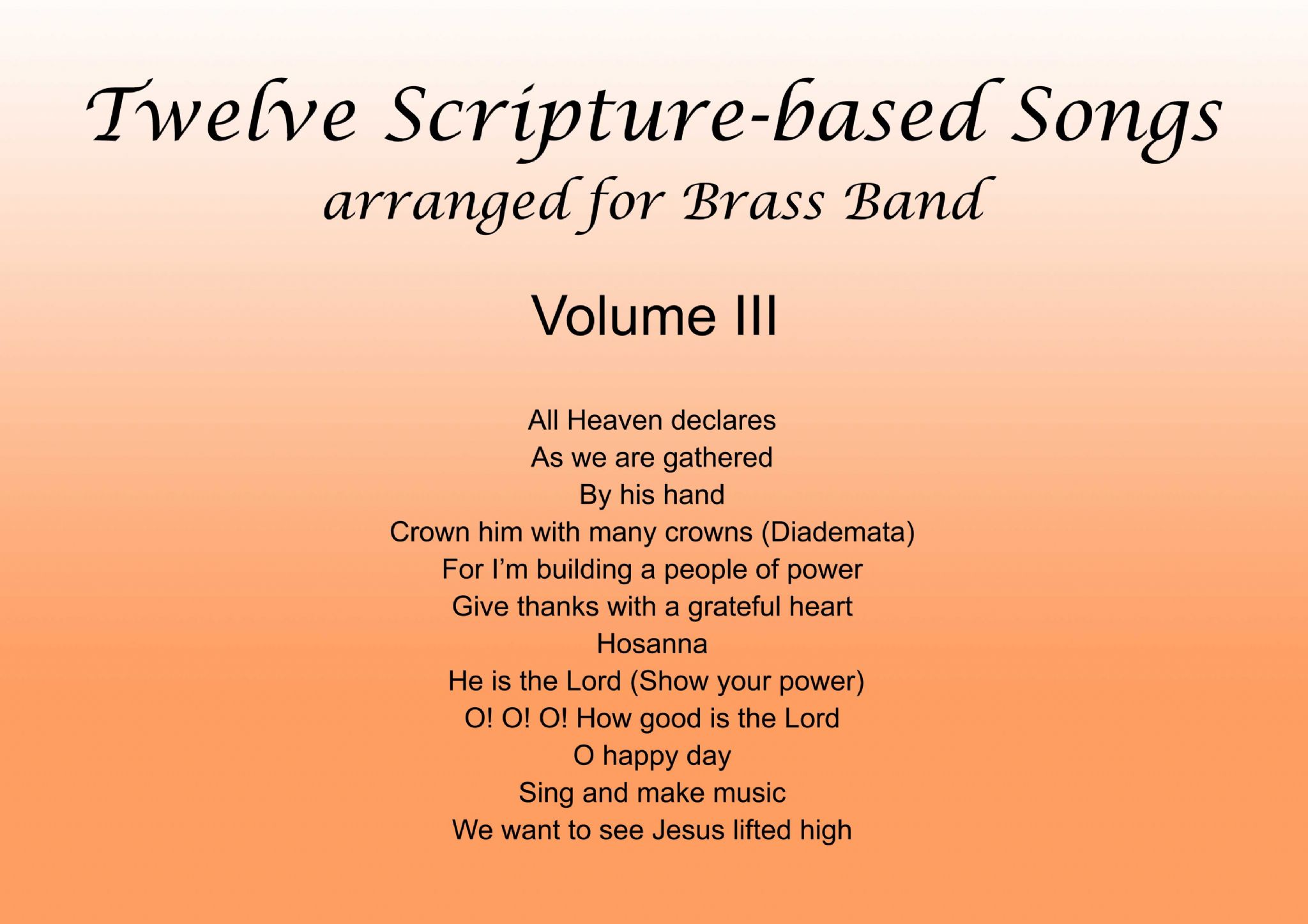
Twelve Scripture-Based Songs Volume III
Twelve scripture-Based Songs arranged for Brass Band (Volume III) are packaged and marketed in complete sets which include a full score and a set of master parts. It is intended that these parts be used as 'masters', for the purpose of photocopying a quantity of parts to accommodate the precise instrumentation needs of the band for which this has been purchased. All Heaven declaresAs we are gatheredBy his handCrown him with many crowns (Diademata)For I'm building a people of powerGive thanks with a grateful heartHosanna He is the Lord (Show your power)O! O! O! How good is the LordO happy daySing and make musicWe want to see Jesus lifted high
Estimated dispatch 7-14 working days
-
 £44.95
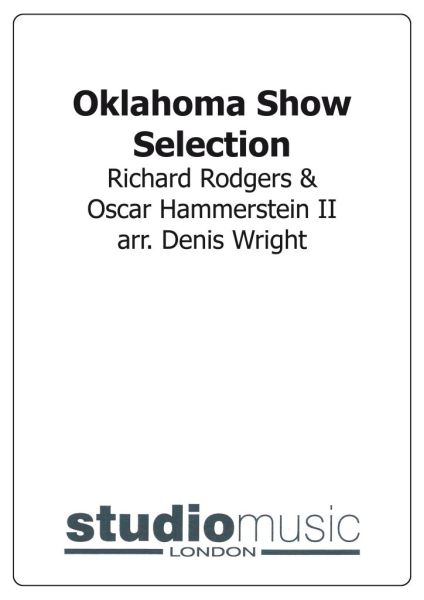
Oklahoma Show Selection
Includes: I Cain't Say No; Out Of My Dreams; The Surrey with the Fringe on Top; Oh What a Beautiful Mornin' Many a New Day; People Will Say We're in Love; Oklahoma.
Estimated dispatch 7-14 working days
-
 £43.99
The Divine Right (Brass Band - Score only) - Harper, Philip
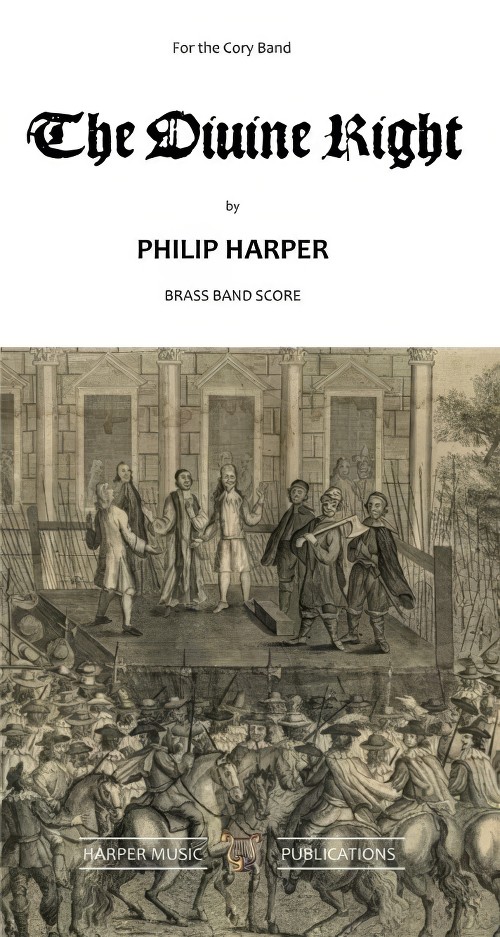
At the time of composing this piece, the Arab Spring was sweeping through the Middle East. It seemed that almost every week a new country's people had risen up against the regimes and dictatorships which had prevailed for generations, leaving many nations at a defining crossroads in their history. There were so many possible ways ahead: so many hopes, yet so many uncertainties.This music is a depiction of these revolutionary times, and several musical themes are in turn presented, discussed, considered, fought over, altered, rejected or accepted.Most nations have had, or probably will have, their own Arab Spring, including the United Kingdom. Events of 17th Century Britain provide the context for this piece, particularly those following the execution of the tyrant King Charles I on 30 January 1649. The regicide was in part due to Charless steadfast belief in the Divine Right of Kings, and led to a tumultuous interregnum, where England stood at its own defining crossroads. The music begins turbulently, before King Charles appears and is led to the gallows outside Banqueting House in central London where he is brutally decapitated. From the assembled crowd rose, according to one observer,a moan as I never heard before and desire I may never hear again.The music descends to emptiness.The musical argument which follows is not strictly programmatic, but a number of musical themes are all thrown into the melting pot, representing ideas such as: religion; military force; reasoned Parliamentary debate; and the chattering, irrepressible voice of the people. Additionally, there are some quotations from the music of royalist composer Thomas Tomkins (1572-1656), who was often in tune with the feeling of the times.This defining episode in England's history was brought to a close with the Restoration of the monarchy in 1660, and as the exiled King Charles II rode back into London the diarist John Evelyn wrote:Never was so joyful a day seen in this nation. I stood in the Strand and beheld it, and blessed God.At the end of the piece the bells ring out, and the musical appearance of the King has transformed from turbulent to triumphant.Duration: 17.00
Estimated dispatch 7-14 working days
-
£104.99
The Divine Right (Brass Band - Score and Parts) - Harper, Philip
At the time of composing this piece, the Arab Spring was sweeping through the Middle East. It seemed that almost every week a new country's people had risen up against the regimes and dictatorships which had prevailed for generations, leaving many nations at a defining crossroads in their history. There were so many possible ways ahead: so many hopes, yet so many uncertainties.This music is a depiction of these revolutionary times, and several musical themes are in turn presented, discussed, considered, fought over, altered, rejected or accepted.Most nations have had, or probably will have, their own Arab Spring, including the United Kingdom. Events of 17th Century Britain provide the context for this piece, particularly those following the execution of the tyrant King Charles I on 30 January 1649. The regicide was in part due to Charless steadfast belief in the Divine Right of Kings, and led to a tumultuous interregnum, where England stood at its own defining crossroads. The music begins turbulently, before King Charles appears and is led to the gallows outside Banqueting House in central London where he is brutally decapitated. From the assembled crowd rose, according to one observer,a moan as I never heard before and desire I may never hear again.The music descends to emptiness.The musical argument which follows is not strictly programmatic, but a number of musical themes are all thrown into the melting pot, representing ideas such as: religion; military force; reasoned Parliamentary debate; and the chattering, irrepressible voice of the people. Additionally, there are some quotations from the music of royalist composer Thomas Tomkins (1572-1656), who was often in tune with the feeling of the times.This defining episode in England's history was brought to a close with the Restoration of the monarchy in 1660, and as the exiled King Charles II rode back into London the diarist John Evelyn wrote:Never was so joyful a day seen in this nation. I stood in the Strand and beheld it, and blessed God.At the end of the piece the bells ring out, and the musical appearance of the King has transformed from turbulent to triumphant.Duration: 17.00
Estimated dispatch 7-14 working days
-
 £74.95
Aspects of Adiemus (Brass Band - Score and Parts) - Jenkins, Karl - Graham, Peter
Aspects of Adiemus is a collection from one of the world's most popular composers, Karl Jenkins. Adiemus, literally translated, means 'we will draw near' and represents a musical language which can be heard on five award winning albums from the composer.Since Adiemus has risen in popularity around the world, it has become a growing entity meaning many different things to many different people. Vocally, the spread of influence grows wider all the time, taking in Arabic and African sounds as well as Celtic and ecclesiastical ones. The percussion too has expanded using Indian, Middle Eastern, Japanese, Chinese and even Australian instrumentation.The evolving nature of Adiemus has meant that it has been difficult to categorise. New age, classical crossover, world music, even pop. Karl sees this as a good sign: To me, Adiemus transcends labels. The fact that it reaches people of different backgrounds, faiths and cultures gives it a universal appeal which is special. The compositions can be spiritual, religious, meditative - it's open to move people in any away they choose to experience.Ironically, the Adiemus project got off the ground initially due to a television commercial for an airline. Karl Jenkins explains, I'd been toying with a new idea, completely separate to my work in advertising, but at this time, Jenkins Ratledge were commissioned to come up with the music for an airline commercial. We presented the client with a demonstration tape of one of my completed compositions and they loved it.That composition became known as Adiemus. The music for the airline commercial was aired and immediately drew interest from the public. Karl: It's ironic that a piece of music not originally intended for a TV commercial should end up on a TV commercial, and that this music became the springboard for the success of the Adiemus project.Expertly arranged by Peter Graham, Aspects of Adiemus features the eponymous Adiemus, an uplifting and instantly recognisable opener. Chorale - Za Ma Ba and Chorale - Vocalise are songs of sanctuary, the latter featuring a chamber group from within the band. The vibrant Song of the Spirit is a cornet feature, and the finale, Song of the Plains combines intense rhythmic energy with tribal harmonies. Duration is variable depending on movement selection and optional cuts.Duration: 20.00
Estimated dispatch 7-14 working days
-
 £45.00
Lament (Brass Band - Score and Parts) - Bridge, Frank - Hindmarsh, Paul
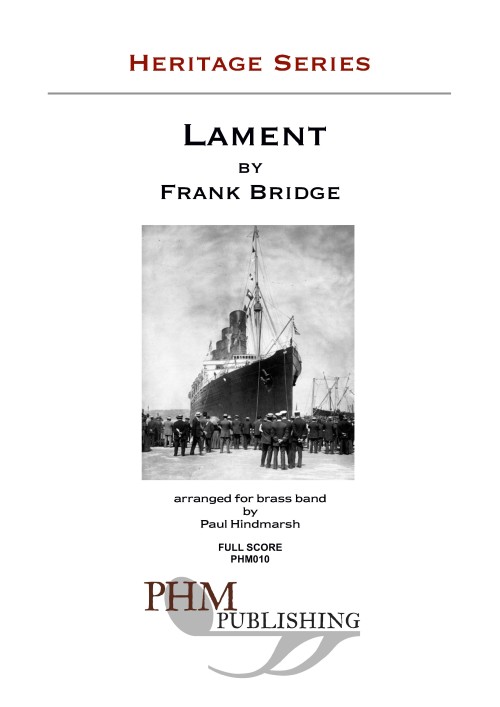
The English composer Frank Bridge (1879 - 1941) did not take an active part in the First World War. However, he was devastated by the slaughter on the western and the eastern fronts, especially the loss of so many of his musicians friends and colleagues. Writing in 1963, his former pupil Benjamin Britten confessed that 'a lot of my feelings about the First World War which people seemed to see in the War Requiem came from Bridge. He had written a piano sonata in memory of a friend killed in France and though he didn't encourage me to take a stand for the sake of a stand, he did make me argue and argue and argue. His own pacifism was not aggressive, but typically gentle'.Bridge composed this Lament for string orchestra on 14 June 1915, in memory of Catherine Crompton, who drowned when the Cunard liner Lusitania was torpedoed by a German submarine on 7 May, 1915. According to figures researched by Liverpool historian Kevin Roach (www.lusitania.net), 1201 men, women and children lost their lives out of the 1962 people aboard. Ninety-four children died, including Catherine, her twin brother Paul and four other siblings. Paul Crompton, Snr. (44), a British businessman working in Philadelphia, his wife Gladys (40) and the family nanny were also drowned. How Bridge's dedication came about is uncertain. The music critic Edwin Evans, who knew Bridge well, has written that the Catherine was a young friend. It is also possible that he came across the family photograph which was published in many newspapers in the wake of the tragedy. By that time, Bridge was greatly distressed by the war as a whole. It seems perfectly in keeping with his pacifist leanings and the strength of his reaction, that this poignant and deeply touching 'war memorial' should mourn a child who he did not know, rather than one of the thousands of young men who fell in battle.Through the musical tears of this melancholy lullaby, Bridge may have regarded the death of young Catherine Crompton as symbolic of the loss of so many innocent lives in wartime. His response to this personal tragedy was characteristically spontaneous and utterly sincere. It is one of his most effective miniatures, poignant yet restrained in its lyrical beauty, with a compelling directness and simplicity of construction.This brass band transcription is pitched one tone lower than the original for string orchestra.- Paul HindmarshDuration: 5.00
Estimated dispatch 7-14 working days
-
 £34.95
The Covenanters (Brass Band - Score and Parts) - Downie, Kenneth
In 1638, many members of the Presbyterian Church of Scotland signed a document called the National Covenant. By doing so, they were declaring that they acknowledged only Jesus Christ as the spiritual head of their church, and not any king or queen. This had become necessary because the Stuart kings believed in the Divine Right of Monarchs and saw themselves as head of the church. In the previous year, Charles I had forcibly introduced the Book of Common Prayer, invoking the wrath of the common people who faced the threat of torture, transportation or execution if they did not use the new liturgy and worship at their local church. The net result of this was that many met illegally in the countryside or in barns and large houses. These meetings became known as 'conventides' and many took place in the south-west of the country. Anyone caught attending was at risk of execution by the muskets of the dragoons who were employed in the area for that specific purpose. This music was written to honour the bravery and loyalty of these Christians to their faith, in the face of extreme danger, in the hope that it will inspire us also to be faithful. There are overtones of military threat, secrecy and solidarity. An old pentatonic tune is used, which the composer heard as a boy being sung to the words The Lord's My Shepherd.
Estimated dispatch 7-14 working days
-
£17.50
The Covenanters (Brass Band - Score only) - Downie, Kenneth
In 1638, many members of the Presbyterian Church of Scotland signed a document called the National Covenant. By doing so, they were declaring that they acknowledged only Jesus Christ as the spiritual head of their church, and not any king or queen. This had become necessary because the Stuart kings believed in the Divine Right of Monarchs and saw themselves as head of the church. In the previous year, Charles I had forcibly introduced the Book of Common Prayer, invoking the wrath of the common people who faced the threat of torture, transportation or execution if they did not use the new liturgy and worship at their local church. The net result of this was that many met illegally in the countryside or in barns and large houses. These meetings became known as 'conventides' and many took place in the south-west of the country. Anyone caught attending was at risk of execution by the muskets of the dragoons who were employed in the area for that specific purpose. This music was written to honour the bravery and loyalty of these Christians to their faith, in the face of extreme danger, in the hope that it will inspire us also to be faithful. There are overtones of military threat, secrecy and solidarity. An old pentatonic tune is used, which the composer heard as a boy being sung to the words The Lord's My Shepherd.
Estimated dispatch 7-14 working days
 View Music