
Results
-
 £79.99
Variants on an English Hymn Tune - Philip Sparke
This set of variations on the well-known hymn tune Holy, holy, holy! will make a most satisfying addition to the solo repertoire for euphonuim and brass band. It is in the traditional air varie form with an introduction, theme and 3 variations. The original melody (known as Nicaea) was composed by John Bacchus Dykes' especially for Reginald Heber's renowned hymn of praise and became universally popular when it was included in Hymns Ancient and Modern in 1861. A beautiful solo that will test the soloists ability to show true emotion.
Estimated dispatch 5-14 working days
-
 £54.99
Stop the Cavalry - Jona Lewie - Stefan Schwalgin
Stop the Cavalry is a song about a British soldier at the front line whowrites a fictional letter to "Mr Churchill", begging him to send the armyhome because he'd prefer to spend Christmas with his darling. Thisrelaxed anti war song with a generous touch of British humour willcertainly help your band make a successful start or end to any concert.
Estimated dispatch 5-14 working days
-
 £109.99
Antarctica - Carl Wittrock
Carl Wittrock became inspired by huge icefields surrounding the South Pole. Colourfull and majestic sounds provide the composition a fascinating view of this "6th" continent.'Antarctica' is a free impression of the scenery in the Antarctic.Melodies are linked together to convey the various aspects of the landscape.These melodies together with their simple harmonic accompaniments make this work pleasant for both the listener and the musician.
Estimated dispatch 5-14 working days
-
£39.99
English Carol Fantasy - James Curnow
Contrasting colors and varied orchestration techniques make this majestic setting of OH LITTLE TOWN OF BETHLEHEM come alive for Christmas. Of the three different tunes that are commonly associated with the original carol text, this arrangement uses the melody that's best known in England. ENGLISH CAROL FANTASY remains entirely accessible to bands at this level and plenty of cueing makes sure it's useful for ensembles of all shapes and sizes. Feature your deserving young cornet section leader on the easy solo, or let the entire first cornet section play it soli. The low brass also get some "well doubled" exposure, so playing this one will be fun for all.Try it!
Estimated dispatch 5-14 working days
-
 £54.99
Sound the Bells of Christmas - James Curnow
Three festive carols are skillfully combined into a terrific showcase for holiday programming. The familiar strains of these "bell" songs will make a superb concert opening for your holiday needs. Includes: Westminster Chimes, The Merry Bells All Ring, I Heard the Bells on Christmas Day and Ukrainian Bell Carol.
Estimated dispatch 5-14 working days
-
 £60.99
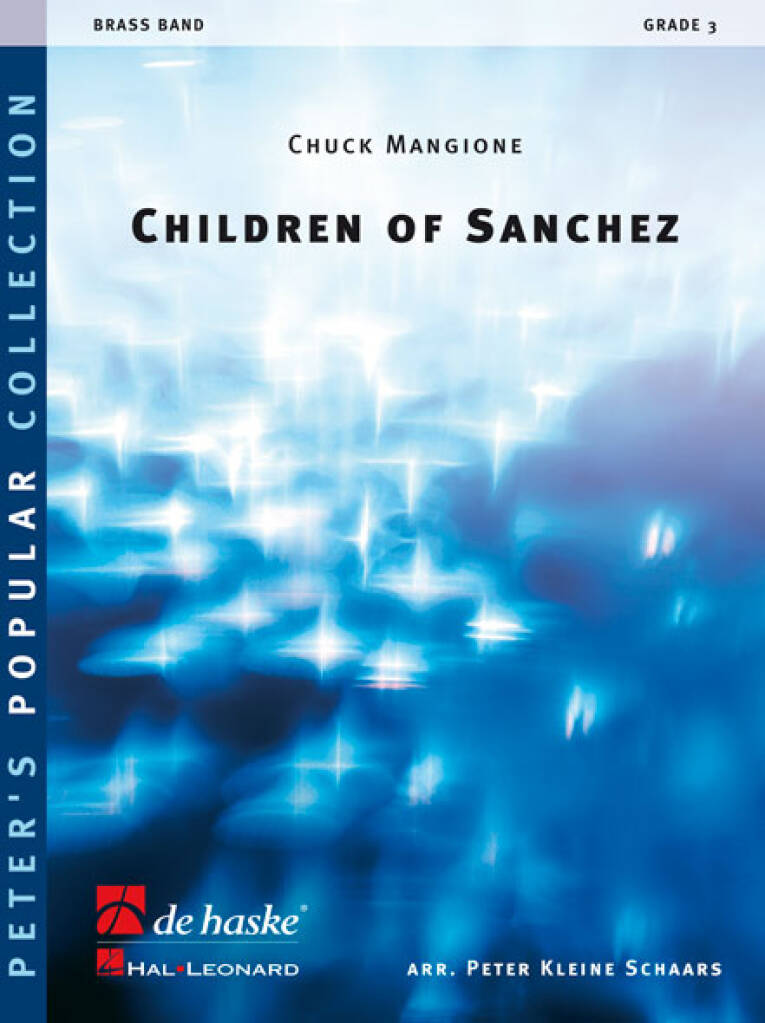
Children of Sanchez - Chuck Mangione - Peter Kleine Schaars
The title track to the film of the same name was originally composed by Chuck Mangione. The well-known melody helped make this 1970's jazz and pop legend so famous and popular. Peter Kleine Schaars skillfully transforms this classic film theme into an excellent arrangement for concert band featuring the fl ute and trumpet.
Estimated dispatch 5-14 working days
-
 £60.99
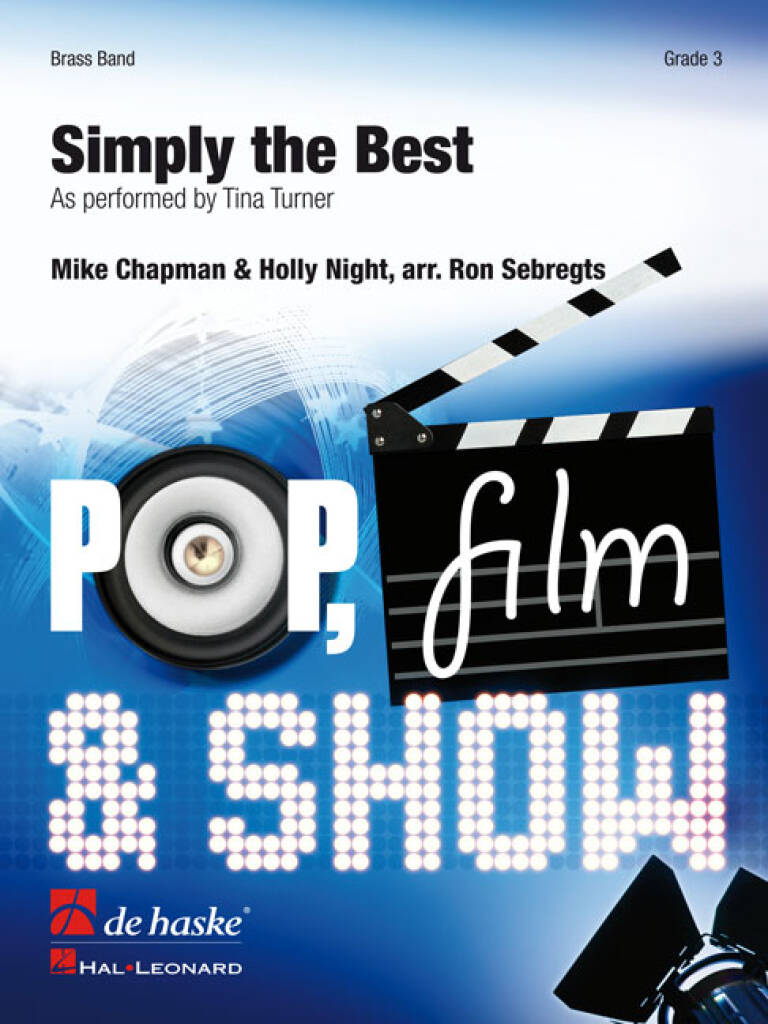
Simply the Best - Mike Chapman - Ron Sebregts
Simply the Best was first performed by the little known Bonnie Tyler in 1988, but did not gain wide-spread popularity until Tina Turner recorded it barely one year later. The song has become one of Tina Turner's all time greatest hits and is a favourite around the world when something needs celebrating. Ron Sebregts' arrangement really rocks and will make sure your next concert is Simply the Best!
Estimated dispatch 5-14 working days
-
 £34.99
Submerged... (Cornet Concerto No.2) - Jonathan Bates
'Submerged..' is a virtuoso concerto for Cornet composed as a response to the 'lost' Derbyshire villages of Ashopton & Derwent,. both of which were drowned in the early 1940's to make way for a new reservoir to aid the ever-increasing water demand from nearby. Sheffield and it's steel industry during World War 2. The work is through-composed but is defined by 3 clear main sections, 'The . Packhorse Bridge, Derwent', 'Ashopton Chapel' and 'Operation Chastise'. Much of the melodic and harmonic material throughout the. concerto is inspired by 3 contrasting sources; an original motif of towering block chords which opens the concerto, the famous opening. fragment of Eric Ball's 'High Peak' (1969) which was composed as a tribute to the district of Derbyshire where Ashopton & Derwent lie, . and finally Claude Debussy's haunting 'La Cath drale Engloutie' or 'The Sunken Cathedral', which was composed in 1910 around the legend of. the submerged cathedral of Ys. . I. Packhorse Bridge, Derwent (1925). One of the most striking features of the former village of Derwent was it's Packhorse Bridge, which spanned the River Derwent. adjacent to the Derwent Hall - a grand, picturesque Jacobean country house. In 1925, the renowned impressionist artist Stanley. Royle painted a striking image of the two in midwinter, with the partially frozen river sat quietly underneath the snow-topped. bridge in the foreground, while the old hall sits peacefully and dark in the background. The opening setion of this concerto paints. this picture in a quite schizophrenic manner; with frosty, shrill march-like material picturing the villagers crossing the narrow icy. bridge, combined with wild and frenzied waltz music of the grand hall and it's masquerade balls laying, for now, quietly mysterious. across the river. . II. Ashopton Chapel (1939). Ashopton was much the smaller and less-populated of the 2 'lost' villages, but still bore home to a Roman Catholic Chapel which was. the focal point of the village. The chapel - along with the rest of Ashopton - was drowned in 1943, but the final service to take place there. was held in 1939, with the final hymn being 'Day's Dying in the West'. This hymn forms a haunting coda to the 2nd section, with firstly the . piano leading the melody before an audio track containing an old recording of the hymn is accompanied by the sound of flowing water and . the rumble of storms as the village hypothetically disappears from existence with the hymn tune still echoing around the valley, before . subsiding into the growing roar of the engine of a Lancaster Bomber as it soars overhead towards Derwent to practise it's 'Dam-Buster' raid. . III. Operation Chastise (1943). The Derwent Reservoir lies adjacent to Ladybower Reservoir (of which Ashopton & Derwent were flooded to make way for) in the . Derbyshire High Peak, and during the 2nd World War was used as one of the central low-atitude practise areas of the 617 Squadron - more . commonly known affectionately as the 'Dambusters'. Before the destruction of Derwent, it's 'Packhorse Bridge' was dismantled stone by stone . and re-assembled upstream at Howden Dam to the north end of Derwent Reservoir. This is where the music begins, with a reconstruction of . the opening material before taking flight into a whirlwind tour of virtuosity from the soloist. .
In Stock: Estimated dispatch 1-3 working days
-
£44.00
Don't Sit Under the Apple Tree - Stept-Brown-Tobias - Bjorn Morten Kjaernes
"Don't Sit Under the Apple Tree (With Anyone Else but Me)" is a popular song that was made famous by Glenn Miller and by the Andrews Sisters during World War II. Its lyrics are the words of two young lovers who pledge their fidelity while one of them is away serving in the war. Originally titled "Anywhere the Bluebird Goes", the melody was written by Sam H. Stept as an updated version of the nineteenth-century English folk song "Long, Long Ago". Lew Brown and Charles Tobias wrote the lyrics and the song debuted in the 1939 Broadway musical Yokel Boy. After the United States entered the war in December 1941, Brown and Tobias modified the lyrics to their current form, with the chorus ending with "...'till I come marching home".In 1942 the song was featured in the film Private Buckaroo as a performance by the Andrews Sisters with the Harry James orchestra and featuring a tap dancing routine by The Jivin' Jacks and Jills. It was featured in the films Twelve O'Clock High (1949), With a Song in My Heart (1952), Kiss Them for Me (1957), A Carol for Another Christmas (1964), In Dreams (1999) and The Master (2012). It also featured in the mini-series The Pacific. You can use the song both on musical concerts, movie concerts or just as a happy jazz tune on your next concert. On the sections (like from bar 25), please work carefully to make a good balance with all parts, and that each chord is balanced. With 4-part harmonies sometimes you need to hold back certain notes to make the accord sound good. If you want to open up for a longer improvisation, you can repeat 65 to 81, but then change the part 2 in bar 80 from Eb to a D on the repeat. The accord will be an F6 instead of F7 (on beat 3 and 4 in bar 80) Have fun and enjoy!
Publisher Closed for Holidays. Est Delivery 13-14th Aug
-
£70.00
Macbeth - Peter Meechan
Commissioned by the Scottish Brass Band Association for the 2007 Scottish Open Championship, Macbeth takes itsa inspiration from the Shakespeare play of the same name. Character portraits (Of the three witches as well as Macbeth himself), abstractions (The lament), and scenes (Macbethas final battle with Macduff) make up the nine sections of the piece.i: WitchesThe prophecies of the three witches are an integral part of the play, and in this opening section, these mysterious characters are represented by three different sections of music that introduces the listener to the musical material of the piece.ii: DaggerMacbethas aIs this a dagger I see before theea speech, where an imaginary dagger leads him to contemplate the pending murder, builds in intensity before the bell tolls at itsa conclusion - a sign from Lady Macbeth that Duncan is now alone.iii: General MacbethA character portrait of Macbeth - a fearless General who has led his armies to defeat foes from all over Europe. His ambition and flair that make him such a great General are also the characteristics that lead to his eventual downfall.iv: Contemplations of Lady MacbethAlone and mad, Lady Macbeth ponders all that has gone, before taking her own life.v: LamentAlthough the play tells of Macbeth not feeling the pain of his wifeas death, this lament ponders not only her death, but the tale as a whole.vi: Tomorrow and tomorrow and tomorrowIt is in this final soliloquy that we see the ultimate tragedy of Macbeth - the realisation that his life is ultimately worthless.vii: A spell still castThis acts as an prologue to section eight, restating the original awitchesa music, before heading into Macbethas final battle.viii: Final BattleMacbethas final battle, where he locks swords with Macduff.ix: Not of woman bornMacbethas realisation that the witches have misled him comes all too late, as Macduff beheads Macbeth, fulfilling the last prophecy.
Estimated dispatch 12-14 working days
 View Music